Cherry Blossoms at Seoul's Historic Sites 2026
The cherry blossom trees that line Changgyeonggung Palace were planted by Japanese colonial administrators in 1909. It was a deliberate act — transforming a Joseon royal palace into a public recreation park, making Japanese-style hanami culture the way people would experience the space. In the decades that followed, ordinary Koreans came anyway, picnicking under the blossoms while the empire's logic worked against them.
Today, those same trees bloom every April. The colonial backstory adds a layer of meaning that no other spring viewing spot in Seoul quite has. When you watch the petals fall over Myeongjeongjeon — the oldest main throne hall among Seoul's Five Grand Palaces — you're not just watching flowers. You're watching history insist on being beautiful despite everything.
This is what Seoul's heritage sites offer in spring that Yeouido and Seokchon Lake cannot: context. The blossoms are the same. The crowds are not.
2026 Cherry Blossom Timing
Before getting into specific sites, the dates:
- First blooms: Around April 1, 2026
- Seokchon Lake blooms: March 29 — April 6
- Peak bloom (citywide): April 7 — 12, 2026
- Yeouido festival: April 8 — 12
Weekday mornings, 7 — 10 AM, at any of these heritage sites: that's when you'll have near-empty pathways and the best light. Weekend afternoons at Changgyeonggung during the night opening are the exception — that event draws crowds intentionally, and that's part of what makes it worth attending.
Changgyeonggung Palace: The Night the Blossoms Return
Of all Seoul's spring viewing experiences, the nighttime cherry blossom opening at Changgyeonggung (창경궁 야간개장) is the most charged with history.
The palace was built in 1484 by King Seongjong for his grandmother and the elder queens of the court. For four centuries it functioned as a royal residential space — more intimate than Gyeongbokgung, less formal, built to human scale. In 1909, Japanese colonial administrators converted it into a public zoo and botanical garden, renamed it "Changgyeongwon" (stripping the honorific "gung" from its name), and planted hundreds of cherry trees for Japanese-style hanami viewing. Nighttime viewing parties became the main draw.
Restoration began in 1983. The zoo moved. The palace reclaimed its name. Most Japanese-planted trees were replaced with Korean varieties. But the spring blossoms remained.
The nighttime openings typically run for two to three weeks in April, starting after the main gates close at 6 PM. The palace is illuminated against darkness; the cherry trees become white-pink clouds suspended in the lit space between the old buildings. Myeongjeongjeon, the east-facing throne hall, looks otherworldly under floodlights with blossoms drifting past.
Practical information:
- Ticketed event; buy well in advance (tickets typically release 2 — 4 weeks before opening dates, sold via Interpark or the palace website)
- Hours: 7 PM — 10 PM (last entry 9:30 PM) during the night opening period
- Admission: approximately ₩9,000 for adults (2026 pricing TBC)
- Getting there: Line 4 Hyehwa Station Exit 4, 10-minute walk; or Line 5 Dongdaemun Yeoksa Munhwa Gongwon Station Exit 5, 12-minute walk
Even outside the night opening, Changgyeonggung during daytime in peak bloom (April 7 — 12) is significantly less crowded than Yeouido or Seokchon Lake. The Chundangji pond reflects the blossoms and the sky. The east-facing throne hall creates a composition you won't see at any other palace.
For more on Changgyeonggung's full history, see our complete Changgyeonggung Palace guide.
Deoksugung Doldam-gil: The Stone Wall That Blooms Pink
Deoksugung Palace's outer stone wall — Doldam-gil (덕수궁 돌담길) — runs along Deoksugung-ro between City Hall and the Canadian Embassy. It's one of Seoul's most photographed spring walks, and arguably the most romantic stretch in the city during peak bloom.
The wall itself dates to the late Joseon period, though the section visible today was partly rebuilt during the early 20th century when Deoksugung became the center of Korea's failed modernization crisis. King Gojong moved the court here after Japanese pressure drove him from the main palaces. The Western-influenced buildings he commissioned — Seokjojeon, Junghwajeon — represent a desperate attempt to modernize on Korean terms. He failed. The court eventually fell to annexation in 1910.
Walking the wall path in spring, you pass under cherry tree canopies that grow on both sides — the palace side and the city side converging overhead. On weekday mornings, the path is quiet enough to hear the petals falling. By midday on weekends, it's shoulder-to-shoulder with photographers. The trees don't change. The crowd density does.
Practical approach:
- The wall path runs roughly 900 meters along the palace's eastern and northern boundary
- Best entry point: Deoksugung main gate area (near City Hall Plaza, Line 1/2 Seoul City Hall Station Exit 2)
- Best time: 7 — 9 AM on weekdays, or the hour before sunset when light goes gold
- The path connects naturally to City Hall Plaza, which also has cherry trees along its perimeter
Deoksugung itself is worth entering during your spring visit — the combination of traditional Joseon architecture and early 20th-century Western-influenced buildings is unlike any other palace, and the admission fee (₩1,000) is negligible. Read our complete Deoksugung guide for details on what's inside.
Naksan Park and the Seoul City Wall: Blossoms on Ancient Fortifications
The Seoul City Wall (한양도성, Hanyangdoseong) was built in 1396 under the orders of King Taejo, the founder of the Joseon Dynasty. The full circuit of 18.6 kilometers still exists in sections around central Seoul. The Naksan section, running from Hyehwa to Dongdaemun, is one of the most accessible and most beautiful in spring.
Naksan Park sits above Ihwa-dong and Naksan-dong — neighborhoods that sat just inside the old city wall. The park occupies the ridge line, and sections of the original granite wall run right through the green space. In spring, cherry trees planted along the ridge bloom at the same level as the wall's battlements, creating a sequence of stone and pink blossom that has no equivalent in the city.
What makes Naksan different from the main cherry blossom spots: it draws the people who live in the surrounding neighborhoods. On weekday mornings, you'll see elderly residents doing their morning walks, pigeons, and not much else. The panoramic view toward Namsan Tower is one of Seoul's best spring views, and it costs nothing to access.

Getting to Naksan:
- Line 4 Hyehwa Station Exit 2, then a 10 — 15 minute walk up through Ihwa-dong's mural village
- Alternatively, Line 1/4 Dongdaemun Station Exit 1, walking west and uphill through Naksan-dong
- The park is free and open at all hours
- Best cherry blossom area: along the ridge path above the mural village, particularly where the original granite wall sections run through the park
The adjacent Ihwa Mural Village (이화마을 벽화마을) adds a dimension that purely historical sites lack — the murals commission local artists and change regularly. Coming up through the village on your way to the park gives the whole experience a lived-in quality that's different from walking between heritage site and heritage site.
For the full story of the Seoul City Wall and how to walk the complete circuit, see our Hanyangdoseong Walking Guide.
Changdeokgung's Biwon: The Secret Garden Wakes Up
Changdeokgung Palace's Secret Garden — the Biwon (비원) — is the most difficult cherry blossom viewing experience in this guide to access. Visits require reserved tickets, guided tour timing, and advance booking that typically sells out weeks before peak bloom.
It's worth the effort.
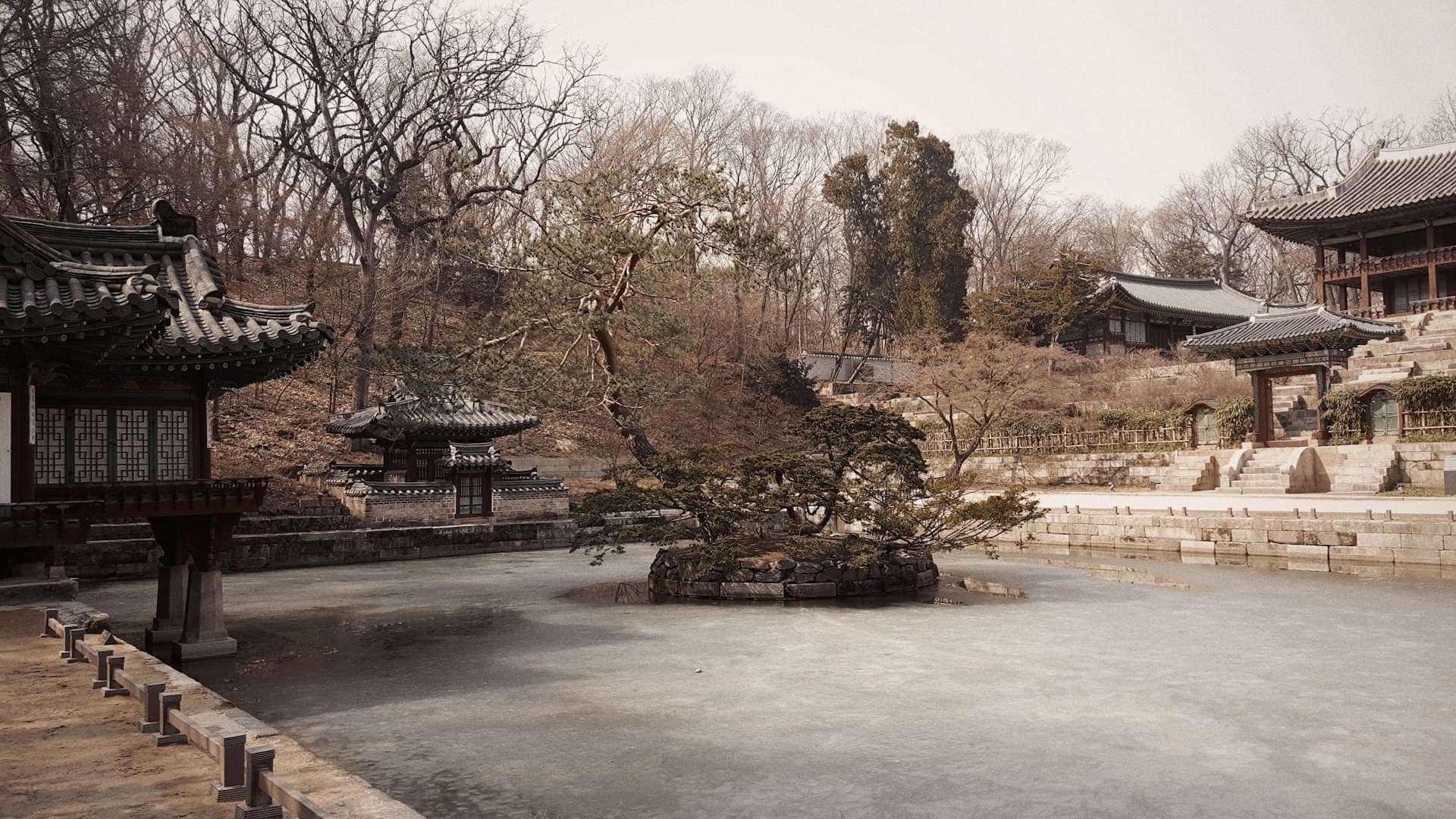
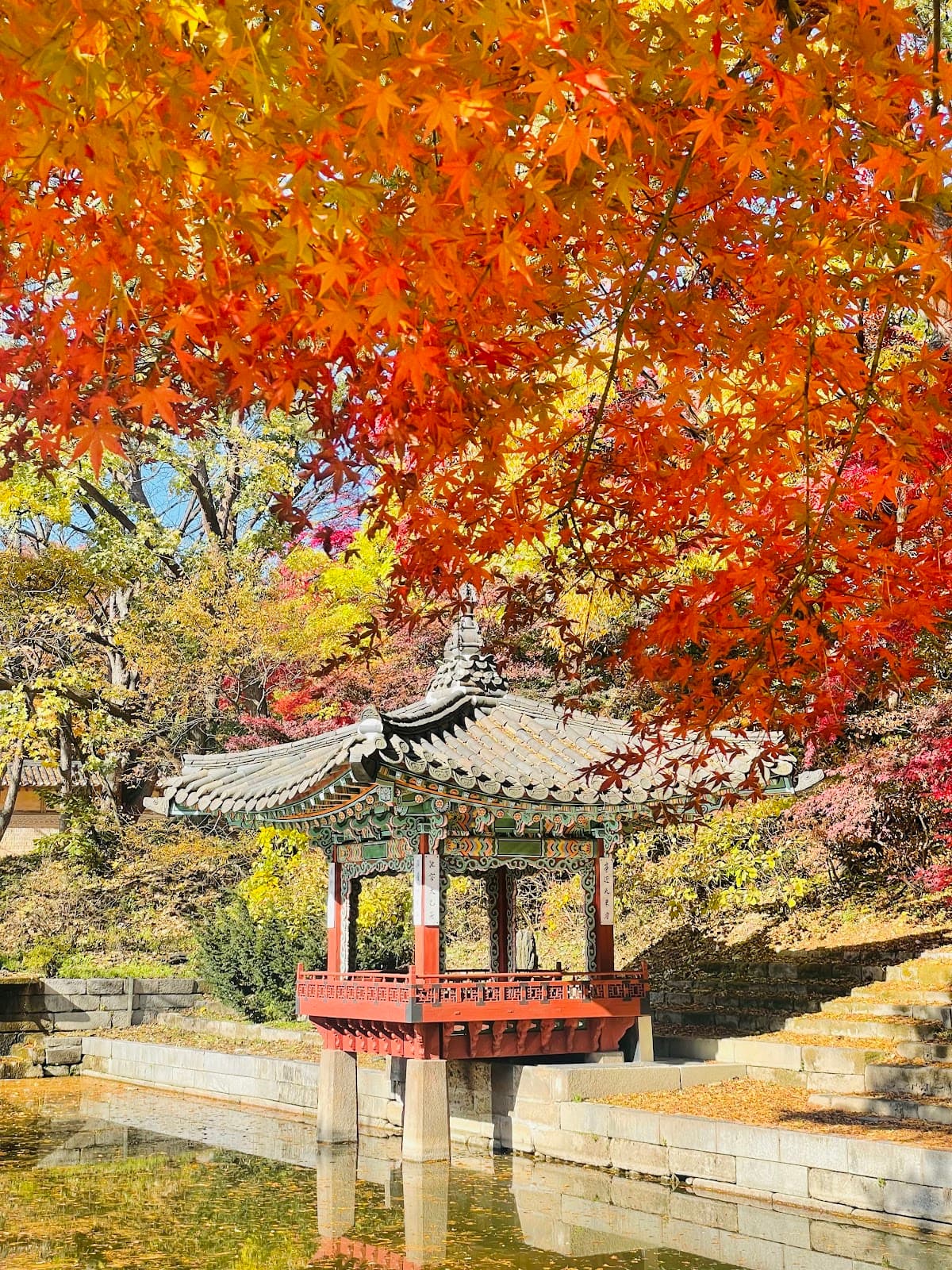
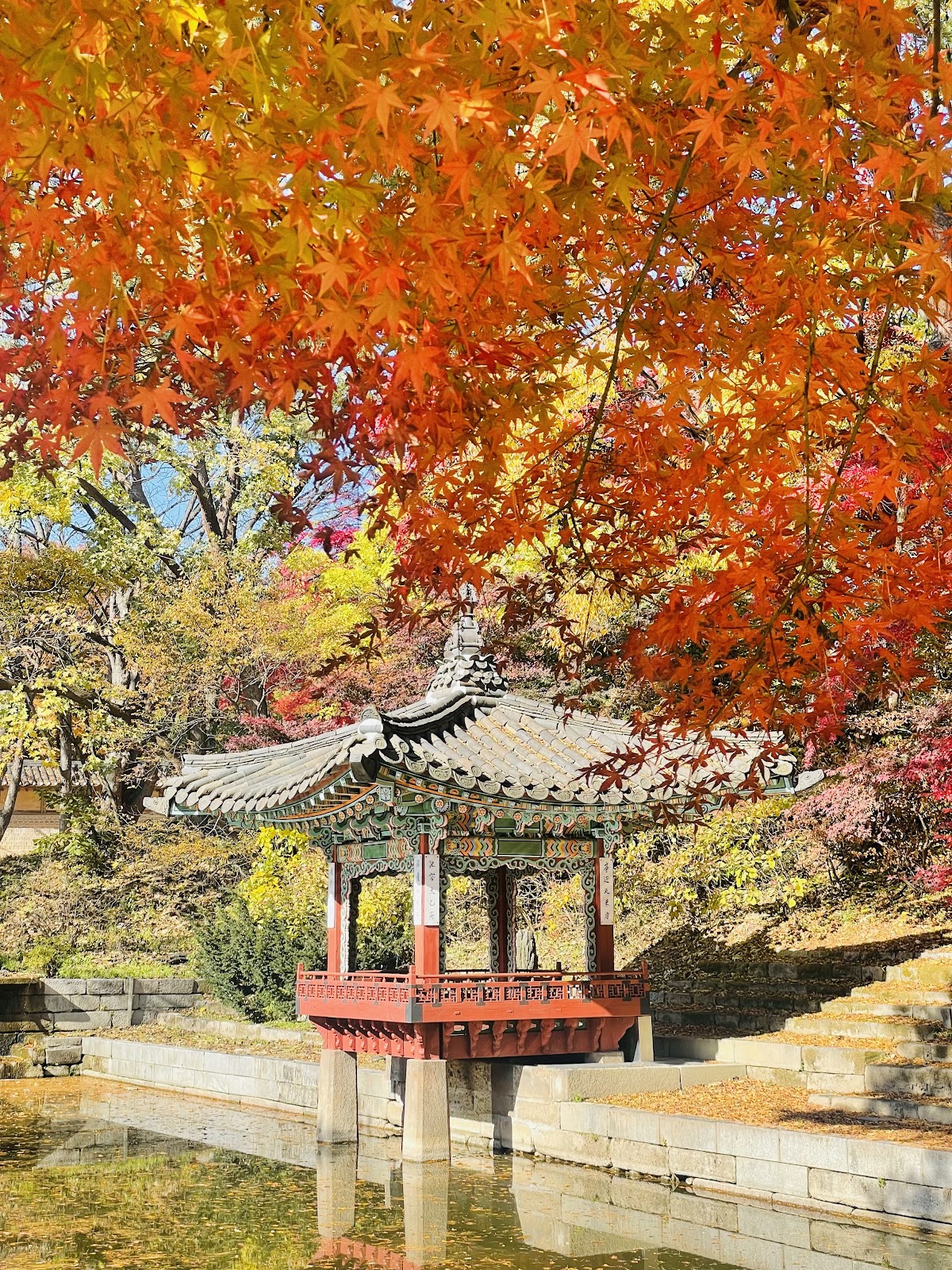
The Biwon is a 78-acre traditional Korean garden that the Joseon royal court kept private from the 14th century until the late 19th century. The garden's design philosophy is the opposite of Versailles: rather than imposing geometry on the landscape, Korean garden design works with existing topography, placing pavilions beside ponds that form naturally, running paths along contours rather than over them. Ancient trees — some several hundred years old — mark the spaces between buildings.
In spring, the Biwon's cherry trees bloom among a forest that also contains magnolias, azaleas, and early flowering plums. The sequence of blooms plays out over several weeks. Because access is controlled and timed, you will never see the Biwon crowded the way Yeouido gets crowded. Each tour group moves through at a pace that allows actual looking.
Booking and access:
- Biwon tickets must be booked in advance at the official Cultural Heritage Administration website (cha.go.kr) or via the palace's online ticketing system
- Spring slots (April) sell out weeks in advance; book as soon as you know your travel dates
- Tours run several times daily in Korean and English (English tours at 11:30 AM and 1:30 PM, check current schedule)
- Combined ticket (Changdeokgung Palace + Biwon): approximately ₩8,000 for adults
- Getting there: Line 3 Anguk Station Exit 3, 5-minute walk
If the Biwon is sold out during your visit — which is likely if you're planning around peak bloom — Changdeokgung Palace proper (without the Secret Garden) is still worth visiting and has significantly fewer visitors than Gyeongbokgung during spring season.
See our Changdeokgung Palace and Secret Garden Guide for everything you need to know about visiting.
Gyeonghuigung: The Western Palace in Spring
Gyeonghuigung (경희궁) is the least visited of Seoul's Five Grand Palaces. This isn't accidental — Japanese colonial administrators demolished over 90% of the palace in the early 20th century, and what stands today is a careful reconstruction on a fraction of the original footprint. Most tourists walk past the entrance gate without knowing it's there.
In April, the palace grounds take on a character that the grander palaces don't quite have. Reconstruction is visible — the timber is still relatively new, the dancheong (traditional painted decorations) still bright — but the spring blossoms settle over old pine trees and original stone foundations, and the contrast between new construction and genuinely old landscape creates something specific.
On most weekday mornings in April, Gyeonghuigung will be nearly empty. The spring light on Sungjeongjeon (the reconstructed throne hall) comes from the east — favorable for photography — and falls on cherry trees that no tourist is fighting for position in front of.
Visit information:
- Admission: Free
- Hours: 9 AM — 6 PM, closed Mondays
- Getting there: Line 5 Seodaemun Station Exit 4 or 5, 5-minute walk
- Adjacent Seoul History Museum (also free) provides essential context on what the palace looked like before colonial demolition
Read our complete Gyeonghuigung Palace Guide for the full history.
Jogyesa Temple: The Buddhist Spring
Jogyesa Temple (조계사), the head temple of Korean Buddhism, sits in central Seoul between Insadong and Gyeongbokgung. It's not primarily a cherry blossom destination — but its courtyard contains old trees, and in April the compound transforms in anticipation of Buddha's Birthday (May 5, 2026).
The 500-year-old zelkova tree at the main entrance is covered in white blossoms in early spring, before the cherry trees peak. The transition from the zelkova's white bloom to the cherry trees' pink-white over April's first two weeks creates a sequence of flowering that regular visitors follow carefully.
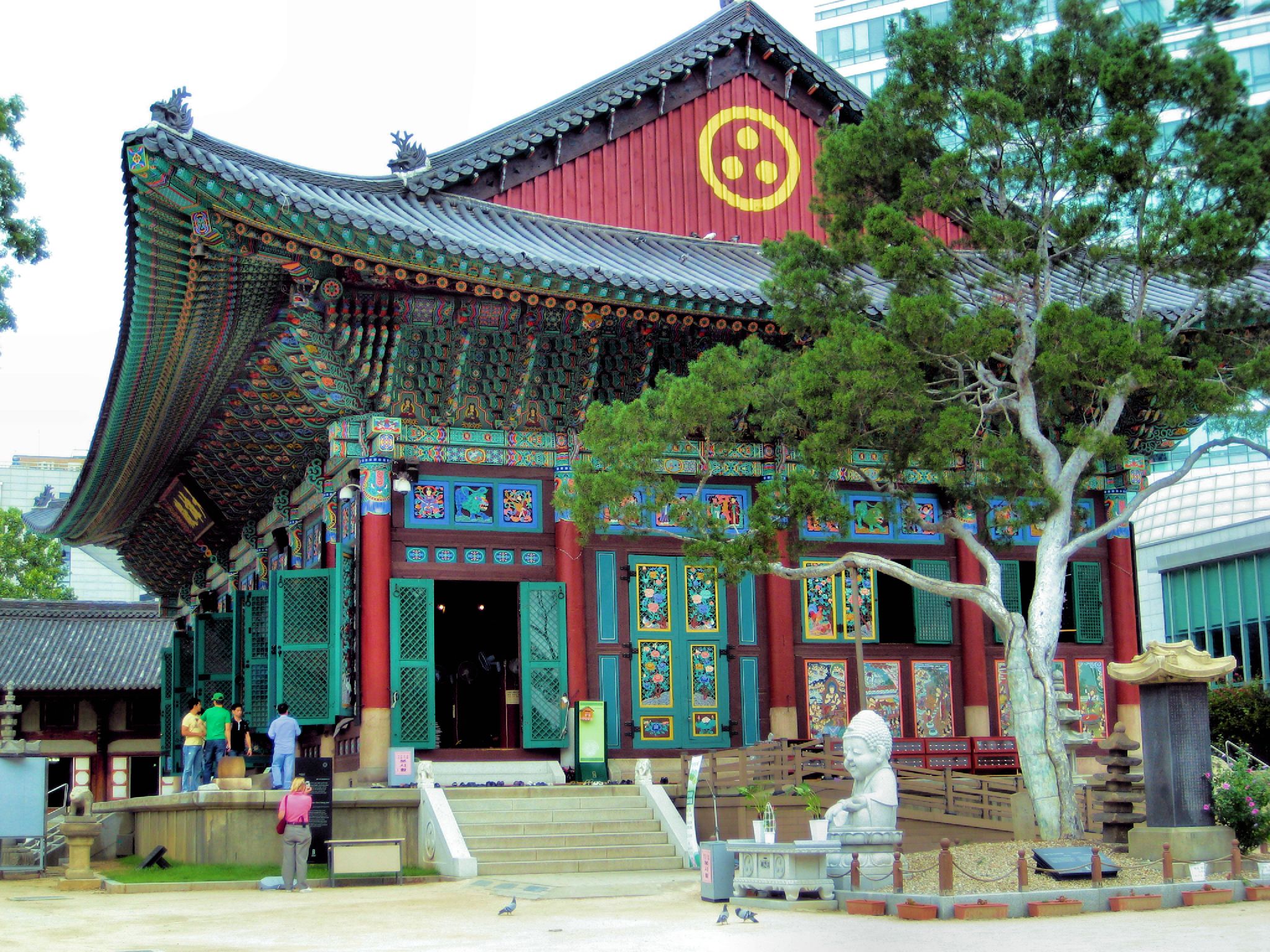
What makes Jogyesa worth including here is the atmosphere: a functioning temple in active use, the colored lotus lanterns beginning to appear in preparation for May festivities, monks and lay practitioners moving through the compound between ceremonies. The cherry blossom viewing here happens amid daily religious life, not as a public event staged for tourism.
The temple is free and open daily from 4 AM — 9 PM.
Practical Guide: Making the Most of Heritage Cherry Blossoms
The right hours
The consensus for any crowded spring viewing spot is "early morning." For heritage sites, this is even more true. At Changgyeonggung outside the night opening period, 9 AM on a Tuesday in early April means near-empty pathways. At Naksan Park, 7 AM means you'll have the ridge to yourself.
Avoid late weekend afternoons at any of these sites. The Deoksugung stone wall path by 3 PM on a Saturday in peak bloom is genuinely crowded. The Naksan ridge gets busy from 11 AM on weekends.
Combining sites into a single day
These heritage cherry blossom sites cluster naturally:
Morning route (Jongno-gu central): Changgyeonggung at opening (9 AM) → walk south through the grounds → exit south and walk 15 minutes to Jongmyo Shrine → continue to Jogyesa Temple → lunch in Insadong → afternoon at Deoksugung Doldam-gil
Northern Wall Route: Gyeonghuigung at 9 AM → walk east 15 minutes to Gyeongbokgung → north to Bukchon Hanok Village → continue to Naksan Park for late afternoon ridge walk
Weather
Cherry blossoms fall in rain. A light rain on a palace cherry tree path is not the disaster tourists fear — wet petals on stone pavement have their own kind of beauty. The practical issue is that photos are harder and the sites' stone surfaces become slippery. Good footwear matters.
Wind accelerates petal fall. The day after strong wind during peak bloom can produce spectacular petal snowfalls even from trees that are starting to thin.
Photography
Palace architecture provides natural framing that open parks cannot — palace gates as foregrounds, tiled roof lines as compositional anchors, stone walls to stand against. The most distinctive shots at heritage sites come from using the architecture rather than just photographing the blossoms in isolation.
At Changgyeonggung during the night opening, tripods are allowed. Long exposures work well for capturing the illuminated buildings with falling petals caught mid-motion.
Frequently Asked Questions
Are the cherry blossoms at palaces the same as at Yeouido?
The species are similar — mostly Yoshino cherry (왕벚나무), which produces the pale pink-white blossoms that define Korean spring. The experience is very different. At Yeouido you're watching blossoms above hundreds of thousands of people. At Changgyeonggung or the Deoksugung stone wall path, you're watching blossoms against historical architecture with a fraction of the crowd.
When do the nighttime openings at Changgyeonggung start selling tickets?
Typically 2 — 4 weeks before the opening. The opening dates aren't announced far in advance; check the Cultural Heritage Administration website (cha.go.kr) and the palace's social media accounts from mid-March onward. Once dates are announced, tickets sell quickly.
Is the Changdeokgung Secret Garden worth visiting if I can't book the cherry blossom timing?
Yes. The Biwon is worth visiting in any season. Spring is the most popular, but the autumn foliage in November is arguably more dramatic. If you can't get April tickets, aim for the second-best option: a weekday morning visit to Changdeokgung Palace proper, which has cherry trees in the outer palace area accessible with the standard admission ticket.
Are these spots suitable for strollers or wheelchair users?
The Deoksugung Doldam-gil wall path is paved and flat — excellent for strollers and wheelchairs. Changgyeonggung's main areas are accessible, though some paths in the upper grounds have steps. Gyeonghuigung's main courtyard is accessible. Naksan Park's ridge path has sections with steps; there are alternative gentler routes but they miss the best cherry tree areas. The Biwon tour involves uneven terrain and is not fully wheelchair accessible.
What should I wear to visit palaces during spring cherry blossom season?
Many visitors choose to rent hanbok (traditional Korean clothing) for palace visits — hanbok wearers historically received free admission to Seoul's major palaces, though this policy varies by palace and year. Spring weather in Seoul is variable: warm afternoons (15 — 20°C) but cold mornings. Layers are essential. The stone pathways at palaces can be cold underfoot even when the air is warm.
Is it true that Korean cherry trees bloom differently from Japanese ones?
The trees are botanically related. The Yoshino cherry (왕벚나무) used most commonly in Seoul's parks and palaces is the same species planted across Japan. The bloom timing is similar — Seoul's April peak aligns closely with Kyoto's — though Seoul's trees are slightly later on average. The key difference is the setting: stone palace walls and traditional timber architecture create a visual context Japanese cherry blossom viewing, at temples and parks, doesn't replicate.