
8 Industrial Heritage Cafes in Seoul: Where Factory Floors Meet Design Excellence
Seoul's rapid industrialization left behind traces now reborn as cultural spaces. Rice mills, shoe factories, and auto repair shops from the 1960-70s have transformed into the city's most sophisticated cafes and galleries.
These eight industrial heritage cafes transcend mere renovation. They preserve the traces of time etched into each brick and steel beam while adding contemporary functionality and aesthetics. In these spaces where past and present coexist, we witness urban regeneration's most elegant form.
Preserving Industrial Authenticity
1. Cafe Onion Seongsu - Brick Memories of a Rice Mill
8 Achasan-ro 9-gil, Seongsu-dong
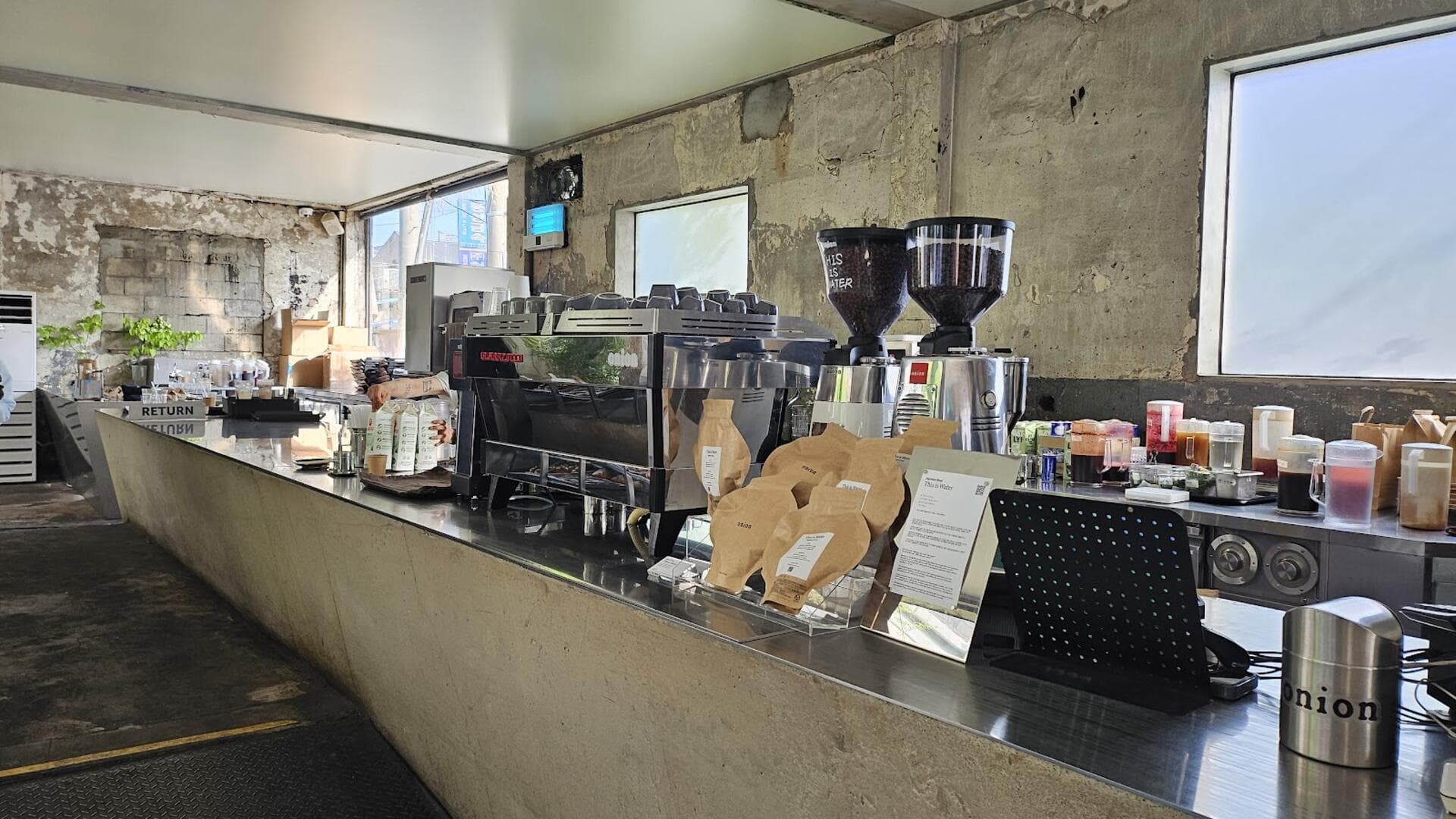
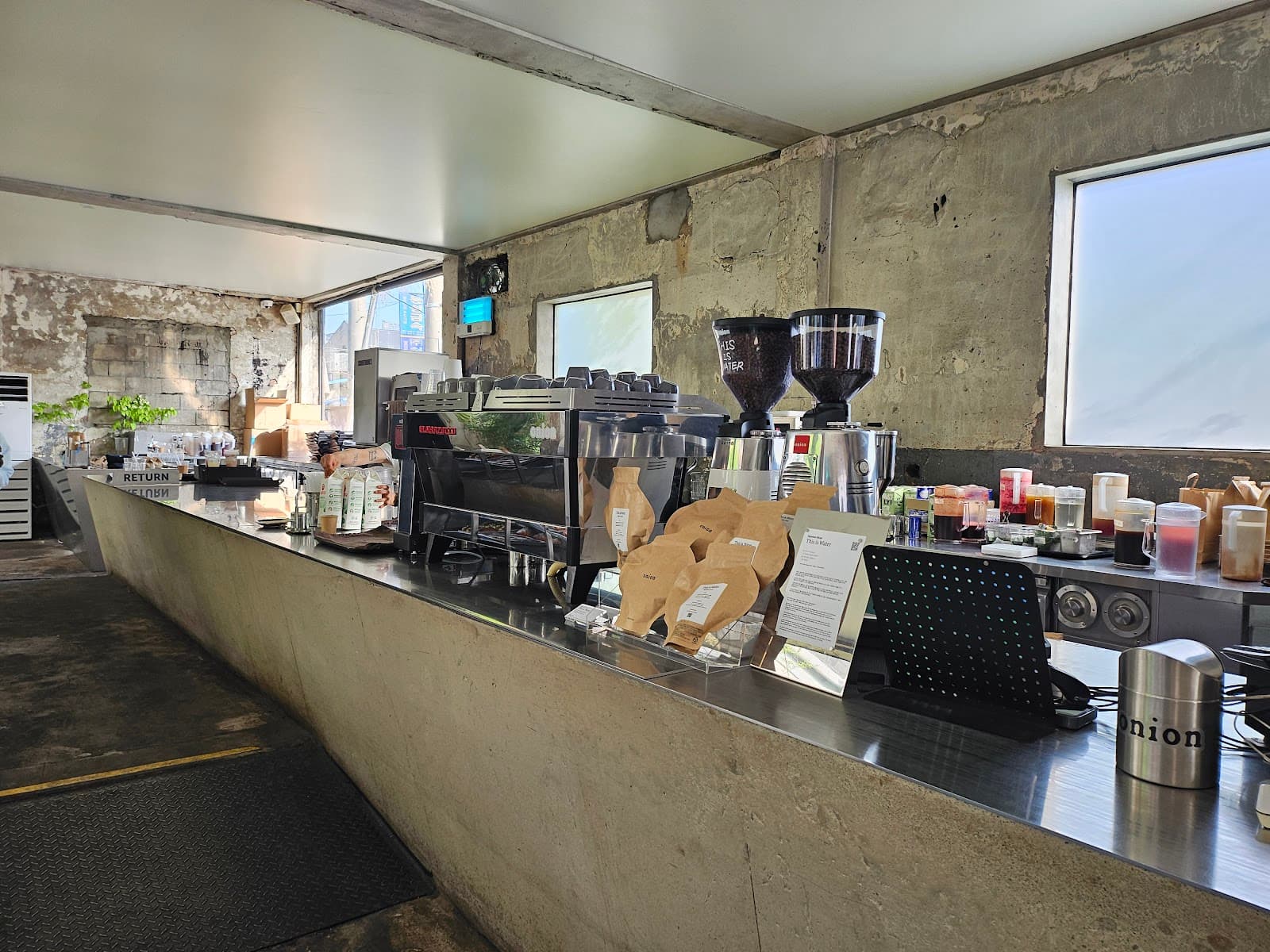
The most iconic transformation of a 1970s rice mill building. Cafe Onion Seongsu has become synonymous with Seoul's industrial heritage cafe movement.
Spatial Characteristics: The red brick exterior remains untouched while the interior opens daringly. Three-story windows draw in natural light, and aged brick walls reveal time's texture. The exposed wooden truss structure on the ceiling showcases the rice mill era's structural beauty.
The contrast between wooden floors and brick walls. The harmony of modern steel stairs with vintage brick. This space serves as a textbook on how preservation and innovation can dialogue within a single venue.
Menu & Experience: Cream cheese garlic bread and croissants are signatures. Bakery aromas spread through old brick walls. Weekend queues form long, but experiencing this space's gravitas makes the wait worthwhile.
The starting point for exploring Seongsu cafe street. Most Instagram shots of Seongsu begin here. @minjicurates
2. Daelim Warehouse - 70 Years Breathing Through Red Brick
78 Seongsu-iro, Seongdong-gu
A 1970s rice warehouse reborn as exhibition space and cafe. Daelim Warehouse symbolizes Seongsu-dong's industrial heritage preservation.
Spatial Characteristics: The external red brick facade preserves the 1970s warehouse architecture intact. The interior finishes as a white cube, securing functionality as exhibition space. High ceilings and column-free open floors maintain the structural features of warehouse architecture.
The first floor hosts coexisting cafe and exhibition spaces. People browsing art books over coffee naturally mix with those viewing installation art. Here, boundaries between cafe and gallery blur.
Exhibitions & Experience: Rotating exhibitions add new context to the space. Fashion shows, popup stores, photo exhibitions. Daelim Warehouse reinterprets the warehouse's flexibility for contemporary use.
10-minute walk from Seoul Forest Station Exit 2. Weekday mornings are quietest.
Reinterpreting Architectural Structure
3. LCDC Seoul - A 4-Story Cultural Experiment from Auto Repair Shop
10 Yeonmujang 17-gil, Seongdong-gu
An auto repair shop and shoe factory converted into a four-story cultural complex. LCDC, meaning "story of stories," layers multiple narratives.
Spatial Characteristics: Each floor preserves traces of different eras. First-floor Cafe Ephemera's high ceilings and concrete columns hint at the repair shop days. The second-floor select shop reinterprets the shoe factory's work tables as display platforms. The third-floor gallery space reveals industrial-era structural beauty through exposed brick and steel trusses.
From the rooftop bar, all of Seongsu-dong spreads below. The landscape of old factory buildings interspersed with new cafes. Here, you read Seongsu-dong's transformation.
Brands & Experience: Independent brand select shops, cafes, and bars maintain individual identities while organically connecting within one building. 1F Cafe 10:00-20:00, 2F Shop 11:00-20:00, 3F Gallery 12:00-19:00 (closed Mondays).
5-minute walk from Seongsu Station. Weekday afternoons offer breathing room.
4. Amazing Brewing Company - Beer Revolution in a 1959 Wooden Building
27-12 Seongsu-dong 1-ga, Seongdong-gu
A wooden building from 1959 reborn as a craft brewery. Pioneer of Seongsu-dong's craft beer culture.
Spatial Characteristics: The 60-year-old wooden structure remains intact while housing brewing equipment. Low ceilings and narrow windows characterize 1950s architectural style. These constraints transform into an intimate taproom atmosphere.
Moving between the indoor taproom and outdoor beer garden, you sample 50+ varieties of craft beer. Seated where brewing tanks are visible, you observe the beer-making process in real-time.
Beer & Experience: In-house brewery with 60-ton annual production capacity. Sample flights allow comparing multiple beers. Quiet back-street location in Seongsu-dong. Near Gyeongdong Elementary School, walking distance from Ttukseom Station.
Drinking beer in industrial heritage. This space fills a building of the past with the culture of the present.
Aesthetics of Concrete and Steel
5. Bunker Company Apgujeong - Industrial Sanctuary of Specialty Coffee
23 Eonju-ro 167-gil, Gangnam-gu
2023 Korean Barista Championship Best Coffee Bar winner. Bunker Company marries industrial aesthetics with specialty coffee.
Spatial Characteristics: Exposed concrete walls and black steel structure. Ceiling lights evoke factory work lamps with industrial design. The barista bar positions centrally, fully exposing roasting and extraction processes.
The space is small but dense. Minimal seating, maximum focus. You don't come here to drink coffee—you come to experience it.
Coffee & Experience: In-house roasted single-origin beans. Homemade baked goods accompany. Open weekdays 8:30-21:00 (last order 20:00). Hidden deep in Sinsa-dong alleys.
A sanctuary for serious coffee enthusiasts. A space focusing on taste over Instagram.
6. Seoul Brewery Seongsu - 5-Story Craft Beer Universe
28-12 Yeonmujang-gil, Seongdong-gu
Seoul Brewery's flagship opened in 2023. Spanning 350 pyeong from basement to rooftop, each floor offers different experiences.
Spatial Characteristics: Vertical space boldly revealing industrial structure. The steel skeleton in the stairwell evokes shipyard frameworks. Each floor separates into brewery, taphouse, cafe, restaurant, and cultural space, yet connects through the central staircase.
Seongsu-dong's industrial skyline viewed from the rooftop. Factory chimneys and cranes composing the landscape represent this place's identity.
Beer & Experience: Brewery tours available. Observe brewing processes while tasting fresh craft beer. Open daily 11:00-24:00. Multiple floors offer choices from casual cafe to full dining.
Heart of Seongsu's trendy area. Perfect stop after exploring boutiques and galleries.
Dialogue Between Past and Present
7. Cafe 203 - Time Travel in Euljiro Alley
203-9 Euljiro 3-ga
In the heart of Euljiro's printing alley, a 1970s print shop building reborn as cafe. Cafe 203 embodies Euljiro "Hipjiro" culture.
Spatial Characteristics: The exterior keeps rusted iron doors and faded signs, naturally blending with the alley. Interior intervention stays minimal. The print shop's wooden drawers, old work tables, vintage chairs became furniture.
Boundaries between old and new blur. A 70-year-old wooden table holds a 2025 latte. This layering of time defines Euljiro cafes.
Coffee & Experience: Hand-drip coffee is the focus. Print shop signs visible through windows, sounds from metal workshops become background music. Weekday lunches draw nearby office workers; evenings attract "Hipjiro" explorers.
3-minute walk from Euljiro 3-ga Station. Perfect after strolling the printing alley.
8. MXL - Minimalist Factory in Mangwon Alley
430-17 Mangwon-dong
A narrow 20-meter lot near Mangwon Market. MXL transformed this constraint into architectural advantage.
Spatial Characteristics: Tunnel-form structure 3 meters wide, 20 meters long. The unique plan—wide at both ends, narrow in middle—naturally draws passing gazes. The arched ceiling inspired by Roman aqueducts demonstrates technical achievement overcoming concrete's material limitations.
When noon sun enters through skylights, rainbow-like shadows appear on concrete walls. This phenomenon earned the nickname "Rainbow Tunnel."
Coffee & Experience: Counter seating dominates the narrow space. This actually encourages active barista interaction. Takeaway-focused menu aligns with Mangwon-dong's mobile neighborhood character.
Coffee after exploring Mangwon Market. 7-minute walk from Mangwon Station.
Before You Visit
-
Photography: Some cafes restrict flash photography to protect exposed brick and concrete textures. Natural light photography is recommended.
-
Temperature: Industrial buildings typically have poor insulation. Dress warmly in winter, lightly in summer. Some spaces have limited heating/cooling.
-
Parking: Most renovated old buildings have limited parking. Public transportation is strongly recommended.
-
Peak Hours: Weekend afternoons are busiest. For properly appreciating architectural qualities, weekday mornings are optimal.
-
Exhibitions & Events: Cultural complexes like Daelim Warehouse and LCDC—check exhibition and popup store schedules in advance. Follow official Instagram accounts to catch special experiences.
Common Questions
Q: Why are most of these cafes concentrated in Seongsu-dong?
Seongsu-dong was Seoul's representative light industry zone in the 1960-70s. This area dense with shoe factories, auto repair shops, and print shops underwent gentrification from the 2010s, reborn as cultural space. Low rents, large factory buildings, and demand for "Brooklyn vibes" combined to create today's Seongsu-dong.
Q: How do industrial heritage cafes differ from regular cafes?
The biggest difference is "layers of time." Newly built cafes contain only the designer's intent, but industrial heritage cafes have 70 years of building history inscribed in walls and columns. Brick cracks, steel rust, concrete discoloration—all these traces compose the space's narrative.
Q: What's the best time for photography?
Natural light matters. 10-11 AM is ideal. Sunlight softly touching brick and concrete brings texture alive. Golden hour (5-6 PM) also works but gets too crowded on weekends. Weekday mornings recommended.
Q: Are these accessible for foreign tourists?
All cafes provide English menus. Cafe Onion and Daelim Warehouse see many foreign visitors, so staff can communicate basic English. Google Maps location finding is easy. Concentrated near Seongsu Station allows walking tours of multiple spots in one day.
Q: Why is Cafe Onion so famous?
It's the "original" of Korea's industrial heritage cafes. When it opened in 2015, transforming a rundown factory into a cafe was revolutionary. The design preserving red brick while combining modern interiors became a benchmark for countless cafes since. Coinciding with the Instagram era, it solidified the image "Seongsu-dong = hip cafe street."
Q: Which places work well for solo visitors?
Bunker Company and Cafe 203 are recommended. Both center on counter seating, creating good atmospheres for solo coffee focus. Bunker Company lets you immerse in specialty coffee taste; Cafe 203 in Euljiro alley atmosphere.
Conclusion
Seoul's industrial heritage cafes aren't simply "old buildings turned into cafes." These are living museums showing through architecture how cities grow, decline, and regenerate.
The machinery sounds of 1960-70s factories crying "let's live well" have been replaced by espresso machine hums. But the "dignity of labor" and "functional beauty" these spaces hold remain inscribed in brick and steel.
Holding a cup of coffee, I gaze at a 70-year-old brick wall. The hands that laid these bricks, the sweat of those who worked here, and us today enjoying lattes. Time flows but space remembers.
Find more design curation at @minjicurates.