
Hapjeong's Most Design-Conscious Cafes 2026: Seoul's Quietest Creative Quarter
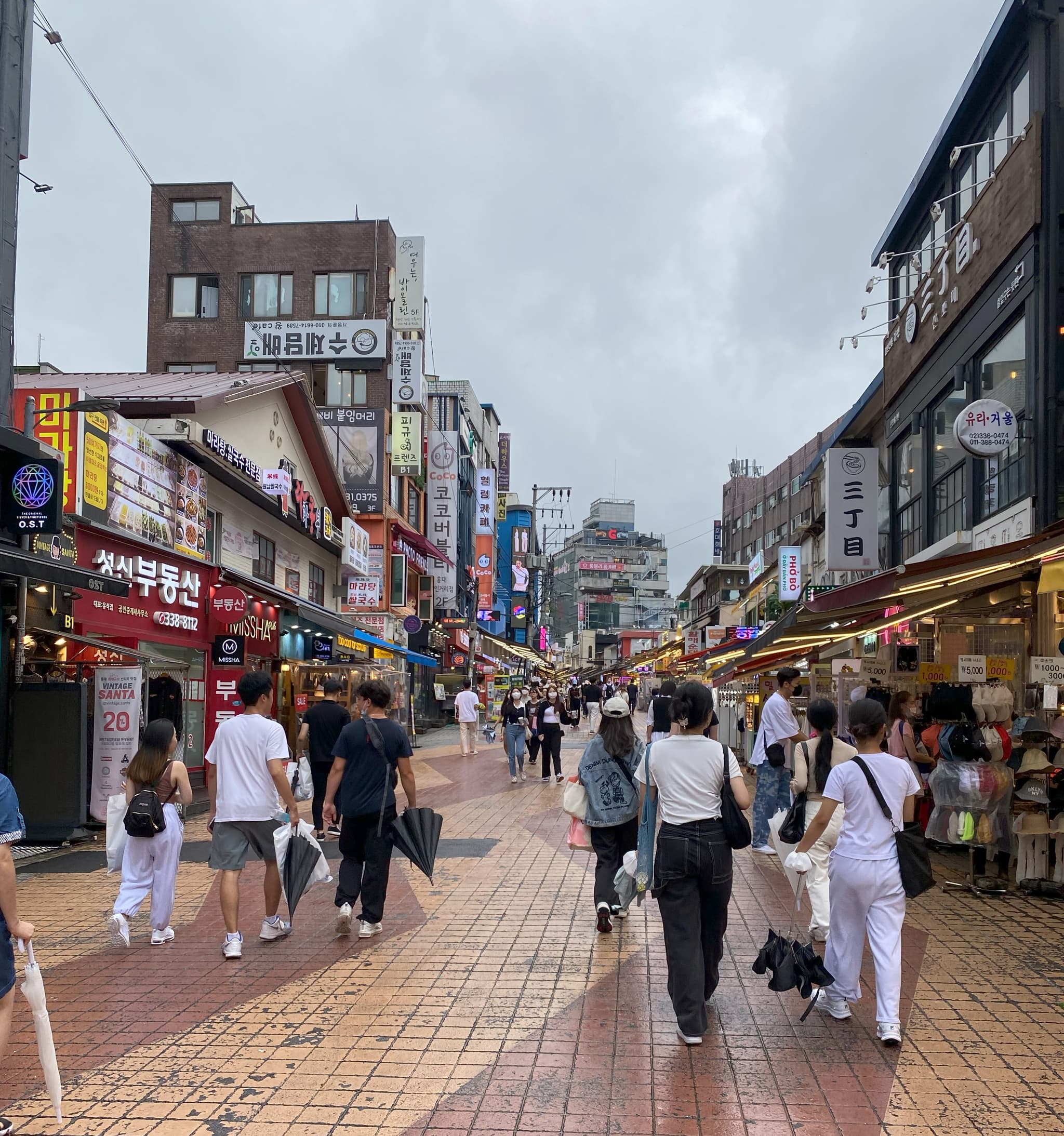
Hapjeong exists in the shadow of its louder neighbors. Seongsu-dong has the industrial theatrics. Hongdae has the street performance. Yeonnam-dong has the forest path aesthetics. Hapjeong, sitting between Hongdae and the Han River in Mapo-gu, has developed something harder to describe: a culture of considered design without spectacle.
The spaces here don't ask you to photograph them. They reward sustained attention instead. Where Seongsu opens with an immediate visual argument — brick warehouse, rust-patinated steel, curated ruin — Hapjeong reveals itself more slowly. The design intelligence is structural rather than demonstrative. Less theater, more architecture.
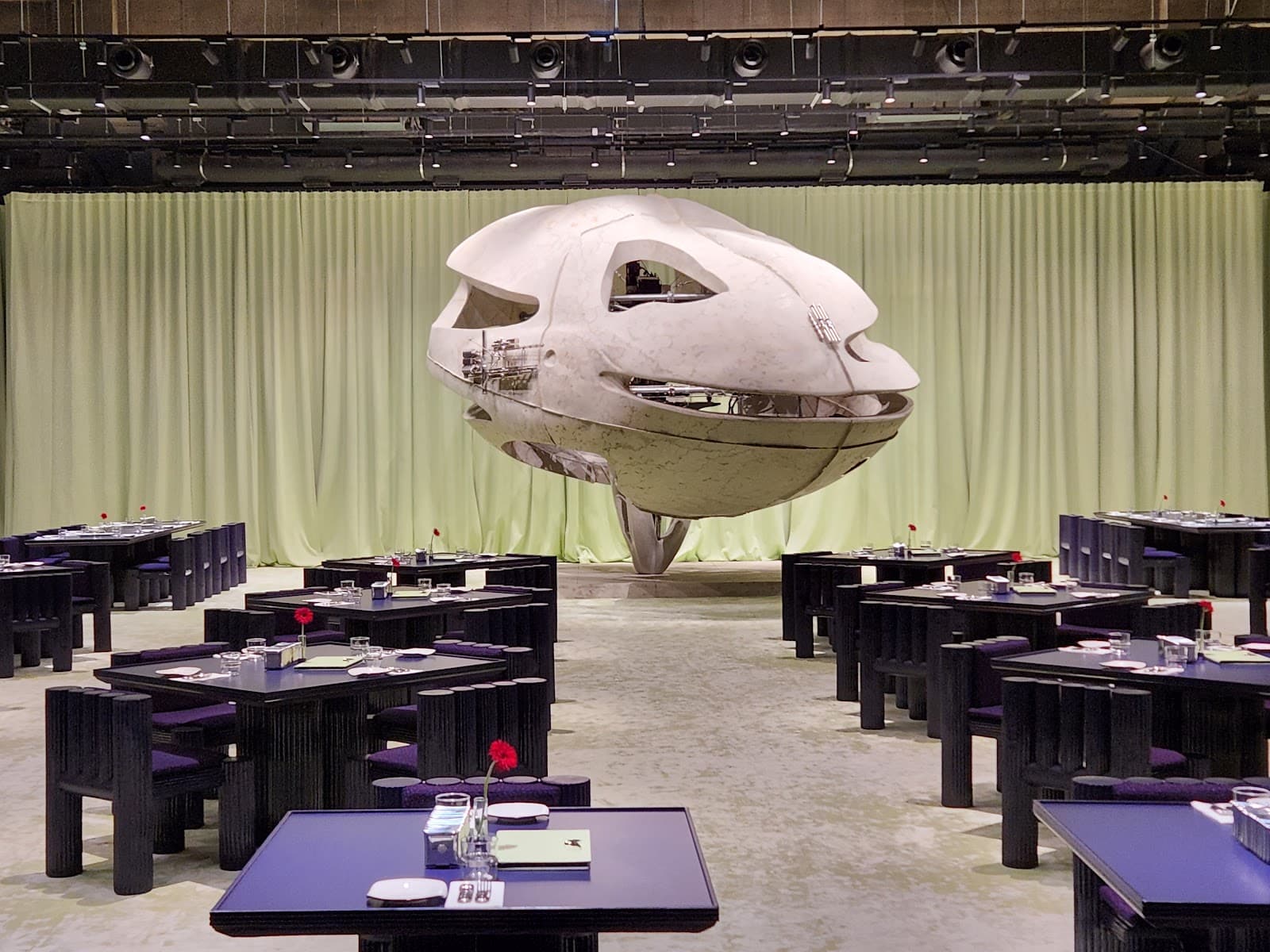
These four spaces represent Hapjeong's distinct approach to the cafe as a designed environment.
The Award-Winning Interior: Perception
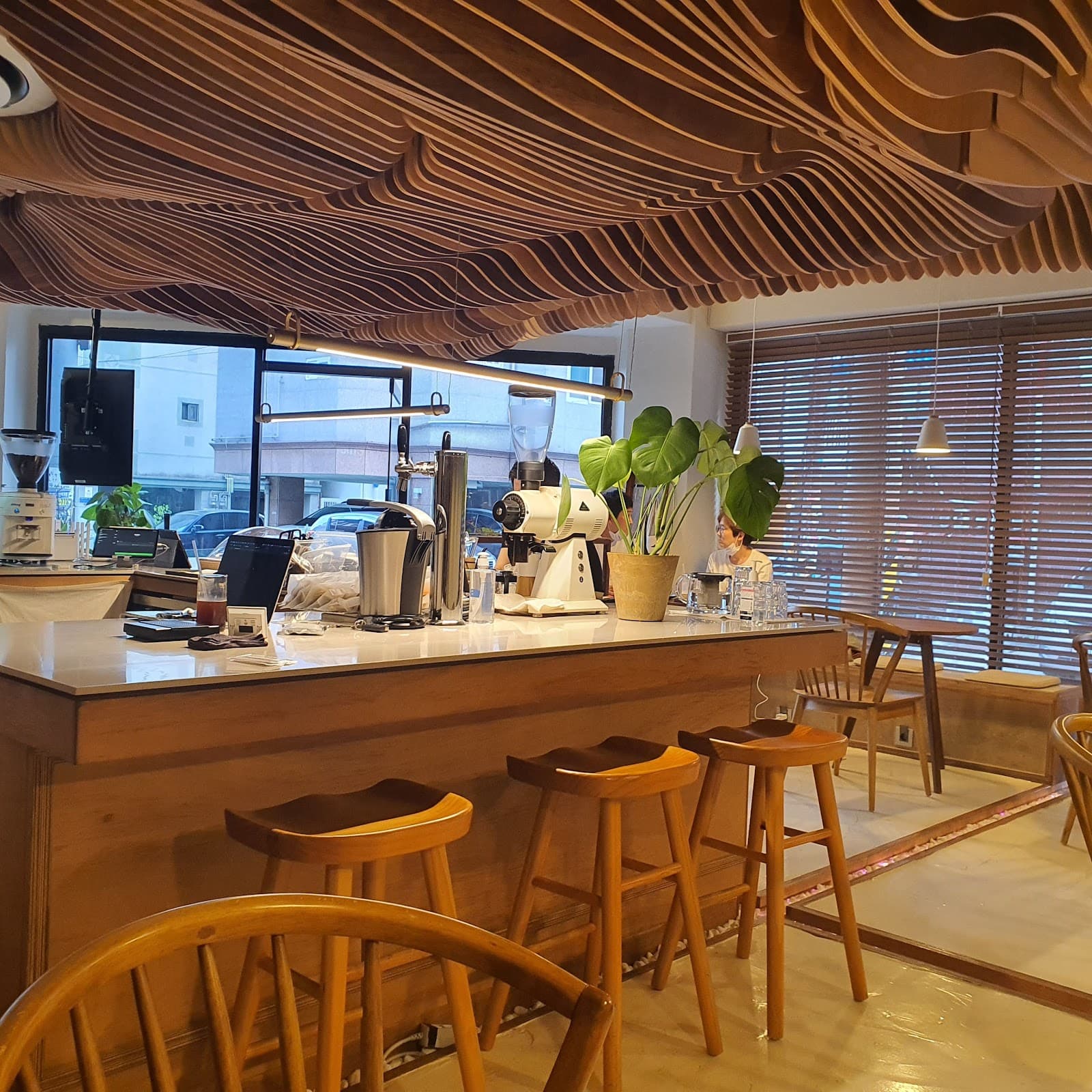
Perception won the A' Design Award — one of the largest and most rigorous international design competitions — for its interior. That's not the most interesting fact. The interesting part is understanding what specifically won it.
The space is organized around a centralized open preparation zone. This is a deliberate inversion of standard cafe spatial logic. In conventional cafes, the bar is pushed to one wall, subordinating coffee-making to background activity — the barista as service function, not spatial element. Perception inverts this: the preparation zone becomes the room's focal center. The baristas operate as the space's organizing principle, not its periphery.
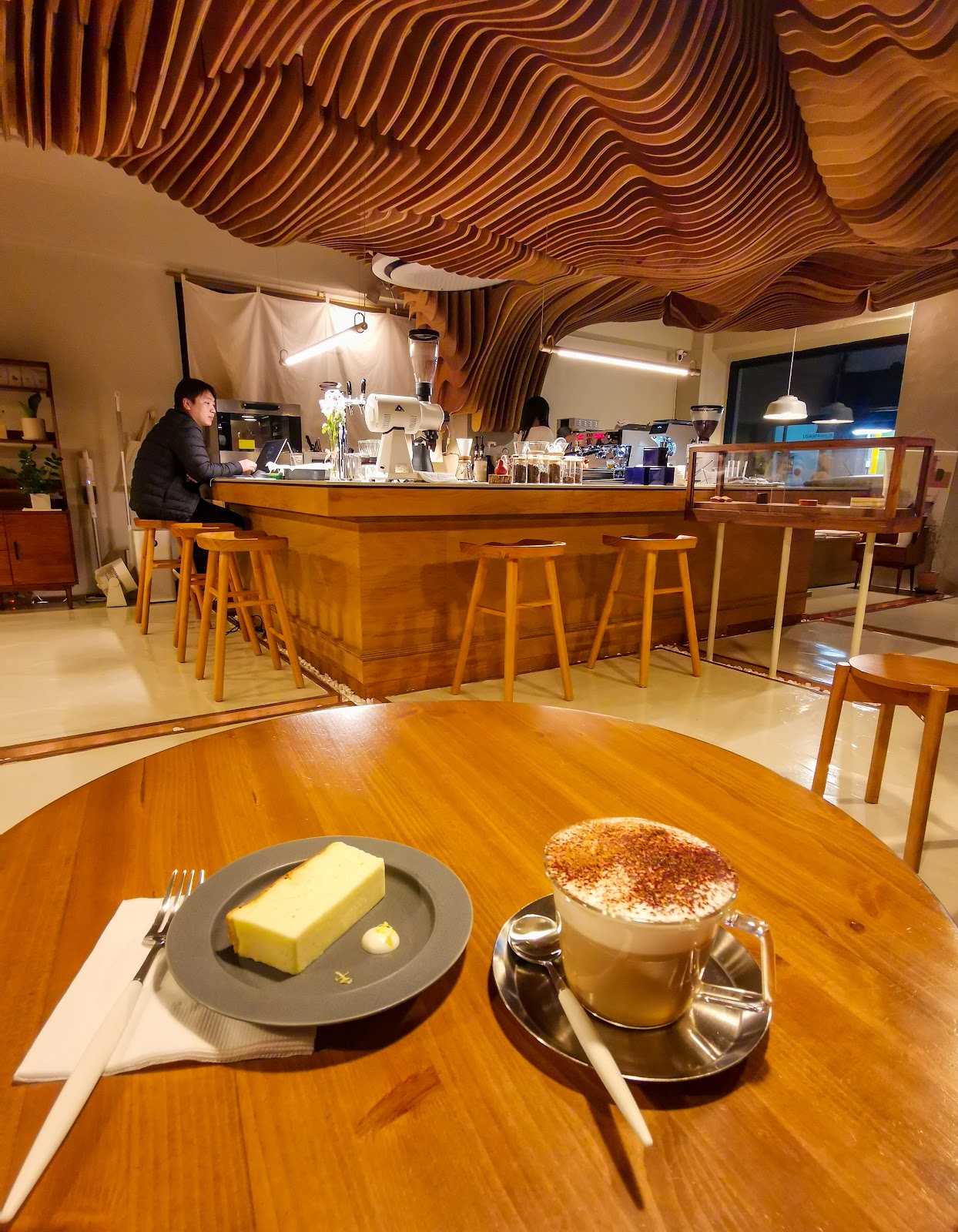
The ceiling concept is described as a "Shading Tree." In practice, this means a ceiling installation that distributes light variably across the space — dappled, shifting, non-uniform. The effect is that the cafe changes its quality throughout the day as Seoul's light changes outside. Early afternoon is a different experience from late afternoon. This is a design that acknowledges the space is not static, that time is part of the material.
The coffee program is rigorous and narrow: approximately fifteen preparations, all brewed in-house, with no food distractions. The design supports this focus — the centralized preparation zone makes the process visible if you want to watch, which becomes part of the visit. The spatial arrangement and the beverage program are arguing the same point about attention.
- Address: 16 Eoulmadang-ro 1-gil, Mapo-gu, Seoul
- Hours: Mon, Wed–Sun 10:00–22:00 (closed Tuesdays)
- Access: Hapjeong Station (Lines 2 & 6), 5-minute walk
The Editorial Space: The Magazine Club
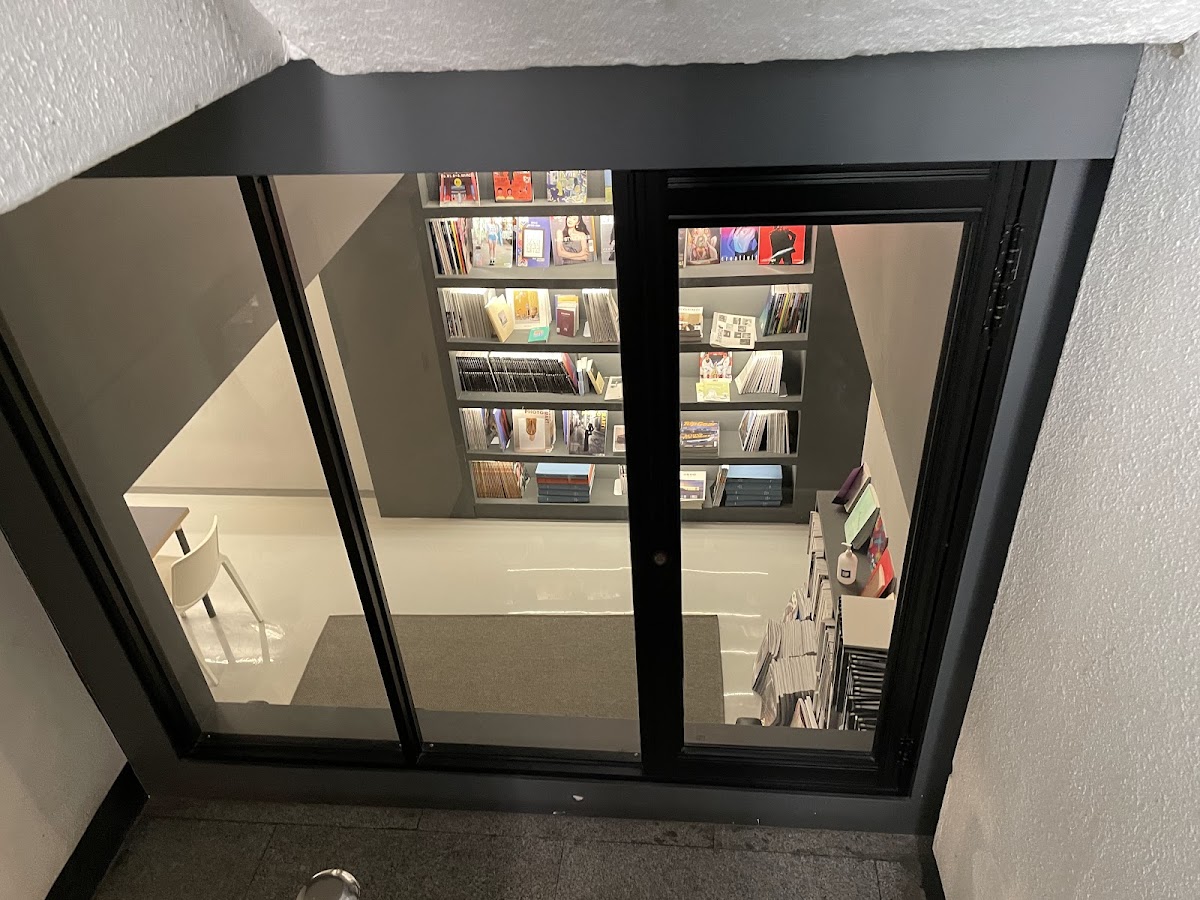
The Magazine Club occupies a basement. This is worth noting because basement spaces in Seoul tend toward either storage or nightlife — underground spatial logic in this city usually signals either practical utility or late-night transgression. The Magazine Club does something more considered: it creates a culture of focused reading in a space that resists casual foot traffic by definition.
Over 400 domestic and international magazines fill the shelves. The curation spans disciplines — design, photography, fashion, architecture, literature, food, niche sports. Monthly, the space organizes themed exhibitions in collaboration with publishers, introducing publications that most visitors wouldn't encounter through ordinary retail channels. This makes the club less a shop than an ongoing editorial program — an active curatorial act rather than a static inventory.
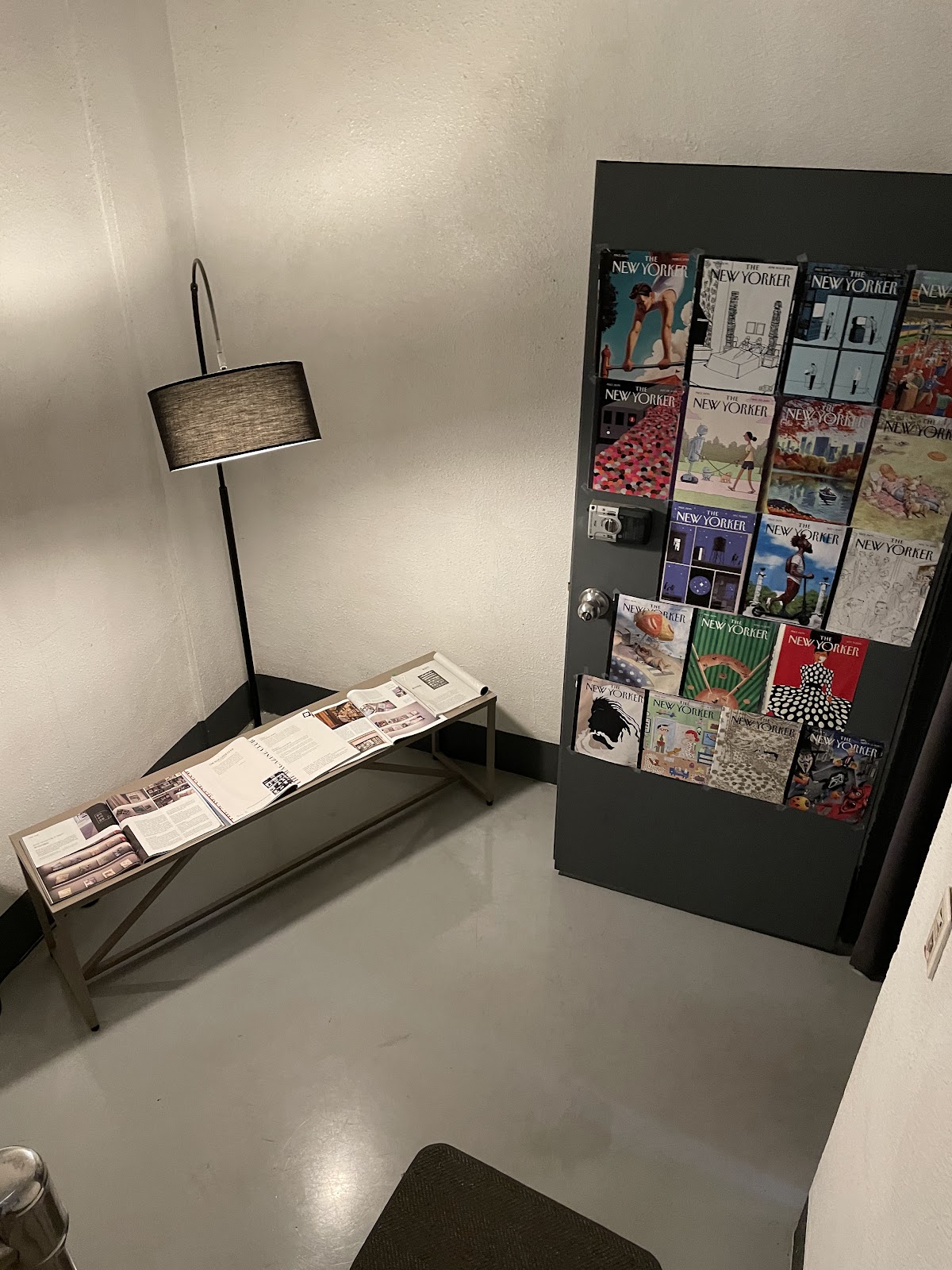
The spatial logic follows the editorial logic: designed for sustained engagement, not rapid browsing. Seating is arranged for reading rather than for social performance. The light is tuned for print rather than for photography. It is, genuinely, one of Seoul's few spaces where the design actively encourages phone-free attention — not through policy, but through environmental cues that make extended reading feel natural and phone use feel slightly incongruous.
For visitors oriented toward design and print culture, this is a destination. The magazine selection covers international design publications that are genuinely difficult to find elsewhere in Seoul — publications from smaller European and American houses, limited print runs, specialist titles.
- Address: Hapjeong-dong, Mapo-gu, Seoul (near Hapjeong Station — basement entrance)
- Hours: Check the @themagazineclub Instagram for current hours and programming
- Access: Hapjeong Station (Lines 2 & 6), Exit 3, 3-minute walk
The Literary Architecture: Cafe Comma
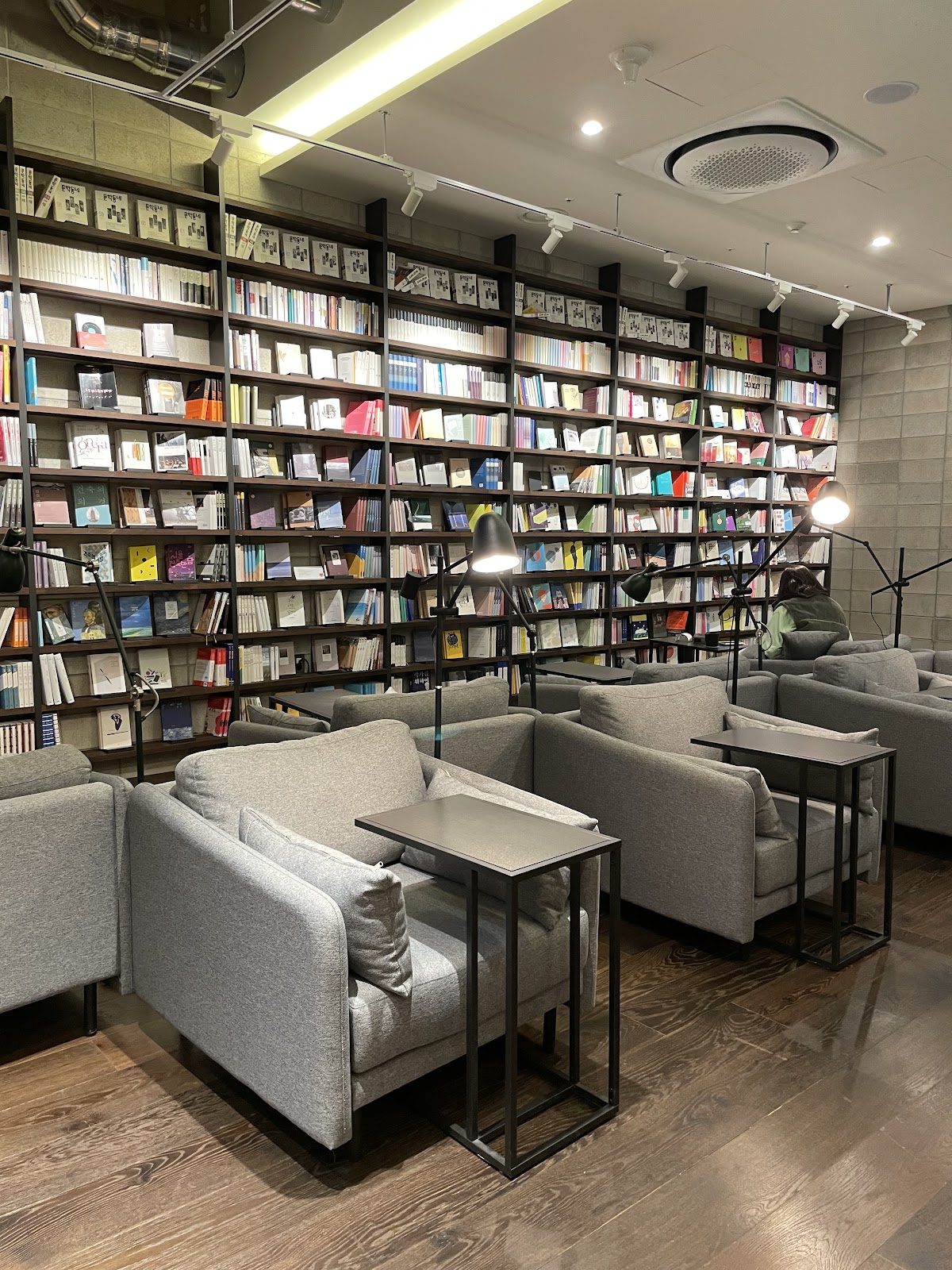
Cafe Comma belongs to Literary Town (문학동네), one of Korea's most significant independent publishers, whose backlist includes major contemporary Korean authors. This context is essential for understanding what the building is doing. It is not a cafe that sells books — it is a publishing house that has built a physical home for its intellectual and editorial project, and the space reflects that difference in purpose.
Seven floors, including basement. The program accumulates vertically: basement, bakery level, cafe spaces, workspace floors, exhibition areas, and a sixth-floor rooftop terrace. The architectural decision is to make this accumulation visible and legible — each floor articulates a different relationship between the visitor and literature, from the basement's active programming to the rooftop's contemplative remove.
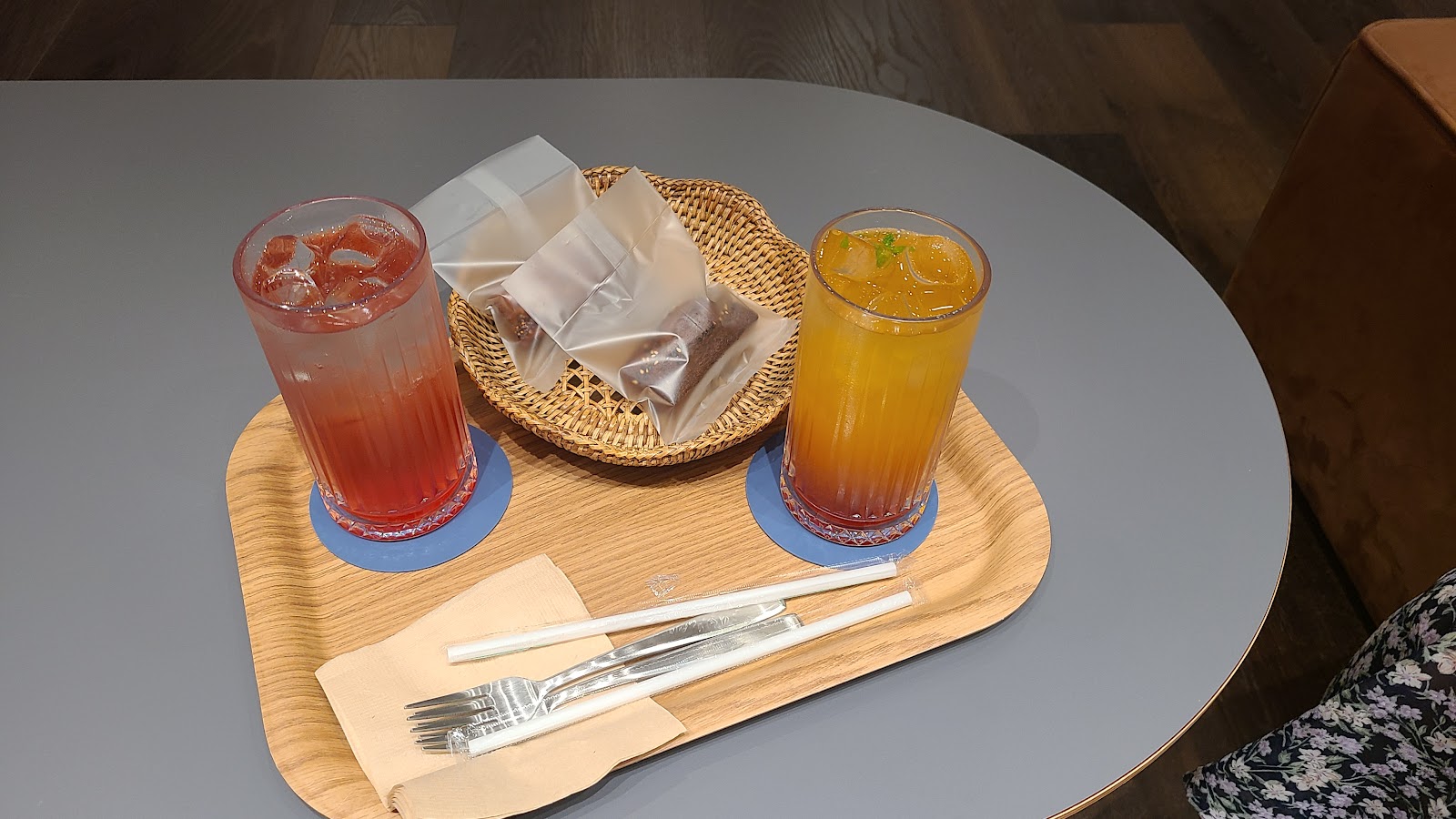
The design language throughout is controlled without being severe. Literary Town's visual identity is bookish and warm — considered material choices, legible typography, shelving that functions as both architecture and inventory. Seating arrangements favor long sessions; the furniture communicates that staying is expected and accommodated. This is explicitly not designed for rapid table turnover, which in Seoul's cafe economy is an unusual and principled position.
Where most cafe concepts optimize for customer throughput, Cafe Comma's design resists it. The building is designed for remaining — for the kind of extended visit that a serious publishing house's physical presence should support. As a tourist, this creates an unusually comfortable framework: you can spend two hours with a coffee and a book without any spatial pressure to leave.
- Address: 49 Poeun-ro, Mapo-gu, Seoul (between Hapjeong and Mangwon Stations)
- Hours: Daily 10:00–22:00 (last order 21:30); closed New Year's Day, Seollal, Chuseok
- Access: Mangwon Station (Line 6), Exit 2, 5-minute walk; or Hapjeong Station, 10-minute walk
The Canelé and the River: Blurr
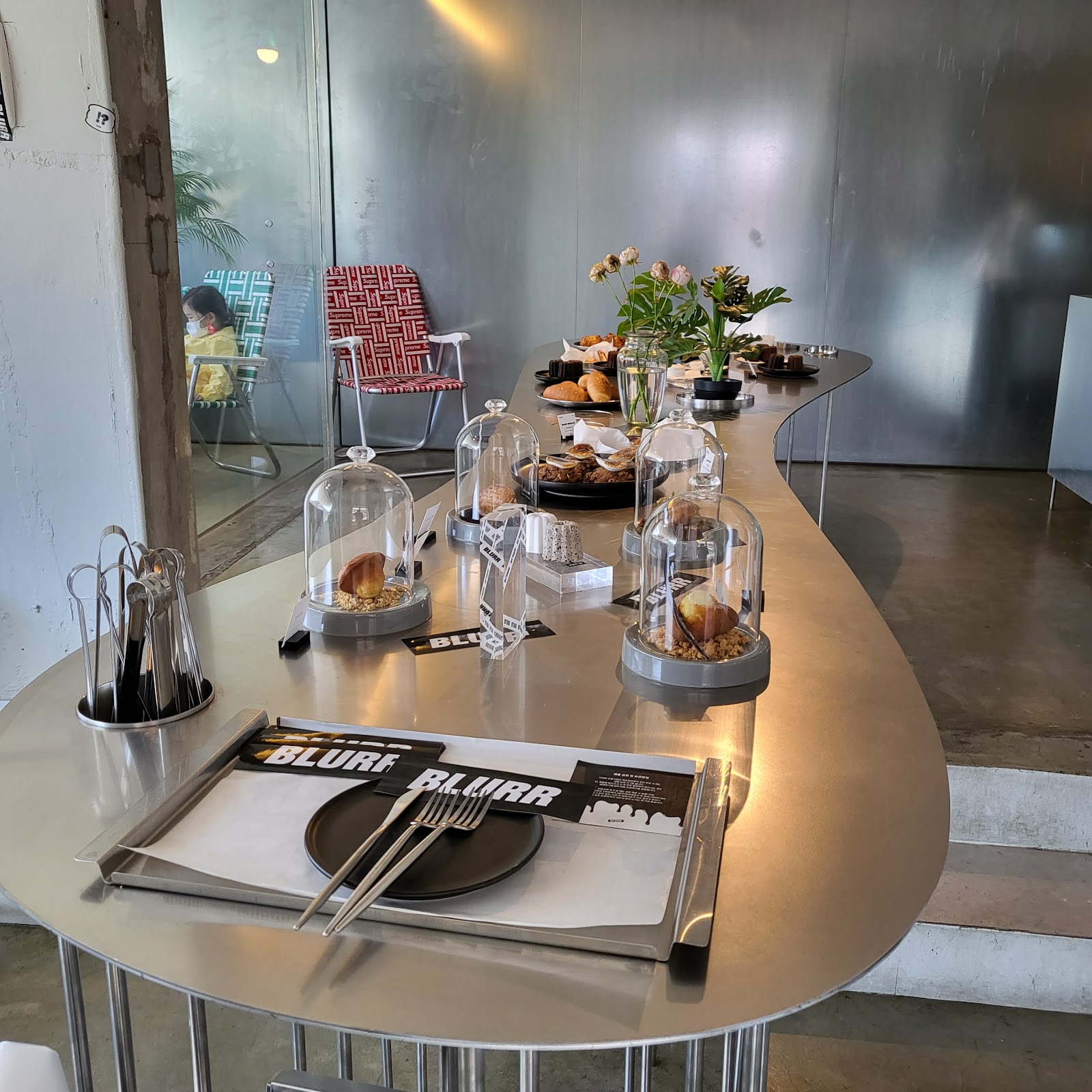
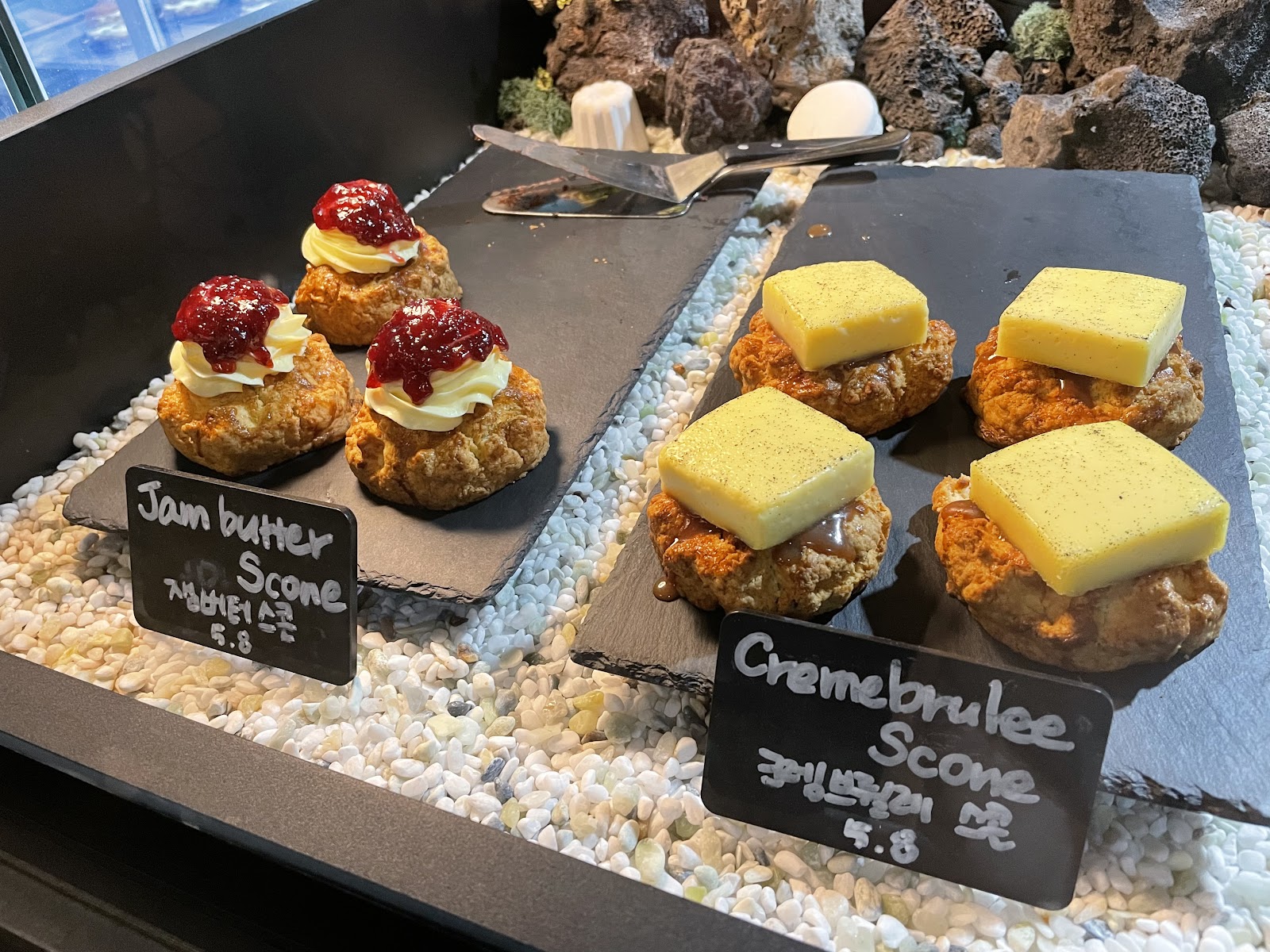
Blurr makes a narrower argument than the other three spaces. The proposition is specific: canelé, Han River, rooftop, late afternoon. That's the designed experience. It's coherent and complete.
Canelé — the Bordeaux specialty of caramelized lacquered baked custard with a moist, rum-scented interior — requires considerable precision to execute. The ratio of crust to custard, the ferrous copper mold, the temperature management, the resting time: getting canelé right is genuinely difficult, and spaces that center it tend to apply the same principles to their environment. Small, focused, controlled.
The Han River view from Blurr's fourth-floor position frames Yeouido in the middle distance. This is less a designed intervention than a deliberate site selection — the location was chosen for what it could frame. In late spring (March through May), the golden hour light over the river changes quickly around 18:00–18:30. The rooftop seating positions visitors facing west along the railing, which organizes everyone into the same directional attention. The room's design is also the view.
Unlike the other spaces in this selection, Blurr is not primarily about interior quality. It's about the relationship between the craft object — the canelé, with its demanding technique — and the natural spectacle of the river at changing light. Both reward the same quality of attention: patient, deliberate, present.
- Address: 198-26 Hapjeong-dong, Mapo-gu, Seoul, 4th Floor
- Hours: Daily 13:00–23:00
- Access: Hapjeong Station (Lines 2 & 6), 5–7-minute walk toward the Han River
Before You Visit
Getting between these four spaces: All are walkable within a 15-20-minute radius of Hapjeong Station. Perception and The Magazine Club are closest to the station; Cafe Comma sits between Hapjeong and Mangwon; Blurr requires a short walk toward the river. A half-day itinerary could include all four.
A logical sequence: Start at Perception for morning coffee (opens 10:00, closed Tuesdays). Browse The Magazine Club. Lunch at one of Hapjeong's growing number of independent restaurants on Eoulmadang-ro. Cafe Comma for an afternoon reading session. Blurr for the evening canelé and river light.
Spring timing: Late March through April, Hapjeong's back streets carry cherry blossoms and forsythia along the smaller residential roads. The neighborhood is significantly quieter than Yeonnam-dong or Seongsu on weekends, which makes the walk between spaces unhurried and genuinely pleasant.
What Hapjeong is not: It's not Seongsu — there are no theatrical concept stores, no queues around the block for croissants, no industrial warehouse conversions. If the defining quality of a Seongsu visit is sensory abundance, the defining quality of a Hapjeong visit is discriminating calm. These are spaces for visitors who have moved past novelty toward quality.
Navigation: Naver Map or Kakao Maps for precise routing. Both have English-language interfaces. The street numbering in Mapo-gu follows the Korean address reform system, which is geographically accurate but non-intuitive for first-time visitors.
@minjicurates — follow for design-forward Seoul curation