
Seoul Money Guide: Currency Exchange, ATMs, Cards & Tipping Explained
Landed in Seoul and wondering where to get Korean won? Not sure if you should bring cash or just use your card? Confused about tipping?
Here's everything you need to know about money in Seoul. From finding the best exchange rates to understanding Korea's no-tipping culture—this guide covers it all.
Quick Money Facts for Seoul Visitors
What you need to know first:
- Currency: Korean won (₩ / KRW)
- Credit cards: Widely accepted in Seoul
- Cash still needed: Traditional markets, small local eateries, street food
- Tipping: NOT expected (seriously, don't tip!)
- Best exchange rates: Myeongdong area
- ATM fees: Around ₩3,000-₩5,000 per withdrawal
- Foreign cards: Accepted at most "Global ATMs"
Bottom line: Seoul is very card-friendly, but carry some cash for markets and street food. You'll need way less cash than you think.
Should You Bring Cash or Use Cards?
Short answer: Bring some cash, but rely on cards for most things.
Seoul's one of the most digitally advanced cities in the world. Credit and debit cards work almost everywhere. Even tiny cafes and street vendors often accept cards.
When cards work:
- Restaurants (99% accept cards)
- Department stores and shopping malls
- Convenience stores
- Coffee shops and chain cafes
- Museums and attractions
- Subway (use T-money card)
- Hotels and guesthouses
When you need cash:
- Traditional markets (Gwangjang Market, Namdaemun)
- Street food vendors
- Some tiny local restaurants (rare in touristy areas)
- Temples and smaller attractions
- Taxis (most accept cards, but cash is safer)
- Coin lockers at older subway stations
My recommendation: Exchange about $100-$200 USD for a week-long trip. That's around ₩130,000-₩260,000—plenty for street food, markets, and emergencies.
Where to Exchange Money: Best Rates in Seoul
Don't exchange at the airport! The rates there are terrible. Here's where to get the best deals.
Myeongdong Money Changers (Best Rates!)
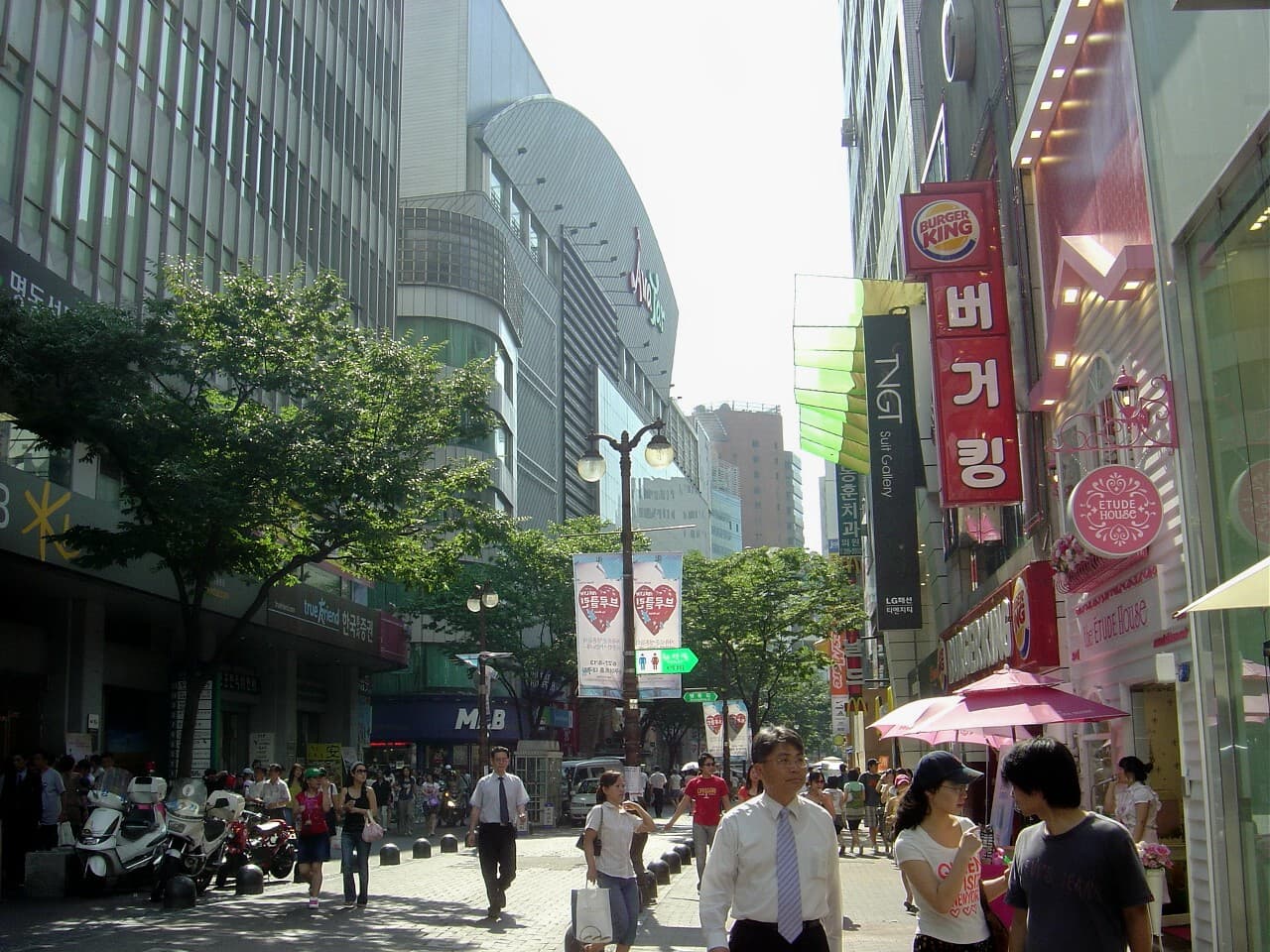
Myeongdong has the best exchange rates in Seoul. Seriously.
The area near Myeongdong Station Exits 5, 6, and 7 is packed with currency exchange shops competing for business. Better rates than banks, better than the airport, better than hotels.
How to find them:
- Exit Myeongdong Station (Line 4) at Exit 5, 6, or 7
- Walk toward the main shopping street
- Look for signs saying "환전" (exchange) or "Money Exchange"
- Compare rates at 2-3 shops before exchanging
Pro tip: The shops display their rates outside. Don't be shy—walk down the street and compare. A 0.5% difference adds up if you're exchanging $500+.
Popular Myeongdong exchanges:
- Money Box (8 branches in Seoul, accepts 18 currencies)
- KEB Hana Bank Money Exchange
- Various independent shops along the main street
Hours: Most open 9:00am-9:00pm, some stay open later.
Hongdae & Gangnam Exchanges
Can't make it to Myeongdong? Hongdae and Gangnam also have competitive rates, though slightly less favorable than Myeongdong.
Hongdae: Near Hongik University Station Exit 9 Gangnam: Around Gangnam Station Exits 10-12
Rates are about 0.3-0.5% worse than Myeongdong, but still way better than airports or banks.
WOW Exchange Machines (Convenient!)
WOW Exchange is an automated currency exchange service found at major Seoul locations. Not the absolute best rate, but decent and super convenient.
Locations:
- Incheon Airport Terminals 1 & 2
- Major subway stations (Seoul Station, Hongdae, Gangnam)
- Shopping areas
How it works:
- Select your currency
- Insert foreign cash
- Receive Korean won immediately
Heads up: Machines only accept bills in good condition. Wrinkled or torn bills might get rejected.
What NOT to Do
❌ Airport exchange booths: Awful rates. Only exchange ₩20,000-₩30,000 for immediate transport, then exchange more in the city.
❌ Hotels: Even worse rates than airports. Avoid unless it's an emergency.
❌ Banks: Better than airports/hotels, but still not as competitive as Myeongdong shops.
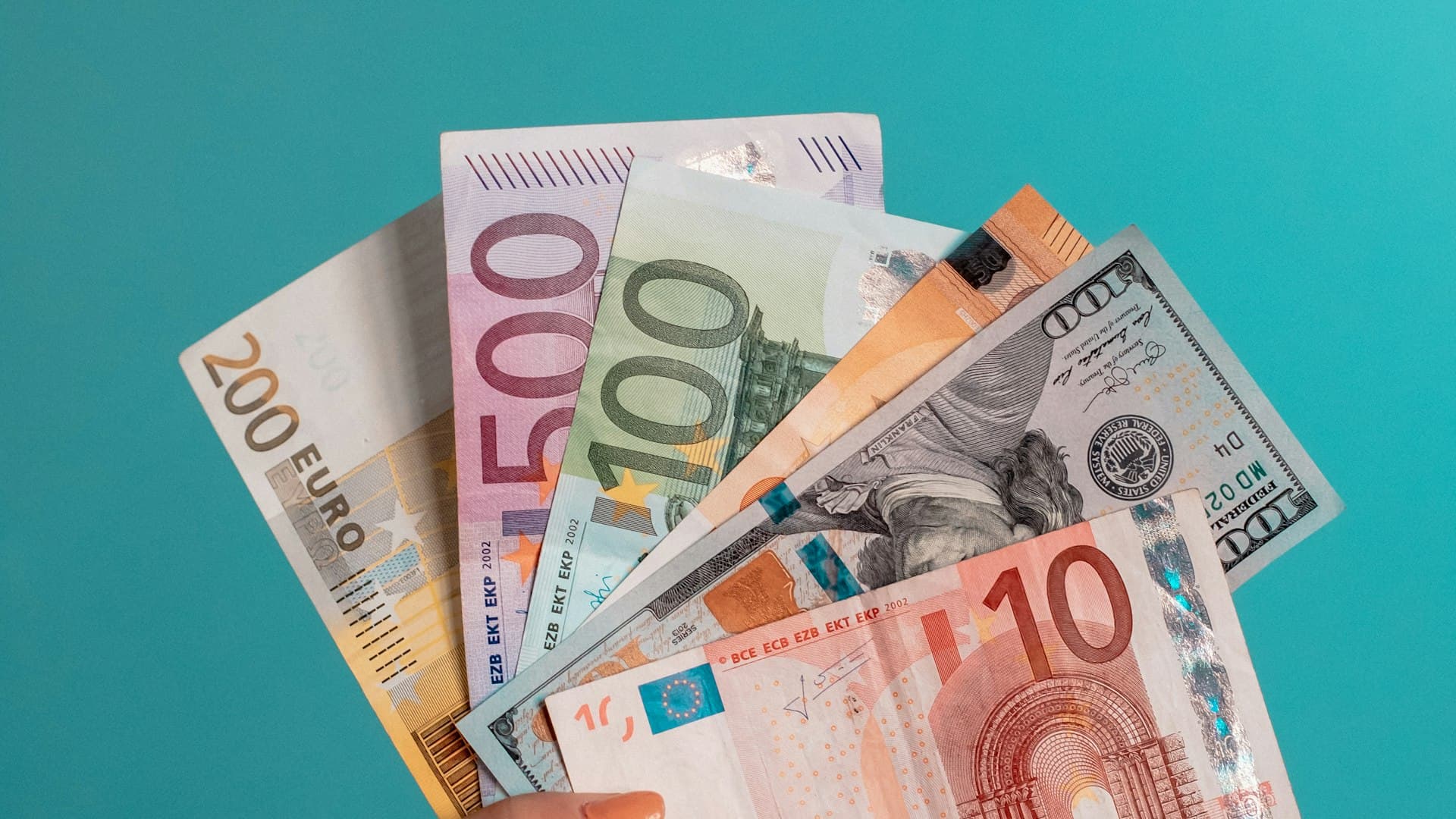
What to bring: US dollars or Euros are easiest to exchange. Bring clean, crisp bills—exchange shops reject damaged notes.
Using ATMs in Seoul
Sometimes ATM withdrawals make more sense than currency exchange, especially for smaller amounts.
Finding Global ATMs
Not all Korean ATMs accept foreign cards! Look for machines marked "Global ATM" or these logos:
- Visa
- Mastercard
- Plus
- Cirrus
- UnionPay
Where to find Global ATMs:
- Convenience stores (GS25, CU, 7-Eleven) → Most convenient!
- Bank ATMs (Woori, KB, KEB Hana, Shinhan)
- Subway stations (major stations usually have them)
- Incheon Airport (both terminals)
Pro tip: Convenience store ATMs are everywhere and available 24/7. If you need cash late at night, find a GS25 or CU.
ATM Fees & Limits
Korean ATM fee: ₩3,000-₩5,000 per transaction (about $2-$4 USD)
Convenience store ATMs sometimes charge slightly more than bank ATMs, but the difference is minimal.
Your home bank fee: Check before you travel! Some banks charge 1-3% on international ATM withdrawals. Others (like Charles Schwab, some online banks) refund all ATM fees.
Withdrawal limits:
- Most ATMs: ₩700,000-₩1,000,000 per transaction
- Daily limits vary by your card
Money-saving tip: Withdraw larger amounts less frequently to minimize ATM fees. If the fee is ₩4,000 whether you withdraw ₩100,000 or ₩700,000, go for the larger amount.
How to Use Korean ATMs
- Select English language (most Global ATMs have it)
- Insert your card
- Enter PIN
- Select "Withdrawal"
- Choose account type (usually "Checking" or "Credit")
- Enter amount
- Take your cash and card
Heads up: ATMs dispense cash first, then return your card. Don't walk away without your card!
Common mistake: If an ATM rejects your card, try a different one. Some machines are pickier than others about foreign cards.
Credit & Debit Cards in Seoul
Seoul is incredibly card-friendly. You can go days without using cash if you're sticking to restaurants and shops.
Which Cards Work?
Accepted everywhere:
- Visa
- Mastercard
Widely accepted:
- American Express (most places, but not all)
- UnionPay (Chinese tourists use this a lot)
Rarely accepted:
- Discover
- Diners Club
Pro tip: Bring a backup card. If your main card has issues, you'll be glad you have a second one.
Contactless Payments
Seoul loves contactless! Most card readers accept:
- Tap to pay (Visa/Mastercard contactless)
- Apple Pay
- Google Pay
- Samsung Pay (works everywhere in Korea, even on old magnetic readers!)
Insider tip: Samsung Pay works on ANY card terminal in Korea, even old ones without NFC. If you have a Samsung phone, add your card to Samsung Pay.
Foreign Transaction Fees
Check if your card charges foreign transaction fees (usually 1-3%). Some travel-friendly cards don't charge these fees:
- Chase Sapphire
- Capital One Venture
- Many online bank cards
Quick math: 3% fee on a $1,000 trip = $30. Worth getting a no-fee card if you travel often.
Korean Payment Apps (Optional)
Locals use apps like Kakao Pay, Naver Pay, and Samsung Pay. As a tourist, you don't really need these—credit cards work fine.
When it might help:
- Ordering from Korean food delivery apps
- Some online purchases
- Certain street vendors who only accept Korean payment apps
Most tourists skip this and stick to cards. Don't stress about setting up Korean payment apps unless you're staying long-term.
Tipping in Korea: The Golden Rule is DON'T TIP
This is important: Korea does NOT have tipping culture.
Seriously. Don't tip at restaurants, cafes, taxis, or hotels. It's not expected, and it might even confuse or embarrass people.
Why No Tipping?
Korean service culture is built on the idea that good service is part of the job, not something you pay extra for. Menu prices already include everything—no hidden costs, no service charges (usually), no tips.
A 2013 law even mandates that restaurant prices include all taxes and fees. The price you see is what you pay.
Where You Definitely Don't Tip
❌ Restaurants: No tip, ever. Even fancy restaurants.
❌ Cafes: No tip jars (you might see some recently, but ignore them—locals don't tip).
❌ Taxis: Fare is the fare. Keep the change? Nope, drivers will give it back.
❌ Hotels: Housekeeping doesn't expect tips. Bellhops don't either.
❌ Bars: No tip. Drinks cost what they cost.
❌ Delivery: Food delivery drivers don't expect tips.
The Controversial Tip Boxes
Recently, some cafes and restaurants started putting out tip boxes or adding tip options on payment kiosks. This is highly controversial in Korea, and most Koreans don't use them.
If you see a tip jar, you can safely ignore it. It's not part of Korean culture, and locals aren't tipping either.
High-End Hotels: The Only Exception
At 5-star international hotels (Four Seasons, Signiel, Park Hyatt), staff might be used to foreign guests tipping. Offering ₩1,000-₩2,000 ($1-$2 USD) for bellhops is acceptable but not required.
If you do tip, put the money in an envelope. Handing cash directly is considered awkward in Korean culture.
How to Show Appreciation
Instead of tipping, just say "감사합니다" (gam-sa-ham-ni-da = thank you) with a smile or a small bow. That's the Korean way.
Quick Reference: Money by Situation
Arriving at Incheon Airport
Best strategy:
- Exchange ₩20,000-₩30,000 at the airport for immediate needs (subway, snacks)
- Take Airport Express (AREX) to Seoul using credit card or the small amount of cash
- Exchange more money at Myeongdong the next day
Why not exchange more at the airport? Rates are 3-5% worse than Myeongdong. You'll lose $15-$25 on a $500 exchange.
First Day in Seoul
What you need cash for:
- Subway (buy T-money card at convenience store with card or cash, then load it)
- Maybe lunch (though most restaurants take cards)
- Convenience store snacks
How much: ₩50,000-₩100,000 is plenty for Day 1.
Shopping in Myeongdong
Payment: Cards work everywhere. But if you need to exchange money, do it here for the best rates.
Street Food at Gwangjang Market
Payment: Cash only at most stalls. Bring ₩20,000-₩30,000 per person.
Pro tip: Some vendors near the entrance accept cards, but don't count on it deep in the market.
Late Night Out in Hongdae
Payment: Clubs and bars accept cards. Street food vendors usually want cash.
Heads up: If you run out of cash at 2am, find a convenience store with a Global ATM.
Common Money Questions
Q: How much cash should I bring for a week in Seoul? A: Exchange $100-$200 USD. Most things accept cards, but you'll need cash for markets and street food. You can always withdraw more from ATMs if needed.
Q: Can I use US dollars or Japanese yen directly? A: No. You need Korean won. Some high-end hotels might accept USD, but the exchange rate will be terrible.
Q: Should I exchange money before leaving my home country? A: No need. Rates in Seoul (especially Myeongdong) are better than wherever you're coming from. Just bring USD or EUR and exchange in Seoul.
Q: Are foreign credit cards widely accepted? A: Yes! Visa and Mastercard work almost everywhere in Seoul. American Express is hit-or-miss.
Q: What if an ATM eats my card? A: Don't panic. Contact the bank immediately (there's usually a phone number on the ATM). Bank staff can retrieve your card during business hours. Bring a backup card just in case.
Q: Do I need to notify my bank before traveling to Korea? A: YES! Tell your bank you're traveling to Korea, or they might flag your card for fraud and block it. Do this a week before your trip.
Q: Can I get a refund on leftover won? A: You can exchange won back to your currency, but you'll lose on exchange fees twice (once converting to won, once converting back). Better to spend it or save it for next time.
Q: What's a safe amount to carry? A: Seoul is very safe, but don't carry more than ₩200,000-₩300,000 cash at once. Use cards for larger purchases.
Q: Are there money changers open late at night? A: Myeongdong money changers stay open until 9-10pm, some even later. If you need cash late, use ATMs at convenience stores.
Q: Can I bargain at money changers? A: Not really. The rates are posted outside. Your "bargaining power" is just walking to the next shop with better rates.
Bottom Line: Managing Money in Seoul is Easy
Seoul makes money stuff surprisingly simple for tourists. Cards work almost everywhere, ATMs are plentiful, and you don't have to worry about tipping math.
Today's takeaways:
- Bring USD or EUR (crisp bills)
- Exchange at Myeongdong for best rates (NOT airport)
- Carry Visa/Mastercard (works everywhere)
- Withdraw from Global ATMs if you need cash
- Don't tip (seriously, nobody tips in Korea)
- Keep ₩50,000-₩100,000 cash for markets and street food
Questions? Most money changers in Myeongdong have English-speaking staff. ATMs have English menus. Don't be shy—Seoul's tourism infrastructure is built for international visitors.
Enjoy your trip without money stress!