Seoul Traditional Korean Wedding: Where 600 Years of Royal Ceremony Lives On
On March 21, 1866, the courtyard of Unhyeongung Palace's Noanam Hall witnessed the last royal wedding in Korean history. Fifteen-year-old King Gojong and sixteen-year-old Lady Min (later Empress Myeongseong) stood facing each other in ceremonial robes of crimson silk embroidered with golden thread. Court musicians filled the air with ritual melodies as the couple performed the ancient matrimonial rites their ancestors had followed for centuries.
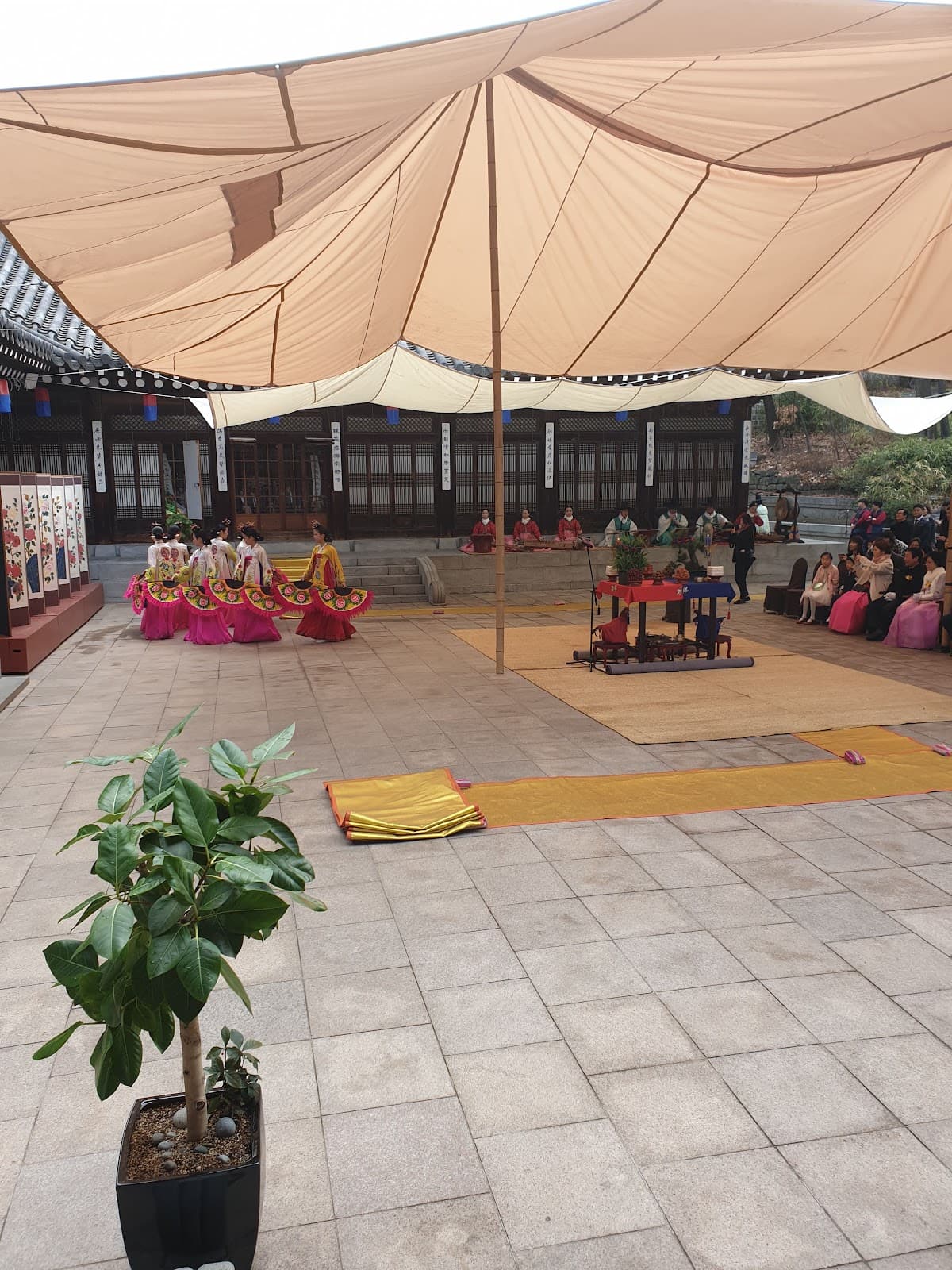
Unhyeongung was the private residence of Heungseon Daewongun, but when his son ascended the throne as Gojong, this modest estate became the most powerful address in Korea. Today, 160 years later, that exact ceremony unfolds again in the same courtyard, performed by actors in historically accurate costumes following procedures documented in centuries-old texts.
This isn't a performance. It's living heritage - one of the world's rarest opportunities to witness an unchanged royal ritual from the 19th century.
The Evolution of Korean Wedding Tradition
Origins in the Three Kingdoms Period
Korean matrimonial customs trace back to the Three Kingdoms era (57 BCE–668 CE). Early practices followed "uihon marriage," where grooms lived at the bride's family home - a matrilocal system that would later reverse completely under Confucian influence.
As Buddhism spread through the peninsula, wedding ceremonies began incorporating religious elements. But the truly distinctive Korean wedding tradition emerged during the Joseon Dynasty (1392–1910).
Joseon Dynasty: The Codification of Ritual
When Joseon adopted Neo-Confucianism as state ideology, marriage became more than a personal union. It transformed into a ritual linking families to ancestors and society.
In 1474, King Seongjong commissioned "Gukjo Oryeui" (Five Rites of the State), which standardized royal wedding procedures down to the smallest detail. For commoners, Lee Jae's 1844 text "Sarye Pyeollam" systematized the Six Rites (Yukrye) that governed traditional weddings. These texts remain authoritative today when scholars reconstruct historical ceremonies.
Traditional Korean marriage wasn't about romantic love between individuals. It joined two families, honored ancestors, and ensured lineage continuation - a social contract witnessed by heaven and earth.
The Six Rites (Yukrye): Traditional Wedding Procedure
Joseon weddings progressed through six distinct phases, collectively called "Yukrye."
Rite 1: Uihon (Proposal Discussion)
Through a matchmaker, the groom's family proposed marriage to the bride's family. This initial inquiry established whether both families found the match suitable based on social standing, lineage, and horoscope compatibility.
The groom's family always initiated. A direct proposal between families would have been considered improper.
Rite 2: Napchae (Acceptance Confirmation)
Once both families agreed in principle, the groom's family sent a goose to the bride's family as formal proposal. The goose symbolized lifelong fidelity - these birds mate for life and never take another partner after their mate dies.
Modern reenactments use wooden goose carvings rather than living birds, but the symbolism remains unchanged.
Rite 3: Napye (Gifts and Marriage Documents)
The groom's family sent wedding gifts and documents to the bride's family in an ornate lacquered box called "ham." A young man from the groom's side would carry this ham, earning the traditional title "hamjinabi."
Contents of the ham:
- Saju danja: Document listing the groom's exact birth date and time
- Honseoji: Formal marriage contract
- Chaedan: Silk fabric in blue and red (blue representing male/yang, red representing female/yin)
- Additional gifts: Precious items demonstrating the groom's family's respect
The modern Korean custom of sending a ham the night before the wedding derives directly from this ancient rite.
Rite 4: Chinyeong (Groom's Journey to Bride's Home)
Traditionally, weddings occurred at the bride's family home. The groom traveled there to perform the ceremony - a reversal of modern practice where brides go to the groom.
The groom arrived carrying a wooden goose. Standing before the bride's house, he could not enter until the bride's mother received the goose and granted permission. This moment symbolized the bride's family accepting the groom.
Rite 5: Gyobaerye (Exchange of Bows)
The central ceremony where bride and groom exchanged formal bows before witnesses. This is the "wedding" that most people envision.
The Choreye Table (Altar):
A ceremonial table called "choreye" stood in the courtyard's center, positioned on the main hall's wooden platform. Upon it:
- Wooden rooster and hen (symbolizing male and female union)
- Dates and chestnuts (symbolizing fertility and progeny)
- Wine cups
- Candles
The groom stood east (yang/male direction), the bride west (yin/female direction).
Jeonanrye (Offering the Goose): The groom placed the wooden goose on the altar. The bride's attendant received it and carried it inside - the formal acceptance of marriage.
Gyobaerye (Exchange of Bows):
- Groom bowed twice to the bride (full prostration bows)
- Bride returned two bows to the groom
- This exchange was witnessed by heaven, earth, and family - binding them as husband and wife
Hapgeunrye (Sharing Wine): Attendants filled wine cups made from halved gourds. The couple each drank from separate cups, then exchanged cups and drank again. This act symbolized "two individuals becoming one" - the essence of marriage.
Rite 6: Wugwi (Bride Departs to Groom's Home)
Three days after the wedding, the bride traveled to her husband's family home. This journey, called "wugwi" or "sinhaeng," completed the marriage process.
Upon arriving at her new home, the bride performed:
- Hyeon-gugurye: First formal greeting to parents-in-law
- Myohyeonrye: Bowing before the family ancestral tablets
- Greetings to all elders and relatives
Only after these rituals was the marriage considered fully complete.
Traditional Wedding Attire: Symbols of Nobility
Groom's Ceremonial Dress (Samogwandae)
Joseon society strictly regulated clothing by social class. Commoners could never wear noble attire - except on their wedding day. For this single occasion, even peasant grooms could dress as yangban aristocrats.
Components:
- Samo: Black hat with distinctive wing-like projections (mogak) on both sides
- Dallyeong: Blue rounded-collar court robe
- Gakdae: Decorative belt
- Mokhwa: Wooden ceremonial shoes
In royal weddings, grooms wore "gonyongpo," the king's everyday robe - an honor reserved for princes and royal sons-in-law.
Bride's Ceremonial Dress: Wonsam or Hwarot
Brides had two options depending on family status.
Wonsam (圓衫):
- Standard yangban aristocrat wedding dress
- Worn over tri-colored (red, blue, yellow) hanbok
- Long, wide sleeves creating elegant silhouette
- Reserved for noble families
Hwarot (活옷):
- Royal and high-ranking aristocrat wedding dress
- Crimson silk base embroidered with gold and five-colored threads
- Featured auspicious symbols: peonies, lotuses, cranes, phoenixes
- So heavily embroidered that some hwarot weighed over 10 kg (22 lbs)
When a bride in full hwarot stood before the altar, the garment caught sunlight and shimmered like living flame - an unforgettable sight.
Hair Ornaments:
- Jokduri: Cylindrical crown secured with pins
- Tteoljam: Gold ornaments that trembled with each movement
- Daenggi: Long silk ribbons trailing down the back
Makeup:
- Yeonjigongji: Red dots painted on cheeks and forehead
- Bun: White powder applied thickly to create porcelain-like complexion
Unhyeongung Royal Wedding Reenactment
History of Unhyeongung
Unhyeongung began as the private Seoul residence of Yi Ha-eung, better known as Heungseon Daewongun. In 1863, his son Myeongbok became the 26th king of Joseon, taking the throne name Gojong. Overnight, this modest estate became the most politically significant address in Korea.
On March 21, 1866, Gojong's wedding to Lady Min occurred here. Royal weddings typically took place in palace halls, but Gojong's ceremony was held at Unhyeongung - a demonstration of Heungseon Daewongun's extraordinary power as the king's father and regent.
This was the last traditional royal wedding in Korean history. After the Japanese occupation (1910-1945), these ceremonies ceased. Unhyeongung's reenactment allows us to witness what has otherwise vanished.
2026 Reenactment Schedule
Unhyeongung holds royal wedding reenactments twice annually, in spring and autumn.
2026 Dates:
- Spring ceremony: Mid-April (exact date announced in March)
- Autumn ceremony: Mid-October (exact date announced in September)
- Time: 2:00 PM start, approximately 90 minutes duration
- Location: Noandam Hall courtyard, Unhyeongung
Attendance Information:
- Admission: Free
- Reservations: Not required (first-come seating)
- For good viewing position: Arrive 1 hour early
- Check schedule: www.unhyeongung.or.kr
Ceremony Sequence
Part 1: Jeonanrye (2:00 PM)
The groom's procession enters through Unhyeongung's main gate. The groom rides a horse, dressed in blue dallyeong and black samo, while attendants carry the ceremonial goose.
At Noandam Hall, the groom dismounts and approaches the altar. He places the goose ceremonially, and gasps rise from the audience.
Part 2: Gyobaerye (2:20 PM)
The bride emerges from the inner quarters. Her crimson hwarot and golden jokduri catch the afternoon light, and the crowd falls silent.
Bride and groom face each other across the altar. As the master of ceremonies calls out each step, they perform deep, formal bows. The wide sleeves of their hanbok flutter in the breeze - impossibly graceful.
Part 3: Hapgeunrye (2:40 PM)
Attendants pour wine into cups made from halved gourds. The bride and groom each drink, then exchange cups and drink again. At this moment, they are formally married.
Part 4: Photo Opportunity (3:00 PM)
After the ceremony concludes, the actors remain in costume for photographs with visitors. This is your chance to see the elaborate wedding garments up close and ask questions about the ceremony.
Viewing Tips
Best Viewing Positions:
- Center front, directly facing Noandam Hall
- Arrive 1 hour early to secure this spot
- Bring a cushion or mat (outdoor seating on ground)
Photography:
- Cameras and smartphones permitted
- Please disable flash (distracts performers)
- Do not move forward during ceremony
- Dedicated photo session follows ceremony
Weather Considerations:
- Outdoor event - canceled if raining
- Check announcement morning of event on Unhyeongung website
- Spring/autumn weather changeable - bring layers
Dress Code:
- Wearing hanbok enhances the experience
- Hanbok rental shops near Anguk Station and Samcheong-dong
- Hanbok wearers receive free admission to palaces
Experiencing Traditional Weddings in Seoul
Want more than observation? Several venues offer hands-on traditional wedding experiences.
Unhyeongung Traditional Wedding Venue Rental
Actual couples can hold their wedding ceremony at Unhyeongung.
Rental Information:
- Booking: Online application through Unhyeongung website
- Cost: ₩1.5-2 million ($1,125-1,500 USD) for venue rental (costume rental and photography separate)
- Included: Venue use, basic ceremony guidance
- Additional costs: Wedding costumes, makeup, professional photography
- Advance booking: Minimum 3 months
- Guest capacity: 50-100 people
Process:
- Submit online application
- Schedule confirmation meeting
- Pay deposit (30% of total)
- Final coordination meeting one month prior
- Ceremony day rehearsal (1 hour before)
- Traditional wedding ceremony (approximately 1 hour)
Korea House Traditional Wedding Experience
Tourist-oriented experience program for visitors.
Location: Jung-gu Toegyero (10-minute walk from Chungmuro Station Exit 3)
Program Details:
- Times: Daily at 11:00 AM and 2:00 PM (1 hour each session)
- Cost: ₩50,000 ($37.50 USD) per person
- Included: Traditional wedding costume rental, simplified ceremony experience, professional photography
- Booking: Website or phone (minimum 3 days advance)
Experience includes:
- Traditional wedding explanation (20 minutes)
- Costume fitting and makeup (30 minutes)
- Ceremony experience at choreye altar - gyobaerye and hapgeunrye (20 minutes)
- Photo session (10 minutes)
- Digital photos emailed same day
Singles, friends, and couples all welcome. You don't need to be a couple to experience the ceremony.
Namsangol Hanok Village Wedding Experience
Location: Jung-gu Pildong (5-minute walk from Chungmuro Station Exits 3-4)
Program:
- Times: Weekends 10:00 AM and 1:00 PM (Saturdays and Sundays only)
- Cost: Free (same-day registration on-site)
- Provided: Simple wedding costume, photo opportunities
- Duration: Approximately 30 minutes
Important notes:
- First-come, first-served (limited to 20 participants)
- Arrive early to participate
- No professional photography service (use your own camera)
Bukchon Hanok Village Studio Photography
For traditional wedding concept photos without an actual ceremony:
Recommended Studios:
- Location: Jongno-gu Bukchon area
- Cost: ₩500,000-3,000,000 ($375-2,250 USD) depending on package
- Includes: Costume rental, makeup, hanok background photography, editing, album
Photos with traditional hanok and gardens as backdrop create stunning results.
Traditional vs. Modern Korean Weddings
Venue
Traditional:
- Bride's family home main hall
- Outdoor courtyard
- Natural, unadorned spaces
Modern:
- Wedding halls
- Hotel banquet rooms
- Churches, chapels
Meaning
Traditional:
- Union of two families
- Honoring ancestors
- Continuing family lineage
Modern:
- Celebrating couple's love
- Public vows before guests
- Individual happiness focus
Duration
Traditional:
- Full six rites: Several months to 1 year
- Wedding day ceremony: 2-3 hours
- Deliberate, respectful pace
Modern:
- Preparation: 3-6 months
- Ceremony: 30 minutes to 1 hour
- Efficient, streamlined
Attire
Traditional:
- Groom: Samogwandae (court official costume)
- Bride: Wonsam or hwarot
- Guests: Hanbok
Modern:
- Groom: Tuxedo or suit
- Bride: Wedding dress
- Guests: Formal attire, dresses
Many contemporary Korean weddings blend both styles - Western ceremony followed by traditional "pyebaek" (bowing to parents) in hanbok.
Symbolism in Traditional Weddings
The Goose
Why exchange geese in marriage ceremonies?
Geese represent:
- Lifelong fidelity (mate for life)
- Devotion beyond death (never remarry after mate dies)
- Family harmony (travel in flocks)
- Adaptability (migrate with seasons)
These qualities embodied the ideal marital relationship in Confucian thought.
Dates and Chestnuts
Why place these specific foods on the ceremonial altar?
- Dates (jujubes): Single pit symbolizing sons
- Chestnuts: Multiple nuts inside symbolizing daughters
- Together: Wish for numerous progeny
While controversial by modern values, in Joseon Korea, descendants ensured family continuity and ancestral worship.
Chickens
Why place rooster and hen on the altar?
- Rooster: Male principle, yang
- Hen: Female principle, yin
- Together: Cosmic harmony, marital balance
Blue and Red Colors
Traditional weddings feature these colors prominently:
- Blue (cheong): Male, yang, heaven
- Red (hong): Female, yin, earth
- Harmony: Universal balance, marital complementarity
This stems from yin-yang cosmology central to Neo-Confucian thought.
Hapgeunrye (Shared Wine Ceremony)
Why drink from halved gourd cups?
- Originally one gourd, split in two
- Symbolizes two separate lives
- Drinking and exchanging cups
- Represents becoming one
This perfectly captures marriage's essence: "Two individuals becoming one flesh."
Visiting Unhyeongung Palace
Essential Information
Address: 464 Samil-daero, Jongno-gu, Seoul (Unni-dong 114-10)
Operating Hours:
- Tuesday-Sunday: 9:00 AM-7:00 PM (April-October)
- Tuesday-Sunday: 9:00 AM-6:00 PM (November-March)
- Closed: Mondays, January 1st
Admission:
- Adults: ₩700 ($0.50 USD)
- Youth: ₩300 ($0.25 USD)
- Children: Free (under age 6)
- Hanbok wearers: Free
Visit Duration:
- Basic tour: 30-40 minutes
- With wedding reenactment: 2-3 hours
Getting There
Subway:
- Line 3 Anguk Station Exit 4, 5-minute walk
- Line 1 Jonggak Station Exit 4, 10-minute walk
- Line 3 Gyeongbokgung Station Exit 3, 15-minute walk
Bus:
- Main lines: 109, 151, 162, 171, 172, 272, 601
- Local lines: 7025
- Stop: Anguk Station or Constitutional Court
Parking:
- No parking at Unhyeongung
- Use nearby public parking
- Public transportation strongly recommended
Combine with Nearby Attractions
Unhyeongung sits in central Seoul's Jongno district, surrounded by cultural treasures.
5-minute walk:
- Insadong: Traditional tea houses, craft shops
- Bukchon Hanok Village: Historic hanok streets
- Cheong Wa Dae (Blue House): Former presidential residence, free tours
- Samcheong-dong: Cafe and gallery district
15-minute walk:
- Gyeongbokgung Palace: Joseon's main palace
- Changdeokgung Palace: UNESCO World Heritage Site
- Jongmyo Shrine: Royal ancestral shrine
- Gwanghwamun Square: Seoul's symbolic center
Recommended Half-Day Itinerary:
- 10:00 AM: Gyeongbokgung Palace tour (2 hours)
- 12:00 PM: Bukchon Hanok Village stroll (1 hour)
- 1:00 PM: Lunch in Samcheong-dong (1 hour)
- 2:00 PM: Unhyeongung wedding reenactment (1.5 hours)
- 4:00 PM: Traditional tea at Insadong tea house (1 hour)
This itinerary provides deep immersion in Seoul's traditional culture within a single day.
Frequently Asked Questions
Q1. When are the wedding reenactments held?
Twice annually - mid-April (spring) and mid-October (autumn). Exact dates are announced 1-2 months in advance on the Unhyeongung website. Spring 2026 dates will be posted in March; autumn dates in September.
Q2. Do I need reservations?
No reservations required for viewing the reenactment. It's free and open to all visitors. However, for good seating, arrive at least 1 hour before the 2:00 PM start time. Seating fills on a first-come basis.
Q3. How much does it cost?
Unhyeongung admission is ₩700 for adults, ₩300 for youth. Wearing hanbok grants free entry. The wedding reenactment itself has no additional charge - it's included with admission.
Q4. Should I wear hanbok?
Highly recommended! Hanbok wearers receive free admission and the experience feels more immersive. Hanbok rental shops are abundant near Anguk Station and Samcheong-dong, typically ₩20,000-30,000 ($15-23 USD) for 4-hour rental.
Q5. Can I take photos?
Yes. Cameras and smartphones are permitted. Please disable flash during the ceremony (it disturbs performers). Refrain from moving forward during the performance. A dedicated photo opportunity with the performers follows the ceremony.
Q6. What happens if it rains?
Being an outdoor event, heavy rain may cause cancellation. Check the Unhyeongung website and Seoul Cultural Heritage official social media on the morning of the event for weather-related announcements.
Q7. Is this suitable for children?
Absolutely. Children find the colorful costumes and ceremony fascinating. However, the 90-minute ceremony may test young children's patience. Bring snacks and water. Outdoor seating means cushions or mats improve comfort.
Q8. Will foreigners understand what's happening?
The ceremony is conducted in Korean, but Unhyeongung provides English, Chinese, and Japanese guidebooks. Additionally, English subtitles appear on screens explaining each ritual step, making it accessible to international visitors.
Q9. Can we actually get married here?
Yes. Unhyeongung rents the venue to real couples for traditional wedding ceremonies. Apply at least 3 months in advance. Venue rental costs ₩1.5-2 million ($1,125-1,500 USD), with costume rental and photography additional.
Q10. Are there restaurants nearby?
Many dining options surround Unhyeongung. Insadong (5-minute walk) offers traditional Korean restaurants and cafes. Samcheong-dong (10-minute walk) features trendy restaurants. Jongno area has more casual dining. Options range from traditional Korean to Western and Japanese cuisine.
Q11. Can I visit in winter?
Unhyeongung remains open year-round (except Mondays). However, wedding reenactments only occur in spring (April) and autumn (October). Winter visits allow viewing the palace architecture but no ceremony.
Q12. Is the venue wheelchair accessible?
As a traditional hanok structure, Unhyeongung has stairs and uneven surfaces. Some areas may be challenging for wheelchairs. However, the wedding reenactment occurs in the courtyard, which is accessible. Contact Unhyeongung in advance for accessibility assistance.
Conclusion: Where Past Becomes Present
Unhyeongung's traditional wedding reenactment isn't mere performance. It's living history - the exact ceremony that joined King Gojong and Empress Myeongseong in 1866, performed in the exact location 160 years later.
When the bride in crimson hwarot walks slowly forward, when the groom places the ceremonial goose upon the altar, when the couple exchanges deep, respectful bows - time collapses. Past and present merge, and we feel the profound weight of cultural continuity.
Our Joseon ancestors considered marriage "life's single most important ritual." The elaborate costumes, meticulous procedures, deep symbolism - every element embodied that reverence.
When visiting Seoul, make time to experience Unhyeongung's traditional wedding. Witness 600 years of heritage living and breathing in one extraordinary ceremony.
In Unhyeongung's Noandam courtyard, the same emotions that filled this space 160 years ago wait to embrace you too.
Sources: