Seoul Traditional Market Food Tour: Gwangjang to Tongin Market Guide
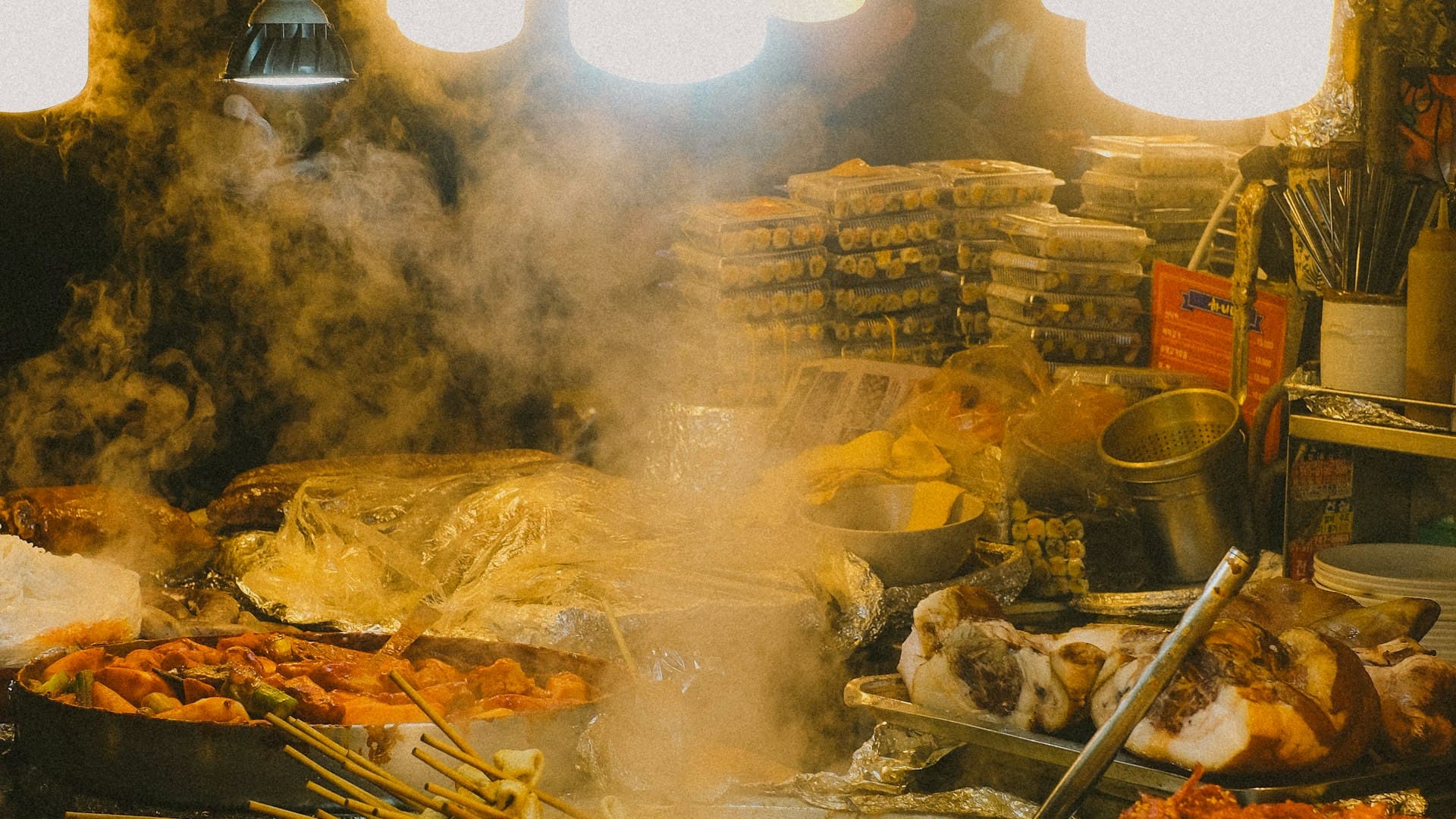
I still remember my first bite of raw beef at Gwangjang Market's second-floor food alley. The sesame oil-dressed yukhoe melted on my tongue, and I thought, "This is what Seoul really tastes like." At the next table, a grandmother was frying bindaetteok (mung bean pancakes), while the smell of freshly fried mayak gimbap drifted from down the alley.
Seoul's traditional markets aren't just places to "look around." These are where real Seoul life happens, where over a century of culinary history lives and breathes. From Gwangjang Market (featured on Netflix's "Street Food"), to Tongin Market where you build lunchboxes with old Korean coins, to Mangwon Market loved by locals, to 24-hour Namdaemun — each market holds its own unique flavors and stories.
This guide covers Seoul's top 4 traditional markets (Gwangjang, Tongin, Mangwon, Namdaemun), their hidden food gems, must-try dishes, and insider tips for eating like a local. Come hungry, bring cash, and get ready for the best food adventure in Seoul!
Gwangjang Market: Seoul's Most Famous Food Paradise
Gwangjang Market opened in 1905 as Korea's first permanent market. With over a century of history, this place serves up authentic Seoul flavors. The second-floor food alley is famous even among international tourists — this is where you'll find Grandma Cho Yonsoon's kalguksu (knife-cut noodles) from Netflix's "Street Food: Asia."
Top 5 Must-Try Foods
1. Yukhoe (Raw Beef)
You can't visit Gwangjang Market without trying yukhoe. Walk into the second-floor food alley and you'll find rows of raw beef specialists. They finely julienne fresh beef and toss it with pear, sesame, and sesame oil — absolutely delicious.
Ordering Tip: Say "Yukhoe one portion!" and you'll get about 150g. First-timers should try the 'yukhoe & nakji (octopus) set' — it's around 20,000 won.
When you pick up that sesame oil-scented beef with chopsticks, it melts in your mouth. Fresh beef's natural sweetness and nuttiness, combined with slightly spicy seasoning, makes you crave makgeolli (rice wine). Follow the grandfathers at the next table and order a bowl of makgeolli for the perfect pairing.
2. Bindaetteok (Mung Bean Pancakes)
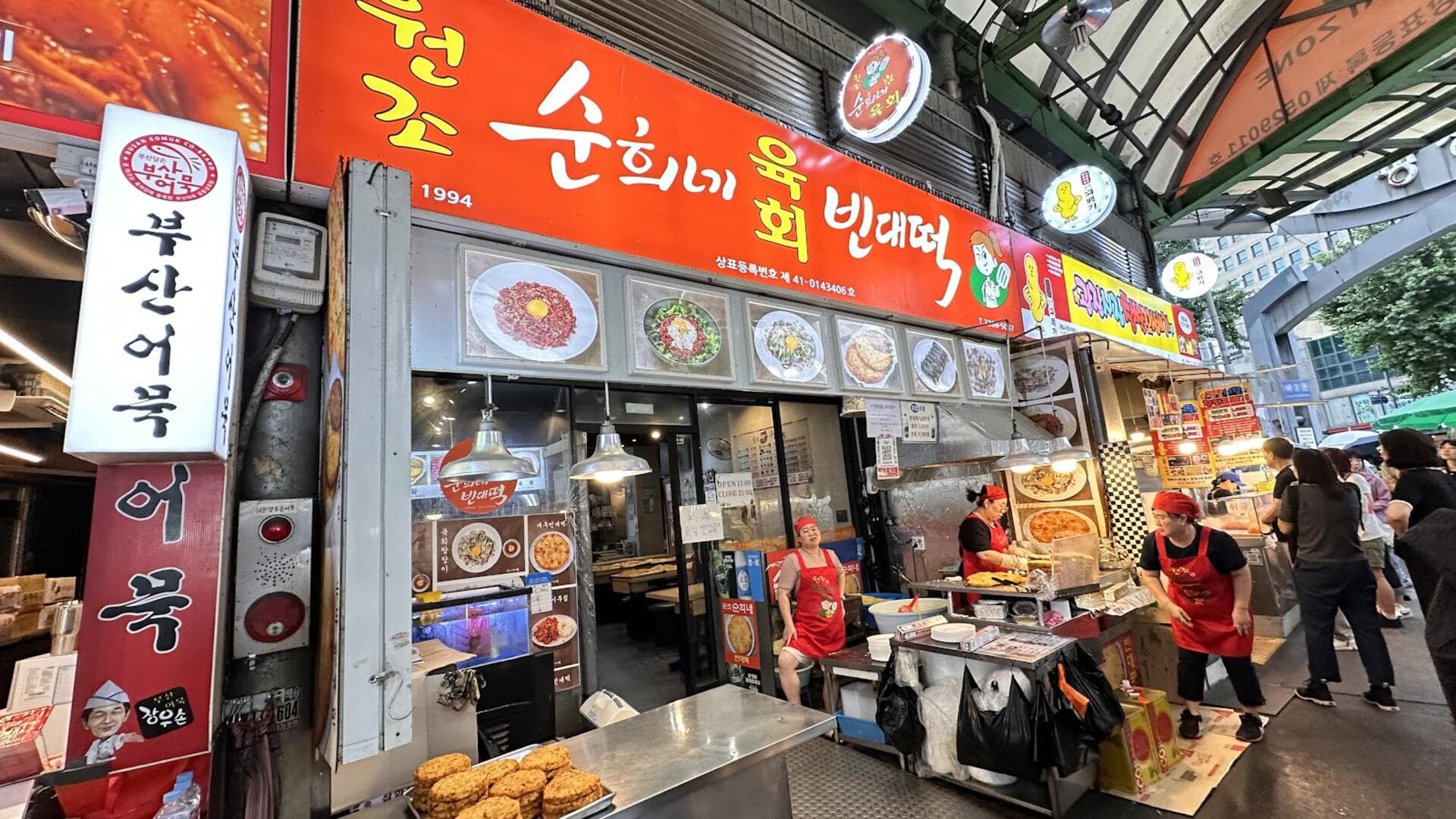
Bindaetteok is Gwangjang Market's signature dish. Made from ground mung beans mixed with pork, bean sprouts, and kimchi, then pan-fried until golden — crispy outside, moist inside, incredibly delicious.
The bindaetteok shops near the alley entrance always have long lines. Just watching the grandmas sizzle these pancakes on huge griddles makes your mouth water. Take a bite of freshly fried bindaetteok and you get that kimchi and pork aroma, with a satisfying crispy texture. Even better when dipped in soy sauce.
Price: 5,000-6,000 won per pancake. One or two pancakes are enough for two people.
3. Mayak Gimbap (Addictive Seaweed Rolls)
True to its name "drug gimbap," this stuff is genuinely addictive. Much smaller and cuter than regular gimbap, packed with sesame oil and sesame seeds for maximum nuttiness. About 10 pieces per roll, and once you start, you can't stop.
Mayak gimbap is sold throughout the food alley, but just look for the longest line. Usually 3,000-4,000 won per roll. The crunchy texture of pickled radish, carrots, and burdock inside, combined with that sesame oil aroma, makes it literally "addictive."
4. Son Kalguksu (Netflix Famous Hand-Cut Noodles)
Grandma Cho Yonsoon has been making hand-cut noodles for over 50 years, and it got even more famous after Netflix. The noodles are hand-cut for extra chewiness, and the anchovy broth is rich yet clean.
Expect 30+ minute waits during lunch hours, so come with time to spare. A bowl costs about 7,000 won. Hot broth with chewy noodles, add a piece of kimchi and your soul is warmed.
5. Tteokbokki & Fried Food
Gwangjang Market tteokbokki tastes completely different from modern franchise versions. The gochujang (chili paste) sauce is richer and the rice cakes chewier. Order a plate of tteokbokki with gimmari (seaweed rolls), squid fritters, and veggie tempura for a complete meal.
Prices: 4,000-5,000 won per plate of tteokbokki, 1,000 won per piece of fried food. Get the freshly fried stuff for maximum crispiness.
Gwangjang Market Pro Tips
How to Get There: Subway Line 2/5 Euljiro 4-ga Station Exit 4, 2-minute walk Hours: Food alley open daily 09:00-23:00 (year-round) Best Times:
- Lunch (12-14:00): Experience the local office worker vibe
- Evening (17-19:00): Perfect time for makgeolli
- Avoid: Weekend afternoons (12-15:00) — packed with tourists
Budget: 20,000-30,000 won per person gets you stuffed.
Insider Tips:
- The food alley is on the second floor. First floor is textiles and clothing.
- Tables are small, so mixing foods from different vendors is tricky. Eat at one place, then move to another.
- Bring cash. Many places don't take cards.
Tongin Market: Build Your Own Yeopjeon Lunchbox
Located in Seochon, west of Gyeongbokgung Palace, Tongin Market is small but offers a unique experience. Started in 1941 by Seochon residents after the Japanese left, it's now nationally famous for its "Yeopjeon Dosirak Cafe" (old coin lunchbox cafe).
The Yeopjeon Lunchbox Experience
The highlight of Tongin Market is definitely the "Yeopjeon Dosirak Cafe." You purchase old Korean brass coins (yeopjeon) and use them to pick side dishes from participating vendors — it's fun, like playing a game.
How It Works:
- Buy a lunchbox set at the cafe entrance (5,000 won)
- Receive an empty lunchbox and 10 brass coins
- Walk around to shops with the 'Yeopjeon Accepted' sign
- Trade 1-2 coins for each side dish you want
- Fill your lunchbox completely
- Return to the cafe for free soup or tteokbokki broth
- Eat your custom-made lunch!
Must-Get Dishes:
- Tteokgalbi (grilled short rib patty): Sweet and tender (2 coins)
- Wangmandu (giant dumplings): Packed with filling (2 coins)
- Japchae (glass noodles): Chewy with perfect seasoning (1 coin)
- Eomuk skewers (fish cakes): Served hot from the broth (1 coin)
- Gimbap/Yubu-chobap (sushi): Perfect bite-size portions (1 coin)
Once you've completed your lunchbox, head to the second floor of the cafe. The hanok-style space overlooks the Seochon alleyways — eating your custom lunch here feels truly special. Soup is free and refillable, so don't hesitate to ask for more.
Tongin Market Stand-Alone Gems
Beyond the yeopjeon lunchbox, Tongin Market has hidden food treasures.
Oil-Fried Tteokbokki: Deep in the market, this tteokbokki is stir-fried in oil (no sauce), making it nutty and savory. About 4,000 won.
Handmade Mandu: The dumpling shop near the entrance has locals lining up from early morning. Steamed dumplings packed with meat are absolutely delicious. 10 dumplings for 5,000 won.
Hotteok: In winter, the hotteok sold at the market entrance is the best. Brown sugar and nuts melt into gooey deliciousness.
Tongin Market Pro Tips
How to Get There: Subway Line 3 Gyeongbokgung Station Exit 2, 10-minute walk Hours:
- Lunchbox Cafe: 11:00-15:00 (closed Mondays, closes early if coins sell out)
- Regular shops: 10:00-19:00 (varies by shop)
Important Notes:
- Lunchbox cafe is first-come-first-served. On weekends, arrive before noon for a relaxed experience.
- Most shops close on Mondays.
- Coins are valid same-day only. Return unused coins for a refund.
Recommended Combo: Gyeongbokgung Palace tour → Seochon alley walk → Tongin Market lunch → Nearby cafe for coffee
Mangwon Market: Where Real Locals Shop and Eat
Mangwon Market sees more neighborhood residents than tourists — this is a true local market. Despite being close to Hongdae, it has zero touristy vibes. You'll witness authentic Seoul grocery shopping culture here.
Mangwon Market Food Highlights
1. Wang Jokbal (Giant Pig Trotters)
The smell of jokbal (braised pig trotters) hits you right at the market entrance. The shop here slices their jokbal huge — perfect ratio of meat to skin. Chewy, tender texture with garlic ssamjang (dipping sauce) is phenomenal.
Price: Medium (2-3 servings) 28,000 won, Large (4-5 servings) 38,000 won Tip: Get it to-go and enjoy with beer at nearby Mangwon Hangang Park — jokmaek (jokbal + beer) instead of chimaek!
2. Grandma's Hand-Cut Kalguksu
This kalguksu specialist deep in the market alley has a grandma who hand-makes the dough and noodles. Rich anchovy broth with chewy noodles — perfect for hangovers.
Price: Kalguksu 6,000 won, Bibim-guksu 6,500 won Tip: Kimchi is unlimited refills, so load up!
3. Fried Food & Sundae
Mangwon Market's fried food and sundae (blood sausage) shop is famous among locals. Around 4pm, students swarm in after school to buy snacks — such a heartwarming scene.
Popular Items: Sweet potato tempura (1,000 won), veggie tempura (1,000 won), sundae plate (5,000 won)
4. Hotdog & Toast
The hotdog shop near the entrance became SNS-famous. They sprinkle sugar on the hotdog for a salty-sweet addictive taste. The toast tastes exactly like old-school school-front toast — pure nostalgia.
Price: Hotdog 2,500 won, toast 3,000 won
Mangwon Market + α Course
Just visiting Mangwon Market would be a waste — there are so many great restaurants and cafes nearby.
Recommended Course:
- 3pm: Arrive at Mangwon Market, warm up with fried snacks
- 4pm: Browse the market, grab snacks
- 5pm: Get jokbal to-go
- 6pm: Jokbal + beer at Mangwon Hangang Park
- 8pm: Dessert at a Mangridan-gil cafe
Mangwon Market Pro Tips
How to Get There: Subway Line 6 Mangwon Station Exit 1, 5-minute walk Hours: Most shops 09:00-20:00 (many closed Sundays) Best Time: Weekday afternoons 3-5pm (student after-school time has the best market vibe)
Local Tips:
- Explore every nook and cranny. Hidden gems everywhere.
- Shops run by elderly people are usually the best.
- Perfect route: Mangwon Market → Mangridan-gil → Mangwon Hangang Park
Namdaemun Market: 24-Hour Food Paradise
Namdaemun Market is one of Seoul's largest and oldest markets. The kalguksu alley and food street are especially famous, with many restaurants opening from dawn — you can eat something 24 hours a day here.
Namdaemun Market Signature Foods
1. Kalguksu Alley
Namdaemun means kalguksu. The market's second floor has a kalguksu alley that opens at 4am. Hand-pulled noodles in anchovy broth with unlimited kimchi and kkakdugi (radish kimchi).
Price: Kalguksu 7,000 won, Mandu-kalguksu 8,000 won Tip: Perfect for early morning flights or waiting for the first train — hot kalguksu warms you right up.
2. Hotteok
Namdaemun hotteok is legendary. Much larger and thicker than regular hotteok, packed with brown sugar, cinnamon, and nuts. Eating one while blowing on it in winter is pure bliss.
Price: 1,500 won per hotteok (they're huge, one is enough) Location: Street vendors near market entrance (always a long line)
3. Wangmandu & Jjinppang (Steamed Buns)
For authentic dawn market vibes, try the giant dumplings and steamed buns. Fist-sized dumplings are packed with filling, and steamed buns have sweet red bean paste that fills your mouth.
Price: Wangmandu 2,000 won each, Jjinppang 1,500 won each
4. Tteokbokki & Sundae
Snack shops throughout the market serve old-school tteokbokki and sundae. Rich gochujang seasoning in the tteokbokki, and handmade sundae tastes completely different from the mass-produced kind.
Price: Tteokbokki 4,000 won, sundae plate 6,000 won
Namdaemun Market Pro Tips
How to Get There:
- Subway Line 4 Hoehyeon Station Exit 5 (direct connection)
- 10-minute walk from Seoul Station
Hours:
- Dawn market: 03:00-07:00
- Regular shops: 10:00-19:00 (many closed Sundays)
- Food street: 4am-10pm
Best Times:
- Dawn (04:00-06:00): Dawn market atmosphere + vendors' pre-work breakfast time
- Lunch (12:00-14:00): Most crowded but vibrant market energy
- Evening (18:00-20:00): Vendors heading home, relatively quiet
Pro Tips:
- Namdaemun Market is huge. Check a map beforehand and plan where to go.
- Dawn visits have great atmosphere, but few tourists — mostly vendors, so it might feel unfamiliar.
- Food is concentrated on the second floor.
Market-Specific Recommendations by Travel Style
Let me recommend which market to visit based on your travel style.
📸 Best for Photos: Gwangjang Market
- Exactly the Netflix atmosphere
- Food alley makes for great shots
- Yukhoe and bindaetteok plate beautifully
🎮 Best for Experience: Tongin Market
- Making yeopjeon lunchboxes is game-like fun
- Great hanok cafe atmosphere
- Easy to combine with Gyeongbokgung Palace and Seochon
🏘️ Best for Local Vibes: Mangwon Market
- See real Seoul daily life
- Fewer tourists, quieter atmosphere
- Perfect route extending to Hangang Park
🌃 Best for Dawn Atmosphere: Namdaemun Market
- 24-hour operation, go anytime
- Dawn kalguksu is a special experience
- Shopping and eating all in one place
Pro Tips for Maximizing Your Market Experience
Budget Planning
- Light snacks: 10,000 won (hotteok, fried food, mayak gimbap)
- Full meal: 20,000 won (kalguksu + mandu + tteokbokki)
- Feast: 30,000 won (yukhoe + bindaetteok + makgeolli)
Time Planning
- Gwangjang Market: Minimum 1 hour (meal only), 2 hours leisurely
- Tongin Market: 1.5 hours (including lunchbox experience)
- Mangwon Market: 1 hour (quick), 3 hours (with Hangang Park)
- Namdaemun Market: Minimum 1 hour, 3 hours with shopping
Practical Tips
- Cash is Essential: Many places don't take cards. Bring 30,000-50,000 won cash per person.
- Avoid Lunch Rush: Weekend lunch hours (12-14:00) mean long waits.
- Taste Multiple Places: Don't fill up at one spot — try small portions from several vendors.
- Table Sharing: Sharing tables is normal. Ask "Mind if I sit here?" to people already seated.
- How to Order: Keep it simple: "One this!", "Yukhoe one portion!"
What to Bring
- Wet wipes (limited hand-washing facilities)
- Small bag (for market purchases)
- Comfortable shoes (lots of standing and walking)
- Extra clothes (food smells stick)
Frequently Asked Questions
Q1. Do vendors speak English at traditional markets?
Basic orders are possible. Use numbers like "One please," "Two," or just point with your finger. Most menus have photos, so pointing works great. Gwangjang and Tongin Markets have many tourists, so some places have English menus.
Q2. Are there vegetarian options?
Some, but choices are limited. Bindaetteok, fried foods, tteokbokki, and hotteok can be vegetarian. However, many broths contain anchovy or meat, so check before ordering. Vegetarians will find Tongin Market's yeopjeon lunchbox best — just pick vegetable side dishes.
Q3. Is it okay to bring children?
Yes, absolutely! Mangwon and Tongin Markets are less crowded with wider paths, making them stroller-friendly. Gwangjang Market on weekends can be very crowded and challenging. Kids usually love mayak gimbap, hotteok, hotdogs, and fried foods.
Q4. What's the best time to visit each market?
Gwangjang Market: Weekday evening (17-19:00) - Great makgeolli atmosphere Tongin Market: Weekday at 11am opening - Relaxed lunchbox experience Mangwon Market: Weekday afternoon 3-5pm - Peak local vibes Namdaemun Market: Dawn 5-7am - Special dawn market experience
Q5. Can I visit multiple markets in one day?
Possible, but not recommended. Each market needs at least 2 hours to properly enjoy, and you'll get full quickly. Two markets per day is reasonable. Good combos:
- Morning: Tongin Market (lunchbox lunch) → Afternoon: Gwangjang Market (snacks)
- Dawn: Namdaemun Market (kalguksu breakfast) → Lunch: Gwangjang Market (yukhoe)
Q6. Are markets good on rainy days?
Yes! Traditional markets are mostly covered, so rain is fine. Actually, hot kalguksu or bindaetteok with makgeolli on a rainy day is perfect. Just wear non-slip shoes since floors can get slippery.
Q7. Which market is the cheapest?
Mangwon Market is most affordable. As a local market rather than tourist destination, prices stay reasonable. Gwangjang Market prices went up a bit after getting famous, but it's still cheap for eating out. Tongin Market's yeopjeon lunchbox at 5,000 won is incredible value.
Final Thoughts: Seoul's Real Flavor Lives in the Markets
Fancy Michelin restaurants are great, but Seoul's true flavors and warmth live in traditional markets. Bindaetteok fried by grandmas at Gwangjang Market, side dishes you personally chose with brass coins at Tongin Market, fried snacks shared with students at Mangwon Market, dawn kalguksu at Namdaemun — all these moments become the most special memories of your Seoul trip.
Markets aren't just "places to eat cheap and fill up" — they're where you directly experience Seoul people's daily lives and over a century of culinary history. So give yourself plenty of time, taste a bit of everything, and walk slowly.
Don't worry if you get lost. Getting lost in markets is part of the fun. Follow the delicious smells and you'll find your way out eventually. By then, your stomach will be full of happiness!
Now grab your wallet, come hungry, and let's go. Seoul's delicious traditional market world is waiting for you! 🍜
Sources: