
Haebangchon: The Village That Seoul Almost Forgot
I found Haebangchon by accident. I was walking back from the War Memorial toward Itaewon one afternoon in late autumn, and I took a wrong turn at Noksapyeong Station. Instead of heading downhill toward the main road, I went uphill—and kept going.
The alley narrowed. Old concrete walls crowded in. A woman in a quilted jacket swept the entrance to her shop. A dog watched me from a doorway. And then I turned a corner and stopped.
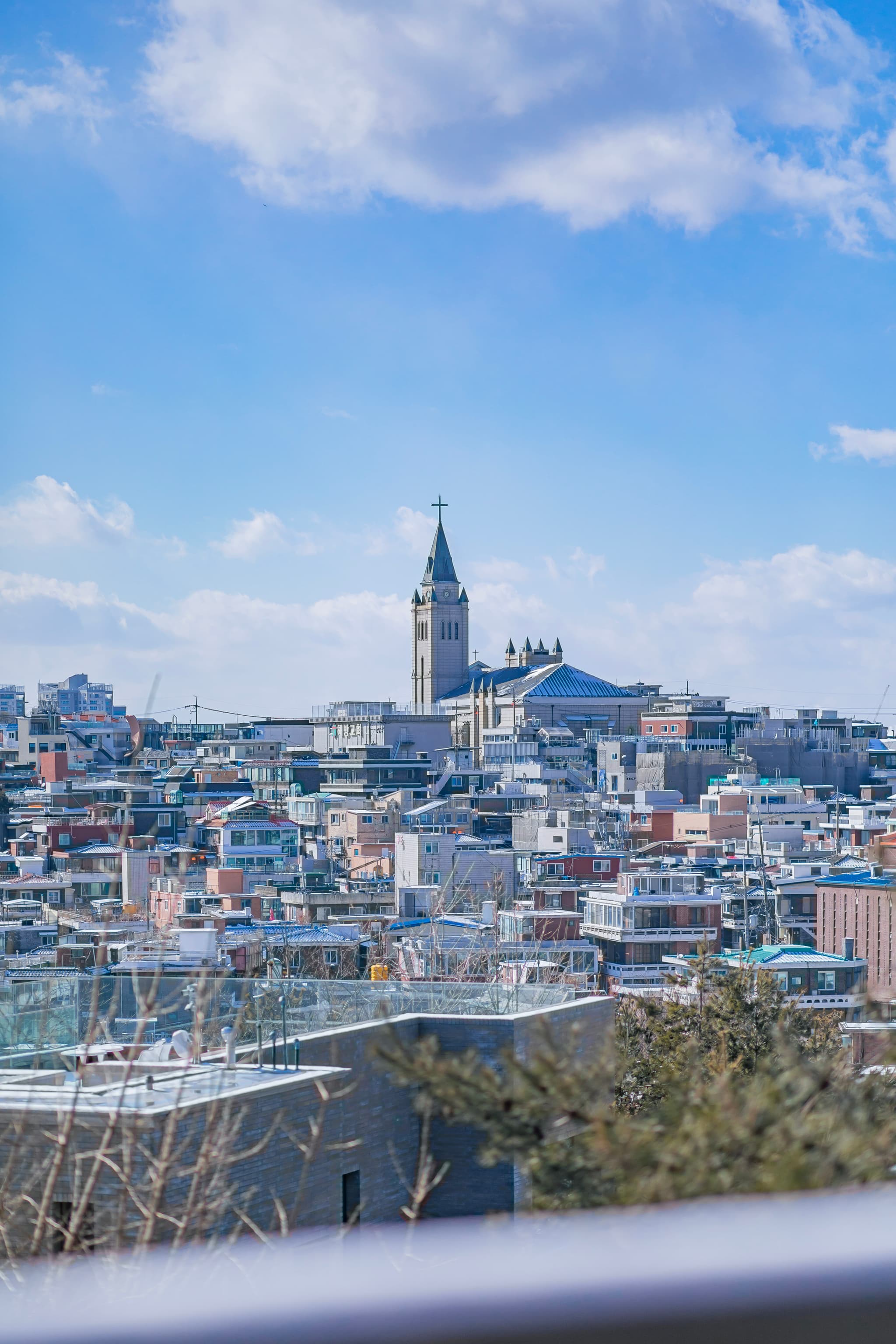
The whole hillside opened up before me. Below, the Han River caught the late afternoon sun. Above, Namsan Tower floated in the haze. And all around me, this strange, layered neighborhood clung to the slope—old market stalls next to indie cafes, Korean grocers next to Mexican taquerias, weathered tenements next to freshly painted studio apartments.
I stood there for a long minute, trying to understand what I was looking at. I've spent years exploring Seoul's neighborhoods, and I've rarely felt so immediately disoriented—and so immediately curious.
Welcome to Haebangchon, or HBC as regulars call it. One of Seoul's most underrated neighborhoods, and one of its most quietly fascinating.
A Village Born from Liberation
The name gives you the first clue. Haebangchon (해방촌) means "Liberation Village." When Korea was liberated from Japanese colonial rule in August 1945, thousands of Koreans who had been living in Manchuria, China, and other Japanese-occupied territories began flooding back to their homeland. Many of them had nowhere to go.
This hillside on the north slope of Namsan—then considered marginal, hard-to-build land—became their home. Families constructed makeshift homes from whatever materials they could find: wood, corrugated iron, salvaged stone. The neighborhood grew organically, following the curves of the hill rather than any planned grid.
Then came the Korean War. After the armistice in 1953, another wave of displaced people arrived—this time North Korean refugees who had fled south with almost nothing. They, too, settled on this hillside. HBC became one of Seoul's most densely packed neighborhoods, a place where survival was the first priority and community grew from shared hardship.
Walk through HBC today and you can still read its history in the architecture. The oldest alleyways twist in ways that no planned street ever would. Low-rise buildings press together at odd angles. Here and there, you spot a stretch of wall that clearly predates anything built in the last fifty years—dark stone, hand-laid, moss-covered at the base.
What makes HBC remarkable is not that it preserved this history deliberately. It happened because the neighborhood was, for decades, simply overlooked. Too hillside, too cramped, too far from the subway lines that pulled investment to other parts of the city.
That quiet invisibility turned out to be its greatest gift.
Climbing Sinheung-ro: The Spine of the Village
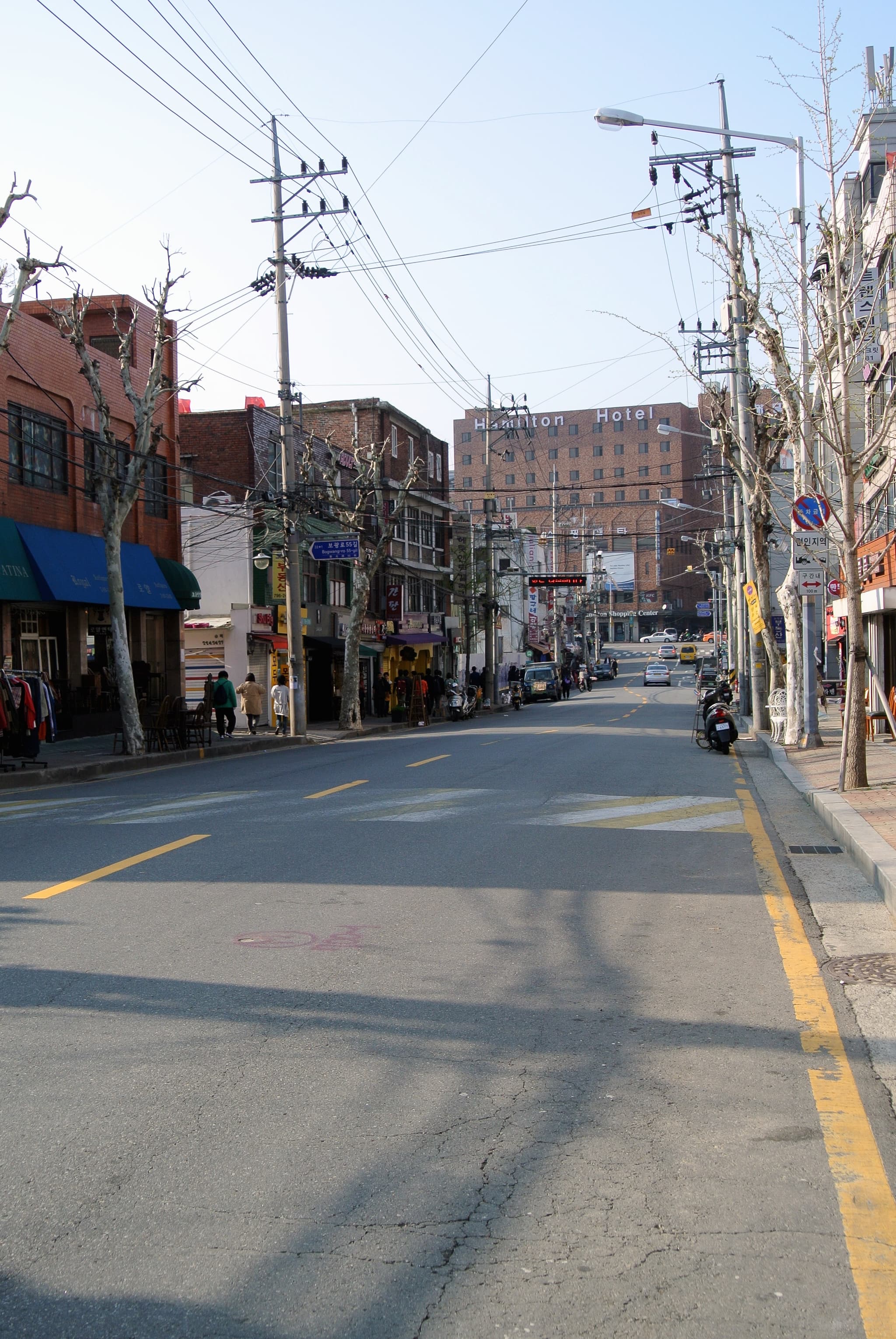
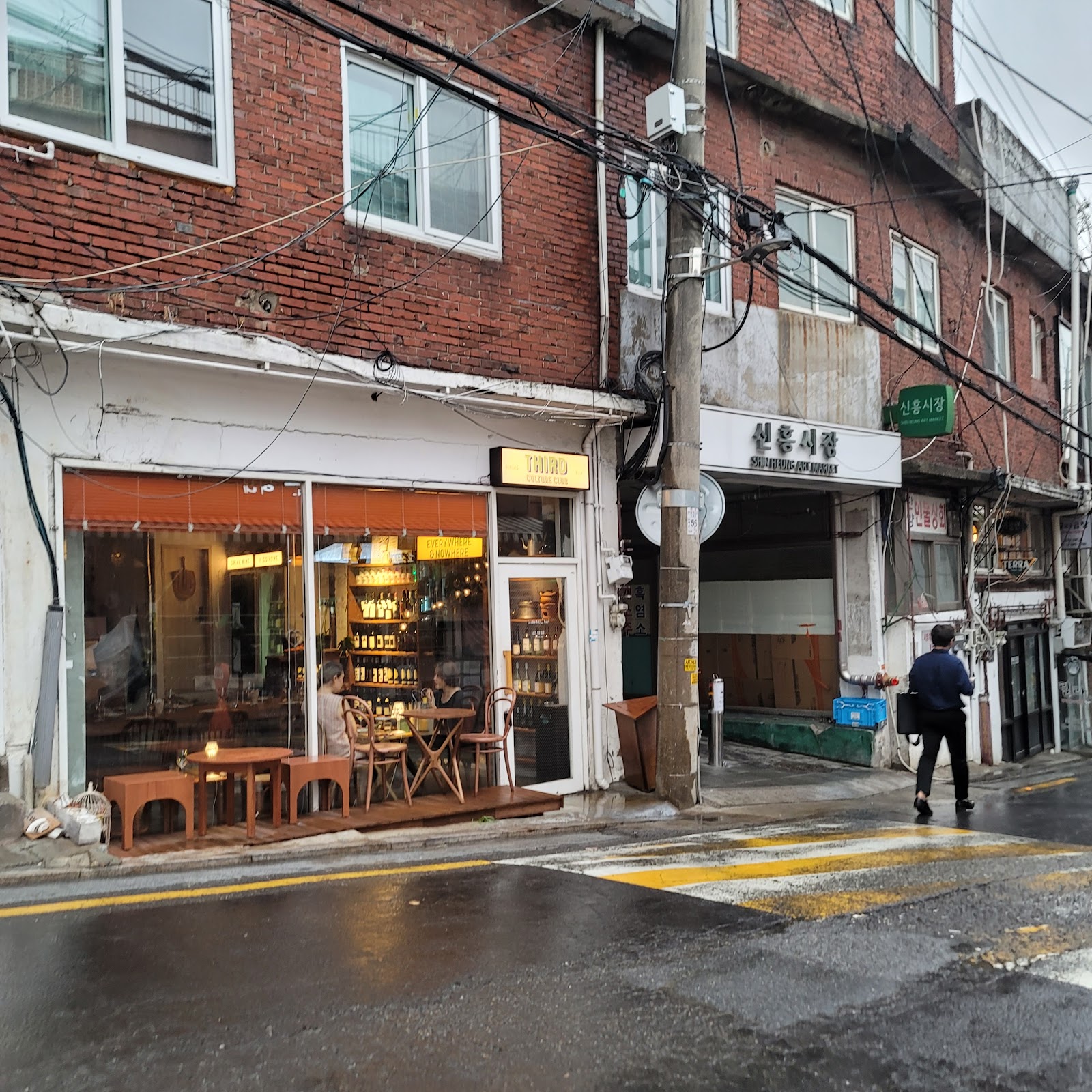
Every neighborhood has an artery. In HBC, it's Sinheung-ro—the main street that climbs straight up the hillside from Noksapyeong Station, past Sinheung Market, and winds toward the quieter residential alleys at the top.
Walking up Sinheung-ro for the first time is one of Seoul's most underrated experiences. The street is steep enough to feel like an achievement, gentle enough to be genuinely enjoyable. More importantly, it rewards you every twenty or thirty steps with something new to notice.
At the bottom, near the station exit, you'll pass convenience stores and small Korean restaurants—the practical infrastructure of a working neighborhood. A few steps further and the character shifts. You might notice a handwritten sign for a language exchange cafe, or an art print visible through a small studio window. HBC has attracted a significant community of expats over the years—many from the US and Europe, some from across Asia—and their presence has given the street a quietly cosmopolitan quality without feeling forced.
Then, perhaps fifteen minutes up the hill, you reach Sinheung Market (신흥시장). This is where HBC's story gets particularly interesting.
What Sinheung Market Has Become
The market has been here for over seventy years. In its early decades, it was a survival market—the kind of place where residents came to buy and sell anything that could be sourced or traded. Old market photographs show dense stalls, people in work clothes, the functional intensity of a neighborhood economy built from scratch.
Today, Sinheung Market is still a market. But the stalls selling traditional produce and household goods now share the narrow lanes with something entirely different: specialty cafes, craft studios, art spaces, and some of the most interesting small restaurants in Seoul.
The most striking example is Le Montblanc (르몽블랑). Housed in what was once a working knitting factory, this dessert cafe has become HBC's most photographed spot. The name makes sense once you're inside: their signature mousse cakes are designed to look exactly like balls of yarn and hand-knit sweaters—the earl grey "yarn" cake and the mango "sweater" cake are genuinely beautiful objects before they're food. Three floors of colorful thread installations, and a rooftop terrace where you can look out over the market rooftops.
What I love about Le Montblanc is that it didn't sanitize its history. The knitting machines are gone, but the industrial bones of the space remain. It's a place that knows what it used to be.
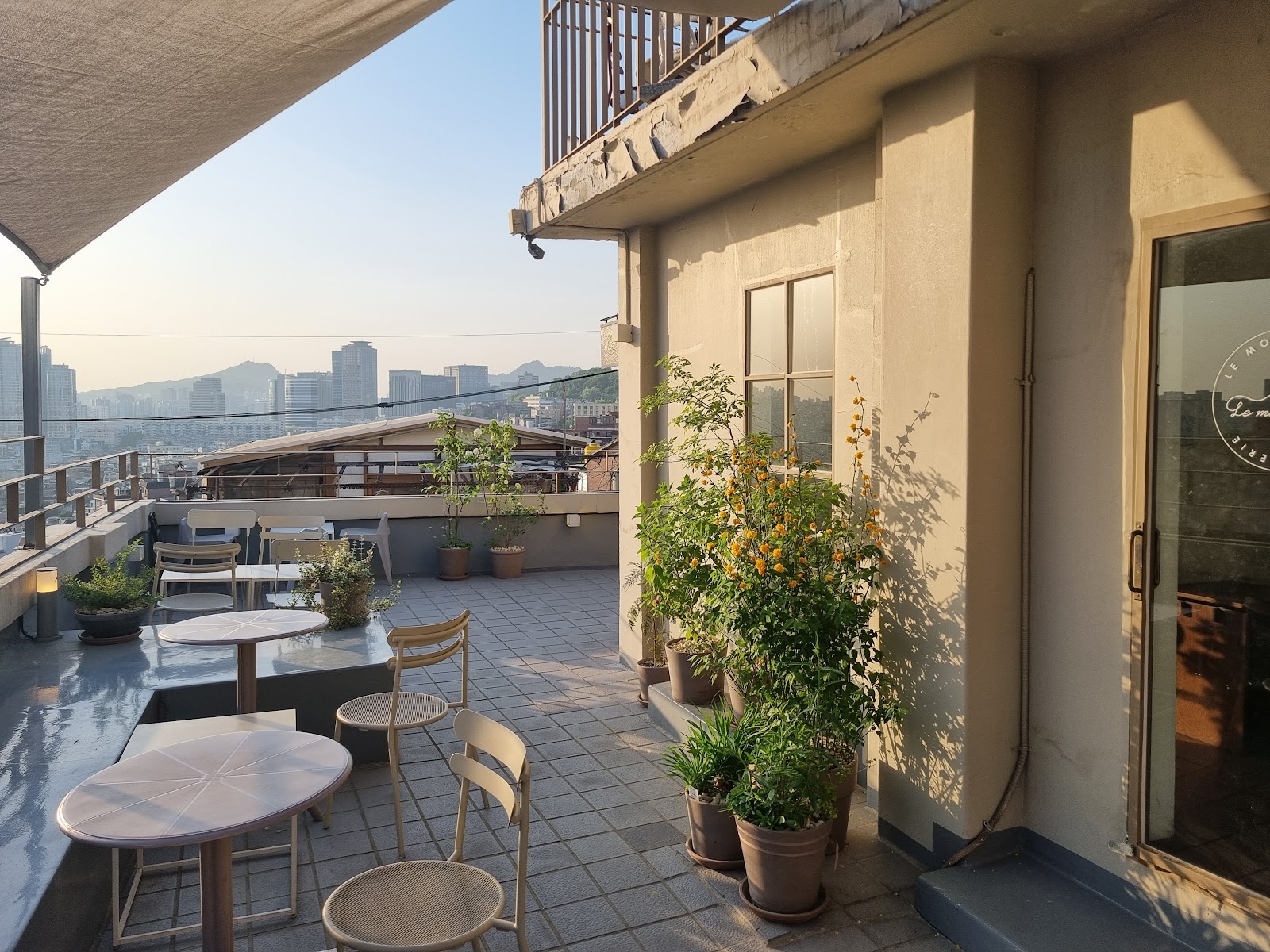
The market's physical layout—cramped alleyways, buildings pressed together, uneven floors—actually works in favor of this kind of experience. It forces a certain intimacy. You can't be anonymous in Sinheung Market. You're always within a few feet of someone.
Sinheung Market practical info:
- Location: 95-9 Sinheung-ro, Yongsan-gu (15 min walk uphill from Noksapyeong Station Exit 2)
- Best time: Weekdays to avoid weekend crowds; morning for traditional market atmosphere
- Tip: The market slopes upward, so arrive with comfortable shoes
Cafes That Earn Their Views
HBC has more cafes per square meter than almost any neighborhood its size in Seoul. Some are purely local—the kind of place that fills up with residents and the odd visiting expat, serving decent coffee in a room with mismatched chairs. Others have become destinations in their own right.
Nuldam Space (늘담스페이스) falls into a category of its own. The concept is almost too clever: visitors can write postcards to their future selves, which the cafe will mail exactly one year later. But what makes Nuldam worth visiting is the setting. The rooftop terrace is one of HBC's best viewpoints—Namsan Tower rising above you, the Han River glinting in the distance, the dense hillside neighborhood stretching down below.
Sit here on a clear morning and try to identify the moment when you want to stay longer than you planned. It happens without warning. The coffee is good—their black sesame cream latte has earned its following—and the atmosphere is quiet enough to actually think.
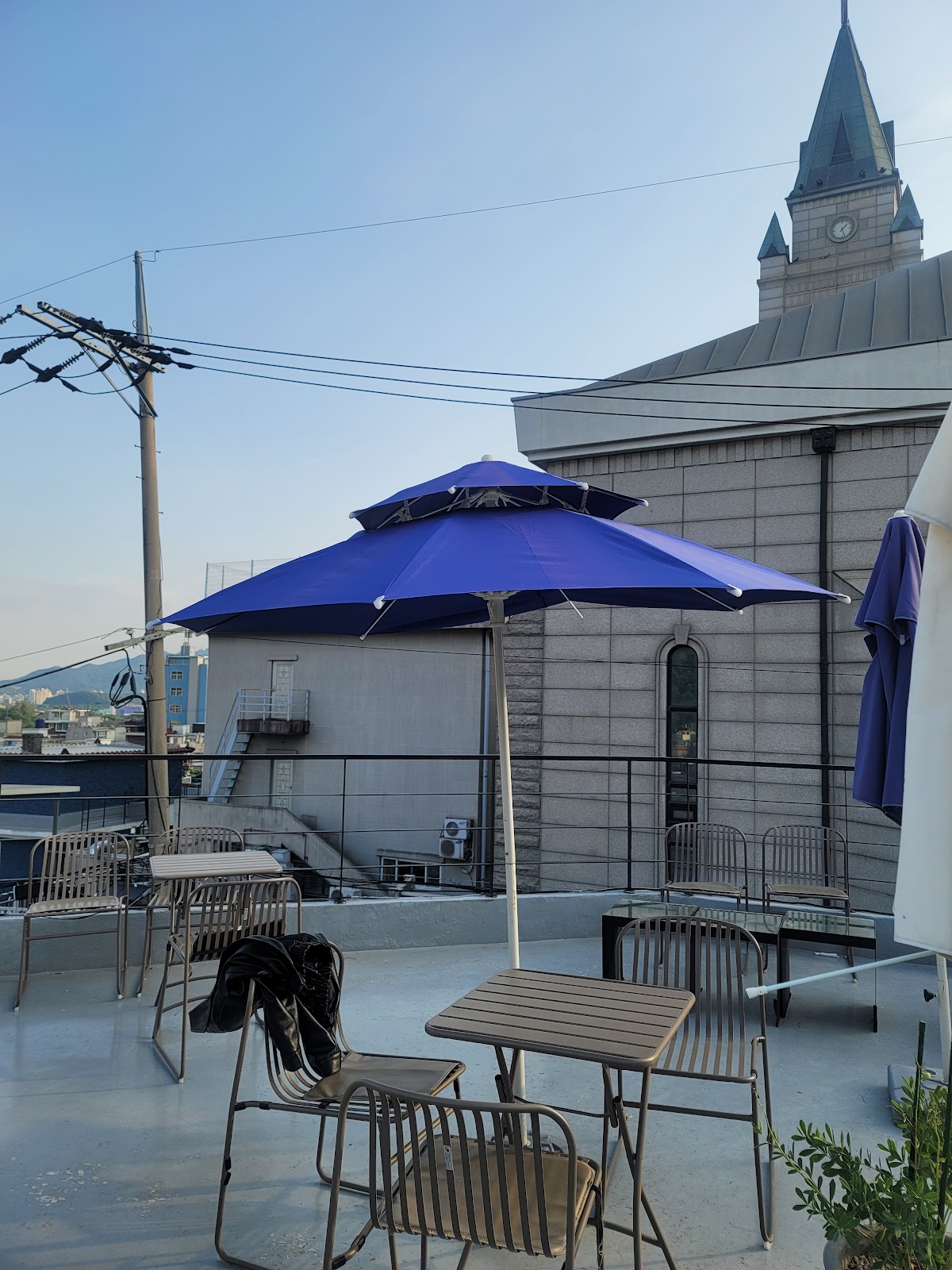
Nuldam Space practical info:
- Address: 18-12 Sinheung-ro 15-gil, Yongsan-gu
- Hours: Daily 12:00-19:40 (last order 19:10)
- Don't miss: The postcard-to-future-self experience; the black sesame cream latte
For a different kind of slow afternoon, Tortoise (토르토이스) is worth seeking out. This small cafe specializes in Japanese-style soufflé pancakes—the kind that take fifteen to twenty minutes to prepare because they're made fresh for each order. The result is something with the texture of a cloud that somehow holds together long enough to eat. Seasonal soufflé variations keep the menu interesting; the regular flat white pairs excellently.
Tortoise fills up quickly, especially on weekends, so weekday afternoons are the better call. The atmosphere is intimate and unhurried—exactly what HBC does best.
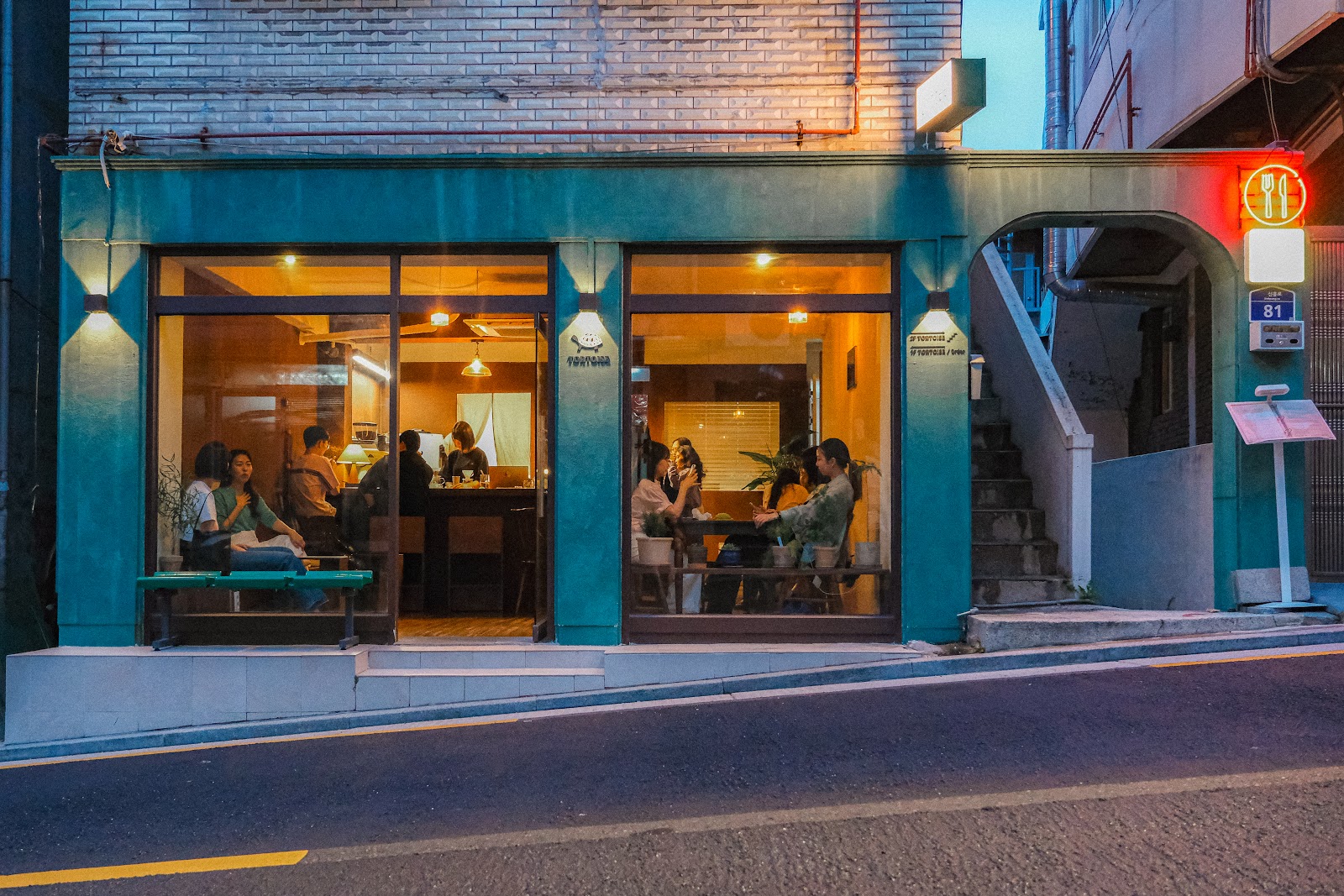
Tortoise practical info:
- Address: 81 Sinheung-ro, Yongsan District, 2F
- Hours: Daily 12:00 PM-9:30 PM
- Tip: Soufflé pancakes take 15-20 min; come on a weekday afternoon for a relaxed experience
The International Streets of HBC
One of HBC's distinguishing features is its genuine multiculturalism—not the curated international atmosphere of Itaewon's main drag, but the kind that develops over decades of actual mixed communities living and working together.
Walk the streets between Sinheung Market and the lower slopes and you'll find restaurants representing cuisines from across the world: Mexican tacos and burritos, Middle Eastern shawarma, Ethiopian injera, American craft burgers, French bistro cooking, Japanese ramen. These aren't tourist restaurants. They're neighborhood restaurants serving communities that actually live here.
This international character goes back to HBC's geographic proximity to what was once the primary US military base in Seoul. Over decades, the neighborhood developed an American expat community that brought different food cultures and eventually attracted a broader international mix. That legacy lingers in the diversity of what you can eat on a single short walk.
The contrasts are part of what makes the neighborhood feel alive. Turn a corner from a Korean pojangmacha (street food stall) and you're in front of a craft beer bar. Pass a traditional Korean restaurant and two doors down is a Lebanese bakery. Nobody seems to find this unusual, because in HBC, it's just how things are.
The Views That Make the Climb Worth It
There's one thing that every person who visits HBC agrees on: the views are extraordinary.
Because the neighborhood climbs the northern slope of Namsan, and because its streets and rooftops rise steeply, the sightlines are open in a way that's unusual for Seoul's usually dense urban fabric. From the right spots—the rooftop of Nuldam Space, the upper terraces of the market, the benches that locals have placed at intervals along the steeper alleys—you can see the Han River to the south, the downtown skyline to the north, and Namsan Tower seemingly close enough to touch above.
Spring is the best season for these views. The cherry blossoms on the slopes of Namsan typically bloom in late March, and when the wind is right, petals drift down into the HBC alleys. The light in March and April hits the hillside at an angle that makes even the old concrete walls look golden.
Come at sunset. This is not negotiable. The western exposure means that HBC catches the full warmth of the evening light, and the view of the Han River with the sun dropping behind the mountains to the west is one of Seoul's quietest great moments.
How to Spend a Day in HBC
HBC rewards a slow, unhurried approach. The neighborhood is small enough to walk completely in a couple of hours, but rich enough to deserve an entire day.
Morning (10:00-12:00): Arrive via Noksapyeong Station Exit 2 and start climbing Sinheung-ro. Stop at a local cafe near the base for coffee before the market opens. Browse the traditional stalls of Sinheung Market when they're just setting up—this is when the neighborhood still feels like it belongs primarily to its residents.
Midday (12:00-15:00): Le Montblanc opens at noon. Get there early for the freshest pastries and before the weekend queue forms. After dessert, explore the alleyways above the market—the residential streets get quieter and more interesting the higher you go. Pack a small lunch if you want to find a bench with views.
Afternoon (15:00-18:00): Tortoise opens at noon but afternoons are ideal—the soufflé pancakes are worth the wait, and the atmosphere settles into a quiet hum. After coffee, walk the international restaurant streets. Note places for dinner. Visit Nuldam Space before 19:00 for the rooftop views in the late afternoon light.
Evening (18:00-20:00): Choose dinner from HBC's international options—this is genuinely one of Seoul's best neighborhoods for non-Korean food. The neighborhood quiets down after 9pm, which is when the residential character reasserts itself.
Getting There & Practical Information
By subway: Line 6, Noksapyeong Station (녹사평역), Exit 2. Walk uphill for 15-20 minutes following Sinheung-ro. You'll know you're there when the street starts feeling properly steep.
From Itaewon: 15-minute walk. From Itaewon Station Exit 1, head toward the Yongsan War Memorial and look for signs to Haebangchon. The walk uphill is part of the experience.
Getting around: HBC is a walking neighborhood. The streets are too narrow and steep for comfortable car access. Comfortable shoes are essential—the slopes are real.
Best seasons: Spring (March-May) for cherry blossoms and mild weather. Autumn (September-November) for clear skies and warm afternoon light. Summer can be humid. Winter is manageable but the uphill walk is less appealing in cold rain.
Best days: Weekdays for a quiet, local atmosphere. Weekends bring more visitors—which changes the energy but also means more cafes are fully staffed.
What Visitors Ask About HBC
Is Haebangchon safe for solo visitors? Very safe, including at night. The neighborhood is active throughout the day and evening, and the mix of residents and visitors creates a naturally monitored environment. Stick to the lit main streets after dark and you'll have no concerns.
How long should I spend in Haebangchon? A minimum of half a day to genuinely experience the neighborhood. A full day if you want to eat well, visit multiple cafes, and see the sunset views. Rushing through HBC misses the point.
Is HBC tourist-friendly? More than it used to be. Enough cafes and restaurants have English menus to make navigation easy for non-Korean speakers. But HBC hasn't been packaged for tourists in the way that Ikseon-dong or the main Itaewon strip has—which is precisely what makes it interesting.
Can I visit Haebangchon and Itaewon on the same day? Easily. They're fifteen minutes apart on foot, and they complement each other well. HBC for the hillside exploration and history; Itaewon for the more developed international restaurant scene and shopping.
What's the best time to visit for photos? Golden hour before sunset, especially in spring and autumn. The hillside catches the light beautifully, and the market alleys create natural frames for street photography.
Found during my morning walk through Haebangchon: A bench halfway up one of the steeper alleys, positioned precisely to frame Namsan Tower between two old concrete buildings. No sign. No Instagram tag. Just a bench someone placed there years ago, pointed at the best view on the hill. The kind of thing that happens in a neighborhood that's had decades to figure out what it is.