
Mangwon-dong Guide 2026: Seoul's Last Real Neighborhood Where Markets Meet Cafes
I first stumbled upon Mangwon-dong in autumn 2018, on my way back from meeting a friend in Hongdae. I absentmindedly got off at "Mangwon" station on Line 6. When I climbed the stairs, Hongdae's glitz had vanished. Instead, I was greeted by the smell of pan-fried fish cakes from the traditional market entrance, elderly women sitting at street stalls, and coffee aroma drifting from somewhere down the alley.
"What is this place?" I wondered. Just two subway stops from Hongdae, yet it felt like an entirely different Seoul.
In 2026, Mangwon-dong still retains that "what is this?" charm. In the morning, elderly ladies set up market stalls; during the day, young baristas pull specialty coffee shots; in the evening, local residents gather at street vendors for soju. It hasn't completely transformed like Seongsu-dong, nor become a tourist destination like Yeonnam-dong. Markets and cafes, old and new, residents and travelers mix naturally—this is Seoul's last "real neighborhood."
The Mangwon-dong Transformation: From Residential Area to 'Most Neighborhood-like Neighborhood'
Pre-2010s: A Quiet Residential Area
Mangwon-dong was simply "the neighborhood next to Hongdae." Before the subway Line 6 opened in 1984, it was just a quiet residential area in Mapo-gu, where daily life revolved around Mangwon Market. University students lived here for cheaper rent while partying in Hongdae, and long-time residents shopped at the market.
In the mid-2000s, as Hongdae rents skyrocketed and the "Hongdae area" reached saturation, Mangwon-dong remained quiet. Even when Yeonnam-dong began filling with cafes, Mangwon-dong still had neighborhood supermarkets, snack bars, and old Chinese restaurants.
2015-2020: Quiet Changes
The transformation started at Mangwon Market. Around 2015, small cafes began appearing near the market. Unlike Yeonnam-dong or Seongsu-dong's flashy "complex cultural spaces," these were modest neighborhood cafes—places where residents who'd finished market shopping could grab a coffee.
In 2017, Mangwon Hangang Park and its bike paths were renovated, bringing weekend picnickers. It's a 10-minute walk from Mangwon Station to the Han River. People started buying kimbap and fruit from Mangwon Market and taking out coffee from cafes before heading to the river.
2019 brought a small turning point. Mangwon Market was selected as a Seoul Outstanding Market and underwent remodeling. Floors became cleaner, lighting brighter, and young vendors started moving in. But the market's essence didn't change. The elderly women's stalls remained, and the smell of fish cakes and tteokgalbi (grilled meat patties) stayed the same.
2020-2026: Birth of "The Most Neighborhood-like Neighborhood"
After the pandemic, Mangwon-dong's identity solidified. Rather than becoming a "hot place" like Hongdae, Yeonnam-dong, or Seongsu-dong, it established itself as "the most neighborhood-like neighborhood."
People started describing Mangwon-dong like this:
- "Not noisy like Hongdae, not touristy like Yeonnam-dong."
- "Feels like drinking coffee among real neighborhood people."
- "Shopping at Mangwon Market and going to a cafe feels like daily life."
In 2026, Mangwon-dong has over 30 cafes, but the resident-to-traveler ratio remains about 7:3. Elderly women still sit in market alleys, and by 6pm, the market quiets as residents head home for "home-cooked meals." Most cafes are small and quiet, prioritizing good beans and peaceful atmosphere over Instagram-worthy flashy interiors.
If Seongsu-dong became "Brooklyn," Mangwon-dong is more like "Paris's Marais district"—a place where daily life remains intact while good shops have naturally integrated into it.
How to Walk Mangwon-dong: A Full-Day Route Guide
Mangwon-dong isn't large. Everything sits within a 500m radius. But to truly feel this small neighborhood, dedicate an entire day to Mangwon-dong.
🌅 10:00 AM: Start at Mangwon Market
Mangwon Market buzzes from 8am, but visitors should arrive around 10am—after the morning shopping rush, when the market catches its breath.
Exit Mangwon Station Exit 1, walk straight for 3 minutes, and you'll reach the market entrance. The smell of pan-fried fish cakes hits you immediately. Three elderly ladies sit before their stall, flipping fish cakes.
Walking through the market feels like exploring a maze. Follow the main aisle, then slip into a side alley to discover completely different scenery. Rice cake shops, side dish stores, dried fish vendors, and suddenly appearing tteokbokki stalls.
Must-Try Items:
- Mangwon Tteokgalbi (market center) - Grilled patties of mixed pork and beef over charcoal. ₩2,000 each. Eat while hot for bursting meat juices.
- Honey Hotteok (market entrance) - Seasonal winter item. Hotteok filled with honey and nuts. Careful—it'll burn your palate.
- Hand-Cut Kalguksu (inside market) - Elderly lady rolls and cuts noodles by hand. Simple anchovy broth with zucchini and potato. ₩6,000 per bowl.
After circling the market, it'll be around 11am. Your stomach is slightly full—perfect coffee timing.
☕ 11:00 AM: Mangwon Market Alley Cafe Tour
Within 100m of the market sit 5+ cafes, each with distinct personality.
Deep Blue Lake Coffee & Roasters
Right next to the market public parking lot, this pastel blue 3-story building catches the eye from afar. Inside, you'll see the roasting machine, with coffee bean aroma filling the space.
Their signature: Nordic-style light roast. Preserving the bean's natural acidity and fruit notes, it's tea-like coffee. If you thought "coffee should be strong and bitter," this place will change your mind.
Sit on the 3rd-floor rooftop and you'll see Mangwon Market's rooftops at a glance. Red awnings, blue tarps, people walking between them. Sipping coffee while looking down at the market—this moment only exists in Mangwon-dong.
- Recommended: Hand drip (weekly rotation beans), Americano
- Atmosphere: Bright 3-story space, rooftop seating
- Hours: Daily 10:00-21:30
- Location: Next to Mangwon Market parking, 3 min walk from Exit 1
Portrait Coffee Bar
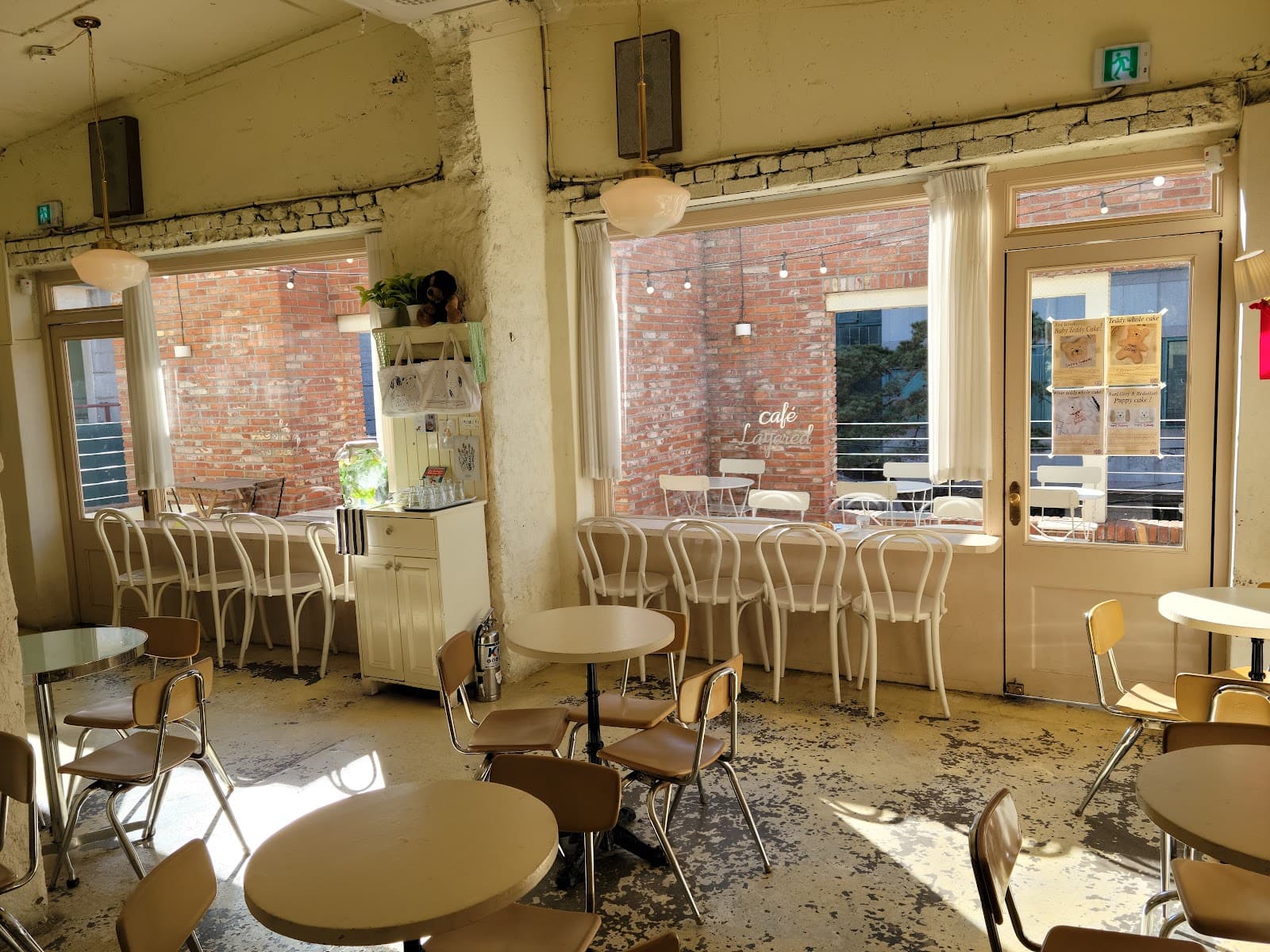
Hidden in a small alley before the market, this cozy cafe has large windows and warm wood-tone interior with sunlight streaming in.
Their signature: Coconut Vienna. Espresso blended with milk and coconut cream—not sweet, yet smooth and nutty. Coconut aroma rises subtly.
Laptop workers quietly work, neighborhood residents chat by windows. Pet-friendly, so you'll often see customers with dogs.
Perfect for resting after market browsing. Strong WiFi, plenty of outlets.
- Recommended: Coconut Vienna, Flat White
- Atmosphere: Quiet and cozy, laptop-friendly
- Hours: Daily 11:00-22:00
- Location: In front of Mangwon Market, next to Gohyang Kalguksu
🥐 12:30 PM: Brunch Time - Beekend
Once the market tteokgalbi has digested and you need real brunch, head to Beekend. 5-minute walk from the market, hidden in a residential alley, this small cafe is tiny.
Their signature: Brioche French Toast. One of Seoul's best. Brioche bread soaked in egg wash, pan-fried, then surface caramelized with a crème brûlée torch. One bite delivers:
- Crispy caramel layer
- Soft, moist brioche
- Egg wash richness
- Butter richness
all bursting simultaneously. Seasonal menus are excellent too—spring strawberry, summer peach, autumn fig, winter chestnut and sweet potato.
Small cafe with about 10 seats. Weekend lines are standard. Weekday 12-1pm is the sweet spot.
- Signature: Brioche French Toast (crème brûlée, seasonal fruit)
- Price: ₩12,000-15,000 for French toast
- Hours: Mon-Fri 10:00-18:00, Sat-Sun 10:00-21:00, Closed Tuesdays
- Tip: Weekend opening rush recommended. Don't miss seasonal menus.
🚶 2:00 PM: Mangwon-dong Alley Stroll
Full stomach means it's walking time. Mangwon-dong's real charm emerges from "walking without plans."
Walk from Mangwon Market toward Mangwon Hangang Park. Passing through residential alleys, these lanes are strangely beautiful. Sunlight filters between low villas and houses, with small cafes and bakeries hidden throughout.
There are no famous landmarks. Instead:
- A small flower shop on a red brick building's 1st floor
- An elderly lady's corner store (triangle kimbap still ₩1,000)
- A 30-year-old hair salon at the alley's end ("Good Perms Here")
- Potted plants on villa rooftops
These create the scenery. This is Mangwon-dong. No "Instagram aesthetic," but real Seoul neighborhood daily life.
Walk for 10 minutes and the view suddenly opens—the Han River appears.
🌳 3:00 PM: Rest at Mangwon Hangang Park
Mangwon Hangang Park isn't flashy like Yeouido or Banpo. But it's leisurely. You can spread a mat on the lawn, watch cyclists pass, see residents walking dogs.
Walk along the Han River path and Yanghwa Bridge comes into view. People resting in the shade under the bridge, couples cooking ramyeon, university students eating chicken. This is how Seoul people truly "enjoy the Han River."
Bring takeout coffee from cafes, eat fruit bought from the market, or just sit on the grass and zone out.
Everyone knows Han River sunsets are beautiful. But Mangwon Hangang Park's sunset is different—not crowded like Yeouido, so you can quietly monopolize the sunset.
🍜 5:00 PM: Early Dinner, Return to Mangwon Market
After playing by the Han River, as the sun sets, return to Mangwon Market. At 5-6pm, the market gains its second wind.
Neighborhood residents come out to buy "dinner side dishes." The market atmosphere differs from morning. Morning felt like "leisurely browsing while shopping," evening feels like "quickly buying from familiar stores."
Conversations like "Boss, how's the mackerel today?" "Today's good!" flow. Familiar jokes between regulars and vendors, generous extras given to 20-year regulars.
Walking the market at this hour, you see the "real neighborhood market"—not a tourist market for travelers, but where residents' daily lives flow.
🍺 7:00 PM: Mangwon-dong Evening Culture
Mangwon-dong evenings are quiet. No loud nightlife like Hongdae or Itaewon. Instead:
- Neighborhood bars: Small pojangmacha and bars hidden in market alleys where residents grab soju.
- Quiet wine bars: Small wine bars settled in residential areas, good for conversation.
- 24-hour cafes: A few cafes open late night for people reading or working.
The essence of Mangwon-dong evenings: "quietly wrapping up the day." If you want clubs or Hongdae bars, just take the subway two stops. But if you stay in Mangwon-dong, drinking soju quietly like a resident or opening a book in a cafe feels right.
Must-Do Things in Mangwon-dong
1. Actually Shop at Mangwon Market
Don't just "browse" as a tourist—actually shop:
- Fruit: Market fruit is cheaper and fresher than supermarkets. Buy strawberries, tangerines for a Han River picnic.
- Side dishes: Elderly ladies' homemade vegetable side dishes. If you have accommodation, buy some for meals.
- Rice cakes: Freshly steamed injeolmi, songpyeon from rice cake shops. So fresh you must eat within a day.
The moment you walk through the market with a shopping basket, you transform from traveler to "neighborhood person."
2. CooKorean Cooking Class
CooKorean Cooking Class is a Mangwon-dong-only experience. Chef Jo Min's 3.5-hour program:
- Mangwon Market Tour (1 hour): Learn Korean ingredients touring the market with the chef. Taste street food.
- Cooking Practice (2 hours): Make three dishes yourself—kimchi, bibimbap, bulgogi.
- Eating Together (30 minutes): Share the food while discussing Korean food culture.
- Price: ₩55,000 per person
- Times: Mon-Sat, 10am or 6pm
- Booking: Website pre-booking required
- Language: English
- Advantage: Not a tourist cooking class, but one in a real neighborhood market. Recipe book provided.
3. Mangwon Hangang Park Picnic
How Seoul people truly enjoy "real Han River picnics":
- Shop at Mangwon Market (kimbap, fruit, drinks, ramyeon)
- Takeout coffee from cafe
- Spread mat on Han River lawn
- Play until sunset
Weekend chicken delivery is available. Chicken + beer is Seoul's national combination.
4. Alley Cafe Hopping
Mangwon-dong cafes aren't big and flashy like Seongsu-dong. Instead, each has distinct philosophy:
- Roastery serious about beans
- Bakery cafe serious about bread
- Aesthetic cafe serious about atmosphere
Visiting 3-4 places daily, tasting each cafe's signature—that's proper Mangwon-dong cafe touring.
Mangwon-dong Practical Information
How to Get There
Subway: Line 6 Mangwon Station
- Exit 1: Mangwon Market direction (3 min walk)
- Exit 2: Cafe alleys, residential area direction
From Hongdae: Line 6 Hongik University Station → Mangwon Station (2 stops, 5 min) From Gangnam: Shinbundang Line Gangnam → Transfer at Yaksu to Line 6 → Mangwon (40 min)
To Mangwon Hangang Park: 10 min walk from Exit 1
Best Visit Times
Seasons: Spring (Apr-May), Autumn (Oct-Nov)
- Why: Good Han River weather, comfortable outdoor market stalls, pleasant walking temperature
Days: Weekdays > Weekends
- Weekdays: Quiet, leisurely neighborhood atmosphere
- Weekends: Brunch cafe wait lines, market crowds
Times:
- 10-11am: Market active, cafes empty
- 12-2pm: Brunch peak, market lull
- 3-5pm: Optimal Han River walk
- 5-6pm: Market's second rush
Budget Guide (Per Person)
Leisurely Enjoyment:
- Morning: Market snacks (tteokgalbi, hotteok) ₩5,000
- Brunch: Beekend French toast ₩15,000
- 2 coffees: ₩10,000
- Lunch: Market kalguksu ₩6,000
- Han River snacks: Market shopping ₩10,000
- Dinner side dishes: ₩5,000
- Total: ~₩50,000
Frugal Enjoyment:
- Market snacks: ₩3,000
- Cafe Americano: ₩5,000
- Market meal: ₩6,000
- Han River picnic (mart kimbap): ₩5,000
- Total: ~₩20,000
Mangwon-dong vs Other Neighborhoods
| Feature | Mangwon | Yeonnam | Seongsu | Ikseon |
|---|---|---|---|---|
| Vibe | Neighborhood+Market+Cafe | Cafe street | Hip complex | Hanok+Cafe |
| Crowds | Low | Medium | High | Very High |
| Resident Ratio | 70% | 40% | 30% | 10% |
| Cafe Style | Modest, local | Aesthetic, Insta | Large, complex | Hanok renovation |
| Food | Market food | Brunch | Fine dining | Desserts |
| Price | Cheap | Medium | Expensive | Expensive |
| Best For | Local experience | Cafe tour | Trend exploration | Hanok culture |
Tips & Warnings
DO:
- ✅ Actually shop at the market (fruit, side dishes)
- ✅ Visit on weekdays for leisure
- ✅ Stroll alleys for serendipitous discoveries
- ✅ Properly set up Han River picnic
- ✅ Act quietly like a resident
DON'T:
- ❌ Wait in weekend brunch cafe lines (go weekdays)
- ❌ Only take photos at market without buying (vendors frown)
- ❌ Talk loudly and disturb neighborhood atmosphere
- ❌ Litter at Han River
- ❌ Wander residential alleys loudly late at night
The Gift Mangwon-dong Gives: Experiencing Seoul's Daily Life
If Seongsu-dong shows Seoul's "trends," Mangwon-dong shows Seoul's "daily life."
Shopping at the market in the morning, drinking coffee at cafes, spending time by the Han River, having soju at a neighborhood bar in the evening—this is how Seoul people live. Mangwon-dong has opened that daily life to travelers.
There are no flashy landmarks. No Instagram "proof shot" spots. Instead, there's the elderly lady's hand grilling tteokgalbi, the sound of coffee beans grinding, couples eating chicken under the Han River sunset, the smile of the corner store grandmother at the alley's end.
In 2026, many Seoul neighborhoods are losing their identity as they become "hot places." But Mangwon-dong is still Mangwon-dong. Markets and cafes, old and new, residents and travelers coexist—the last "real neighborhood."
Walking through Mangwon-dong, you'll suddenly think: "I want to live here."
That's Mangwon-dong's greatest gift. Feeling it not as a travel destination but as a neighborhood you'd want to live in.
Found during my morning walk through Mangwon: A small rice cake shop hidden in a market alley corner. An elderly lady runs it alone, and freshly steamed injeolmi still steams. "Just try one," she said, handing me a songpyeon. That taste and warmth—Mangwon-dong still holds onto it.