Jongmyo Shrine: Where 600 Years of Royal Ritual Lives On
In 1395, when King Taejo founded the Joseon Dynasty and moved the capital to Hanyang (old Seoul), the first structure he built wasn't a palace. It was Jongmyo, the royal ancestral shrine dedicated to the spirits of Joseon's kings and queens. This choice reflected a fundamental Confucian principle: "When a state is established, the royal shrine must be built first."
Six centuries later, Jongmyo stands as one of the world's rarest cultural treasures—a site that holds not one, but three separate UNESCO designations. The shrine itself is a UNESCO World Heritage Site (1995). The royal ancestral ritual performed here, Jongmyo Jerye, is UNESCO Intangible Cultural Heritage (2001). And the ritual music and dance, Jongmyo Jeryeak, is also UNESCO Intangible Cultural Heritage (2001).
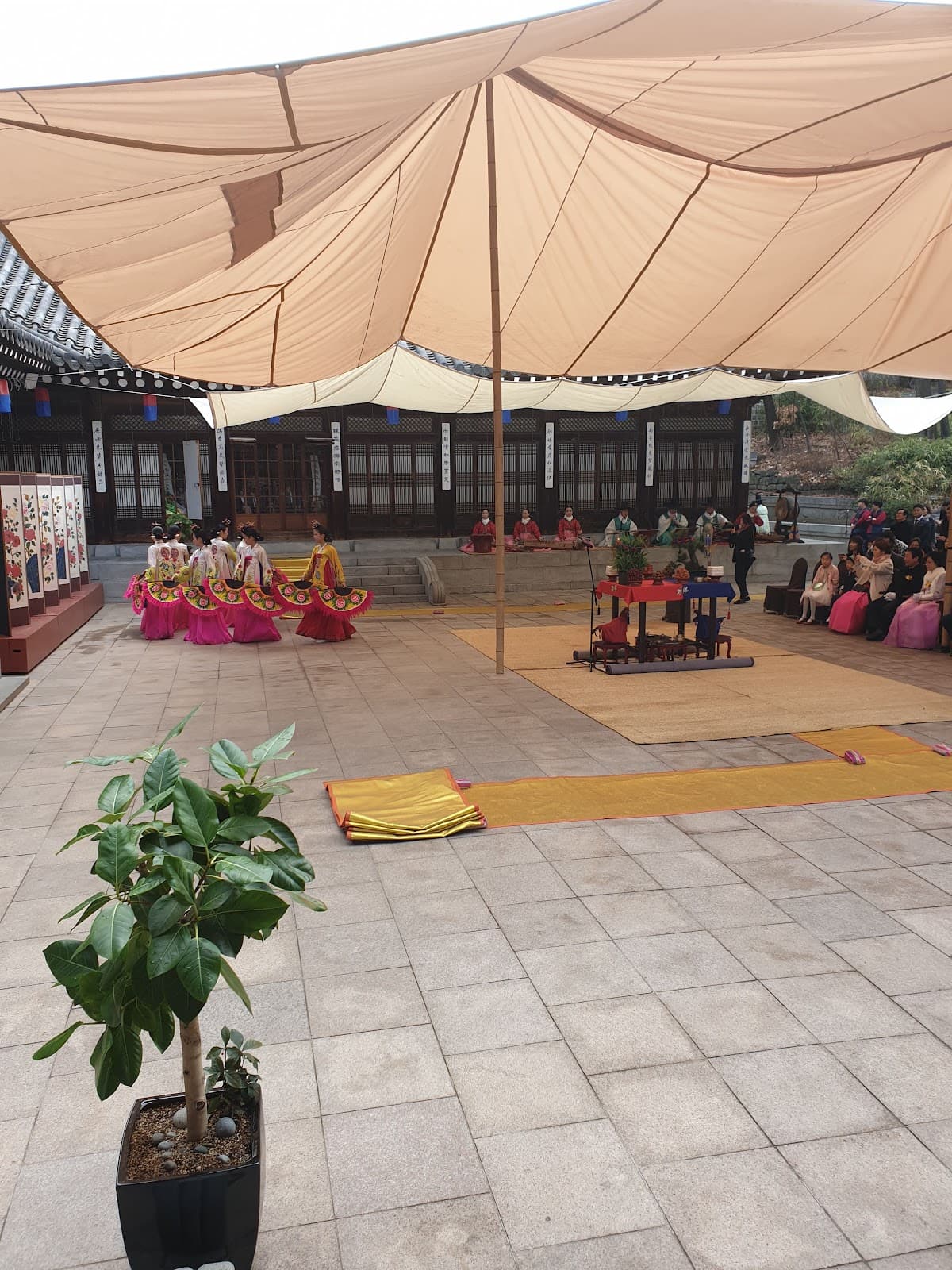
Every year on the first Sunday of May, over 1,000 participants dressed in traditional court attire perform the same ritual their ancestors performed 600 years ago, in the exact same way, at the exact same location. Standing in Jongmyo's courtyard watching this ceremony, you forget you're in 21st-century Seoul.
Why Jongmyo Is Unique: The Triple UNESCO Crown
1995 World Heritage: The Architecture
Jongmyo was inscribed as a UNESCO World Heritage Site in 1995 for its outstanding architectural and historical significance. The shrine consists of two main buildings: Jeongjeon (Main Hall) and Yeongnyeongjeon (Hall of Eternal Peace).
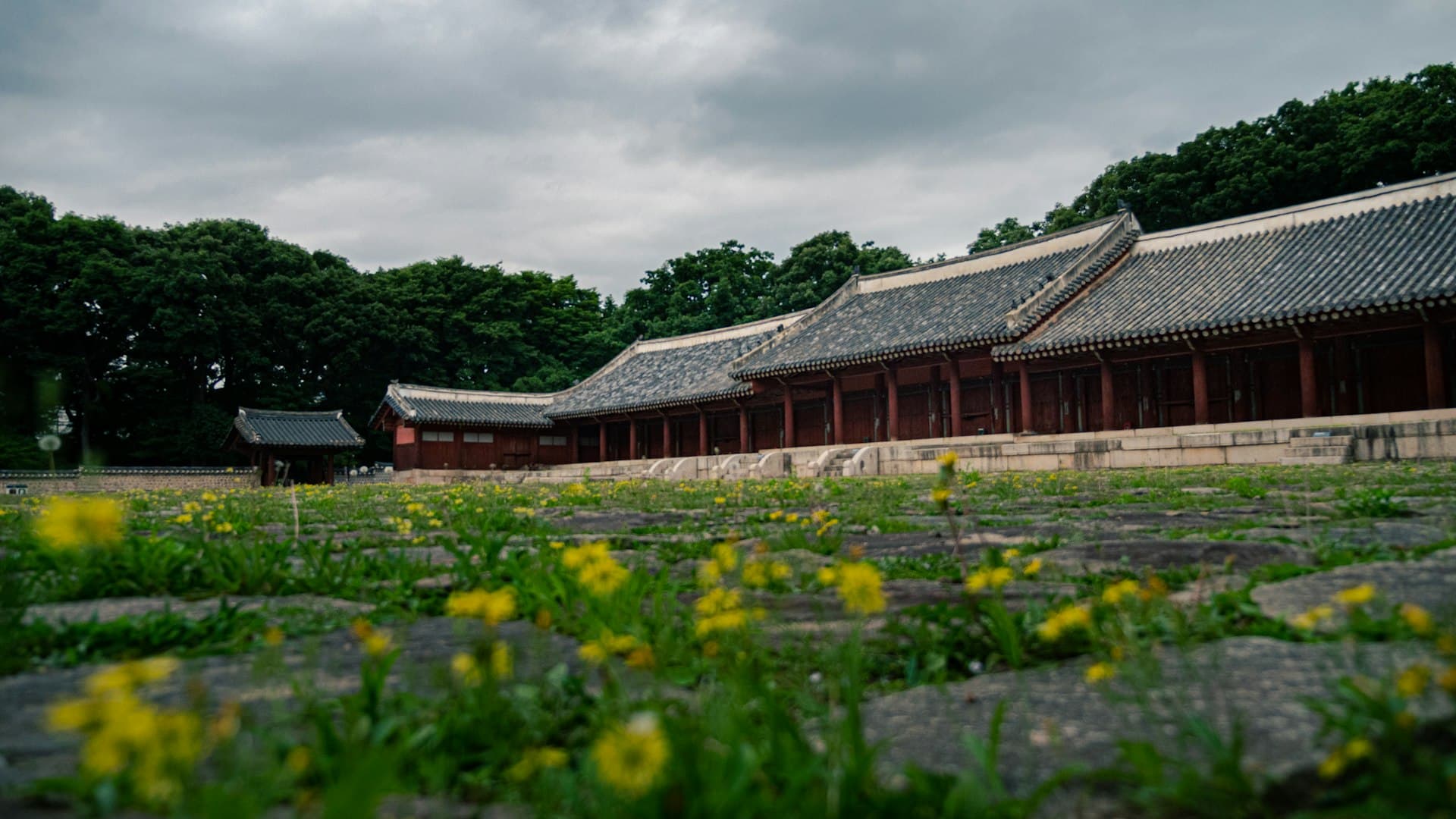
Jeongjeon is the longest single wooden structure in Korea. Measuring 109 meters in length with 19 chambers across its front, this massive building was continuously expanded over 500 years to house the spirit tablets of 19 Joseon kings and 30 queens. The building started with just 7 chambers and grew to 19—a physical manifestation of the dynasty's history.
What strikes visitors most is the building's austere simplicity. No dancheong (colorful decorative patterns), no elaborate carvings, no ornamental details. Only the natural color and grain of aged wood. This severe restraint embodies the Confucian aesthetic that Joseon scholars pursued: reverence over decoration, sincerity over display.
The building's proportions create an overwhelming sense of solemnity. Standing before Jeongjeon, you can't see from one end to the other—the structure simply stretches beyond your peripheral vision. Yet despite its scale, there's nothing ostentatious about it. The architecture speaks through absence rather than presence.
2001 Intangible Heritage: The Ritual and Music
In 2001, UNESCO recognized two interconnected intangible cultural heritage practices at Jongmyo: the royal ancestral ritual (Jongmyo Jerye) and its accompanying music and dance (Jongmyo Jeryeak). Few royal ritual traditions anywhere in the world have been continuously practiced in their original form for six centuries.
Jongmyo Jerye was the most important state ritual in Joseon Korea. The king personally presided, civil and military officials attended in full court dress, and over 1,000 participants were involved. Though the monarchy ended in 1910, the ritual continues today, performed annually by descendants of the royal family and traditional ritual specialists.
Jongmyo Jeryeak is court music composed during King Sejong's reign in the 15th century. The music is performed on traditional instruments—stone chimes (pyeongyeong), bronze bells (pyeonjong), flutes (piri), zithers (geomungo and gayageum), and drums—while 64 dancers perform precisely choreographed movements representing the balance of Yin and Yang.
Musicologists call Jongmyo Jeryeak "the world's slowest music." A single movement can last over 20 minutes. Unlike Western classical music that builds tension and releases emotion, this music operates through repetition and restraint. It creates a meditative space where time itself seems to slow down.
The Architecture of Reverence
Jeongjeon: 109 Meters of Solemn Simplicity
When you first encounter Jeongjeon, the scale overwhelms. The building stretches so far left and right that you must turn your head to see both ends. Yet there's no decoration to draw your eye—no colorful paint, no carved details, no ornamental flourishes.
This radical simplicity is intentional. Joseon's Confucian scholars believed that modesty was the highest form of respect. In a space dedicated to ancestral spirits, lavish decoration would be disrespectful. Thus Jongmyo became the most austere and restrained of all Joseon architectural works.
Architectural Features:
- 19 chambers front, 5 deep: Representing the 19 Joseon kings enshrined here
- Woldae (Moon Terrace): The stone platform before Jeongjeon with three staircases (center for spirits, sides for humans)
- Nap-dori roof: The simplest traditional Korean roof style
- No dancheong: Preserving only the natural wood color
Yeongnyeongjeon: The Younger Sibling
Yeongnyeongjeon houses the spirit tablets of kings not enshrined in Jeongjeon, including posthumously elevated kings and their consorts. Built in 1421 during King Sejong's reign, it has 16 chambers—smaller than Jeongjeon but following identical architectural principles.
Between Jeongjeon and Yeongnyeongjeon sits Jaegung, the preparation hall where rituals are organized and participants prepare. This administrative building served as the operational center for Jongmyo's ceremonies.
The Living Ritual: Jongmyo Jerye
The Ceremony's Structure
Jongmyo Jerye begins before dawn and continues for approximately five hours. The ritual unfolds in four major phases.
Phase 1: Royal Procession (9:00 AM) The ceremony recreates the historical procession when Joseon kings traveled from Gyeongbokgung Palace to Jongmyo. Over 1,000 participants dressed in traditional court attire march through Jongno streets. The procession alone is spectacular.
Phase 2: Jeonpyerye (11:00 AM) The offering of pyebaek (silk cloth) to the ancestral spirits, signaling the ritual's commencement.
Phase 3: Jeonjangye (Noon) The main ritual offering wine and food while honoring ancestors through song and dance. This is when Jongmyo Jeryeak is performed and ilmu (ritual dance) unfolds.
Sixty-four dancers arrayed in eight rows move in perfect unison, symbolizing the harmony of Yin and Yang. The dance comprises two parts: munmu (civil dance) honoring scholarly virtue, and mumu (military dance) honoring martial achievement.
Phase 4: Cheolbyeondu and Eumbongye (2:00 PM) The ritual concludes as offerings are removed and participants receive blessings.
Jongmyo Jeryeak: The World's Slowest Music
Jongmyo Jeryeak consists of eleven movements organized into two suites composed by King Sejong: Botaepyeong and Jeongdaeop.
Instruments Used:
- Pyeongyeong (Stone Chimes): Percussion instrument made from jade
- Pyeonjong (Bronze Bells): Tuned bronze bells
- Piri, Haegeum, Geomungo, Gayageum: Traditional string and wind instruments
- Janggu, Chuk, Eo: Rhythm instruments
The music unfolds with extreme slowness and repetition. Single notes are held for many seconds, and melodic phrases repeat multiple times. To ears accustomed to Western music, it may sound monotonous. But that's precisely the intention—music designed to eliminate emotion and cultivate reverence.
Visitor Guide: Planning Your Jongmyo Visit
Year-Round Visiting Information
Hours:
- Feb–May, Sept–Oct: 09:00–18:00
- June–Aug: 09:00–18:30
- Nov–Jan: 09:00–17:30
- Closed Mondays
Admission:
- Adults: ₩1,000
- Youth (7–18): ₩500
- Free admission: Last Wednesday of each month
Guided Tour Schedule: To protect this cultural treasure, Jongmyo requires guided tours (except Saturdays).
- Korean tours: 09:10, 10:00, 11:00, 12:00, 13:00, 14:00, 15:00, 16:00
- English tours: 10:00, 12:00, 14:00, 16:00
- Japanese/Chinese tours: 10:00, 14:00
Saturday exception: Every Saturday, Jongmyo allows self-guided exploration without mandatory tours.
Attending the Jongmyo Jerye (May)
Jongmyo Jerye is performed annually on the first Sunday of May at 10:00 AM. On this day, Jongmyo transforms from museum to living ritual space.
Advance Reservation Required:
- Reservation site: www.jongmyo.net
- Booking opens: Mid-April
- Free admission but limited seating
Walk-in Attendance: If you didn't reserve, you can still attend by standing. Arrive around 7:00–8:00 AM to secure a good viewing spot.
Catch the Royal Procession: The procession begins at 9:00 AM from Gyeongbokgung Palace and proceeds to Jongmyo through Jongno streets. Watch the procession first, then head to Jongmyo for the ritual.
Getting There
Subway:
- Lines 1, 3, 5 to Jongno 3-ga Station, Exit 11, 5-minute walk
- Line 3 to Anguk Station, Exit 1, 10-minute walk
Bus:
- Main routes: 151, 162, 171, 172, 272, 601
- Local route: 7025
Parking: Jongmyo's parking is extremely limited. Public transportation is strongly recommended.
Visitor Etiquette
Jongmyo remains a sacred ritual space. Please observe these guidelines:
- No photography inside halls: You may photograph courtyards and building exteriors, but photography is prohibited inside Jeongjeon and Yeongnyeongjeon where spirit tablets are housed.
- Maintain quiet: Respectful silence is expected throughout the shrine.
- Show reverence before spirit chambers: These house the actual ancestral tablets of Joseon royalty.
- Modest dress: While there's no strict dress code, avoid overly revealing clothing.
Nearby Cultural Sites
Changdeokgung & Changgyeonggung Palaces
A 10-minute walk from Jongmyo brings you to Changdeokgung and Changgyeonggung palaces. Visiting these palaces after Jongmyo provides a comprehensive understanding of Joseon architectural aesthetics.
Changdeokgung's Secret Garden (Huwon) operates by reservation only. This royal garden offers a nature-focused beauty that contrasts beautifully with Jongmyo's austerity.
Bukchon Hanok Village
A 15-minute walk north from Jongmyo leads to Bukchon Hanok Village. Walking through narrow alleys between traditional hanok houses, you glimpse the residential culture of Joseon-era nobility.
Ikseon-dong Hanok Street
Ten minutes south of Jongmyo, Ikseon-dong features traditional hanok converted into cafes and restaurants. This neighborhood embodies the unique coexistence of tradition and modernity.
Frequently Asked Questions
Can anyone attend the Jongmyo Jerye in May? Yes, the annual ritual on the first Sunday of May is open to the public free of charge. However, seating requires advance reservation, and walk-ins must stand to watch.
Is photography allowed? You may freely photograph courtyards and building exteriors. However, photography is strictly prohibited inside Jeongjeon and Yeongnyeongjeon where spirit tablets are housed.
Is admission free for hanbok wearers? Unlike royal palaces, Jongmyo charges admission even for visitors wearing hanbok. Different policy from the palaces.
Is winter a good time to visit? Yes, winter Jongmyo has its own beauty. Snow-covered Jeongjeon creates an ink-painting atmosphere. Dress warmly—it's all outdoor viewing.
How much time should I allocate? Guided tours last approximately one hour. Allow 90 minutes for a leisurely visit.
Can I hear Jongmyo Jeryeak outside of the annual ritual? Jongmyo Jeryeak is performed only during the annual Jerye ceremony. However, the National Gugak Center occasionally presents Jongmyo Jeryeak performances—check their schedule if interested.
Final Thoughts: Timeless Reverence
Visiting Jongmyo feels like time travel. You walk the same courtyards Joseon kings walked 600 years ago. Unchanged buildings, unchanged ritual, unchanged music—this continuity makes Jongmyo extraordinary.
Even if you can't witness the actual Jerye ceremony, a quiet afternoon visit is profoundly moving. Stand in the courtyard before Jeongjeon and gaze at that 109-meter-long structure. Feel the reverence contained in its simplicity, the depth expressed through restraint.
Seoul's quietest, most solemn, most profound place. That's Jongmyo.