Seoul Buddhist Temples Solo Wellness Guide 2026: Finding Quiet Healing in Sacred Spaces
Hidden among Seoul's apartment forests and skyscrapers are spaces holding 1,700 years of history. These are Korea's Buddhist temples—Jogyesa in Jongno, Bongeunsa in Gangnam, Beopjusa in Seongbuk. These aren't mere tourist attractions. They're quiet sanctuaries where you can step away from the intensity of modern life and reconnect with yourself.
For solo travelers especially, these temples offer something precious. Visit alone, and you'll find time without the need for conversation or social performance. Amid the sound of temple bells, you might hear something you haven't heard in a while—the voice of your own mind settling into stillness.
Korean Buddhist Temples: 1,700 Years of Wisdom
A Spiritual Tradition Since the Three Kingdoms
Korean Buddhism began in the 4th century during the Three Kingdoms period. Goguryeo, Baekje, and Silla each received Buddhism through different paths, yet it eventually took root as distinctly Korean. Though the Joseon Dynasty's suppression of Buddhism forced many temples into remote mountains, several important temples maintained their place within Seoul itself.
These temples were never just religious facilities. They were spiritual sanctuaries that comforted Koreans through life, death, and everyday hardships. Dynasties changed, wars swept through, and rapid modernization transformed the city—yet temple bells continued ringing over Seoul.
Buddhism Meets Modern Wellness
In the 2020s, Buddhism has found new meaning. No longer just religion, it's become a form of "mental care" for modern people. As contemporary concepts like meditation, mindfulness, and healing meet 1,700 years of Buddhist wisdom, younger generations and international travelers are increasingly visiting temples.
For solo travelers in particular, temples are perfect destinations. Spaces where you can stay without awkwardness, where being alone is something to savor rather than avoid.
Jogyesa: The Spiritual Heart of Central Seoul
A Hidden Sanctuary in Jongno
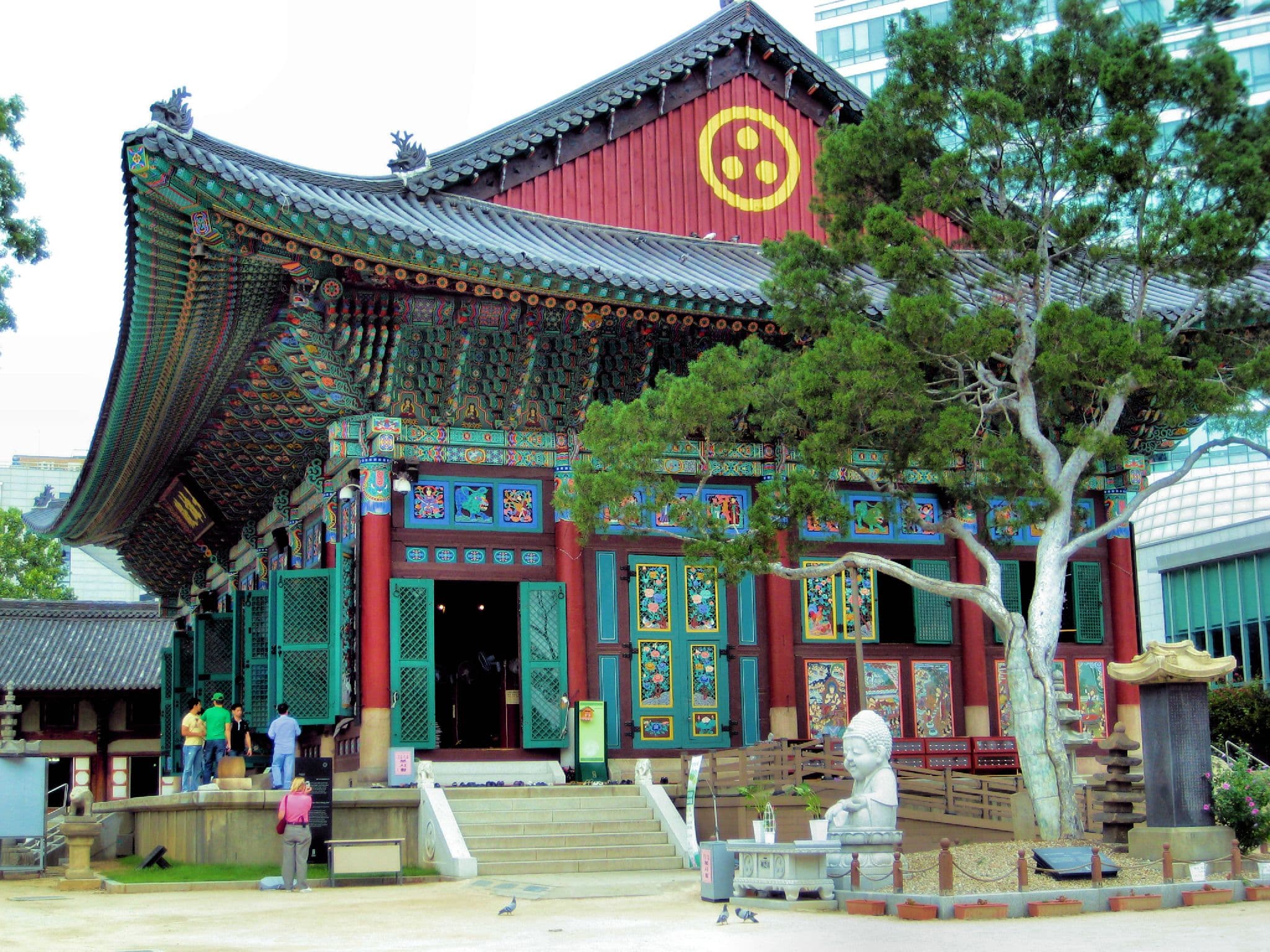
Jogyesa is the head temple of the Jogye Order of Korean Buddhism, located in Geonji-dong, Jongno. Just a 10-minute walk from Gyeongbokgung Palace, yet the moment you enter the gate, you feel separated from the world outside.
Built in 1910, Jogyesa has preserved orthodox Korean Buddhism through Korea's turbulent modern history. Japanese colonial suppression, the devastation of the Korean War, rapid modernization—through it all, Jogyesa has continued beating as the heart of Korean Buddhism.
Experiencing Jogyesa Solo
Here's a recommended itinerary for visiting Jogyesa alone:
First, pass through the Iljumun (One Pillar Gate). This gate symbolically separates the secular world from sacred space. As you pass through, create your own ritual of setting aside daily worries.
Before the main hall (Daeungjeon), you'll find a three-story stone pagoda. Modeled after Silla dynasty style, this pagoda holds spiritual energy from 1,400 years ago. Walk slowly around it and make a wish. It doesn't have to be religious prayer—it can simply be a moment of listening to yourself.
Jogyesa's Meditation Program
Jogyesa offers an English meditation program every Saturday at 2 PM. It includes a tour explaining the temple's history, 30 minutes of seated meditation, and conversation time over tea. The program runs about 2 hours.
The program is free, though you can make donations to the temple. You won't feel awkward participating alone—most participants are solo travelers themselves.
Bongeunsa: A Contemporary Temple in Gangnam
A Quiet Refuge in Samseong-dong
Bongeunsa, located a 15-minute walk from Gangnam Station, is one of Seoul's most modern temples. First built in 809 during the Silla Dynasty, the current buildings were reconstructed in 2003, showcasing unique architecture where Korean tradition meets modernity.
What makes Bongeunsa special is its accessibility. In the middle of Gangnam's bustling district, yet once inside the walls, urban noise disappears. Cherry blossoms in spring, maple leaves in autumn—the temple offers different scenery each season.
Bongeunsa Temple Stay
Bongeunsa's biggest attraction is its temple stay program. From 2-day overnight stays to half-day programs, various options exist. Popular among solo travelers.
The half-day program runs from 2 PM to 5 PM, including temple tour, 108 prostrations, lotus lantern making, and tea ceremony. Cost is around 20,000 KRW.
The overnight program runs from 3 PM to 10 AM the next day, including evening service, tea ceremony, temple walk, and morning service. Cost ranges from 60,000 to 80,000 KRW.
Participating alone lets you have deeper solo time. You can chat with other participants or spend time quietly alone—the choice is entirely yours.
Beopjusa: A Mountain Temple in Samseon-dong
Mountain Temple Scenery in Seongbuk
Beopjusa is located in Samseon-dong, at the entrance to Bukhansan's Sammaks temple. About 40 minutes by car from the city center, but upon arrival, you feel like you've entered a space where time flows differently.
Built in the 1870s, Beopjusa harmonizes with the energy of Bukhansan Mountain. Azaleas in spring, summer greenery, autumn foliage, winter snow—each season offers distinct scenery. It's one of the best places in Seoul to experience the changing of four seasons.
A Day at Beopjusa
Beopjusa is perfect for spending an entire day alone. Accessible by public transport, but with few other attractions nearby, it's never crowded. Weekdays are especially quiet.
Arrive at 10 AM and explore the temple—main hall, hall of paradise, mountain spirit shrine. Lunch at a small restaurant nearby, try mountain vegetable bibimbap. In the afternoon, walk the forest trails behind the temple and enjoy Bukhansan views.
Beopjusa doesn't run temple stay programs. This can be an advantage—you can stay as long as you want, at your own pace.
Meditation at Temples: Starting Solo
Basics of Seated Meditation
If you want to meditate at temples but don't know where to start, try simple seated meditation:
- Posture: Sit on a cushion on the floor. If you can't cross your legs, sitting on a chair is fine. Keep your back straight, relax your shoulders.
- Hands: Make the Dharma Seal (left palm on top, right palm below, thumbs lightly touching) and place at your abdomen.
- Breathing: Breathe in deeply through your nose, exhale slowly through your mouth. Repeat until you find a natural rhythm.
- Gaze: Lower your gaze about 45 degrees toward the floor. Eyes can be closed or open.
- Time: Start with 5-10 minutes initially, gradually increase duration.
Focusing on Temple Sounds
If seated meditation feels difficult, try focusing on temple sounds. The wooden gong (moktak), bell, wind, birds—various sounds exist in temples. Consciously listening to these sounds alone has meditative effects.
Especially visit during morning service (around 4 AM) or evening service (around 6 PM). During monks' chanting and the wooden gong, focus only on the sound. You'll lose track of how time passes.
Temple Etiquette for Solo Travelers
Basic Etiquette
There are basic etiquette rules to follow when visiting temples:
- Attire: Avoid overly revealing clothing. Mini-skirts, short shorts, and sleeveless tops are best avoided.
- Shoes: Remove shoes before entering temple halls. Wear comfortable shoes.
- Photos: Don't photograph monks or people praying without permission. Interior photography is often prohibited.
- Noise: Avoid loud conversations or phone calls. Temples are quiet spaces.
- Food: Don't eat inside temple grounds. Avoid drinking beverages except in designated areas.
Conversation with Monks
You might encounter monks during your visit. If you have a chance to talk with a monk while traveling solo, it will be a valuable experience.
When greeting a monk, place palms together (hapjang) and bow slightly. Saying "Hello, monk" is sufficient. Unless a monk initiates conversation, avoid asking questions first.
When talking with monks, show respect. You don't need deep Buddhist knowledge—ask genuine questions, and monks will kindly answer.
Recommended Seoul Temple Itineraries
Half-Day Course
Morning Course (Jogyesa)
- 9:00 AM: Arrive at Jogyesa, pass through Iljumun gate
- 9:30 AM: Main hall visit, three-story pagoda
- 10:00 AM: Temple exploration, try meditation
- 11:00 AM: Lunch at restaurant near Jongno
Afternoon Course (Bongeunsa)
- 2:00 PM: Arrive at Bongeunsa, main hall visit
- 3:00 PM: Ten-story stone pagoda
- 4:00 PM: Heart Sutra chanting experience
- 5:00 PM: Move to Gangnam Station
Full-Day Course
Jongno·Seongbuk Course
- 9:00 AM: Jogyesa visit (2 hours)
- 11:00 AM: Gyeongbokgung Palace walk (1 hour)
- 1:00 PM: Lunch near Jongno
- 3:00 PM: Travel to Beopjusa (1 hour)
- 4:00 PM: Beopjusa walk (2 hours)
- 6:00 PM: Dinner near Jongno
Gangnam Course
- 10:00 AM: Bongeunsa temple stay participation (3 hours)
- 1:00 PM: Lunch near Gangnam
- 3:00 PM: COEX Starfield Library visit
- 5:00 PM: Rest at Gangnam cafe street
Frequently Asked Questions
How do I book temple stay?
Bongeunsa temple stay can be booked through their website, which has an English reservation page. Book at least a week in advance. Weekends and peak season fill quickly.
How much does it cost?
Temple admission is mostly free. Bongeunsa temple stay costs about 20,000 KRW for half-day, 60,000-80,000 KRW for overnight. Jogyesa meditation program is free with voluntary donations.
Is it okay to go alone?
Yes, I actually recommend going alone. Over 60% of temple stay participants are solo travelers. You can have a deeper experience when alone.
When is the best time to visit?
Spring (April-May) and autumn (September-October) are best. Weather is mild and temple scenery is beautiful. Summer is too hot, winter too cold—but snow-covered temples in winter have unique beauty.
Can I stay at temples?
Overnight stays are possible at Bongeunsa and Beopjusa, but require reservations. For solo travelers, I recommend the 1-night temple stay program. Regular accommodation may operate differently from temple stay programs.
Closing: Meeting Yourself Alone
Seoul's temples are a special gift for solo travelers. Time without needing to be with anyone, space to focus only on yourself. This is the greatest attraction of temple travel.
Visit a temple. Amid the sound of wooden gongs and flowing time, you may hear something you haven't heard in a while—the voice of your own mind settling into stillness. Hidden among Seoul's apartment forests and skyscrapers, 1,700 years of quiet wisdom awaits.