
Seoul's Design Masterclasses: 6 Spaces Where Architecture IS the Experience
Design literacy in Seoul extends well beyond its cafes. The same formal intelligence that produced a generation of spatially considered coffee spaces — the drive toward material honesty, spatial sequence, and designed experience — runs through a broader ecosystem of buildings and institutions that reward serious attention.
These six destinations span different functions and scales: architectural landmark, private museum campus, public art institution, retail experience, cultural cafe, civic spectacle. What unifies them is design that does not apologize for itself. In each case, the architecture constitutes the entire reason to visit.
The Formally Impossible
Some buildings are arguments. The DDP is Zaha Hadid's argument that the orthogonal grid is a convention, not an inevitability.
1. Dongdaemun Design Plaza (DDP)
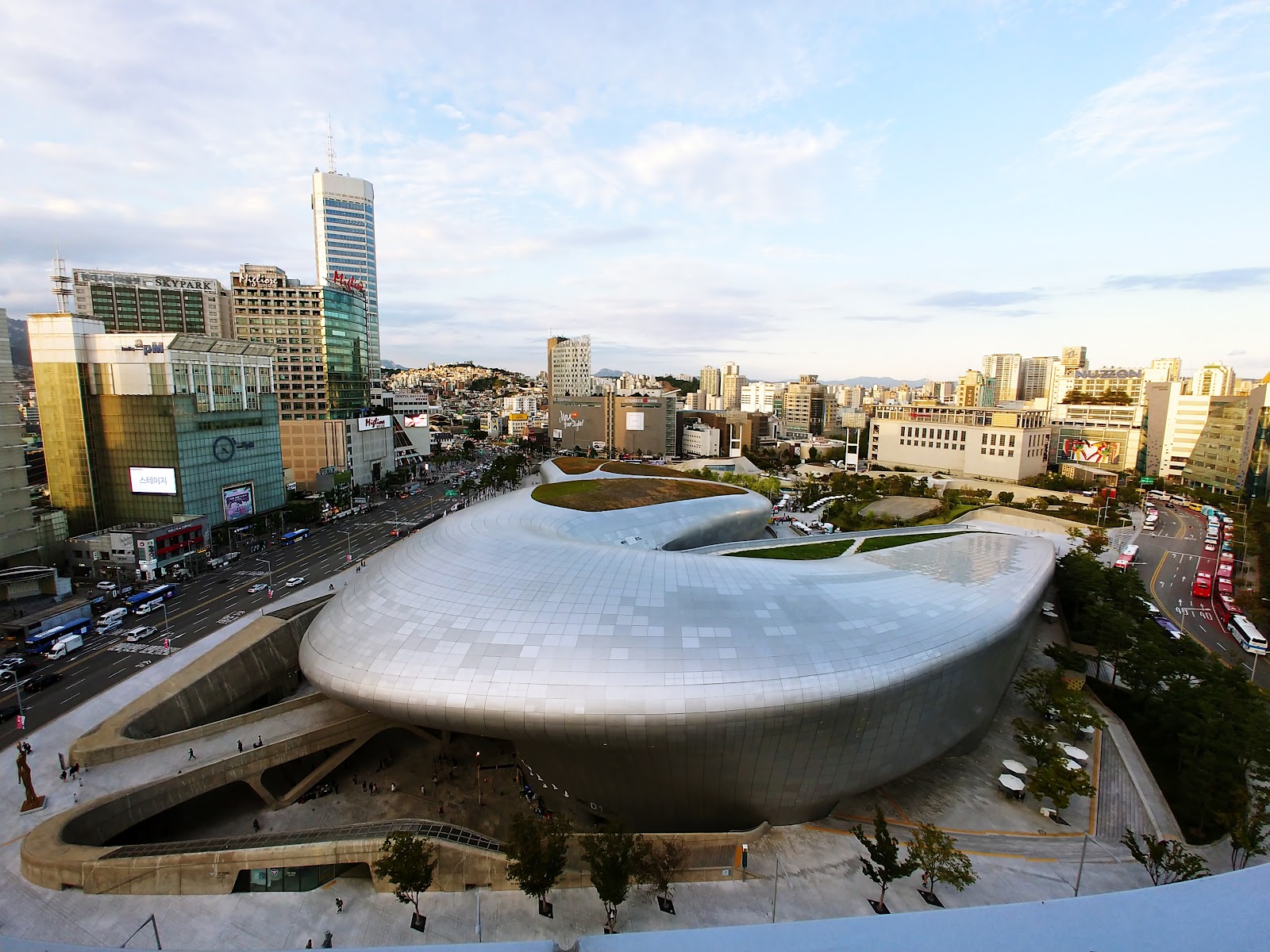
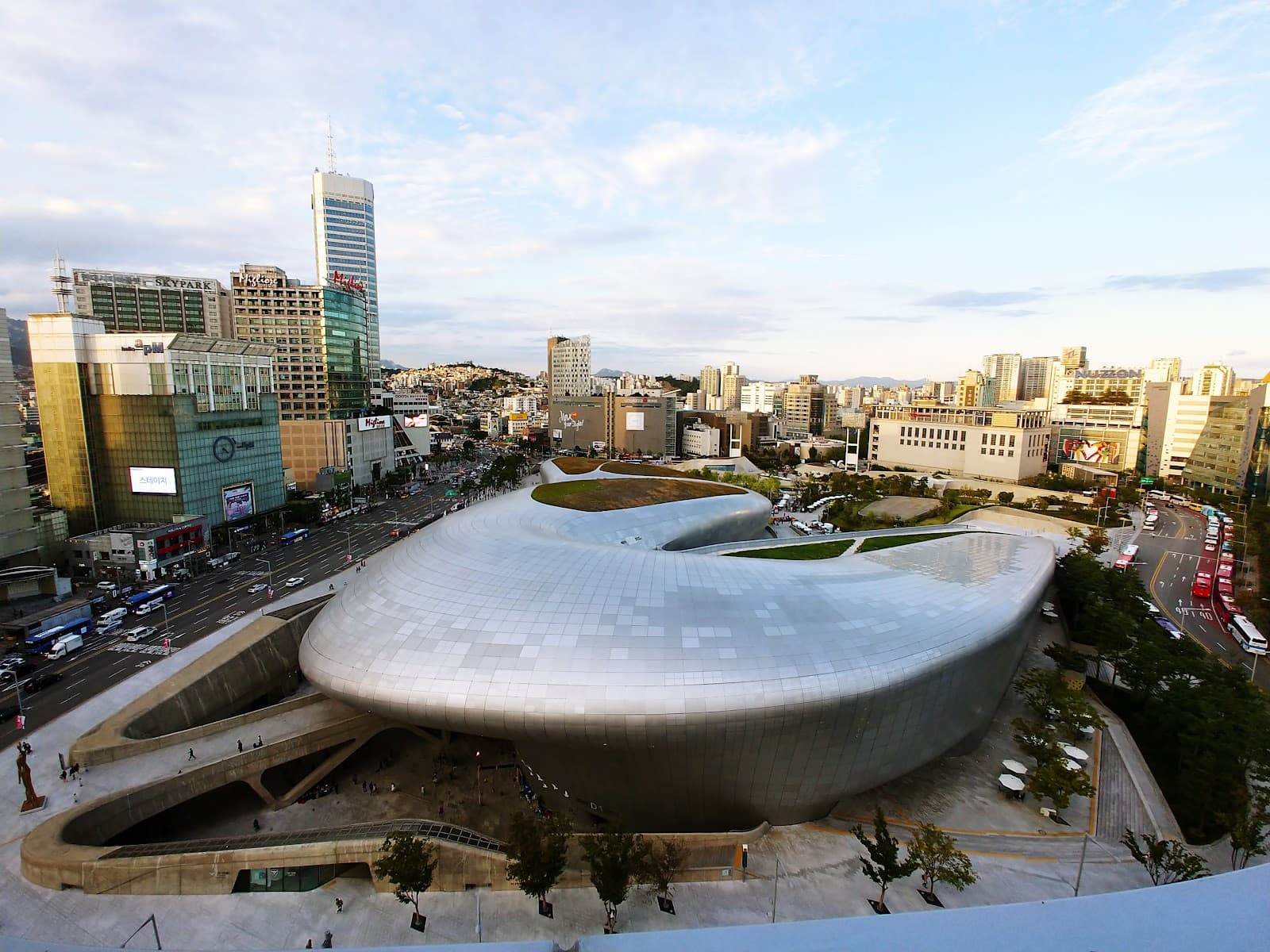
There is no other building in Seoul like this one. Designed by Zaha Hadid Architects and opened in 2014, the Dongdaemun Design Plaza covers 86,574 square meters with a surface of 45,133 unique aluminum panels. No two panels are identical. No straight lines exist anywhere in the composition. The building's edges dissolve into the surrounding landscape, and at night, when the LED lighting activates, the entire mass appears to hover.
The DDP is not simply a building; it is a civic-scale argument for parametric design. The premise — that computational tools allow form to follow forces rather than geometry — produces an interior that continues the exterior logic. Curved exhibition halls, flowing circulation paths, and spaces that disorient pleasantly, forcing an engagement with volume that conventional buildings never require.
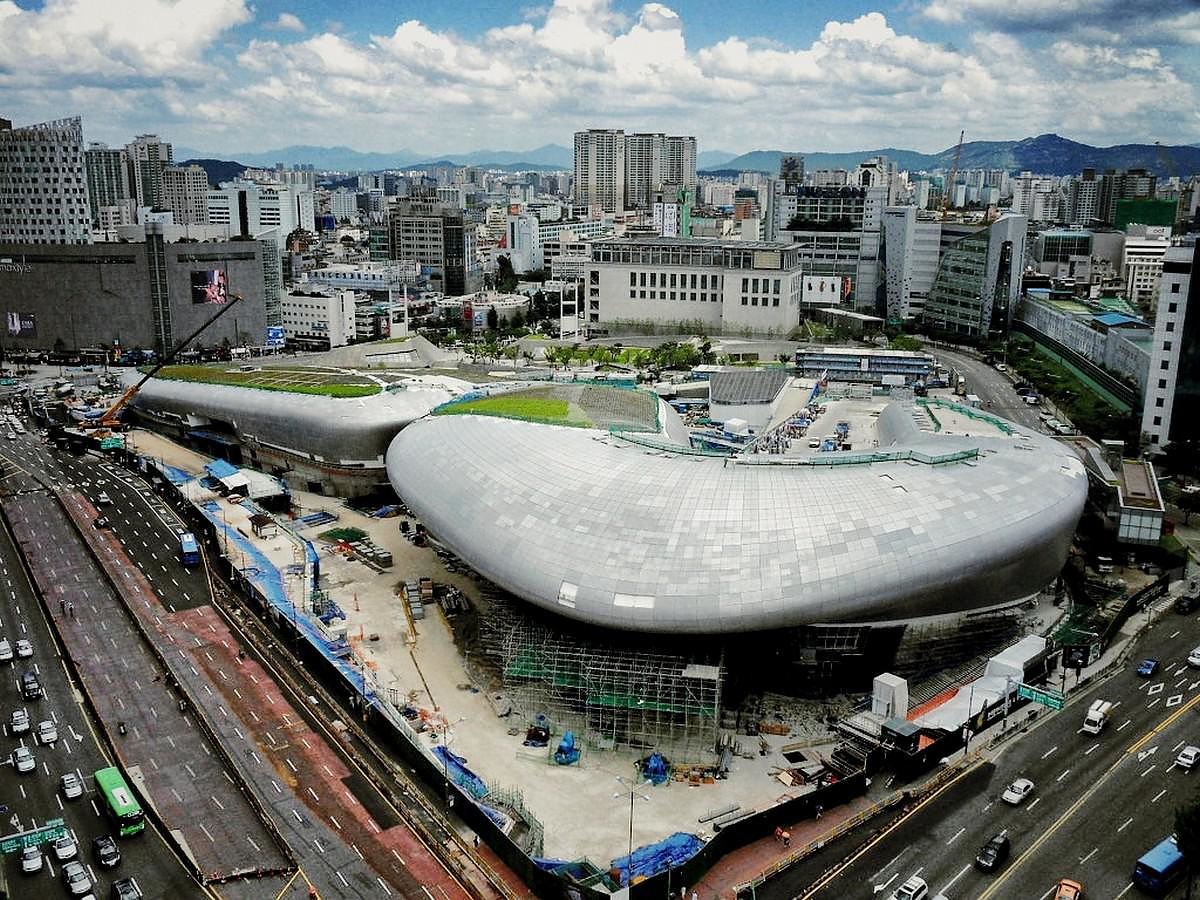
The programming rotates constantly: Seoul Fashion Week, major design exhibitions, and curated retail make the DDP a destination year-round. But the building itself is always the primary exhibit. Outdoor areas are accessible 24 hours, and the evening illumination — when 45,133 panels catch and reflect the surrounding city lights — is worth the trip alone.
- Address: 281 Eulji-ro, Jung-gu, Seoul
- Hours: Exhibition halls 10:00–19:00; Design Store 10:00–20:00; outdoor areas 24 hours
- Access: Exits 1 or 2, Dongdaemun History & Culture Park Station (Lines 2, 4, 5)
- Admission: Free to enter; special exhibitions vary
The Multi-Author Campus
What happens when three consequential architects each design a separate building for the same hillside site, with no mandate to agree?
2. Leeum Museum of Art
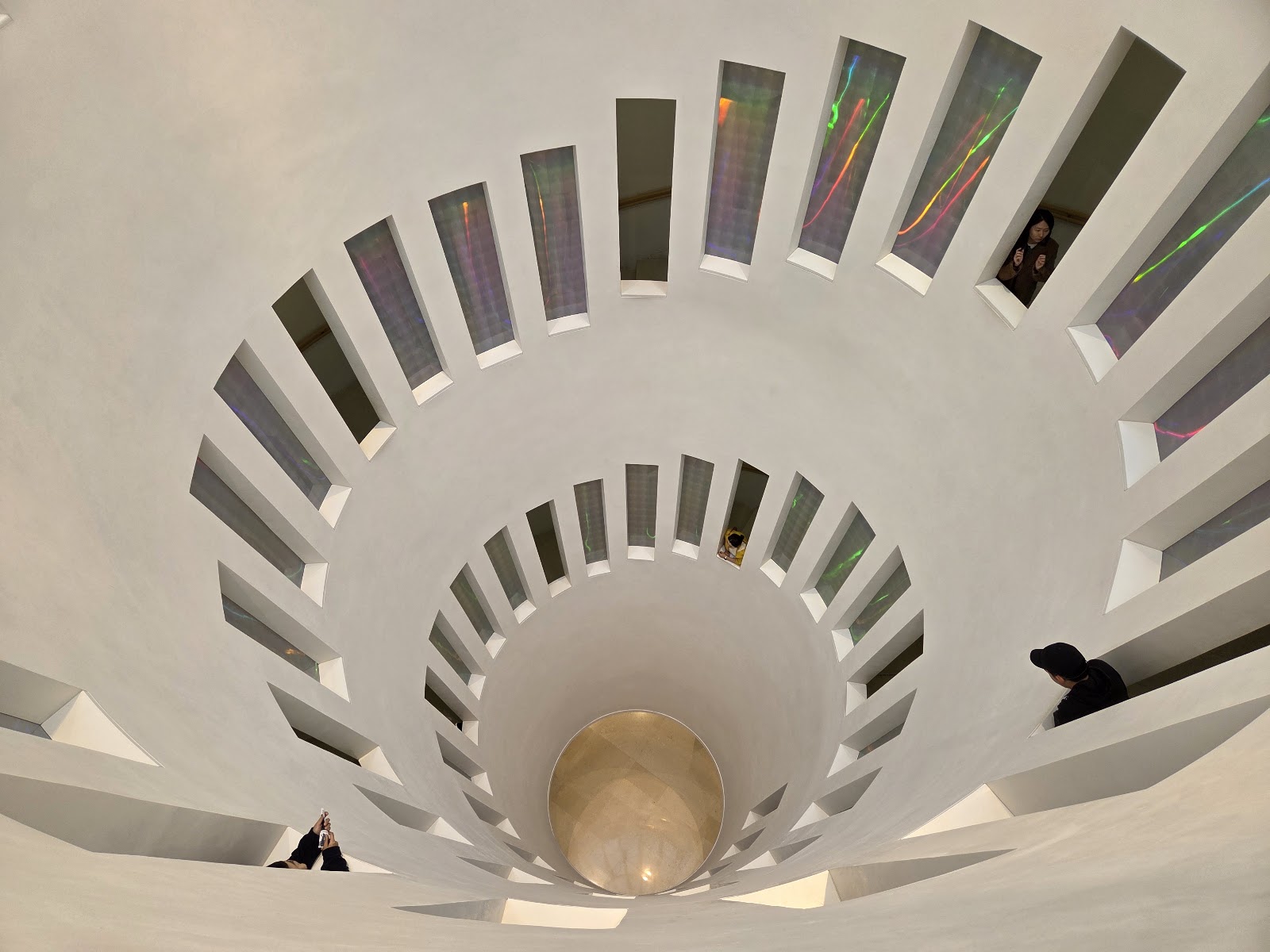
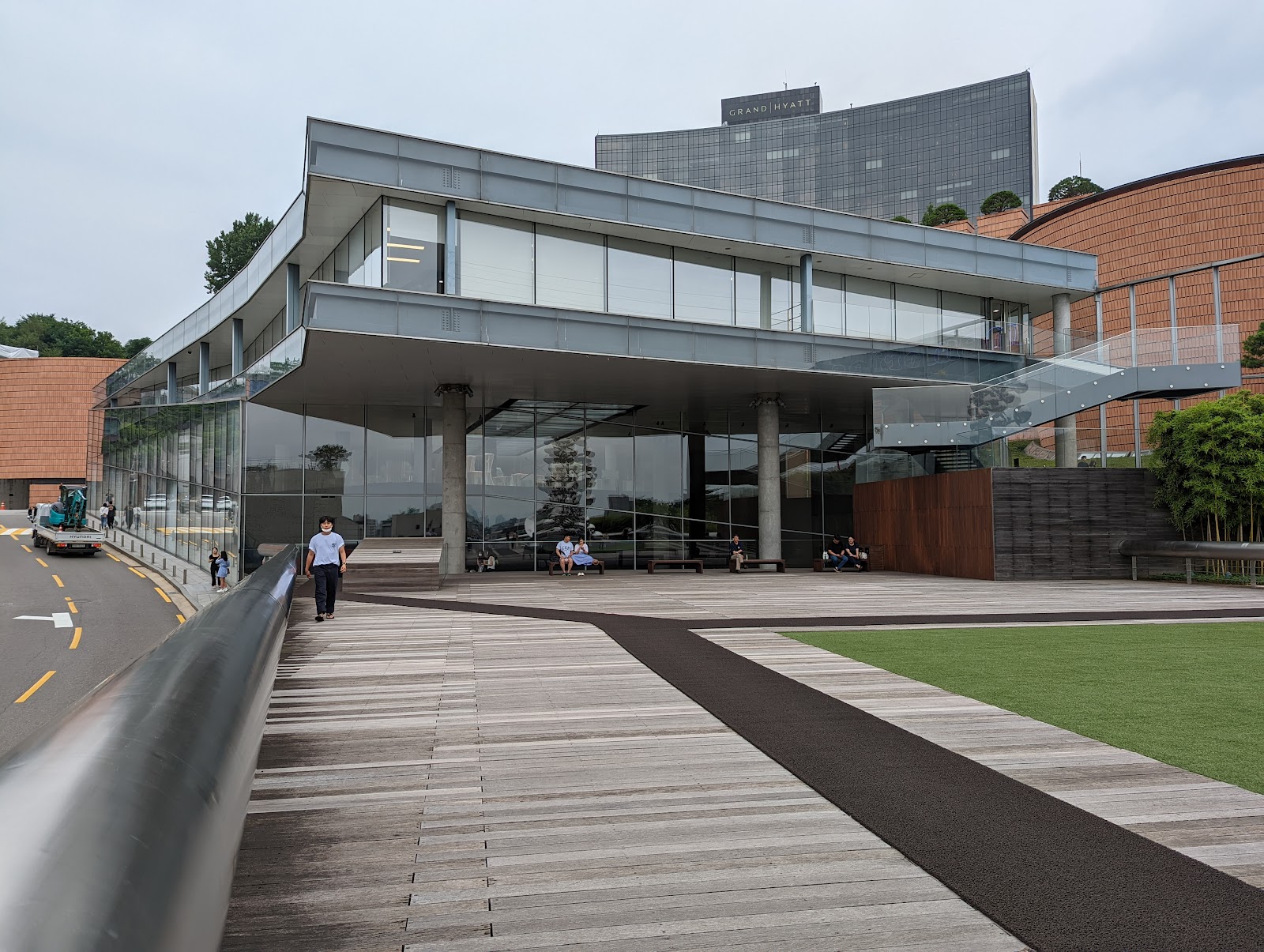
Leeum, funded by the Samsung Foundation of Culture and opened in 2004, asked exactly this question. Mario Botta designed Museum 1: terracotta cylinders climbing the Hannam-dong hillside, housing traditional Korean art from the Three Kingdoms through the Joseon Dynasty. Jean Nouvel designed Museum 2: a dark stainless steel volume cutting against the slope, housing modern and contemporary Korean and international art. Rem Koolhaas designed the Samsung Child Education & Culture Center: an inverted truncated cone in rust-colored weathering steel, cantilevering over the central plaza.
The three buildings do not agree with each other — and that is the design. Each responds to the hill, the program, and the collection in a distinct formal language. Moving between them is a compressed education in contemporary architectural philosophy: Botta's craft and materiality, Nouvel's precision and drama, Koolhaas's formal audacity.
The collection justifies a full day. Botta's building contains some of Korea's most significant traditional ceramics — Goryeo celadon and Joseon white porcelain — alongside Buddhist sculpture and court paintings. Nouvel's holds a permanent contemporary collection including early Lee Ufan and significant international holdings.
- Address: 60-16 Itaewon-ro 55-gil, Yongsan-gu, Seoul (Hannam-dong)
- Hours: Tue–Sun 10:00–18:00 (closed Mondays and major holidays)
- Access: 15-minute walk from Hangangjin Station (Line 6); short taxi from Itaewon Station
- Admission: Museum 1 permanent collection free; temporary exhibitions require tickets
The Beauty Building
3. Amorepacific Museum of Art (APMA)
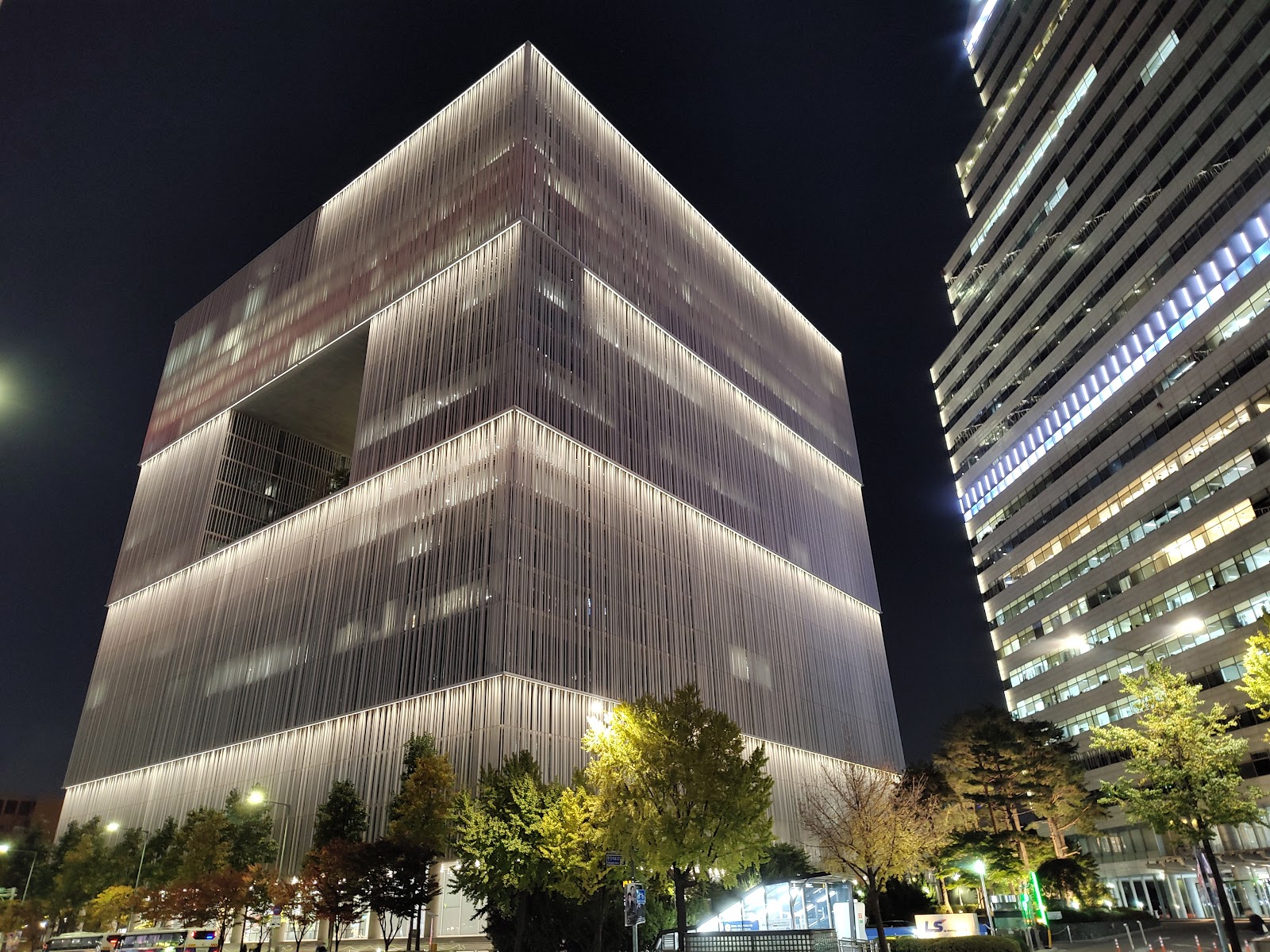
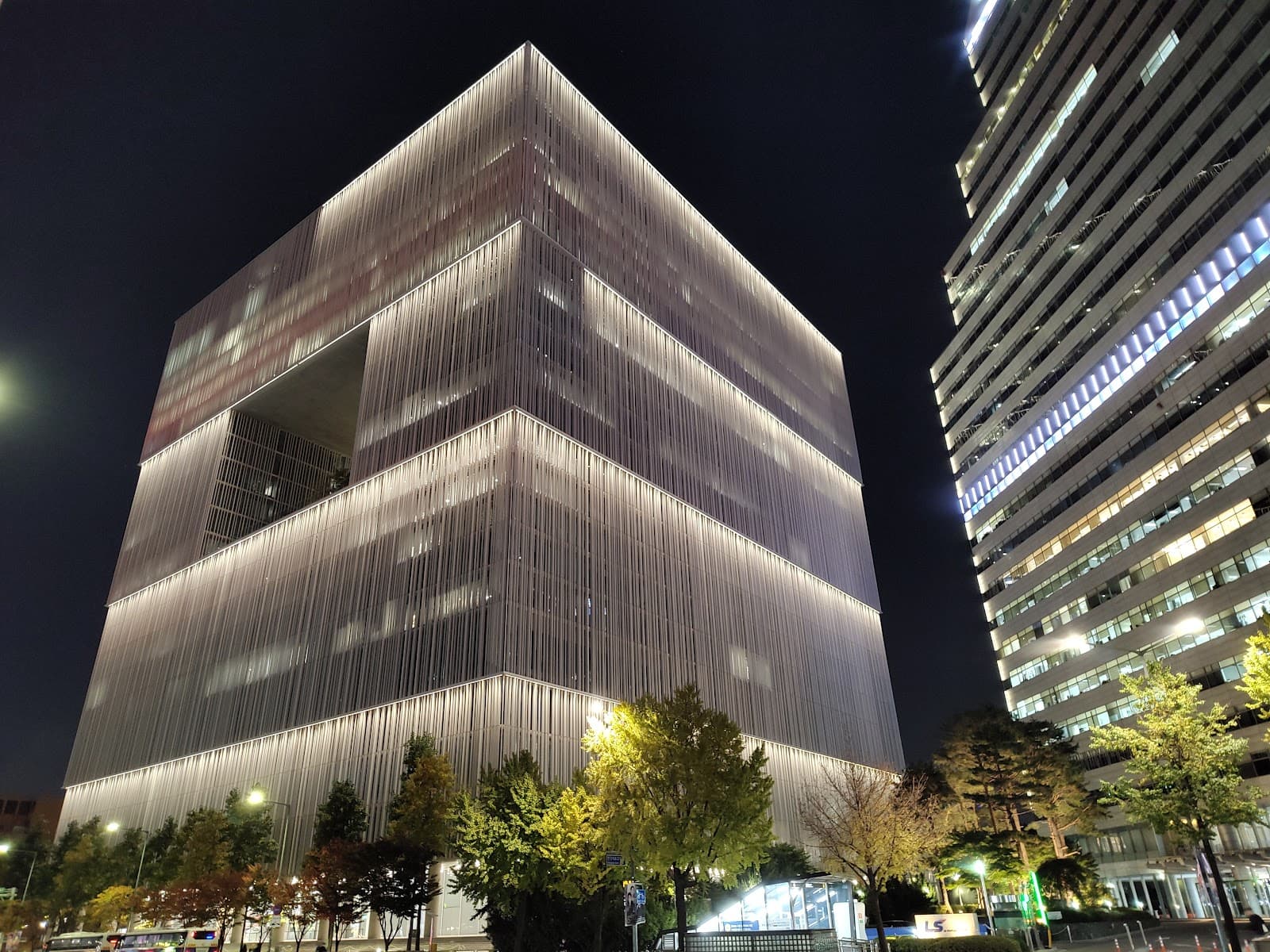
David Chipperfield designed the Amorepacific headquarters as a square lantern: a massive cube with three courtyard voids cut through its mass, flooding the interior with controlled natural light. The scale is extraordinary — the building reads as a single monumental object from the surrounding streets, yet inside the proportions become measured and human. Chipperfield's signature vocabulary — restrained material use, precise geometry, light as the primary spatial element — reaches a particular refinement here.
The Amorepacific Museum of Art (APMA) occupies the lower floors and is, notably, free to enter. The collection focuses on contemporary Korean and international art with a curatorial intelligence around the intersection of art and beauty — appropriate for the world's fifth-largest cosmetics company. The apLAP art library on the lower level is a reading room of unusual spatial quality: designed for sustained engagement, not photography.
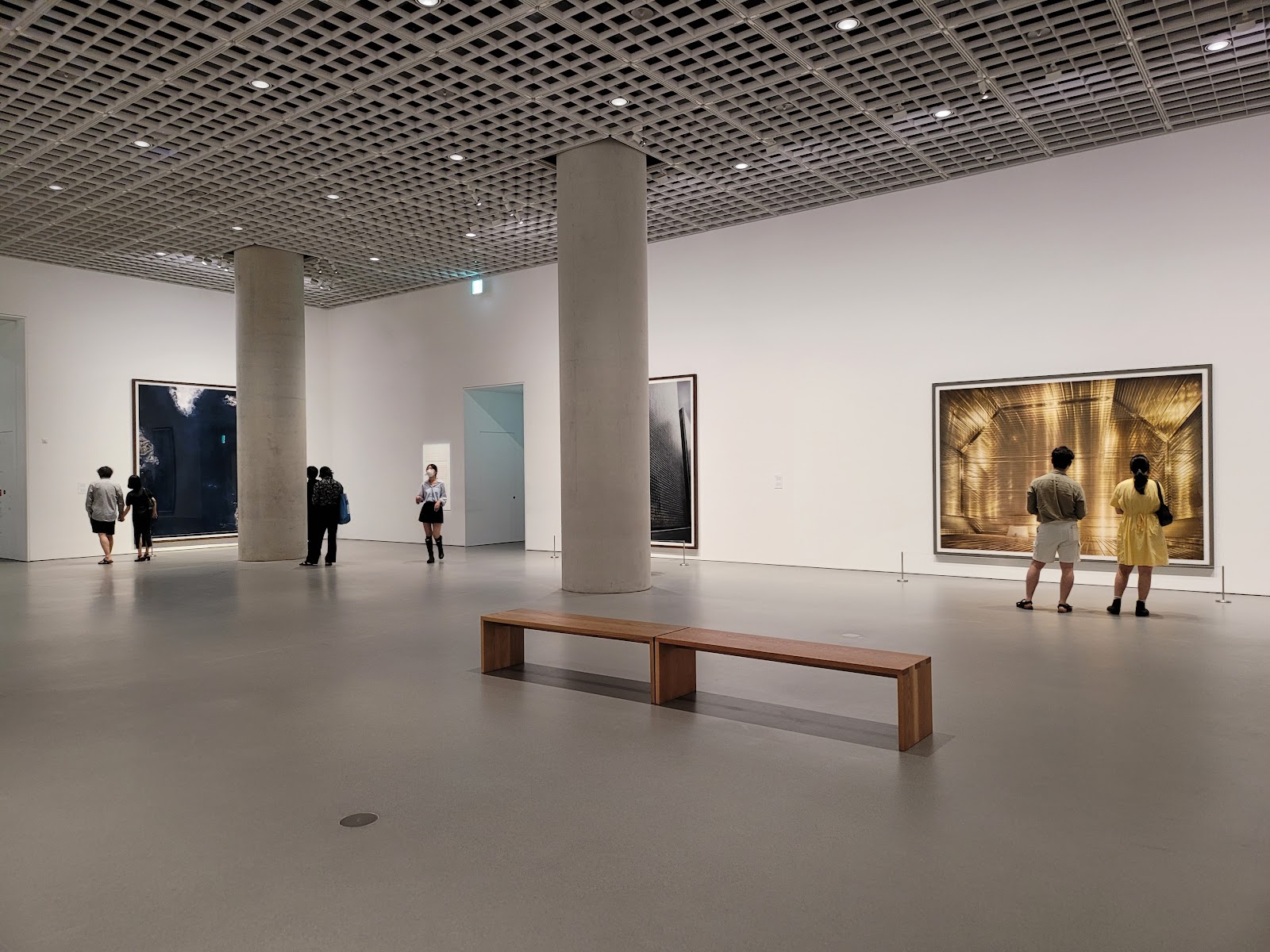
This is one of Seoul's most consistently undervisited design destinations. International visitors tend to overlook it in favor of the more prominent Leeum. The building and collection both reward the detour.
- Address: 100 Hangang-daero, Yongsan-gu, Seoul (Amorepacific Headquarters)
- Hours: Tue–Sun 10:00–18:00 (closed Mondays)
- Access: Exit 4, Sinyongsan Station (Line 4); or Exit 2, Yongsan Station (Lines 1, KTX)
- Admission: Free
When Retail Becomes Landscape
4. The Hyundai Seoul
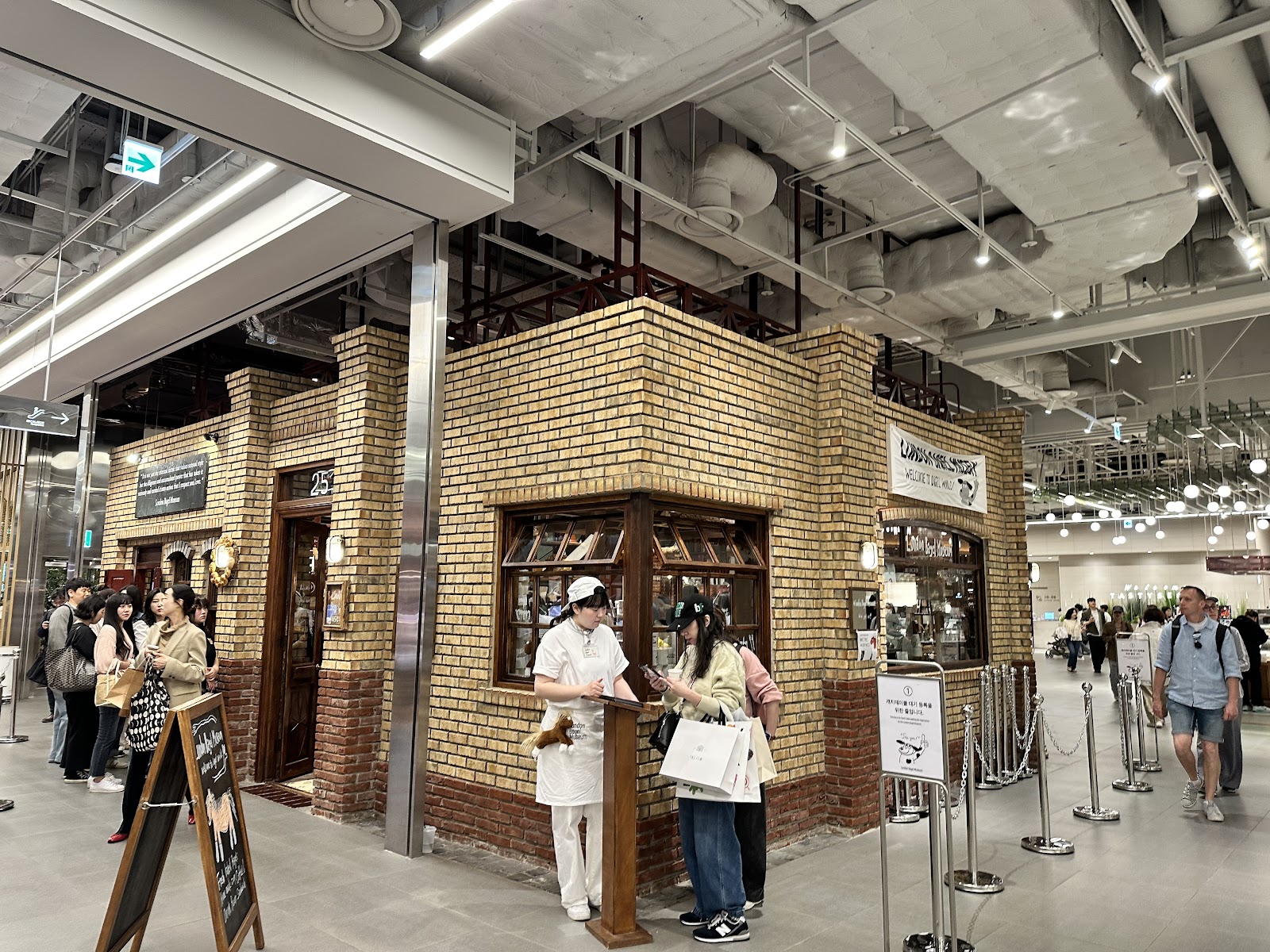
Opened in February 2021, The Hyundai Seoul made an immediate argument that retail could be something more than shopping. The building's central atrium rises 49 meters to a skylight system that floods the space with natural light. Inside, flanking the atrium on multiple levels, is a living forest: actual mature trees, not decorative plants, but a curated planted landscape that functions as the building's organizing principle.
The design premise is simple and radical — what if the most valuable square meters in a department store were given to nature? The answer is a space that earns its own reason to visit, separate from the retail it contains. Local residents use the atrium as a meeting point and gathering space. The food halls on the lower floors draw queues that have nothing to do with shopping.
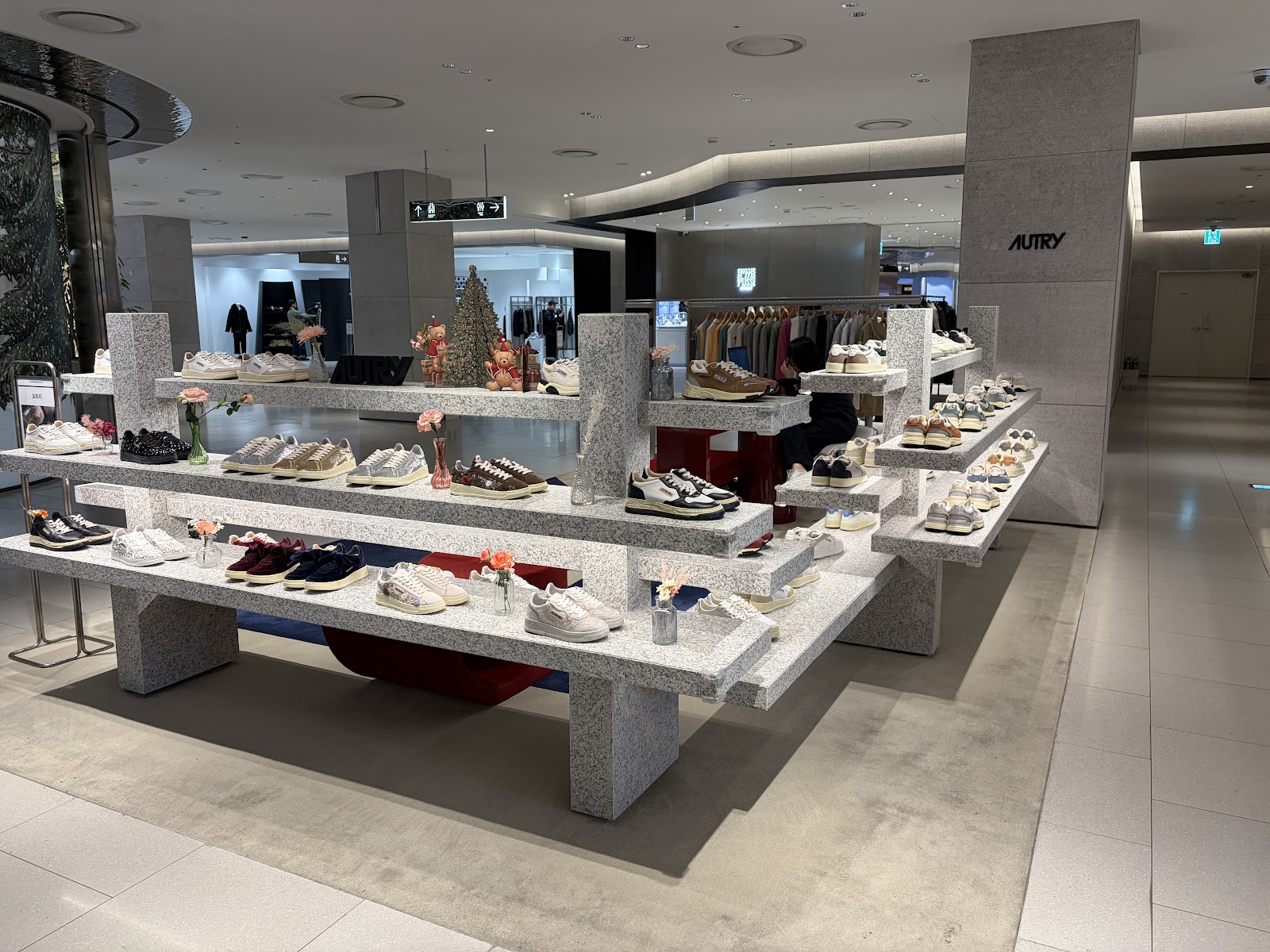
For design tourists, the interest is architectural: this is South Korea's most spatially ambitious retail building, and the biophilic logic — nature as structural element, not ornament — is worth studying as a design position.
- Address: 108 Yeoui-daero, Yeongdeungpo-gu, Seoul
- Hours: Mon–Thu 10:30–20:00; Fri–Sun 10:30–20:30
- Access: Direct connection from Yeouido Station (Lines 5, 9)
- Admission: Free
Art Within the Palace District
5. MMCA Seoul
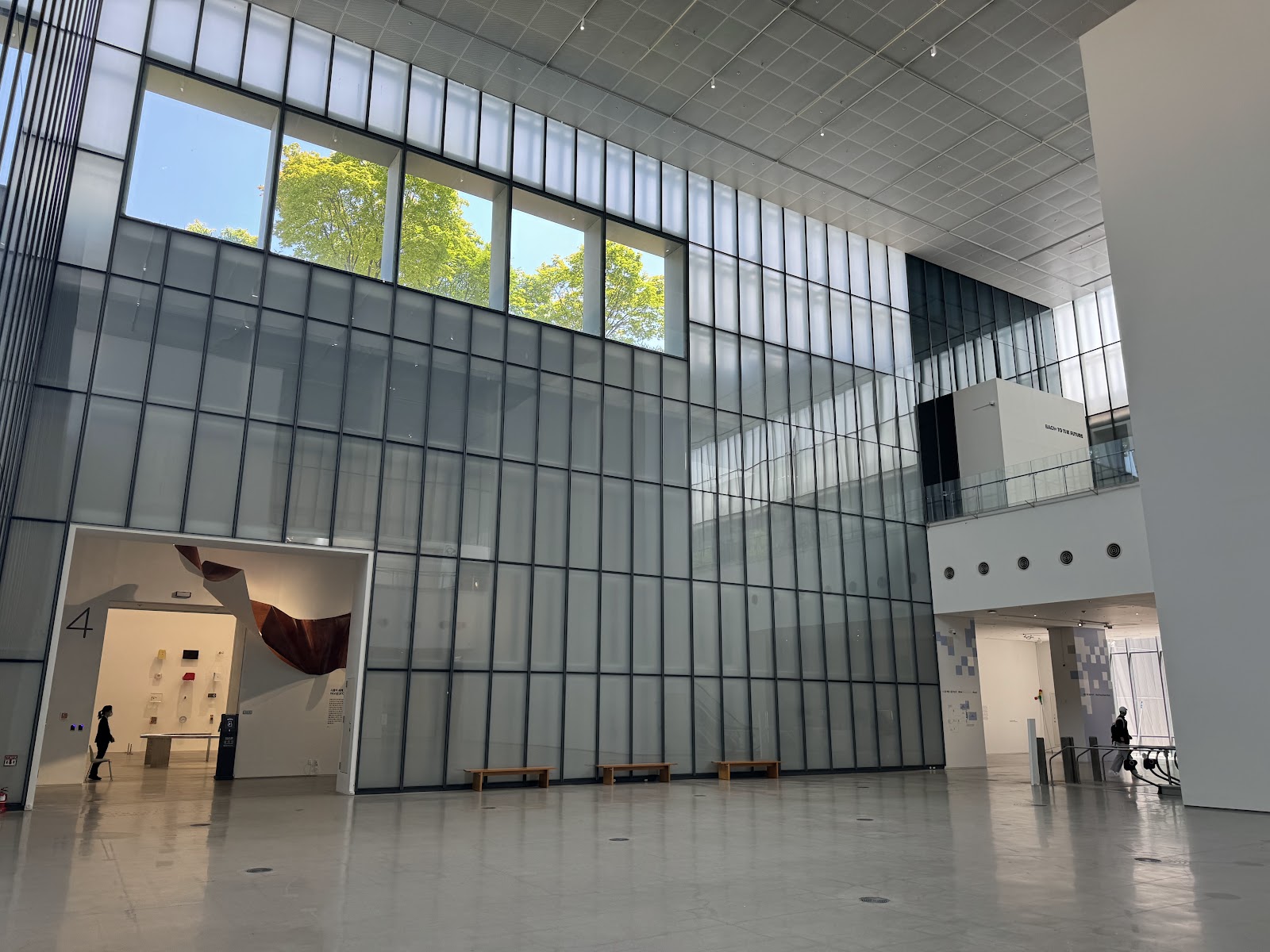
The National Museum of Modern and Contemporary Art's Seoul branch is an unlikely spatial proposition: a contemporary art museum inserted within the historic compound adjacent to Gyeongbokgung Palace, converting former military buildings into galleries and connecting them with a contemporary architectural intervention. The spatial negotiation between new construction and the stone walls and tile-roofed structures of the Joseon era is itself a design argument — about cultural continuity, about how contemporary Seoul relates to its own past.
The Terrarosa coffee bar inside the museum complex is one of Seoul's most considered cafe spaces: a glass and steel intervention that opens fully to a garden courtyard, designed not as a commercial amenity but as a spatial extension of the museum experience.
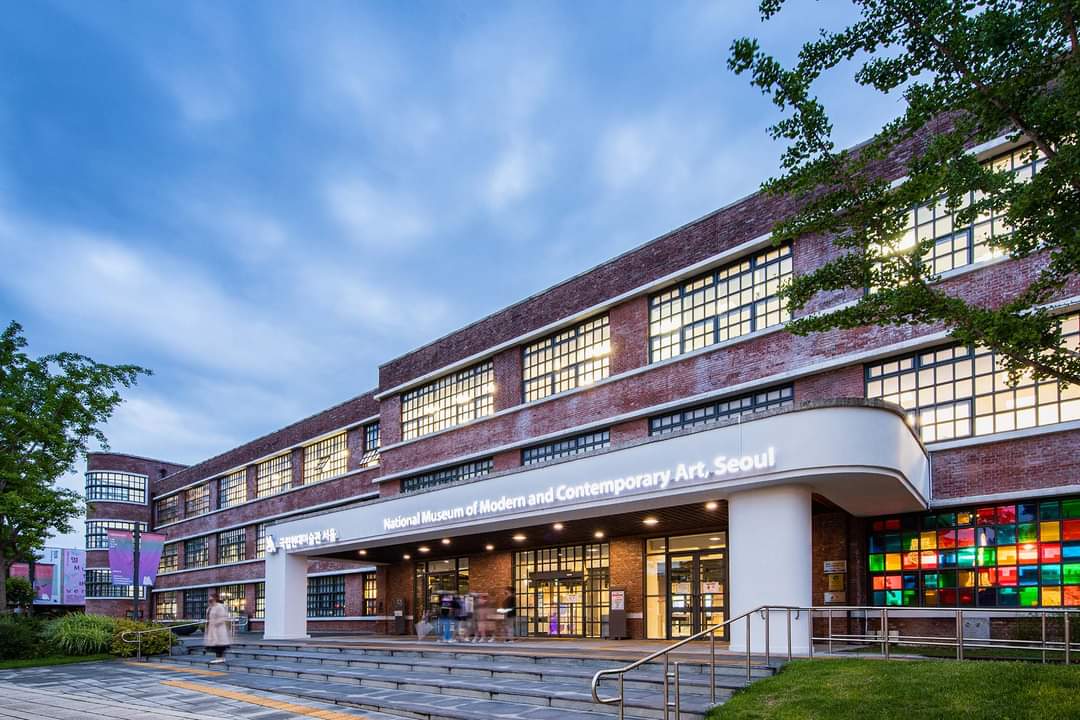
MMCA Seoul's location means a morning visit connects naturally to Gyeongbokgung Palace and the Bukchon Hanok Village — a full day engaging with how Seoul negotiates the relationship between its architectural history and its present.
- Address: 30 Samcheong-ro, Jongno-gu, Seoul
- Hours: Tue–Sun 10:00–18:00; Wed & Sat 10:00–21:00 (closed Mondays)
- Access: 5-minute walk from Anguk Station (Line 3), Exit 1
- Admission: Permanent collection ₩2,000; temporary exhibitions vary
Books as Architecture
6. Starfield Library, COEX Mall
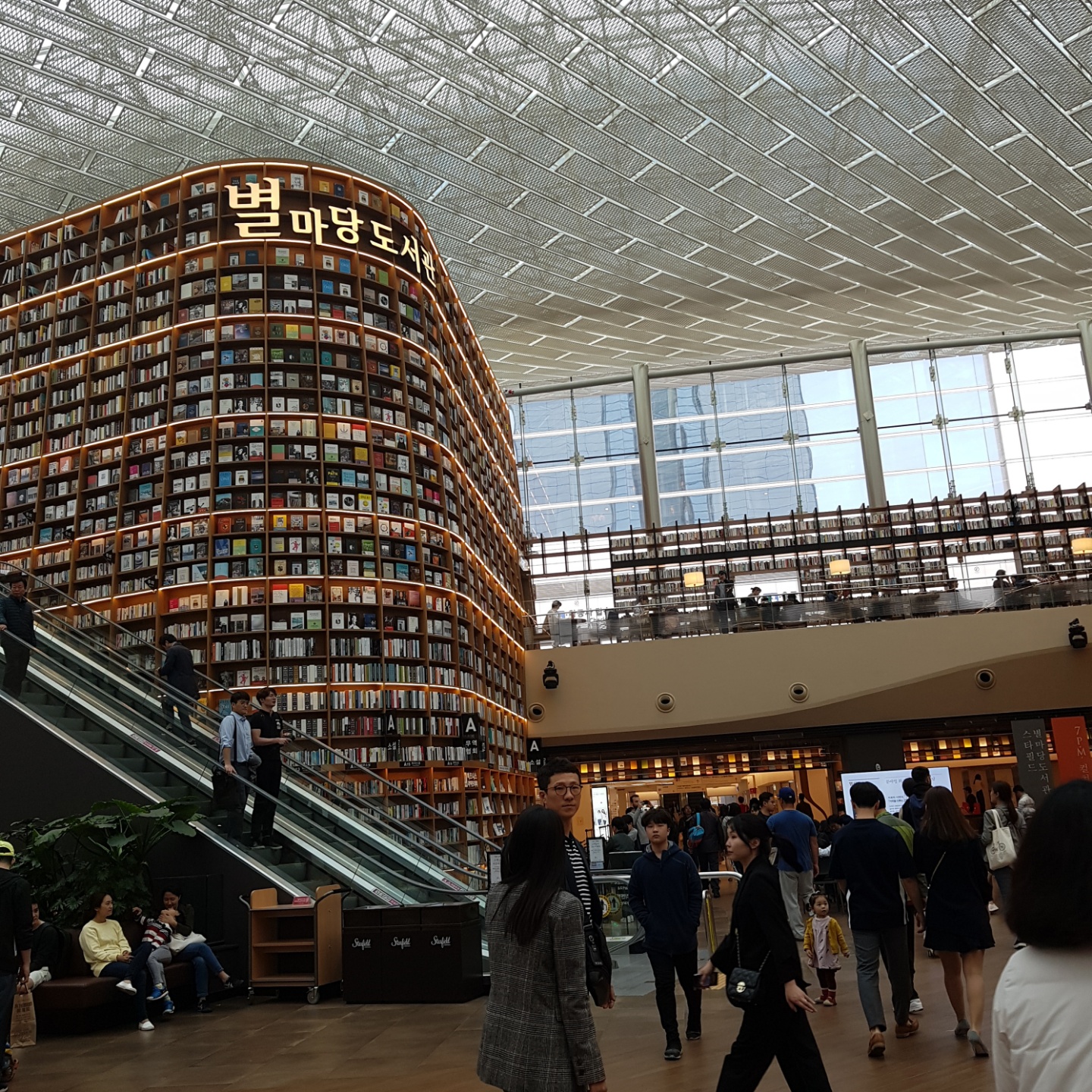
The least institutional destination on this trail is perhaps the most democratically designed. Starfield Library occupies the central atrium of the COEX underground mall in Gangnam — a double-height space lined with bookshelves rising 13 meters. The design concept is unambiguous: books as architecture. The shelves define the walls, ceiling, and atmosphere of the space simultaneously, collapsing the distinction between collection and container.
The curatorial gesture is generous: the books are real and accessible. Seating is free. The space is open to anyone passing through COEX, without admission or reservation. In a city of premium experiences, this is a public gift.
Design visitors tend to arrive at COEX for other reasons and discover the Library incidentally. It rewards more intentional attention — the precision of the shelf geometry, the organization of the collection, the way the volume is activated by the human figures moving through it, the scale shift from the surrounding mall.
- Address: 513 Yeongdong-daero, Gangnam-gu, Seoul (COEX Mall, B1)
- Hours: Daily 10:30–22:00
- Access: Exit 5 or 6, Samseong Station (Line 2)
- Admission: Free
Planning Your Design Trail
These six destinations span multiple neighborhoods, requiring strategic sequencing for a multi-day visit.
The Hannam-Yongsan Circuit (half day): Leeum Museum to Amorepacific Museum is a 15-minute taxi ride, connecting two of Seoul's most architecturally significant cultural institutions in a single afternoon. This pairing rewards the most design-focused visitors.
The Full Day East-to-West: Begin at MMCA Seoul in the morning (arrive at opening for the fewest crowds), move to DDP in the early afternoon for the scale and exterior, finish at the Starfield Library as the evening light filters through the COEX skylights.
The Yeouido Anchor: The Hyundai Seoul is a destination in itself — the atrium and food hall can absorb two to three hours. Combine with the Han River parks one block away for a Yeouido half-day.
Most of these spaces are free or low-cost. Leeum's temporary exhibitions and some MMCA shows require advance booking. All six are accessible by Seoul Metro within a 5–15 minute walk from subway stations.
Common Questions
Is the DDP worth visiting without a specific exhibition running? Yes — the building is always the primary exhibit. Outdoor areas are free and open 24 hours. The evening illumination, when 45,133 aluminum panels glow against the Dongdaemun streetscape, is worth the trip regardless of what's showing inside.
Can I visit all six in two days? Comfortably. Day one: MMCA Seoul, Leeum Museum, Amorepacific. Day two: DDP, The Hyundai Seoul, Starfield Library. Both itineraries involve cross-city transit but no single space requires more than two to three hours.
Are these spaces tourist-heavy or visited primarily by locals? Both. DDP and Starfield Library draw high local traffic, particularly on weekends. Leeum and APMA attract a more design- and art-literate audience with fewer crowds. The Hyundai Seoul skews heavily local but is entirely visitor-friendly.
Do I need to book in advance? Leeum Museum's temporary exhibitions require advance reservation. MMCA Seoul recommends booking popular shows early. The DDP, APMA, Hyundai Seoul, and Starfield Library require no advance booking.
Follow @minjicurates for ongoing coverage of Seoul's design landscape — cafes, galleries, and architectural destinations worth your attention.