Seoul Hanok Village Guide 2025: Bukchon, Namsangol & Living Traditional Architecture
Walking through the alleys east of Gyeongbokgung Palace, I encountered the graceful curve of a hanok's tiled roof. The sound of raindrops falling from the eaves. These houses where Koreans lived 600 years ago—people still call them home today.
A hanok is not simply an old house. It's a scientific architectural solution developed during the 1400s Joseon Dynasty to survive Korea's harsh climate—frigid continental air masses in winter, hot and humid oceanic fronts in summer. The coexistence of ondol (underfloor heating) and maru (ventilated wooden floors) in one space represents Korean architectural ingenuity found nowhere else in the world.
Seoul offers three distinct hanok experiences. Bukchon is an aristocratic residential neighborhood with 600-year history, Namsangol is an open-air museum recreating Joseon-era life, and Ikseondong is a 1920s working-class hanok district transformed into a modern cafe street. Each reveals a different facet of Korea's living architectural tradition.
Bukchon Hanok Village: 600 Years of Aristocratic Elegance
History: Born Between Palaces
The name Bukchon (北村) means "Northern Village," referring to its location north of Cheonggyecheon Stream. During the Joseon Dynasty, the area north of the stream housed yangban (aristocrats) and royalty, while commoners lived to the south. Positioned between Gyeongbokgung and Changdeokgung Palaces, Bukchon was the center of power.
In the 1930s during Japanese colonial rule, real estate developers subdivided the area, creating the current alley structure. They transformed large aristocratic estates into smaller urban hanok, but maintained the traditional tiled roofs and architectural integrity.
As Seoul rapidly modernized in the 1990s, Bukchon's hanok faced demolition. The city's "Bukchon Preservation Project," launched in 2001, saved them. Today, approximately 900 hanok remain.
Critical 2025 Update: Visitor Restrictions (Red Zone)
Bukchon remains a residential neighborhood where 6,100 people live. However, 6.4 million visitors in 2024 created severe privacy invasion and noise problems for residents.
New Regulations Effective March 1, 2025:
- Restricted Hours: Tourist entry permitted only 10:00 AM - 5:00 PM
- Red Zone Area: 34,000㎡ residential area behind Jeongdok Library (Bukchon-ro 11-gil district)
- Penalty: ₩100,000 ($76) fine for violations
- Exemptions: Residents, family visitors, accommodation guests, shop customers
Charter Bus Ban: Since January 2025, tour buses are prohibited from entering Bukchon due to illegal parking and traffic congestion.
Why these rules? The resident-to-tourist ratio is 1:1,000. Over 10,000 visitors daily crowding narrow alleys meant residents couldn't avoid being photographed at their own doorsteps and endured noise until late night. This isn't mere inconvenience—it's a quality of life crisis.
Bukchon Visitor Etiquette: Respectful Tourism
Bukchon is not a museum—it's people's homes. Please observe these guidelines:
- Minimize noise: Don't talk loudly in the alleys
- Respect privacy: Don't photograph or peek over hanok walls
- Carry trash: Almost no public bins exist
- Small groups: Visit in groups of 5 or fewer
- No doorway photos: Don't photograph private house entrances
- Yield to residents: Give locals right of way in narrow alleys
Official Bukchon Sign: "This is a residential area. Quiet Please."
Bukchon 8 Scenic Views: Top Photo Spots
The city designated 8 official photo locations:
- View 1 - Changdeokgung Palace panorama (Yun Bo-seon House front)
- View 2 - Wonseo-dong Craft Street
- View 3 - Gahoe-dong 11-beonji alley
- View 4 - Gahoe-dong 31-beonji hill (cascading tiled roofs)
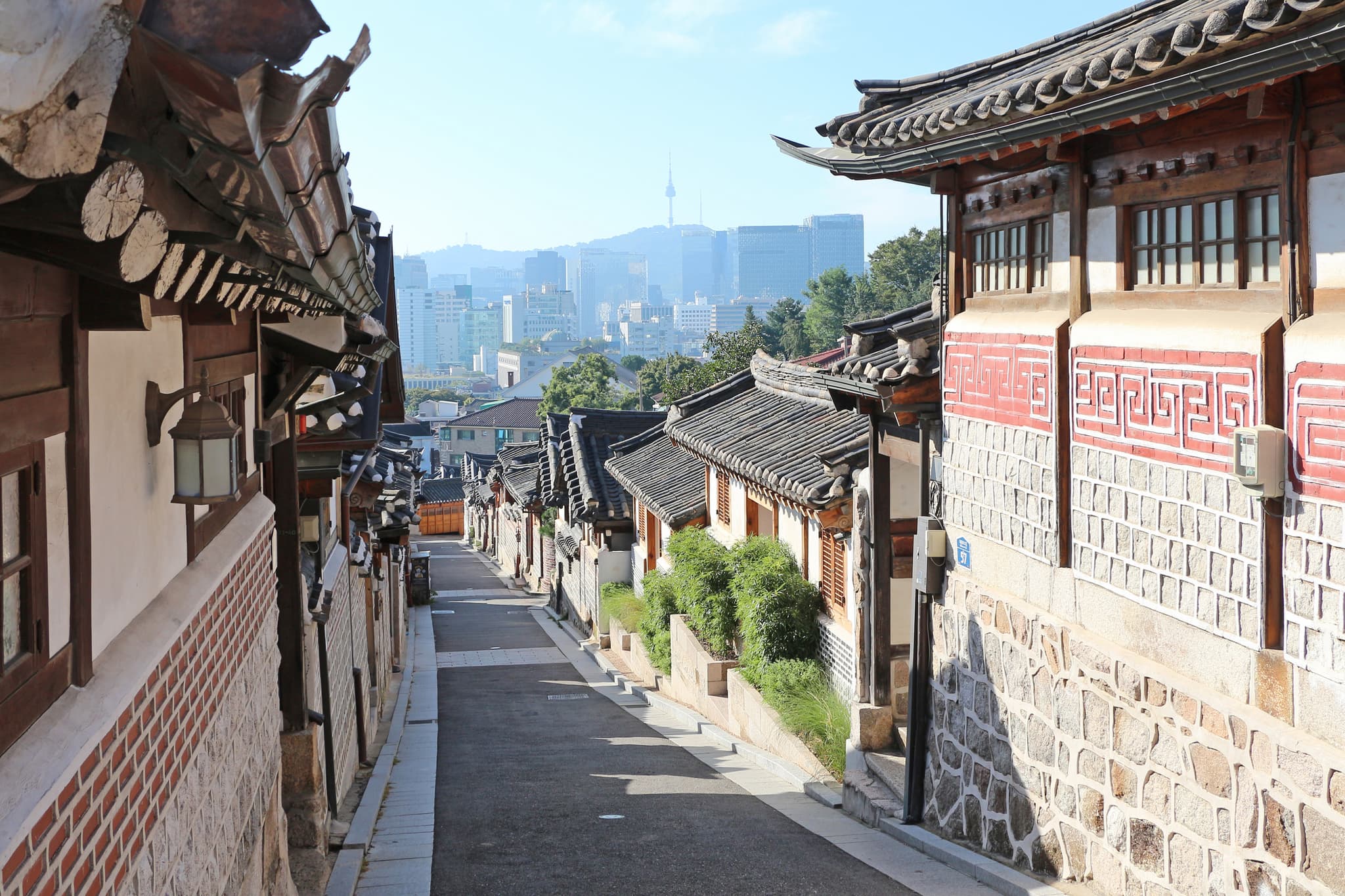
- View 5 - Gahoe-dong downhill alley (most famous photo spot)
- View 6 - Gahoe-dong uphill alley
- View 7 - Gahoe-dong 31-beonji alley
- View 8 - Bukchon panorama (Samcheong-dong stone steps)
Top Recommendation - View 5: The contrast between layered tile roofs and Seoul's modern skyline is stunning. However, this is also where resident inconvenience peaks. Photograph quietly and move quickly.
Bukchon Hanok Architectural Features
Tiled Roof Curves: Hanok roofs follow gentle curves, not straight lines. This "bellying beam" technique allows rainwater to flow naturally and creates visual stability.
Eaves (Cheoma): The roof extends far beyond walls. In summer, eaves block high-angle sunlight. In winter, low-angle sunlight enters the interior. The angle is scientifically calculated.
Dancheong (Decorative Painting): The colorful patterns on columns and eaves. Originally wood protection paint, it evolved into decorative art for palaces and temples. Common Bukchon houses have minimal or no dancheong—it was a royal and religious privilege.
Walls: Bukchon hanok walls are earthen with tile caps. Wall height indicated the owner's social status—higher walls for higher-ranking aristocrats.
Bukchon Visit Information
Getting There:
- Subway Line 3, Anguk Station Exit 3, 5-minute walk
- Buses: 151, 162, 171, 172, 272, Jongno 11
Best Visit Time:
- 10:00-11:00 AM (quiet, good light)
- Weekdays are much less crowded than weekends
Time Needed: 2-3 hours (leisurely walk with photos)
Parking: Almost nonexistent. Public transit strongly recommended.
Cultural Programs: Bukchon Cultural Center (Gahoe-dong 31) offers free hanok exhibits and experience programs.
Namsangol Hanok Village: Walking Through Joseon-Era Life
Concept: Time Capsule Restored as Open-Air Museum
Namsangol Hanok Village differs completely from Bukchon. This isn't a residential neighborhood—it's an open-air museum opened in 1998. Five Joseon-era hanok scattered across Seoul were relocated and restored at the northern foot of Namsan Mountain.
Why relocate hanok? During 1990s Seoul redevelopment, historically valuable hanok faced demolition. The city dismantled, relocated, and restored them at Namsangol—essentially an architectural rescue operation.
Five Restored Hanok: Class-Based Housing Culture
Namsangol's greatest educational value: comparing hanok structure across social classes at a glance.
1. Min Family House (Yangban residence, relocated from Samcheong-dong)
An aristocratic household from Samcheong-dong, relocated in 1995.
- Structure: Separate women's quarters (anchae), men's guest quarters (sarangchae), and servants' quarters (haengnangchae)
- Feature: Confucian spatial separation. Women lived exclusively in anchae; male guests were received in sarangchae.
- Architecture: Tiled roof, spacious wooden maru floor, no dancheong but high-quality timber.
2. Yun Family House (Middle-class residence, relocated from Jegi-dong)
Home of a jung-in (professional middle class—interpreters, physicians).
- Feature: Smaller than yangban houses but still using tiled roofs. Middle-class families were economically prosperous but socially ranked below yangban.
- Structure: L-shaped with anchae and sarangchae connected.
3. Empress Sunjeong's Natal Home (Royal in-law residence)
The childhood home of Korea's last empress, Empress Sunjeong.
- Feature: Befitting a family married into royalty, it's large and elegant.
- Woldae: A stone platform in front—an element found only in royal architecture.
4. Haepung Daewongun Yun Taek-yeong Jaesil (Ancestral ritual hall)
A building dedicated to performing ancestral rites.
- Feature: As ritual space rather than living quarters, its structure is simple.
- Jaesil Significance: Joseon aristocrats considered ancestral rites paramount, building separate structures solely for ceremonies.
5. Cheonugak (Time Capsule Hall)
Built in 1994 to commemorate Seoul's 600th anniversary, this structure houses a time capsule to be opened in 2394—600 years later.
Hanok Heating and Cooling: The Science of Ondol and Maru
Namsangol lets you enter hanok interiors freely. Two architectural elements demand close observation:
Ondol: The World's Oldest Underfloor Heating
Ondol (溫突), meaning "warm stones," is Korea's unique heating system developed since prehistoric times.
- How It Works: Fire in the kitchen fireplace sends hot smoke through channels (gorae) beneath the room. The stone floor (gudeul) slowly heats and radiates warmth.
- Scientific Excellence: Radiant heat doesn't dry the air and achieves high thermal efficiency. Modern floor heating systems are based on ondol principles.
- Cultural Impact: Ondol led Koreans to sit and sleep on floors. No beds—just cotton mattresses (yo) spread on the floor. Dining tables remain low for floor sitting.
Maru: Summer Cooling System
Maru is a wooden floor elevated 30-50cm above ground.
- Cooling Principle: Air circulates freely beneath the floor, dissipating heat. Sitting on maru brings cool air rising from below.
- Space Use: The spacious daecheong-maru served as summer dining, resting, and guest reception area.
- Origin: Developed for southern regions with oceanic climate.
Ondol + Maru = Hanok's Genius
Korea experiences Siberian continental high pressure in winter (extremely cold and dry) and North Pacific oceanic air masses in summer (extremely hot and humid). For a temperate climate, temperature extremes are severe.
Hanok achieved coexistence of ondol (winter) and maru (summer) in one space. Live in ondol rooms during winter, shift to maru in summer. This architectural solution is uniquely Korean, found nowhere else globally.
Namsangol Traditional Experience Programs
Namsangol's biggest advantage: free experience programs.
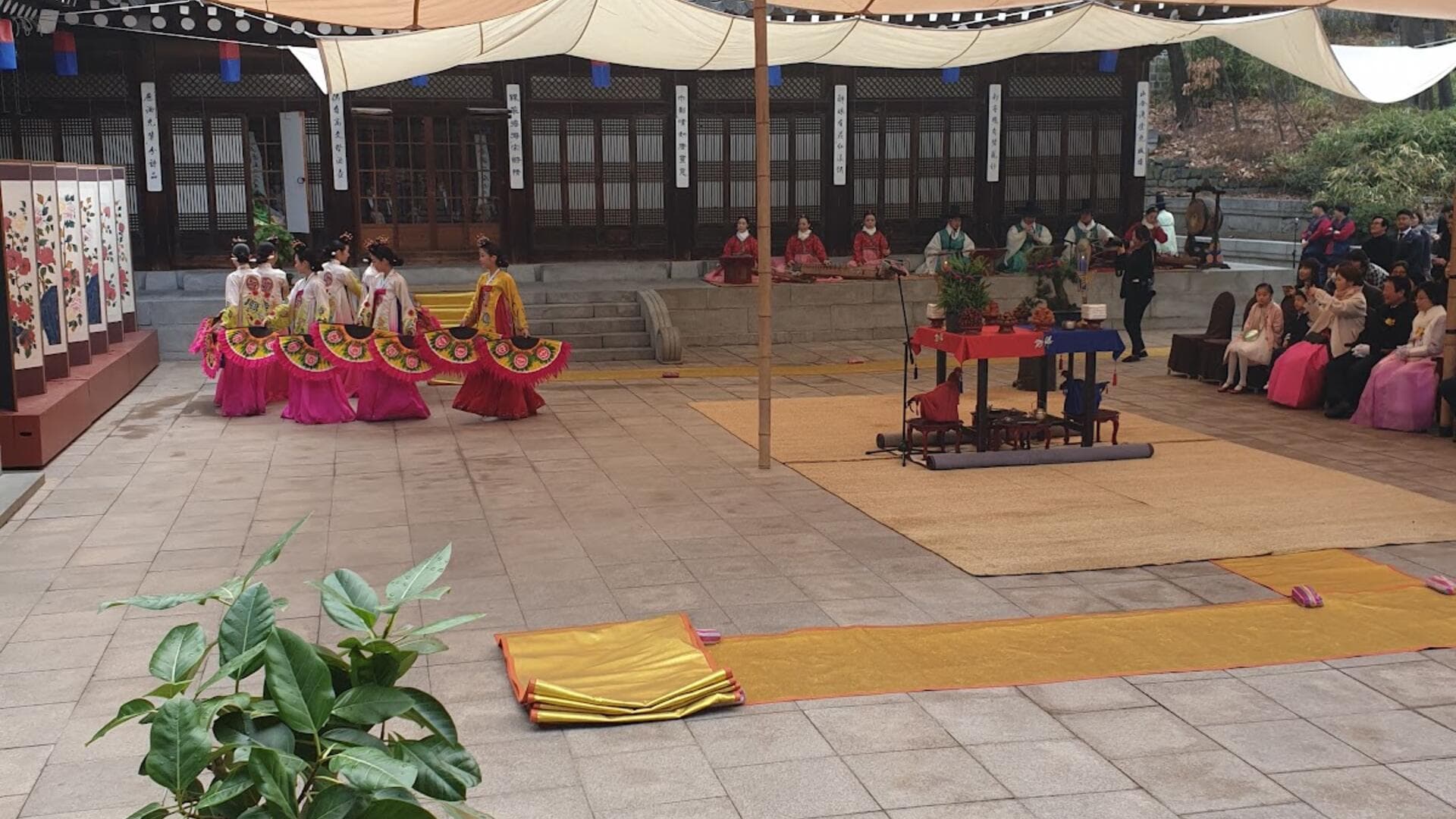
- Hanbok Experience: Free (30 minutes, photography inside hanok permitted)
- Traditional Etiquette Training: Learning bowing and tea service
- Yunnori, Jegichagi, Tuho: Traditional games
- Hanji Craft: Traditional paper crafts
- Traditional Tea Tasting: Korean traditional teas
- Falconry Demonstration: Weekend traditional hunting displays (Joseon royal hunting culture)
Reservations: Most programs accept same-day walk-ins. Hanbok experience may have long waits on weekends—weekdays recommended.
Namsangol Visit Information
Admission: Free
Hours:
- Apr-Oct: 09:00-21:00
- Nov-Mar: 09:00-20:00
- Closed Mondays
Getting There:
- Subway Lines 3 or 4, Chungmuro Station Exits 3 or 4, 5-minute walk
- Buses: 104, 105, 261, 263
Nearby Attractions:
- N Seoul Tower (15-minute walk)
- Myeongdong Shopping District (10-minute walk)
Best Visit Time: Weekday mornings 10:00-12:00 (quiet, no program waiting)
Time Needed: 1.5-2 hours (including experience programs)
Photography: Freely permitted everywhere, including hanok interiors (unlike Bukchon)
Ikseondong Hanok Village: 1920s Working-Class Hanok Meets Modern Design
History: Seoul's Oldest Urban Hanok District
Ikseondong tells a completely different story from Bukchon and Namsangol.
1920s Birth: During Japanese colonial rule in the 1920s, real estate developer Jung Se-kwon created an urban hanok district for common people. It was an innovative "modular hanok" concept for its time.
- Modular Hanok: Yangban hanok reduced and made efficient. Plot sizes around 60-90㎡ with 2-3 rooms.
- Working-Class Housing: Affordable rental housing for commoners (middle-class professionals, merchants, laborers)—not aristocrats.
- Density: 119 hanok packed densely into narrow alleys. Seoul's highest hanok concentration.
Century of Decline and Revival: After the 1920s, Ikseondong became Seoul's forgotten neighborhood. Aging hanok, narrow alleys, elderly population. But starting in 2015, young entrepreneurs rediscovered its value.
Newtro Trend Mecca
Newtro = New + Retro: The trend of reinterpreting the old in fresh ways. Ikseondong embodies newtro perfectly.
- Preserve Exterior + Modernize Interior: Maintain hanok exteriors like earthen walls and tiled roofs while transforming interiors into modern cafes, restaurants, bars, and galleries.
- Hanok + Contemporary Design: Old wooden rafters meet neon signs. Traditional courtyards meet minimalist interiors.
- Respect History: Honoring 100-year-old hanok history while embracing 21st-century lifestyle.
Ikseondong Hanok Cafe & Restaurant Culture
Ikseondong's identity is hanok cafes and restaurants.
Cheongsudang:
- Mega-cafe connecting 6 hanok structures
- Garden with bamboo grove and ponds
- Tranquil urban escape in the city center
Seoul Coffee:
- Original cafe existing before Ikseondong's hipster transformation
- Small cafe in old hanok alley
Hanok Restaurants:
- French, Italian, Japanese, and Korean restaurants preserving hanok structure
- Dining experience in courtyards
Ikseondong vs Bukchon vs Namsangol: Which to Visit?
| Feature | Bukchon | Namsangol | Ikseondong |
|---|---|---|---|
| Nature | Active residence | Open-air museum | Cafe/restaurant district |
| Era | Joseon~1930s | Joseon recreation | 1920s working-class |
| Social Class | Yangban aristocrats | Yangban to commoner mix | Urban working class |
| Scale | Large (900 hanok) | Small (5 hanok) | Medium (119 hanok) |
| Atmosphere | Quiet, formal | Educational, traditional | Vibrant, modern |
| Photography | Limited (respect residents) | Free | Free |
| Time Needed | 2-3 hours | 1.5-2 hours | 2-4 hours (with dining) |
| Best For | Architecture enthusiasts | Families, hands-on learners | Cafe/food explorers |
| Admission | Free | Free | Free (cafe/meal separate) |
| Time Restrictions | ⚠️ Yes (10:00-17:00) | 09:00-20:00/21:00 | No (varies by shop) |
First-Timer Recommended Sequence:
- Namsangol - Understand hanok structure and heating/cooling systems
- Bukchon - Experience aristocratic hanok beauty (mind curfew!)
- Ikseondong - Enjoy tradition-modernity fusion at hanok cafes
Ikseondong Visit Information
Getting There:
- Subway Lines 1, 3, 5, Jongno 3(sam)-ga Station Exits 4 or 6, 3-5 minute walk
Best Visit Time:
- Daytime (12:00-15:00): Cafe brunch
- Evening (18:00-21:00): Restaurant dinner, night ambiance
Dress: Narrow alleys and stone steps abound. Comfortable shoes recommended.
Weekends vs Weekdays: Very crowded on weekends. Weekday afternoons are relaxed.
Time Needed: 2-4 hours (cafe + dining + alley strolling)
Nearby Attractions:
- Jongmyo Shrine (5-minute walk) - UNESCO World Heritage
- Euljiro (10-minute walk) - Retro hipster district
- Gwangjang Market (10-minute walk) - Traditional market food
Hanok Stay: Sleeping in a Hanok
To truly experience hanok, consider a hanok stay.
Bukchon Hanok Stay Features
Bukchon has 50+ hanok guesthouses.
Experience Elements:
- Sleeping on Ondol Floors: Traditional yo mattress on heated floor
- Free Hanbok Rental: Most hanok stays provide hanbok
- Hanok Breakfast: Traditional Korean morning meal (porridge, kimchi, side dishes)
- Courtyards and Eaves: Experiencing hanok spatial character
Price Range: ₩80,000-₩200,000 per night (varies by property and season)
Booking Tips:
- Spring (cherry blossom) and autumn (foliage) require 2-3 months advance booking
- Summer maru rooms without ondol stay cool
- Winter allows ondol heating experience
Cautions:
- Poor soundproofing (wood and hanji paper doors)
- Many have shared bathrooms
- Sleeping on floors, not beds (tough if you have back issues)
- Low doors and ceilings (watch your head if tall)
Hanok Architectural Philosophy: Harmony of Nature and Human
Baesan-imsu (背山臨水): Site Selection Principle
Hanok weren't built just anywhere. They followed pungsu (geomancy) principles for optimal location.
- Baesan: Mountain in back (blocks winter northwest winds)
- Imsu: Water in front (water source, humidity control)
Bukchon became an aristocratic neighborhood for precisely this reason. Mt. Bukak behind, Cheonggyecheon Stream in front. Perfect baesan-imsu topography.
Natural Materials
Hanok use almost no artificial materials:
- Wood: Pillars, rafters, maru floors
- Stone: Gudeul stones (ondol floor), foundation stones
- Earth: Walls, floors
- Paper (hanji): Doors and windows
- Straw: Roof insulation
These materials all breathe. They absorb and release moisture, naturally regulating interior humidity—something modern concrete and vinyl wallpaper can't achieve.
Aesthetic of Curves
Hanok have few straight lines. Roof lines follow gentle curves (hapgak), pillars slightly bulge (baehullim), and eave ends (chunyeo) lift slightly.
Why curves?
- Functional: Rainwater flows naturally
- Structural: Curves distribute weight better than straight lines
- Aesthetic: Soft, natural feeling
- Philosophical: Nature contains no perfect straight lines. Trees, mountains, rivers—all are curved.
Frequently Asked Questions
Q1: Bukchon or Ikseondong—which if I only have time for one?
Bukchon. Despite curfew restrictions (10:00-17:00), it shows authentic traditional hanok villages. Ikseondong is more cafe district, making it harder to properly see hanok structure.
Q2: Will I really be fined for entering Bukchon outside 10:00-17:00?
Yes, enforcement began March 1, 2025. Entering the Red Zone (Bukchon-ro 11-gil area) before 10 AM or after 5 PM for tourism purposes incurs a ₩100,000 fine. Exceptions: accommodation guests, shop customers.
Q3: Hanok stay vs hotel—which is better?
Choose hanok stay if:
- Korean traditional culture is your travel priority
- You want to experience ondol floor heating
- You want photogenic accommodation
- You prefer quiet atmosphere
Choose hotel if:
- You need comfortable beds
- Private bathroom is essential
- You have back or joint issues (floor living is tough)
- Soundproofing matters
Q4: Photo etiquette in hanok villages?
- Bukchon: People's homes—don't photograph through windows or gates. Only alley scenery.
- Namsangol: Free photography everywhere, including hanok interiors.
- Ikseondong: Cafes/restaurants follow shop policies. Mostly OK, but some prohibit photography.
Q5: Do hanok have air conditioning or heating?
- Traditional Hanok (Bukchon stays): Most have air conditioning and ondol heating installed. They maintain traditional structure while adding modern HVAC.
- Namsangol: Museum with no HVAC. Hot in summer, cold in winter.
- Ikseondong: Cafes and restaurants have full air conditioning and heating.
Q6: Is visiting hanok villages worthwhile on rainy days?
Even better! Rain sounds on tiled roofs, earthy smells, misty alleys—hanok ambiance intensifies. Just be careful—narrow alleys get slippery.
Conclusion: Living Architecture, Continuing Stories
Hanok are not museum artifacts. People still live in them, run cafes, and create new culture—living architecture.
In Bukchon, feel 600 years of aristocratic formality. At Namsangol, learn about Joseon-era common life. In Ikseondong, witness tradition meeting modernity.
The 2025 Bukchon restrictions may seem disappointing, but perhaps they're necessary. Hanok are living spaces, not spectacles. The more we respect them, the longer and more richly they'll share their stories.
Sit beneath a hanok eave and listen to rain falling in the courtyard. In that moment, you become part of hanok's 600-year story.