Gyeongbokgung Palace Guide 2025: Complete Visitor's Guide to Seoul's Grand Palace
In 1395, King Taejo, founder of the Joseon Dynasty, built a magnificent palace on the northern edge of Hanyang (old Seoul). Named Gyeongbokgung—"Palace Greatly Blessed by Heaven"—this wasn't just the king's residence. For over 500 years, it stood as the political and cultural heart of the kingdom, the very place where Hangeul (the Korean alphabet) was created.
Though burned during the Japanese invasions and later systematically destroyed during colonial rule, Gyeongbokgung has risen again. Today, in the heart of modern Seoul with Mt. Bukak as its backdrop, this 330-building complex spanning 410,000 square meters stands as Korea's most important cultural monument. When you walk through Gwanghwamun Gate, you're stepping into 630 years of Korean history.
The History of Gyeongbokgung: From Glory to Ashes to Rebirth
The Beginning: 1395
Built in the 4th year of King Taejo's reign (1395), Gyeongbokgung was designed as the principal palace of the newly founded Joseon Dynasty. The name comes from a line in the Book of Songs: "Already drunk with wine, already full of virtue, may you be blessed for ten thousand years."
Jeong Do-jeon, the brilliant scholar-statesman, designed the palace according to pungsu (geomancy) principles. He chose a perfect site: Mt. Bukak to the north, the Han River to the south, flanked by mountains on east and west. This configuration, called baesan-imsu (mountain in back, water in front), was considered ideal for prosperity.
273 Years of Ruins: 1592-1867
When Japanese forces invaded Korea in 1592, King Seonjo fled the palace, abandoning Seoul. Angry citizens, betrayed by their king, set fire to Gyeongbokgung. The palace burned to the ground. For the next 273 years, it remained a field of ruins while Joseon kings ruled from Changdeokgung and Changgyeonggung instead.
Reconstruction and New Glory: 1867
In 1867, during King Gojong's reign, his father Heungseon Daewongun launched an ambitious reconstruction project to strengthen royal authority. Over seven years, workers rebuilt 330 buildings with 5,792 rooms. The reconstruction was magnificent but came at enormous cost to the people, requiring new taxes and currency that destabilized the economy.
Japanese Destruction and Modern Restoration
After annexing Korea in 1910, the Japanese government systematically destroyed Gyeongbokgung to erase Korean identity. In 1915, they built the Government-General Building right in front of Geunjeongjeon Hall and demolished over 90% of the palace buildings.
Korea's restoration began in the 1990s. The colonial building was torn down in 1996, and major structures like Gwanghwamun Gate, Heungnyemun Gate, and Geoncheonggung Palace were rebuilt to their original forms. Restoration continues today.
Architectural Magnificence: How the Palace Tells Its Story
The Layout: Confucian Order in Stone and Wood
Gyeongbokgung follows strict Confucian principles and geomantic theory. From Gwanghwamun Gate in the south to the private quarters in the north, major buildings align on a single axis. Left-right symmetry throughout the complex expresses hierarchical order.
Outer Court (Oejeon): Political and ceremonial space
- Gwanghwamun → Heungnyemun → Geunjeongmun → Geunjeongjeon → Sajeongjeon
Inner Court (Naejeon): Royal living quarters
- Gangnyeongjeon (King), Gyotaejeon (Queen), Jagyeongjeon (Queen Mother)
Rear Garden (Huwon): Recreation and banquets
- Gyeonghoeru Pavilion, Hyangwonjeong Pavilion, Amisan Garden
Geunjeongjeon: The Throne Hall
Geunjeongjeon Hall ("Hall of Diligent Governance") served as the palace's main throne hall. Rising 24.4 meters high on a two-tiered stone platform, its ceiling features two dragons fighting over a wish-granting orb.
This is where kings held coronations, received foreign envoys, and announced civil examination results. With its 5-by-5 bay structure and double-layered hip-and-gable roof, it's considered the masterpiece of Joseon wooden architecture.
Step inside and look up—those dragons on the ceiling have watched over Korea's pivotal moments for centuries.
Gyeonghoeru: Pavilion on Water
Gyeonghoeru ("Pavilion of Joyful Meetings") floats above a lotus pond, supported by 48 stone pillars. The unique two-story structure has an open first floor and enclosed second floor where the king hosted foreign dignitaries and celebrated successful exam candidates.
The pond contains three artificial islands representing the mythical mountains where immortals dwell. In spring, cherry blossoms frame the pavilion. In autumn, golden leaves float on the water. Year-round, it's the most photographed spot in the palace.
The Colors and Curves: Dancheong and Roof Design
The vibrant patterns covering palace buildings—called dancheong—aren't mere decoration. These five-color designs (blue, red, yellow, white, black) represent yin-yang and five-element philosophy while protecting wood from weathering.
The gentle curves of the roof eaves sweeping toward the sky aren't just beautiful—they're engineering. These curves shed rainwater efficiently and control sunlight entering the buildings. Science and art united in every line.
Visiting Information for 2025
Hours and Admission
Opening Hours (vary by season):
- January-February: 09:00-17:00 (last entry 16:00)
- March-May: 09:00-18:00 (last entry 17:00)
- June-August: 09:00-18:30 (last entry 17:30)
- September-October: 09:00-18:00 (last entry 17:00)
- November-December: 09:00-17:00 (last entry 16:00)
Closed: Every Tuesday (open if Tuesday is a national holiday)
Admission Fees:
- Adults (19-64): ₩3,000 (~$2.25 USD)
- Youth (7-18): ₩1,500 (~$1.10 USD)
- Children (under 6) and Seniors (65+): Free
- FREE admission when wearing hanbok (traditional Korean dress)
Integrated Ticket: ₩10,000 (4 palaces + Jongmyo Shrine, valid 3 months)
- Covers: Gyeongbokgung, Changdeokgung, Changgyeonggung, Deoksugung, Jongmyo
Changing of the Guard Ceremony: Don't Miss This
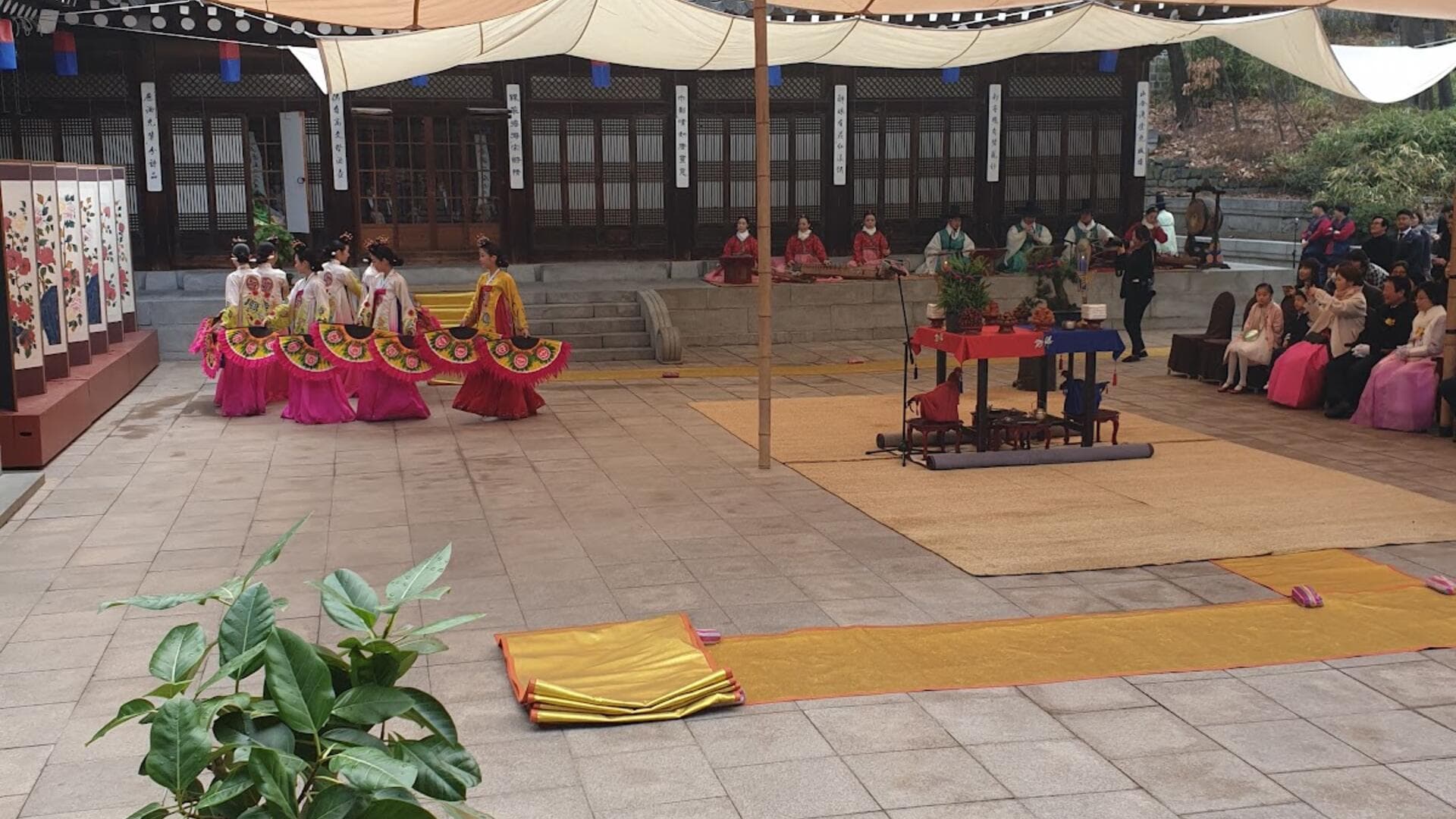
The Royal Guard Changing Ceremony is Gyeongbokgung's most popular attraction. Based on the 1469 "National Five Rites of State," 80 guards in traditional armor perform this 20-minute ceremony with authentic procedures and music.
Schedule: Daily at 10:00 AM and 2:00 PM (20 minutes each) Location: Gwanghwamun Gate plaza Cost: Free (separate palace admission required) Cancelled: Tuesdays (palace closed), extreme weather, heavy rain
The guards march in formation to drumbeats and horn blasts, executing precise movements passed down through centuries. It's stunning theater and living history combined.
Arrive 20-30 minutes early for good viewing spots. The ceremony gets incredibly crowded, especially on weekends. If you're wearing hanbok, you'll get amazing photos with the guards.
Night Tours: The Palace After Dark
Twice yearly (spring and fall), Gyeongbokgung opens for special night tours. Under illumination, the palace transforms into something otherworldly—moonlight on Gyeonghoeru pond, glowing lanterns along paths, shadows dancing on ancient walls.
2025 Schedule (tentative):
- Spring: April-May (approximately 2 months)
- Fall: August-October (approximately 3 months)
Booking: Online reservation required (Interpark Tickets) Capacity: Limited per session Hours: 19:00-21:30 (staggered entry times)
Tickets sell out within minutes of release, so set alerts and book immediately when sales open. The moonlit palace is worth the effort.
Recommended Routes Through the Palace
Quick Route: Essential 2-Hour Tour
Perfect for visitors with limited time who want to see the highlights.
- Gwanghwamun Gate (10 min) - Main gate, King Sejong and Admiral Yi statues
- Heungnyemun Gate (pass through) - Second gate
- Geunjeongmun & Geunjeongjeon (30 min) - Throne hall, dragon ceiling
- Sajeongjeon (15 min) - King's office
- Gangnyeongjeon & Gyotaejeon (20 min) - Royal living quarters
- Gyeonghoeru (25 min) - Pavilion on pond, best photo spot
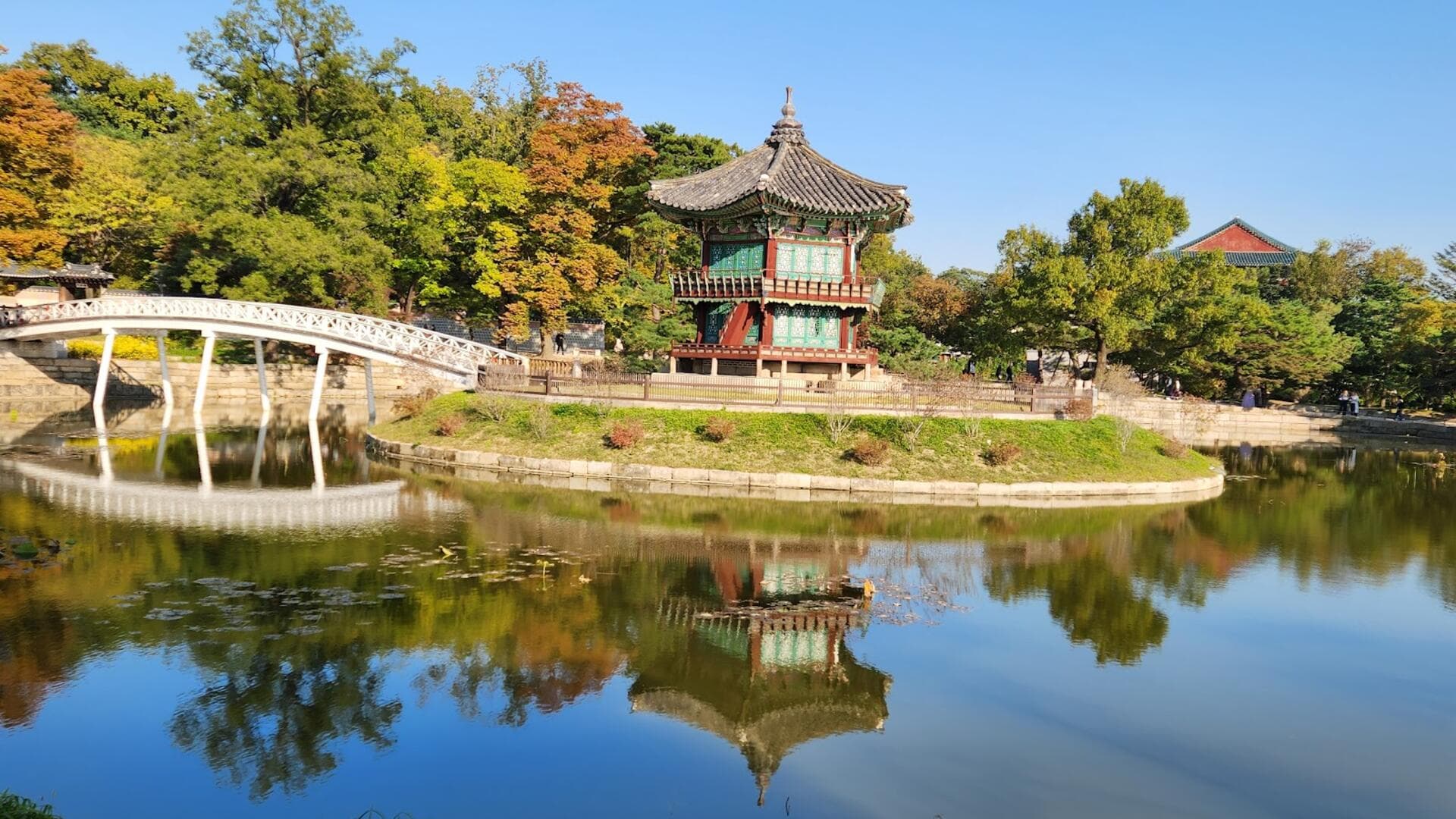
- Hyangwonjeong (20 min) - Hexagonal pavilion on island
Duration: 2 hours Difficulty: Easy Best for: First-time visitors, families with children
Complete Route: 3-4 Hour Deep Dive
For those who want the full Gyeongbokgung experience.
- Gwanghwamun Plaza - King Sejong and Admiral Yi monuments
- Heungnyemun & Geunjeongmun - Experience palace entrance ritual
- Geunjeongjeon - Throne hall majesty, stone terrace carvings
- Sajeongjeon, Cheonchujeon, Manchunjeon - King's workspace
- Gangnyeongjeon, Gyotaejeon, Jagyeongjeon - Royal family quarters
- Amisan - Queen's garden with decorated chimneys
- Gyeonghoeru - 48-pillar pavilion
- Hyangwonjeong & Hyangwonji - King Gojong's retreat
- Geoncheonggung - Site of Queen Min's assassination
- National Palace Museum (optional) - Royal artifacts
Duration: 3-4 hours Difficulty: Moderate (lots of walking) Best for: History enthusiasts, photographers, repeat visitors
Insider Tips
Best Photo Spots:
- Geunjeongjeon from below the stone terrace
- Gyeonghoeru from pond's edge (reflection shots)
- Hyangwonjeong from Chwihyanggyo Bridge
- Jagyeongjeon's decorative chimneys at Amisan
- Geoncheonggung garden
Seasonal Highlights:
- Spring (March-May): Cherry blossoms at Gyeonghoeru
- Summer (June-August): Lotus flowers at Hyangwonji, evening breezes
- Fall (September-November): Autumn colors, clear skies
- Winter (December-February): Snow-covered roofs, peaceful atmosphere
Crowd Levels:
- Weekday mornings (09:00-11:00): Peaceful ★★★★★
- Weekday afternoons (13:00-15:00): Moderate ★★★
- Weekends/holidays: Crowded ★
- Guard ceremony times: Very crowded
Enhance Your Visit
Hanbok Experience
Renting hanbok (traditional Korean clothing) around Gyeongbokgung is hugely popular. Besides free palace admission (saving ₩3,000), you'll get beautiful photos in traditional dress among ancient buildings.
Rental Areas: Samcheong-dong, Insadong, Bukchon (5-15 min walk) Cost: ₩15,000-30,000 for 4 hours Tip: Rent early (before 10am) to avoid crowds and get best selection Note: Book ahead on weekends and holidays
National Palace Museum of Korea
Inside Gyeongbokgung, this free museum displays 40,000 royal artifacts: ceremonial robes, royal seals, historical records, scientific instruments, and architectural models.
Admission: Free Hours: 10:00-18:00 (closed Mondays) Duration: 1-2 hours Recommendation: Visit before or after touring the palace for context
Nearby Attractions
After Gyeongbokgung, explore these nearby cultural sites.
Within 10 minutes walk:
- National Folk Museum (inside palace grounds)
- Blue House (advance reservation required)
- Samcheong-dong (cafes, galleries, boutiques)
- Seochon (Tongin Market, traditional neighborhood)
- Insadong (traditional crafts, tea houses)
15-20 minutes walk:
- Bukchon Hanok Village
- Changdeokgung & Changgyeonggung Palaces
- Gwanghwamun Plaza
- Jongmyo Shrine
Essential Visitor Information
Getting There
Subway (highly recommended):
- Line 3: Gyeongbokgung Station, Exit 5 (5-minute walk to Gwanghwamun Gate)
- Line 5: Gwanghwamun Station, Exit 2 (10-minute walk)
Bus:
- Routes 109, 171, 172, 272, 601, 606
- Stop at Gyeongbokgung or Gwanghwamun stops
Parking: Limited palace parking available (₩3,000 for 2 hours)
- Use public transit on weekends—parking fills quickly
Visitor Etiquette
Gyeongbokgung is a 600-year-old cultural treasure. Please observe these guidelines:
- Don't enter roped-off buildings
- Don't lean on pillars or walls
- Don't sit on stone terraces (woldae)
- No littering
- Keep voices down
- No drone photography
- Food allowed but don't eat near buildings
What to Wear
- Spring/Fall: Layering recommended (temperature changes)
- Summer: Sun protection, light clothes, sunscreen
- Winter: Warm coat, gloves, scarf (mostly outdoor walking)
Shoes: Comfortable walking shoes essential (2-3km of walking)
Guided Tours
Free Docent Tours:
- Korean: Daily 10:00, 14:00 (meet at Heungnyemun inner courtyard)
- English/Japanese/Chinese: Daily 11:00, 15:00
- Duration: 1 hour
- Registration: First-come, first-served on-site
Audio Guides:
- Languages: Korean, English, Japanese, Chinese, Spanish
- Rental: ₩3,000
- Pick up at visitor center inside Heungnyemun
Frequently Asked Questions
Q1. How long should I spend at Gyeongbokgung?
Quick visit: 1-2 hours. Thorough exploration: 3-4 hours. Including the guard ceremony and museum: plan for a half-day (4-5 hours).
Q2. Should I rent hanbok?
Not required, but highly recommended. You'll save the admission fee and get stunning photos in traditional dress among palace buildings. Rental shops are everywhere nearby.
Q3. How is Gyeongbokgung different from other palaces?
Gyeongbokgung is the largest and most formal—the main royal palace. Geunjeongjeon's grandeur, Gyeonghoeru's beauty, and the overall scale surpass other palaces. If you only visit one Seoul palace, make it this one.
Q4. Can I visit in the rain?
Yes. Rain actually adds atmosphere to the palace. However, the guard ceremony is cancelled in heavy rain, and surfaces can be slippery.
Q5. Is it good for children?
Absolutely. Kids love the large courtyards to explore, and the National Folk Museum has hands-on exhibits. Strollers work in main areas but can be awkward on stairs—baby carriers are easier.
Q6. Are there restaurants or cafes inside?
No dining facilities inside the palace. Only vending machines. Eat at nearby Samcheong-dong, Seochon, or Insadong. There's also a food court in Gwanghwamun subway station.
Q7. Can I take photos?
Personal photography is completely free. Commercial shoots, wedding photos, and drones require advance permission.
Q8. When do night tour tickets go on sale?
Approximately 1-2 weeks before night tours begin, sold through Interpark Tickets. They sell out extremely fast—set alerts and book immediately when sales open.
Final Thoughts: Where History Lives
Gyeongbokgung isn't just a tourist attraction. It's where 500 years of Korean history lives and breathes. From the moment you pass through Gwanghwamun until you exit at Hyangwonjeong, you're time-traveling through the Joseon Dynasty.
Stand before Geunjeongjeon and you'll feel like a court official witnessing a coronation. Sit by Gyeonghoeru pond and imagine scholars celebrating their exam success. Walk through Geoncheonggung garden and the tragic history of Queen Min becomes heartbreakingly real.
The secret to experiencing Gyeongbokgung? Don't rush. Wear hanbok if you can. Walk slowly. Notice the details—carved stones, painted eaves, worn pathways. Imagine the lives lived here. Let the palace speak to you.
When the palace does speak—and it will—you'll understand that history isn't something that happened long ago. It's right here, right now, in every pillar and pavilion, waiting to share its stories with anyone who takes time to listen.
If you visit Seoul, Gyeongbokgung is absolutely essential. Come discover the dreams of the dynasty's founders, carved in wood and stone 630 years ago, still standing proud in the heart of modern Korea.