Seoul Traditional Tea Ceremony Guide: Experience 1,000 Years of Korean Tea Culture
Walking through the alleys west of Gyeongbokgung Palace, I stumbled upon a small hanok tea house. The moment I opened the door, the subtle fragrance of tea greeted me. The gentle sound of water pouring from the teapot seemed to stop time itself.
Korea's tea culture spans over a thousand years, yet it continues to thrive in modern Seoul. Tea arrived with Buddhism during the Three Kingdoms period (57 BCE–668 CE), became central to Goryeo court culture, and evolved into the formal tea ceremony (darye, 다례) during the Joseon Dynasty.
History of Korean Tea Culture: From Scholars' Spirit to Modern Times
Tea's Arrival: Three Kingdoms Period (1st–7th Century)
Tea first came to Korea from China along with Buddhism. Initially, only royalty, aristocrats, and Buddhist monks could enjoy this precious beverage.
According to the Samguk Sagi (History of the Three Kingdoms), in 828 CE during King Heungdeok's reign, tea seeds were brought from Tang China and planted on Jirisan Mountain. This marked the beginning of tea cultivation on the Korean peninsula.
Tea Culture's Golden Age: Goryeo Dynasty (918–1392)
The Goryeo Dynasty represented the golden age of Korean tea culture. In this Buddhist state, tea transcended mere beverage status to become a tool for spiritual cultivation.
The royal court established tea ceremony as official state ritual. National events like Palgwanhoe and Yeondeunghoe required tea offerings as essential protocol. Scholars gathered to compose poetry and discuss philosophy over tea.
Yi Saek's 14th-century writing contains the line: "One cup of tea makes you forget worldly troubles." Tea wasn't just a drink—it was spiritual solace.
Establishment of Darye: Joseon Dynasty (1392–1910)
Early Joseon's anti-Buddhist policies initially threatened tea culture. However, among Confucian scholars, darye evolved into an even more refined form.
The late Joseon tea master Monk Cho-ui (1786–1866) systematized Korean tea culture in his work "Dongtasong" (東茶頌). He wrote: "Drinking tea is an act of emptying the mind."
For scholars, tea served as a tool for spiritual cultivation. In quiet studies, they would brew tea while reading classics, contemplating nature, and meeting friends. This culture became the foundation of today's traditional tea ceremony.
Modern Rediscovery: 20th Century to Present
Through Japanese colonization and the Korean War, traditional tea culture nearly vanished. Coffee and Western teas replaced traditional Korean tea.
From the 1970s, the traditional culture revival movement began rediscovering tea culture. Especially after the 1980s, traditional tea houses emerged around Insadong, reintroducing tea culture to modern Koreans.
Today, Seoul's traditional tea houses aren't just places selling tea. They're cultural spaces preserving a thousand years of history and meditation sanctuaries offering tranquility to busy modern people.
The Spirit and Procedure of Traditional Darye
What is Darye?
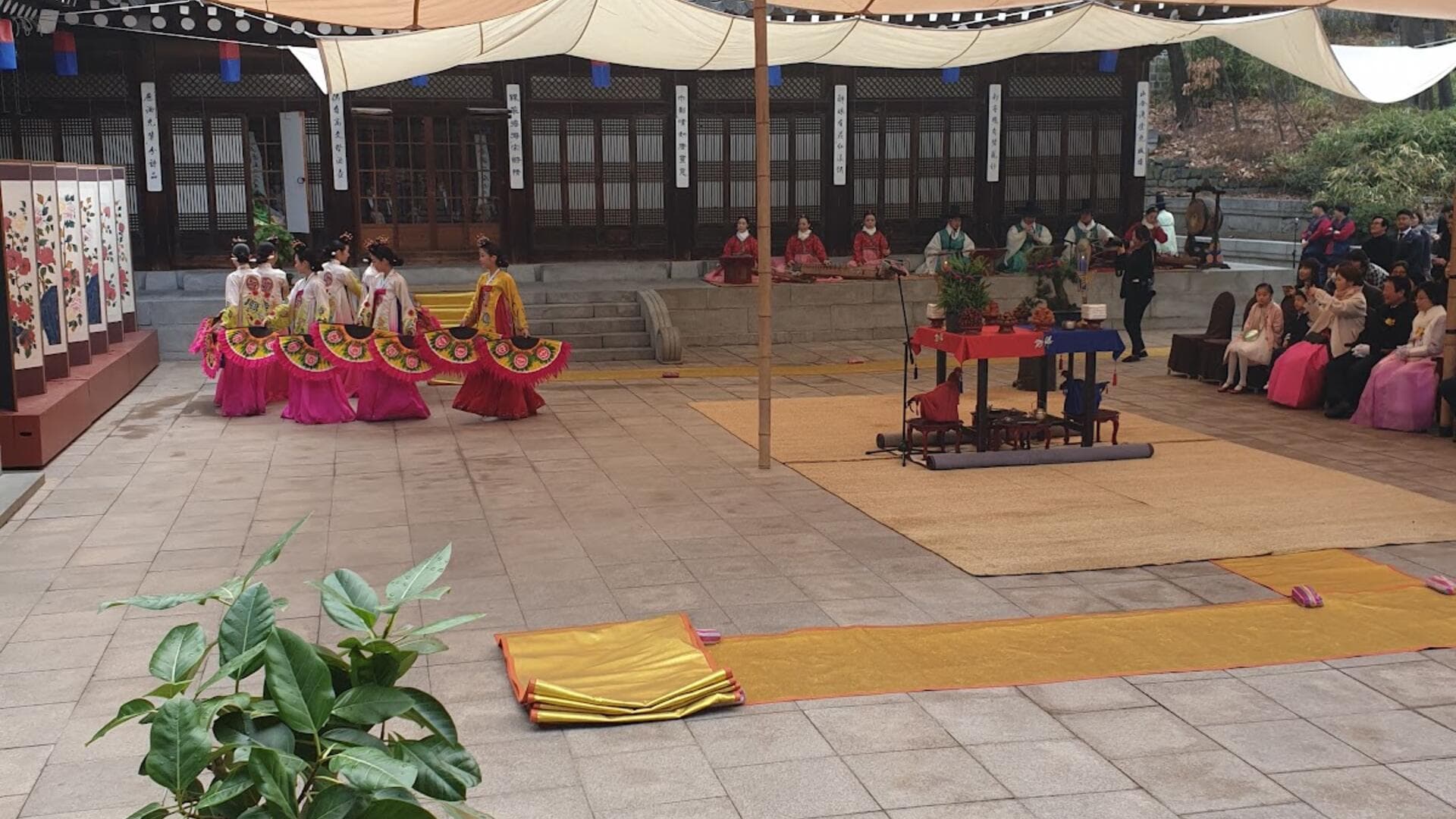
Darye (茶禮) is the ritual of carefully preparing tea and serving it with proper etiquette. It's not simply drinking tea—it's a spiritual practice of self-cultivation and respecting others through tea.
Core Principles of Darye:
- Gyeong (敬): Reverence and respect throughout all tea-handling processes
- Cheong (淸): Purifying body, mind, and tea environment
- Jeok (寂): Quiet mind becoming one with tea
- Heo (虛): Emptying the mind of distractions
These four principles combine Confucian propriety (禮) with Buddhist Zen (禪), forming the philosophy of Korean tea culture.
Basic Darye Procedure
Traditional Korean darye varies slightly by region and school, but the basic flow remains similar.
Step 1: Preparation (Seolcha, 設茶)
Before beginning, carefully prepare tea and tea ware (dagu, 茶具).
- Clean and arrange the tea room
- Wash and position necessary tea ware
- Boil water to proper temperature
- Settle the mind with reverent attitude
Step 2: Warming Tea Ware (Ongi, 溫器)
Pour hot water into teacups and tea bowls to warm them. This serves hygiene and maximizes tea's aroma and flavor.
Step 3: Adding Tea Leaves (Toucha, 投茶)
Add appropriate amount of tea leaves to the tea pot (dagwan). Usually fill about 1/3 of the pot's capacity. Smell the leaves' fragrance to commune with the tea.
Step 4: Rinsing Tea (Secha, 洗茶)
Discard the first brew. This rinses dust from leaves and "awakens" them. This process is called "secha."
Step 5: Brewing Tea (Jeomcha, 點茶)
Slowly pour properly heated water to brew tea.
- Green tea: 70-80°C (158-176°F), 1-2 minutes
- Fermented tea (black tea): 95-100°C (203-212°F), 3-5 minutes
- Yellow tea: 80-90°C (176-194°F), 2-3 minutes
When pouring water, do so from height in circular motion. This is called "bongwangsam jeomdu" (phoenix nods three times), expressing courtesy to guests.
Step 6: Distributing Tea (Buncha, 分茶)
Pour brewed tea into cups. Importantly, all cups must have equal tea strength. Pour small amounts first, then more later to distribute evenly.
Step 7: Presenting Tea (Bongcha, 奉茶)
Respectfully lift the teacup with both hands and offer it to the guest. Position any patterns or designs toward the guest. This expresses giving beauty to the guest first.
Step 8: Drinking Tea (Kkeukcha, 喫茶)
The recipient receives the cup with both hands, first smelling the aroma. Appreciate the tea's color, then slowly drink in three sips.
The first sip feels temperature, the second savors flavor, the third enjoys aftertaste. This is called "samgu eumda" (three-mouth drinking).
Understanding Tea Ware (Dagi, 茶器)
Traditional darye uses various tea ware. Understanding each piece's purpose deepens appreciation of the ceremony.
- Dagwan (茶罐): Small teapot for brewing. Often made from purple clay (zisha)
- Dawan (茶碗): Teacup for drinking. Various sizes and shapes
- Dahae (茶海): Vessel for temporarily holding brewed tea. Equalizes tea strength
- Dachim (茶針): Tool for unclogging teapot spout
- Dahyeop (茶夾): Tongs for holding tea bowls
- Daban (茶盤): Tray holding all tea implements
Seoul's Traditional Tea Houses: Where Time Stands Still
Seoul houses beautiful tea houses preserving traditional tea culture. Each has unique atmosphere and philosophy.
Insadong: Mecca of Traditional Tea Houses
Insadong gathers Seoul's most traditional tea houses. Since the 1980s, it has been the heart of traditional culture and tea.
Notable Tea Houses:
Gwicheon (歸天)
Opened in 1987, this is Insadong's representative tea house. Located on the second floor of a hanok, it overlooks Insadong Street.
- Location: Insadong-gil, Jongno-gu (5-min walk from Anguk Station Exit 6, Line 3)
- Hours: 10:00-22:00 (Open year-round)
- Signature Menu: Omija Tea (₩8,000 / $6), Ssanghwa Tea (₩9,000 / $7), Traditional Rice Cake Set (₩12,000 / $9)
- Features: Second-floor hanok space, Insadong street view, traditional rice cakes with tea
Suyeonsanbang (壽硯山房)
A traditional tea house with over 40 years of history. The owner's collection of antiques and calligraphy fills the space.
- Location: Insadong 10-gil, Jongno-gu (7-min walk from Anguk Station Exit 6)
- Hours: 11:00-21:30 (Closed Mondays)
- Signature Menu: Green Tea (₩10,000 / $7.50), Jujube Tea (₩9,000 / $7), Traditional Sweet Set (₩15,000 / $11)
- Features: Antique display, traditional hanok structure, quiet atmosphere
Chamashineuntteum
Hidden deep in Insadong alleys, this small tea house offers peace like countryside while in Seoul's heart. Sit in the hanok courtyard and enjoy tea.
- Location: Insadong 11-gil, Jongno-gu (8-min walk from Anguk Station Exit 6)
- Hours: 12:00-21:00 (Closed Tuesdays)
- Signature Menu: Ujeon Tea (₩12,000 / $9), Chrysanthemum Tea (₩8,000 / $6), Handmade Yakgwa (₩5,000 / $4)
- Features: Hanok courtyard, seasonal refreshments, serene atmosphere
Samcheong-dong: Tea Culture Street by the Palace
Located between Gyeongbokgung and Changdeokgung Palaces, Samcheong-dong harmonizes tradition and modernity. Hanok tea houses create tranquil atmosphere.
Hakgojae Dawon (學古齋 茶苑)
Inside Hakgojae Art Museum, enjoy tea after viewing exhibitions. Experience traditional tea in modernly reinterpreted space.
- Location: 50 Samcheong-ro, Jongno-gu, Hakgojae 1F
- Hours: 10:00-19:00 (Varies with exhibition schedule)
- Signature Menu: Boseong Green Tea (₩12,000 / $9), Jeju Citrus Tea (₩10,000 / $7.50)
- Features: Gallery attached, modern space, tea after exhibition viewing
Bukchon: Tea Fragrance in Hanok Village
In Bukchon Hanok Village, experience tea in actual hanok. Feel traditional hanok structure and elegance while enjoying tea.
Chamasil
A tea house converted from a 100-year-old hanok. Sit on the main hall wooden floor, gaze at Bukchon's tile roofs while drinking tea—feels like time-traveling to Joseon Dynasty.
- Location: Bukchon-ro 11-gil, Jongno-gu (10-min walk from Anguk Station Exit 3)
- Hours: 10:30-21:00 (Closed Mondays)
- Signature Menu: Matcha (₩12,000 / $9), Black Tea (₩10,000 / $7.50), Traditional Dasik (₩8,000 / $6)
- Features: 100-year hanok, main hall, Bukchon view
Seochon: Hidden Gems West of Gyeongbokgung
West of Gyeongbokgung, Seochon is quieter than Insadong or Samcheong-dong but preserves deep tea culture.
Choso Chaekbang (草所冊房)
Located on Inwangsan Mountain's slope, this bookstore-tea house offers slow time with books and tea.
- Location: Jahamun-ro 10-gil, Jongno-gu
- Hours: 11:00-20:00 (Closed Tuesdays)
- Signature Menu: Seasonal Teas (₩8,000-₩12,000 / $6-$9), Handmade Cookies
- Features: Bookstore attached, Inwangsan view, quiet atmosphere
Types and Benefits of Traditional Korean Tea
Korean traditional tea varies by fermentation level and ingredients. Each tea has unique taste, aroma, and health benefits.
Green Tea (Nokcha, 綠茶)
Unfermented tea. Leaves are steamed and dried immediately after picking. Korea's prime green tea regions are Boseong (Jeollanam-do) and Jeju Island.
Types:
- Ujeon (雨前): First harvest before Gogu (April 20). Highest grade
- Sejak (細雀): Made from young leaves. Named for resembling small sparrow tongues
- Jungjak (中雀): Made from medium-sized leaves
- Daejak (大雀): Made from large leaves
Benefits: Rich in catechins with antioxidant effects. Helps improve concentration, weight management, and skin health.
Taste: Slightly astringent with subtle sweetness. Fresh grass aroma.
Price: ₩10,000-₩15,000 ($7.50-$11) at tea houses
Yellow Tea (Hwangcha, 黃茶)
Fermentation level between green and black tea. In Korea, also called "fermented tea" or "stone tea."
Benefits: Aids digestion, anti-aging, strengthens immunity
Taste: Softer than green tea, lighter than black tea. Subtle fruity notes.
Price: ₩12,000-₩18,000 ($9-$13.50)
Medicinal Tea (Yakcha, 藥茶)
Made from various medicinal herbs, not tea leaves. Contains wisdom of traditional Korean medicine.
Popular Medicinal Teas:
Jujube Tea (Daechu-cha): Boiled jujube tea. Sweet and warm flavor. Prevents colds, improves insomnia. ₩8,000-₩10,000 ($6-$7.50)
Ginger Tea (Saenggang-cha): Ginger preserved in honey. Warms body, aids digestion. ₩8,000-₩10,000 ($6-$7.50)
Yuzu Tea (Yuja-cha): Yuzu preserved in honey. Rich in vitamin C, prevents colds. ₩8,000-₩10,000 ($6-$7.50)
Omija Tea (Omija-cha): "Five-flavor" tea (sour, sweet, bitter, pungent, salty). Relieves fatigue and thirst. ₩8,000-₩12,000 ($6-$9)
Ssanghwa Tea (Ssanghwa-cha): Multiple medicinal herbs blended. Restores energy. ₩9,000-₩12,000 ($7-$9)
Grain Tea
Made from roasted grains. Caffeine-free, suitable for everyone.
Barley Tea (Bori-cha): Korea's most common tea. Nutty flavor.
Corn Tea (Oksusu-cha): Sweet and nutty. Reduces swelling.
Brown Rice Tea (Hyeonmi-cha): Savory taste. Aids digestion.
Darye Experience Programs: Learn Traditional Tea Culture
Seoul offers places to learn and experience traditional darye. English programs available for foreign visitors.
Korea House
This traditional Korean culture complex runs tea ceremony experience programs.
- Location: 10 Toegye-ro 36-gil, Jung-gu
- Program: Basic Darye Course (1 hour)
- Content: Darye history, tea ware usage, tea brewing practice
- Languages: Korean, English, Japanese, Chinese (with advance reservation)
- Cost: ₩30,000 ($22.50) including tea and refreshments
- Reservation: Website or phone (+82-2-2266-9101)
Temple Stay Programs
Join temple stay programs at Seoul-area temples to learn monks' tea ceremony.
Jogyesa Temple Stay:
- Location: 55 Ujeongguk-ro, Jongno-gu (5-min walk from Anguk Station Exit 6)
- Programs: 1-day experience, 2-day/1-night relaxation/experience type
- Tea Ceremony Time: 4:00-5:00 PM (varies by program)
- Cost: 1-day ₩20,000 ($15), 2-day/1-night ₩70,000-₩100,000 ($52-$75)
Traditional Culture Centers
Korea Culture House KOUS:
- Location: 40 Cheonggyecheon-ro, Jung-gu (Euljiro 3-ga Station Exit 5)
- Program: Traditional Darye Basics (once weekly, 4-week course)
- Cost: ₩150,000 ($112) including materials and tea
- Features: Advanced courses also available
Practical Tips: Visiting Traditional Tea Houses
Etiquette and Manners
Traditional tea houses aren't just places to drink tea—they're cultural spaces. Following basic etiquette makes the experience more meaningful.
Speak Quietly: Traditional tea houses are spaces for meditation and contemplation. Avoid loud talking; converse in low voices.
Remove Shoes: Many hanok tea houses require removing shoes on wooden floors or ondol rooms. Bring clean socks.
Photography Permission: Ask the owner before taking photos. Especially be careful when other guests are present.
Take Your Time: Traditional tea houses aren't fast food joints. Allow at least 30 minutes to 1 hour to enjoy tea properly.
Dress Code
No strict dress code exists, but neat attire suitable for traditional atmosphere is appreciated. Wearing hanbok (Korean traditional dress) makes the experience even more special.
Reservations
Popular tea houses can be fully booked on weekends. Small hanok tea houses in Bukchon or Samcheong-dong especially require advance reservations.
Best Visiting Times
Weekday afternoons (2-4 PM): Quietest time. Ideal for peaceful tea enjoyment.
Weekend mornings (11 AM): Arrive at opening time to secure good seats.
Evening (6-8 PM): Enjoy special atmosphere drinking tea under subtle lighting.
Seasonal Recommendations
Spring (March-May): Ujeon tea, peony tea. Enjoy fresh flavors of new shoots.
Summer (June-August): Cold-brew green tea, omija tea. Refreshing cold-brewed tea quenches thirst.
Fall (September-November): Chrysanthemum tea, yellow tea. Subtle aromas suit autumn well.
Winter (December-February): Ssanghwa tea, ginger tea. Warming medicinal teas are best.
Traditional Tea and Refreshments Pairing
Traditional tea houses offer various traditional refreshments with tea. Tea and refreshment harmony deepens flavor appreciation.
Dasik (茶食)
Small rice cakes made from grain powder kneaded with honey and shaped in molds. Beautiful colors and subtle flavors perfectly complement tea.
- Types: Pine pollen dasik, starch dasik, sesame dasik, bean dasik
- Taste: Sweet and soft
- Price: ₩5,000-₩8,000 ($4-$6)
Yakgwa (藥果)
Fried wheat flour dough soaked in honey or syrup. Crispy yet moist texture.
- Taste: Sweet and nutty. Cinnamon and ginger aroma.
- Price: ₩5,000-₩10,000 ($4-$7.50)
Hangwa Set
Assorted traditional sweets set.
- Contents: Yakgwa, yugwa, gangjeong, dasik, etc.
- Price: ₩12,000-₩20,000 ($9-$15)
Songpyeon, Injeolmi
Rice cakes offered seasonally. Especially songpyeon during Chuseok (autumn harvest), warm rice cakes in winter.
Frequently Asked Questions
What's the difference between traditional tea houses and cafes?
Traditional tea houses focus on Korean traditional tea and darye culture. They primarily serve Korean traditional teas (green, yellow, medicinal teas) rather than coffee or Western teas, featuring hanok or traditional interiors. Quiet, meditative atmosphere is characteristic.
Cafes center on coffee and modern beverages with more casual atmosphere.
Are English menus available?
Most tea houses in foreigner-frequented areas like Insadong, Samcheong-dong, and Bukchon provide English menus. Many also offer Japanese and Chinese menus. Menus briefly explain tea types and benefits.
How much time does it take?
Drinking one cup of tea at a traditional tea house usually takes 30 minutes to 1 hour. Slow brewing and quiet enjoyment are the essence of traditional tea culture.
Darye experience programs take 1-2 hours.
What's the price range?
One cup of traditional tea usually costs ₩8,000-₩15,000 ($6-$11). Premium green tea or special medicinal teas can reach ₩15,000-₩20,000 ($11-$15).
Including refreshment sets, expect ₩15,000-₩25,000 ($11-$19) per person.
Can children come along?
Traditional tea houses emphasize quiet atmosphere, so they may not suit young children. However, some have family rooms—inquire in advance.
For elementary-age and older, it can be a good opportunity to learn tea culture.
I'm concerned about caffeine. Which tea should I drink?
Green and yellow teas contain caffeine, though much less than coffee.
If concerned about caffeine, choose medicinal teas (jujube, ginger, yuzu) or grain teas (barley, corn). These are completely caffeine-free.
Do darye experience programs require reservations?
Yes, most darye experience programs require advance reservations. Book at least one week ahead. If Korean is difficult, choose places offering English reservations or ask your hotel concierge.
Can I take photos?
Most tea houses allow photography. However, avoid invading other guests' privacy. Don't use flash.
Photography is generally allowed during darye experience programs, but confirm with the instructor beforehand.
Closing: A Thousand Years in One Cup of Tea
Upon entering a traditional tea house, you'll feel time flows differently. In busy Seoul's heart, slowly brewing tea, smelling its aroma, taking one sip—in that moment, Korea's thousand-year tea culture meets you.
Drinking tea isn't simply quenching thirst. It's spiritual cultivation—emptying the mind, self-reflection, communing with others. This is darye's essence.
Try a cup of tea at Seoul's traditional tea houses. The sound of tea brewing in the pot, steam rising from the cup, subtle taste on your tongue—all this conveys Korea's essence to you.
Like Goryeo Dynasty scholars, like Joseon tea masters, you'll set down worldly worries before one cup of tea. And you'll realize: the deepest journey isn't going far, but staying slowly.
When you visit Seoul, definitely visit a traditional tea house. A thousand years of tea culture awaits you.