I still remember my first solo meal in Seoul. Sitting at a tiny soup house counter, blowing on hot broth, when the ajusshi next to me said, "You came alone? That's brave."
Back then, it felt awkward. Korean dining culture traditionally centers on group meals. But ten years later, solo dining has become completely natural in Seoul.
Walk through Jongno alleys during lunch. Office workers sit alone at gimbap counter seats, eating quickly before heading out. At an Euljiro soup house, a grandmother enjoys her dinner with a shot of soju. At a Hongdae ramen shop, a student slurps noodles while scrolling through their phone.
This is Seoul's honbap culture in 2026. It's not special anymore. It's just normal.
Understanding Honbap (혼밥): Seoul's Solo Dining Revolution
As recently as 2010, eating alone in Seoul felt lonely. Korean food culture emphasizes "eating together." Stews require minimum 2 servings, meat orders start at 2 portions. Solo diners felt awkward.
But single-person households exploded. As of 2021, 33.4% of Seoul households are single-person. By 2030, projections hit 50%. With so many people living alone, forcing everyone to dine in groups made no sense.
So the culture shifted. Starting with convenience store lunch boxes, moving to snack shop single-serving menus, evolving into solo-dining specialist restaurants. Now most restaurants welcome solo diners.
The word "honbap" (혼밥) combines 혼자 (honja = alone) + 밥 (bap = rice/meal), representing this cultural phenomenon of eating alone.
Why Solo Dining Works
What makes eating alone appealing?
Freedom. No menu negotiations. Order exactly what you want. No compromising on taste preferences.
Speed. With only a 1-hour lunch break, solo dining gets you in and out fast. No waiting for others.
Comfort. No need to make conversation. Just focus on the food. Some days, that's exactly what you need.
Economics. Order one portion, pay for one portion. No forced 2-serving minimums that leave food wasted.
Solo Dining Etiquette for International Visitors
Things to know when dining alone in Seoul.
Check for "Minimum 2 Servings" Rules
Korean BBQ and hot pot dishes often require "2인분 이상 주문" (2 servings minimum). Menus will state this clearly.
Why? Firing up a grill costs money, large pots can't practically cook single portions.
Solution: Look for solo BBQ specialists like "Gogitbar" with individual booths and personal grills. Or choose meat-based rice bowls (bulgogi-eopbap, pork belly donburi) which come in single servings.
Counter Seats Are Your Friend
Counter seats (카운터석) at soup houses, ramen shops, and noodle restaurants are perfect for solo dining. Face the wall, eat comfortably, no awkward eye contact. Quick exit when done.
My regular Euljiro soup house has 10 counter seats. During lunch, they fill completely with solo diners. Nobody talks, everyone scrolls on their phones while eating soup. That's the vibe.
Solo at Tables? Totally Fine
These days, sitting alone at a table is completely normal. Especially during lunch, half the diners are solo.
When entering, tell staff "Han myeong-iyo" (one person) or just say "One person" in English. They'll seat you.
Your Phone Is Your Dining Companion
What do solo diners do? Most watch their phones. YouTube videos, webtoons, news articles. Nobody finds this strange. It's expected.
However, avoid loud phone calls. In small restaurants, talking loudly draws annoyed looks.
Best Foods for Solo Dining
Seoul foods that work perfectly for eating alone.
1. Soup & Hot Pot (Gukbap, Tang) - Solo Dining Classic
Seolleongtang, galbitang, haejangkuk, sundaeguk... Soup dishes are optimized for solo dining. They naturally come in single servings.
24-hour soup houses are solo dining sanctuaries. Visit at 3am for hangover soup and nobody cares. Everyone's busy with their own meal.
Price: ₩8,000-12,000 (US$6-9) Recommended: Seolleongtang, seonji haejangkuk, bone hangover soup
2. Bibimbap - Safe Choice
Bibimbap is perfect for solo dining. Served in a single-portion hot stone pot, mix it yourself and eat. Nutritionally balanced too.
Dolsot bibimbap (hot stone) is even better. Rice crisps up on the hot stone, creating nurungji (scorched rice). Mix with gochujang and steam rises, carrying that toasty aroma straight to your nose.
Price: ₩8,000-11,000 (US$6-8) Recommended: Jeonju Jungang Hoekwan (Myeongdong), Gogung (Insadong)
3. Noodles & Ramen - Counter Seat King
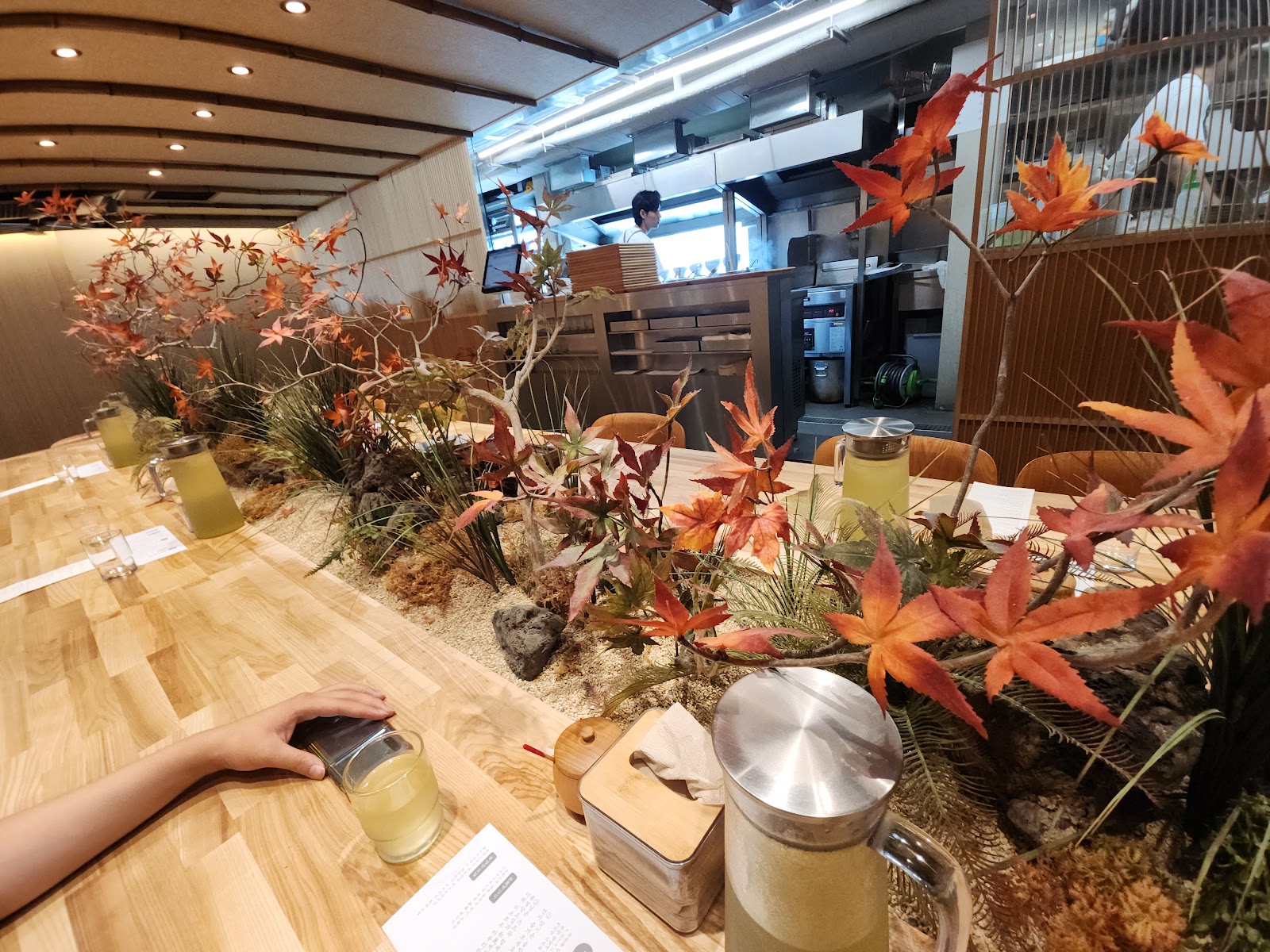
Noodle shops and ramen joints have solo dining culture as natural as Japan's. Sit at the counter, slurp noodles, leave. Done.
Kalguksu, naengmyeon, janchi-guksu, ramen, udon... Plenty of choices. Slurping sounds are fine. Actually, that means you're enjoying it.
Price: ₩7,000-11,000 (US$5-8) Recommended: Myeongdong Kalguksu, Nishimuramen (Hongdae)
4. Snack Foods (Bunsik) - Quick & Easy
Tteokbokki, gimbap, fried snacks... Snack shops are where solo dining starts. Fast, cheap, no pressure.
Order just one gimbap roll. The owner won't mind. Sit at a small table alone, eat your gimbap, check your phone.
Tteokbokki portions can be large. Ask "1-inbun ganeunghaeyo?" (is one serving possible?). If not, try tteokbokki + half a gimbap roll combo.
Price: ₩3,000-6,000 (US$2-4) Recommended: Shinjeon Tteokbokki, Jaws Tteokbokki (chains are pressure-free)
5. Rice Bowls (Eopbap) - Fast Meal
Japanese-style donburi or Korean rice bowls work perfectly solo. Everything in one bowl, eat quickly.
Gyudon (beef bowl), oyakodon (chicken & egg), tuna bowl... Finish in 5 minutes. Perfect for short lunch breaks.
Price: ₩6,000-9,000 (US$4-7) Recommended: Yoshinoya (chain), Jinuh Tuna Yeonnam (tuna bowls)
Solo-Friendly Restaurants by Area
Places I've personally eaten alone.
Gwangjang Market - Solo Dining Mecca
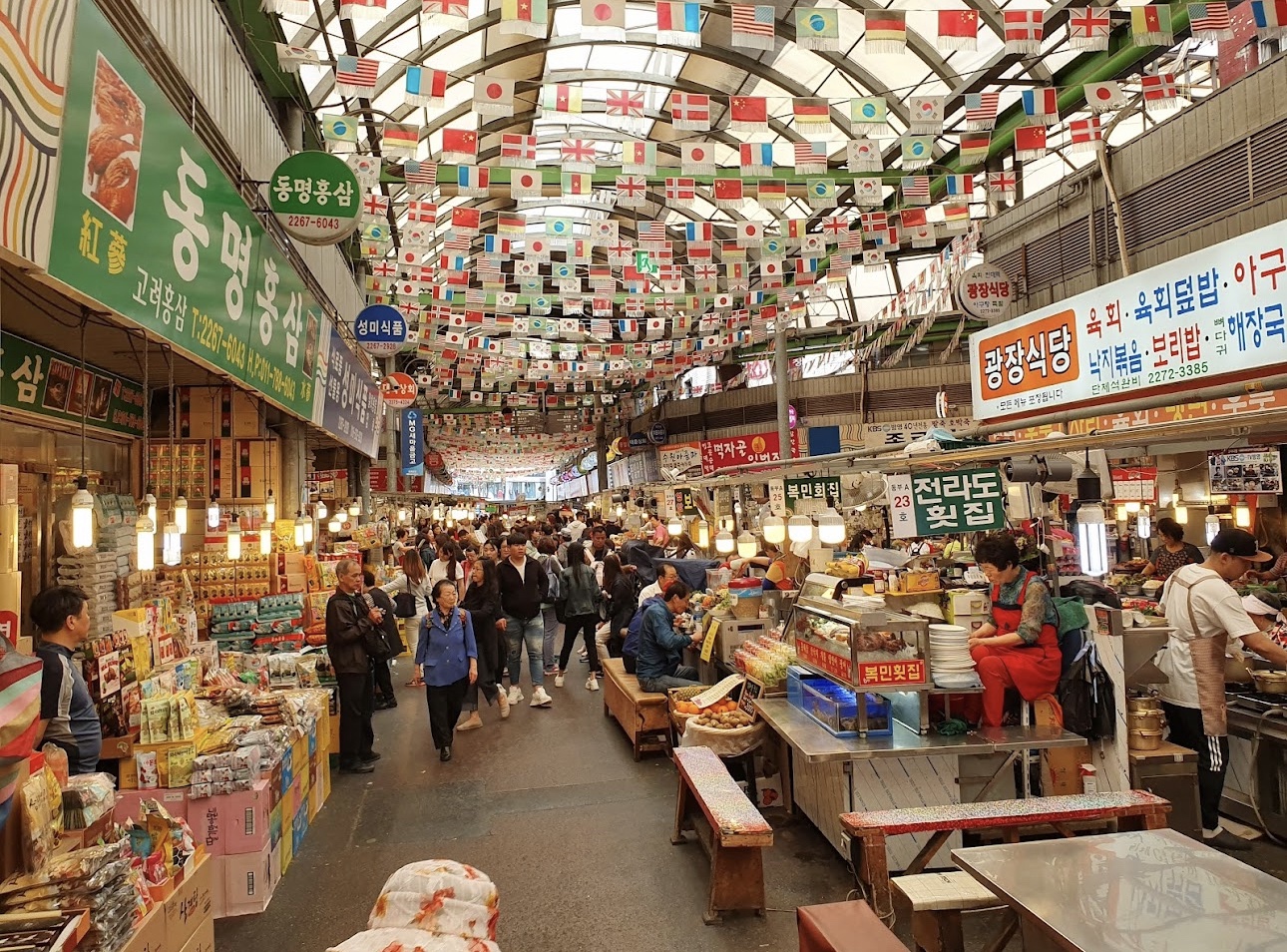
No place in Seoul is better for solo dining than Gwangjang Market. Long communal tables where strangers sit together. Coming alone feels completely natural.
Recommended Dishes:
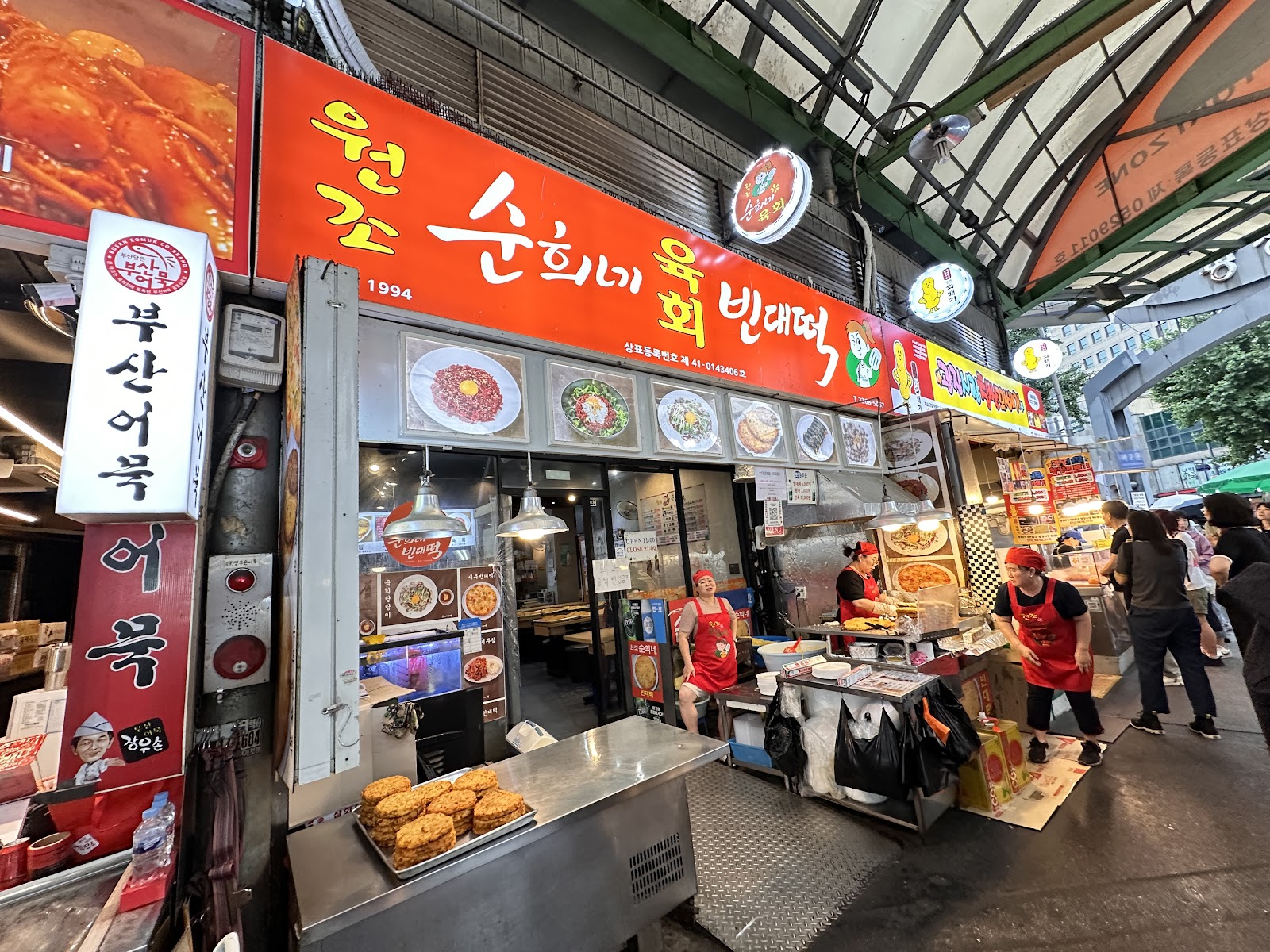
- Bindaetteok (₩5,000): Mung bean pancake with pork and kimchi, fried crispy. Perfect with a glass of makgeolli.
- Mayak Gimbap (₩3,000): Mini gimbap that's genuinely addictive. One roll gives you 10 pieces.
- Yukhoe Bibimbap (₩15,000): Fresh raw beef on bibimbap. Gwangjang Market specialty.
Solo Tip: Avoid lunch rush (12-2pm). Too crowded. Visit 3-5pm for comfortable seating.
Jongno - Soup House Alley
Jongno 3-ga back alleys are soup house heaven. Many open 24 hours, counter seats everywhere, perfect for solo dining.
Recommended:
- Cheongjinog (Euljiro): Hangover soup specialist. Blood sausage in bone soup is incredible. ₩9,000
- Hadongkwan (Myeongdong): Gomtang specialist. Traditional slow-cooked broth. ₩15,000
Hongdae - Ramen & Japanese Food
Hongdae has tons of ramen shops. All counter-seat focused, ideal for solo dining.
Recommended:
- Nishimuramen: Japanese ramen. Rich pork bone broth. Sit at counter, slurp noodles. ₩10,000
- Tsuru Ton Tan: Udon specialist. Cream udon is famous. ₩16,000
Gangnam - Clean Solo Options
Gangnam has many office workers, so single-serving menus are well-developed. Especially lunch specials optimized for solo dining.
Recommended:
- Bonjo: Porridge chain. Clean, no pressure. ₩7,000-9,000
- Sulbing: Dessert cafe, solo visits totally fine. Shaved ice solo portions. ₩11,000
Solo-Friendly Chain Restaurants
Chains are great for solo dining beginners. Systems are established, staff are used to solo customers.
Recommended Chains
1. Gimbap Cheonguk - Korea's largest gimbap chain
- Gimbap, tteokbokki, ramen, simple meals
- Small tables, no pressure dining alone
- Price: ₩3,000-6,000
2. Baek Jong-won's Bonka - Beef noodle soup & pho
- Single-serving noodle soups OK
- Has counter seats
- Price: ₩8,000-10,000
3. Yoshinoya - Japanese gyudon
- Beef rice bowl specialist
- Fast and cheap
- Price: ₩6,000-8,000
4. Bonjo - Porridge specialist
- Various porridge options
- Easy to digest, no pressure
- Price: ₩7,000-9,000
Useful Korean Phrases for Solo Dining
Expressions for local restaurants without English menus.
When entering:
- "Han myeong-iyo" = One person
- "Counter jari isseoyo?" = Do you have counter seats?
When ordering:
- "Igeo 1-inbun ganeunghaeyo?" = Can I order one serving of this?
- "Igeo juseyo" = This one, please (while pointing at menu)
Spice level:
- "An maepge haejuseyo" = Not spicy, please
- "Botong-euro juseyo" = Medium spice, please
- "Maepge haejuseyo" = Make it spicy, please
Paying:
- "Gyesan-iyo" = Check, please
- "Card dwaeyo?" = Do you take cards?
Most restaurants accept cards. But traditional markets and small pojangmacha might be cash-only, so carry ₩10,000-20,000 cash.
Step-by-Step: Your First Solo Meal Success
Stage-by-stage guide for first-time solo diners in Seoul.
Step 1: Start with Easy Places
First solo meal recommendations:
- Chain gimbap shops (Gimbap Cheonguk, Gimbap Nara)
- Convenience store lunch boxes (7-Eleven, CU) + in-store seating area
- Food courts (department store basements, COEX Mall)
These places have clear systems, no pressure. Many people eat alone, so you blend in.
Step 2: Counter-Seat Restaurants
Once comfortable, try local restaurants with counter seats.
- Soup house counters
- Ramen shop counters
- Noodle restaurant counters
Counters face the wall, so no eye contact with others. Comfortable.
Step 3: Regular Table Restaurants
Finally, regular table restaurants. Bibimbap shops, meal set restaurants, home-style meal places...
Remember this: Everyone's busy eating their own food. Nobody cares about you. Nobody stares because you're alone. Really.
Solo Dining Failures & Solutions
Case 1: Can't order because menu requires 2 servings → Solution: Check menu photos beforehand for "2인분 이상" marks
Case 2: Portions too large, leaving food → Solution: Say "yang jeokge haejuseyo" (small portion please). Or request takeout "pojang haejuseyo"
Case 3: Don't know where to sit, feeling awkward → Solution: Say "han myeong-iyo" at entrance, staff will guide you to a seat
Seasonal Solo Dining Recommendations
Match Seoul's seasons for better taste.
Spring (March-May): Light Foods
- Bibimbap (₩8,000-11,000)
- Naengmyeon cold noodles (₩10,000-13,000)
- Ssambap lettuce wrap set (₩9,000-12,000)
Summer (June-August): Refreshing Foods
- Kongguksu soy milk noodles (₩9,000)
- Mul-naengmyeon water cold noodles (₩10,000)
- Samgyetang chicken soup (₩15,000) - hot soup fights heat!
Fall (September-November): Nourishing Foods
- Galbitang short rib soup (₩12,000)
- Yukgaejang spicy beef soup (₩9,000)
- Abalone porridge (₩12,000)
Winter (December-February): Hot Soups
- Seolleongtang ox bone soup (₩10,000)
- Haejangkuk hangover soup (₩9,000)
- Kalguksu knife-cut noodles (₩7,000)
Frequently Asked Questions
Q1: Is eating alone in Korea seen as weird?
Not at all. In 2026 Seoul, honbap is completely normalized. Visit any restaurant during lunch and over half the diners are solo. Nobody thinks it's strange.
Q2: Can I eat Korean BBQ (samgyeopsal, galbi) alone?
Most BBQ restaurants require 2-serving minimums. However, "solo BBQ" specialists are emerging. Search keywords like "gogitbar" or "honbap restaurant." Alternatively, BBQ rice bowls (bulgogi-eopbap, pork belly donburi) come in single servings.
Q3: Do people talk to solo diners?
In a big city like Seoul, rarely. Everyone's busy with their own business. At traditional markets or small neighborhood restaurants, the owner might chat friendly-like. "Where are you from?" That kind of thing.
Q4: Is it safe for women to dine alone at night?
Seoul has excellent public safety. Women dining alone at 10-11pm is completely normal. However, drinking establishments (pojangmacha, hofs) might have drunk patrons, so regular restaurants are recommended.
Q5: Do I need to tip?
Korea has no tipping culture. Pay the menu price exactly. Payment is usually done by calling staff to your table or going to the counter.
Q6: How long can I sit?
Once you finish eating, it's polite to leave. Especially during peak times like lunch, you should eat and go so the next customer can sit. Unless it's a cafe, sitting 30+ minutes after finishing your meal gets awkward.
Q7: Do restaurants have English menus?
Tourist area restaurants have English menus. But local restaurants often have Korean-only menus. Use Google Translate's camera function to translate menu boards. Or point at another table's food and say "that one."
Q8: Do I need reservations?
For solo dining, no reservations needed. Just walk in, sit if there's space. If there's a wait list, write your name and wait. When asked "what's your name?", just give your English name.
Q9: Is water free?
Yes, water is free at most restaurants. There's a water cooler or barley tea pot at tables, or ask staff "mul juseyo" (water please) and they'll bring it.
Q10: Can I take photos while eating alone?
Totally fine. Koreans take tons of food photos. Posting to Instagram is seen as normal. Just be careful not to get other customers' faces in your shots.
Final Thoughts: Solo Dining Is Freedom
Eating alone in Seoul is more than just filling your stomach.
It's eating at your own pace, ordering exactly what you want, without worrying about anyone else. If you're craving tteokbokki today, hit a snack shop. If you want hot soup, go to a soup house. That's freedom.
It might feel awkward at first. Especially if you learned that meals should be "shared experiences." But try it once or twice and you'll get it. How comfortable solo dining really is.
Seoul is a great city for solo dining. Plenty of 24-hour restaurants, well-developed single-serving menus, people used to honbap culture.
Take this guide, open that restaurant door, walk in alone. Say "han myeong-iyo" (one person), take a seat, pick from the menu, and enjoy your meal.
Solo dining isn't lonely. It's liberating.
Sources: