
K-pop Demon Hunters in Seoul: 7 Design-Forward Spaces Behind the Phenomenon
Two Academy Awards. A Netflix global concert tour announced March 18. K-pop Demon Hunters didn't just win — it confirmed Seoul as the visual reference point for global pop culture in 2026.
The show's aesthetic isn't accidental. Seoul has been building this visual vocabulary for decades: parametric architecture alongside Joseon-era stone walls, brutalist industrial spaces repurposed for creative culture, contemporary art institutions that compete with any in the world. Directors don't invent these atmospheres. They find them here.
This is a curator's guide to the seven spaces that share the show's design DNA — places worth visiting on their own terms, which happen to be the same terms that made K-pop Demon Hunters visually exceptional.
The Parametric World: Dongdaemun Design Plaza
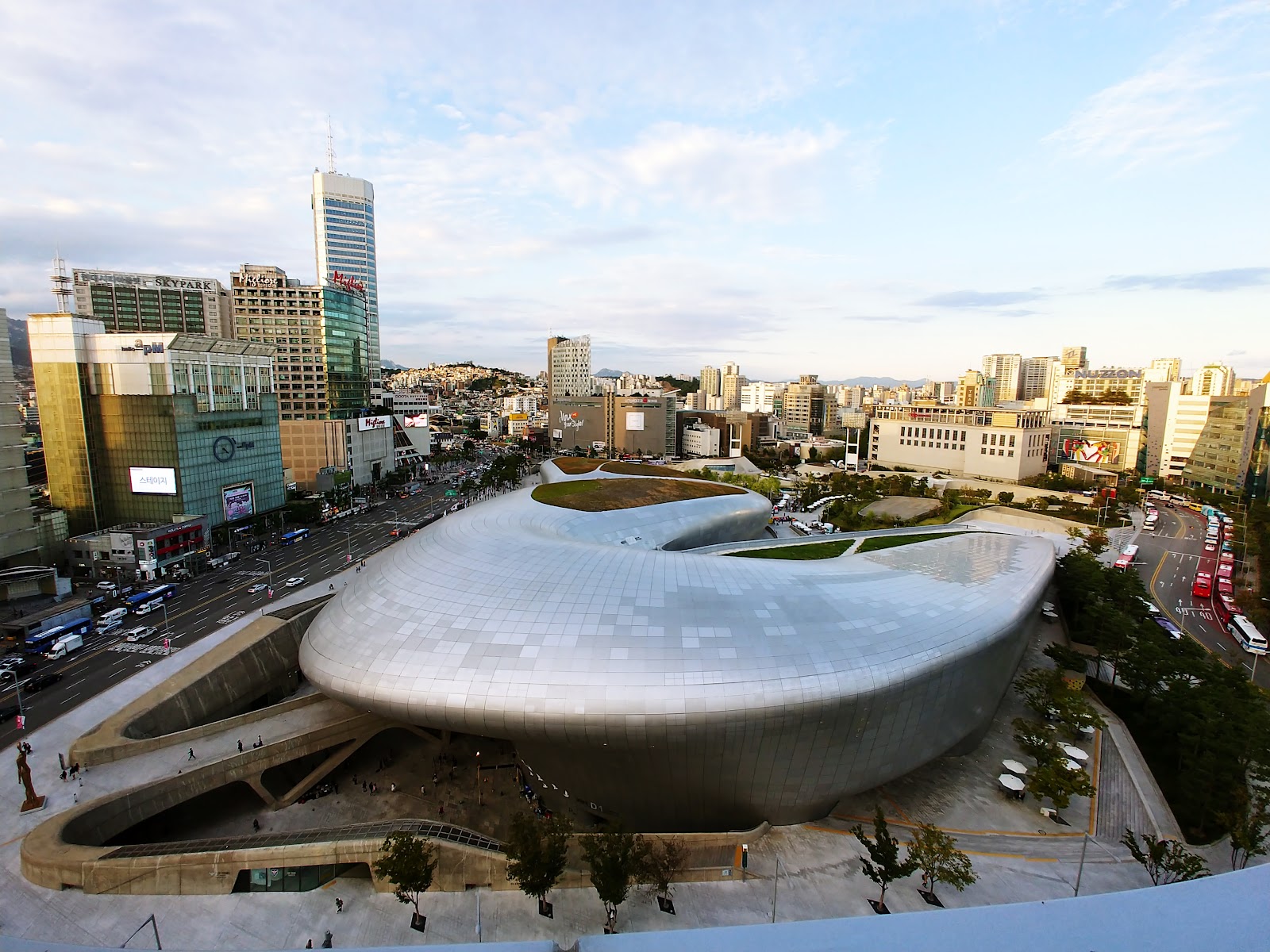
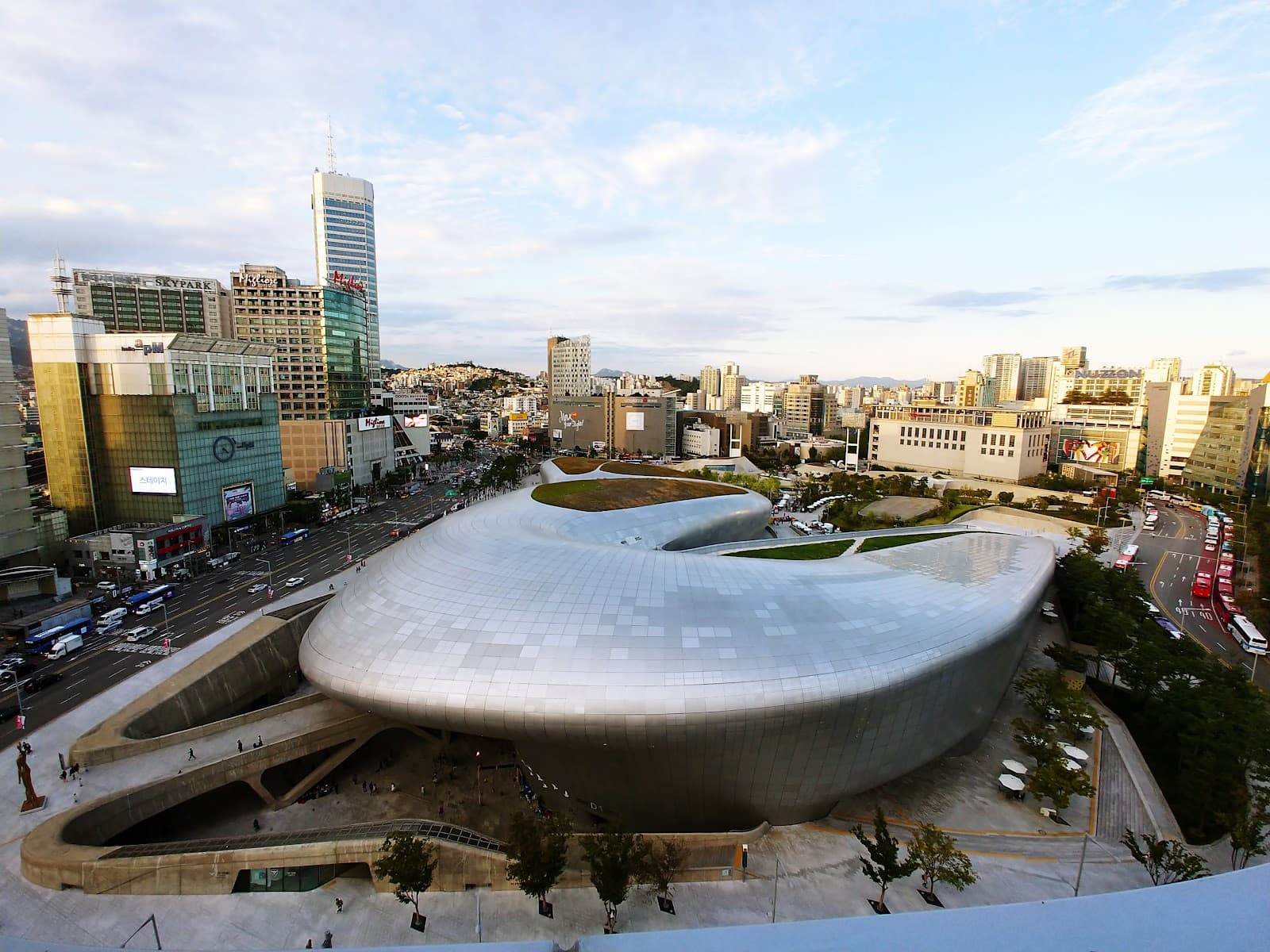
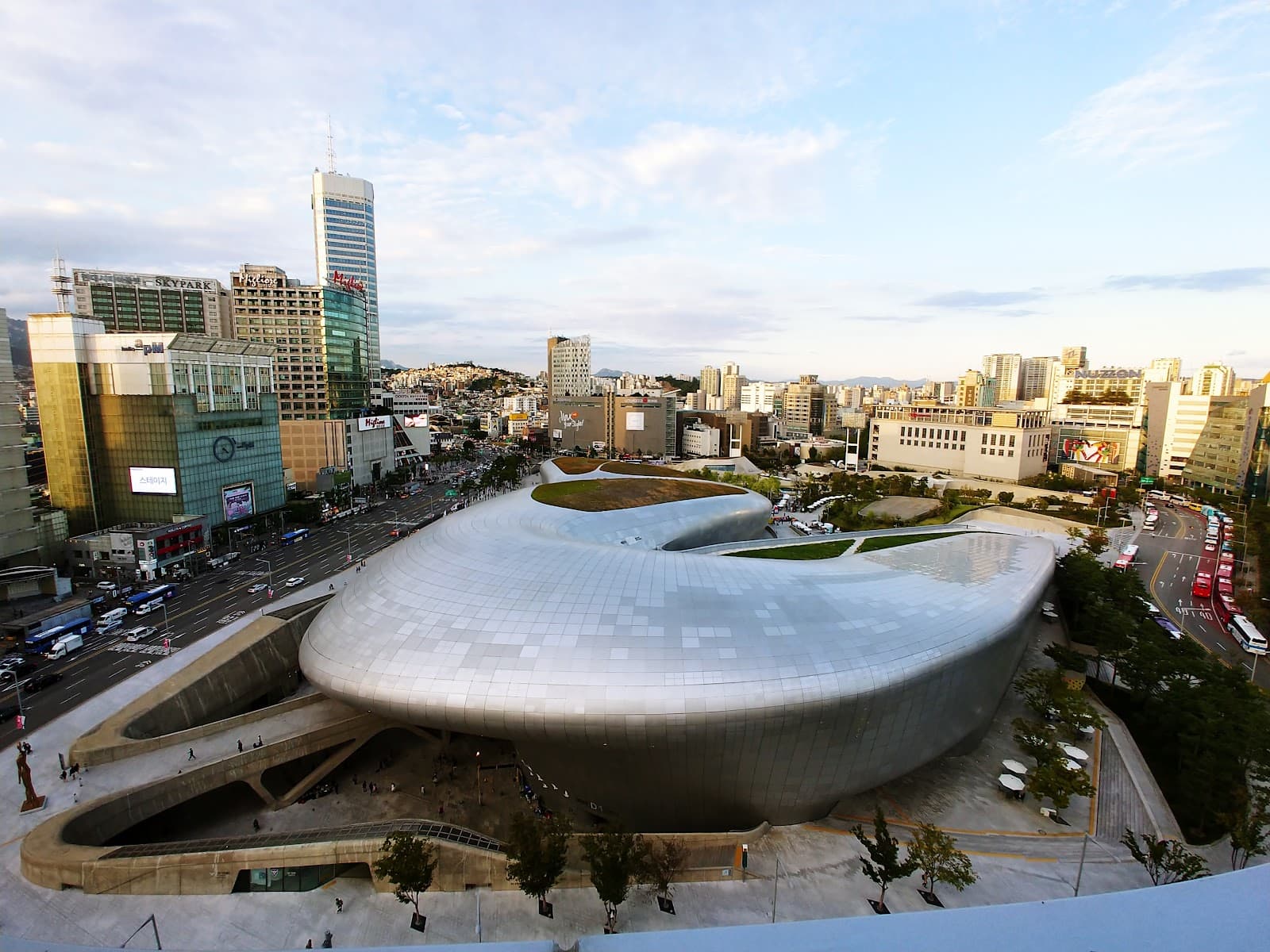
Nothing in Seoul looks quite like this. Zaha Hadid's Dongdaemun Design Plaza uses 45,133 aluminum panels in a continuous curved surface with no right angles — a building that reads less as architecture and more as a topographic event dropped into the city grid.
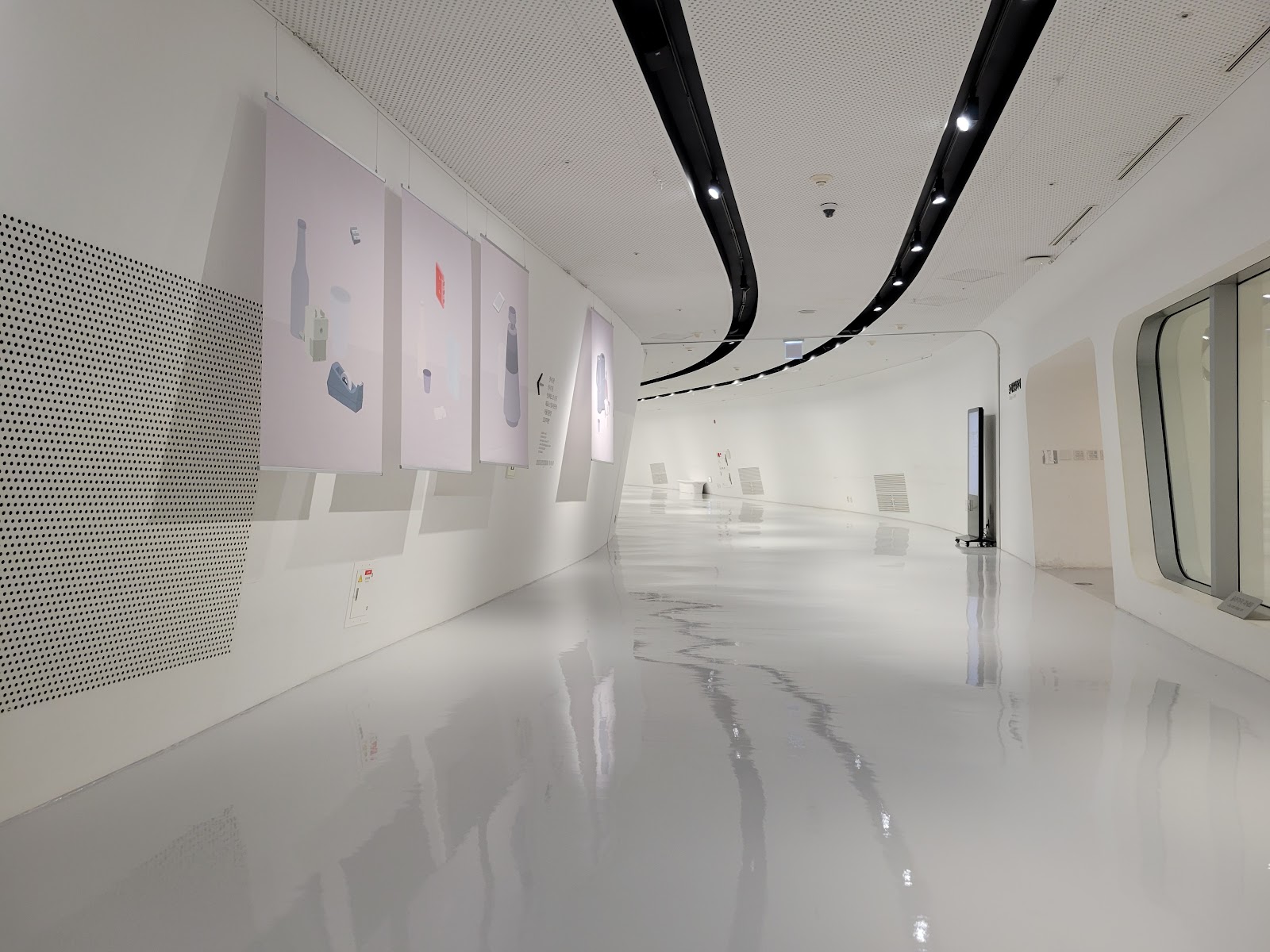
K-pop Demon Hunters draws heavily on this non-Euclidean aesthetic: forms that shouldn't exist but do, spaces where straight lines are absent, a visual grammar that signals we're not in an ordinary world. The DDP interior — its gallery corridors with reflective epoxy floors, curved walls that flow without corners — is Seoul's most convincing argument that architecture can occupy the same emotional register as science fiction.
The outdoor plaza transforms at night. The LED system illuminates 45,133 panels simultaneously, and the building shifts from architectural object to something stranger. K-pop productions understand this moment. They keep coming back.
- Address: 281 Eulji-ro, Jung-gu, Seoul
- Hours: Outdoor plaza 24 hours; galleries vary by exhibition
- Admission: Free (plaza); gallery admission varies
- Access: Dongdaemun History & Culture Park Station (Lines 2, 4, 5), Exit 1
The Art Matrix: Leeum Museum of Art
Three architects on a single hillside in Hannam-dong: Mario Botta's fired ceramic brick cylinder for ancient Korean art, Jean Nouvel's oxidized steel volume for modern collection, Rem Koolhaas's glass-and-concrete structure for contemporary work. The three buildings coexist in productive argument — each making a different claim about what museums should be.
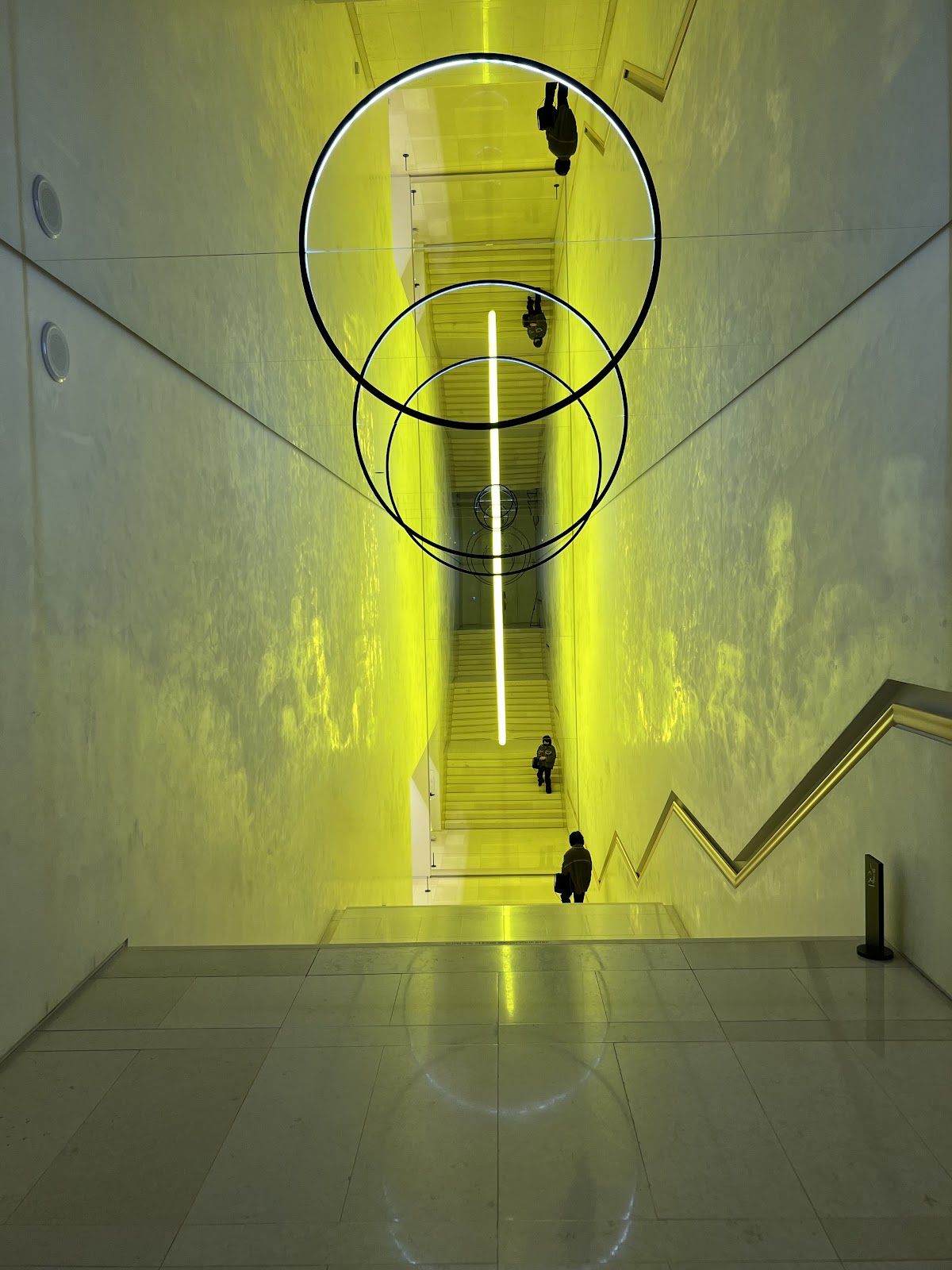
The space that stops people mid-step is the stairwell in Nouvel's building. Concentric circle light installations hang through a vertical void, flooded with neon. It's the kind of image that doesn't need explanation — you understand immediately why a production designer would plant a camera there.
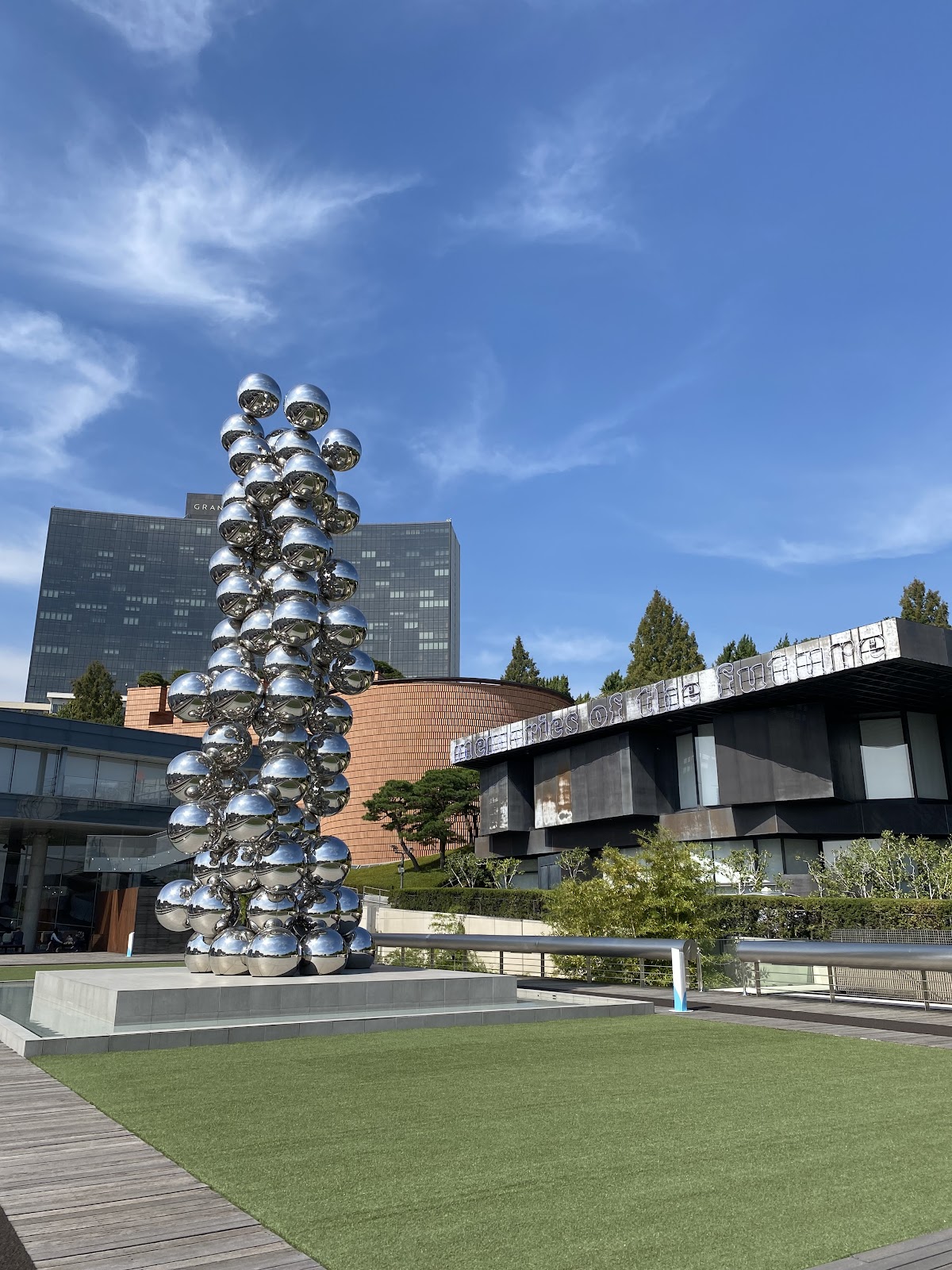
Above the buildings, Anish Kapoor's Tall Tree and the Eye — a column of 73 polished chrome spheres — reflects the campus and sky in compound fragmentation. K-pop Demon Hunters' visual team clearly understands this grammar: the world reflected, multiplied, slightly wrong.
The Leeum's rotating contemporary exhibitions change the experience entirely on each visit. Check the schedule before going — some exhibitions are exceptional, and the permanent collection alone justifies the admission.
- Address: 60-16 Itaewon-ro 55-gil, Yongsan-gu, Seoul
- Hours: Tue–Sun 10:30–18:00 (closed Mondays)
- Admission: ₩20,000 adults, ₩10,000 students
- Access: Hangangjin Station (Line 6), Exit 1, 10-minute walk
Industrial Gothic: Yeonmujang & Seongsu-dong
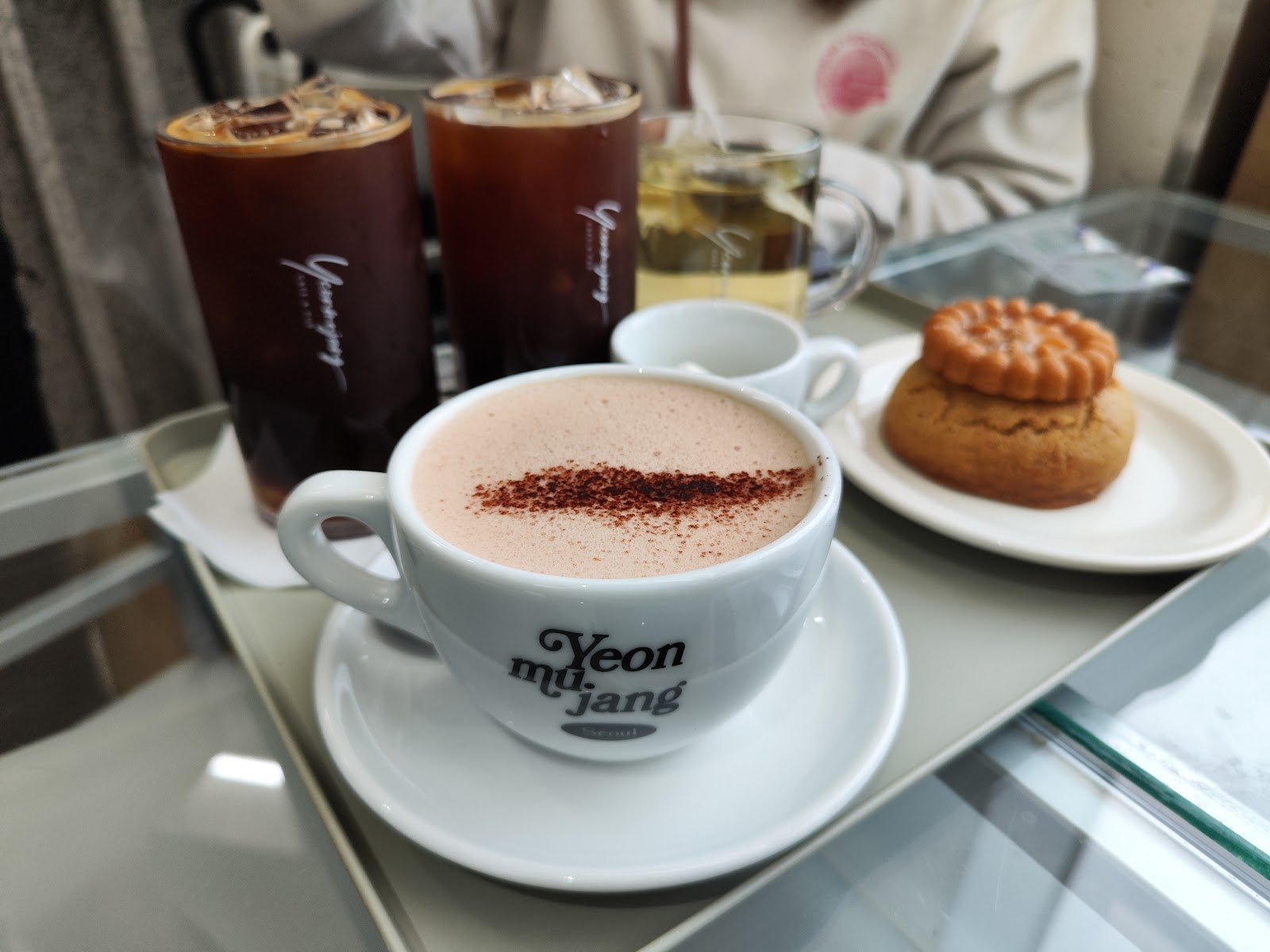
Seongsu-dong's visual logic is: what happens when factory buildings get repurposed by people who care about design? The result is a neighborhood with exposed brick, steel frames, concrete floors, and natural light flooding through industrial glazing. The texture is authentic in the way that purpose-built trendy neighborhoods never are — these buildings were made for work, not Instagram.
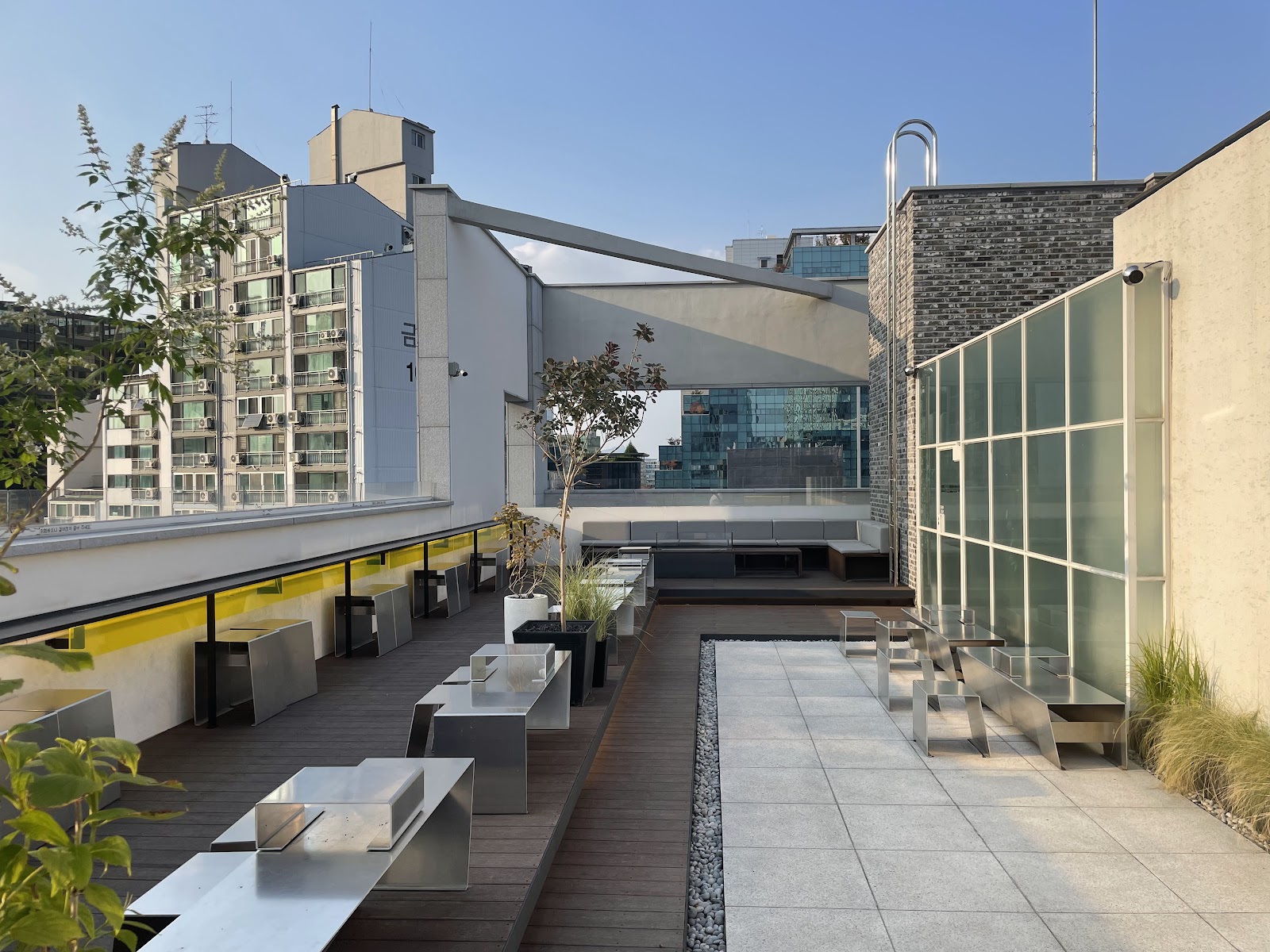
K-pop Demon Hunters uses this aesthetic register extensively. The darker, more grounded visual sequences — the ones that contrast with the show's supernatural elements — have this same quality: weight, material truth, visible industrial history. Seongsu gives you that atmosphere at street level without any set dressing required.
Yeonmujang is the neighborhood's anchor: a converted factory that houses a cafe, creative studios, and event space. The courtyard is one of the better-composed outdoor spaces in Seoul. Walk the streets between Seongsu Station and Seoul Forest Station — the density of well-preserved and well-adapted industrial buildings is higher than anywhere else in the city.
More on Seongsu-dong's design spaces →
- Access: Seongsu Station (Line 2), Exit 4; Seoul Forest Station (Bundang Line), Exit 4
- Best for: Self-guided walking; weekend morning before crowds arrive
The Contemporary Art World: Arario Gallery
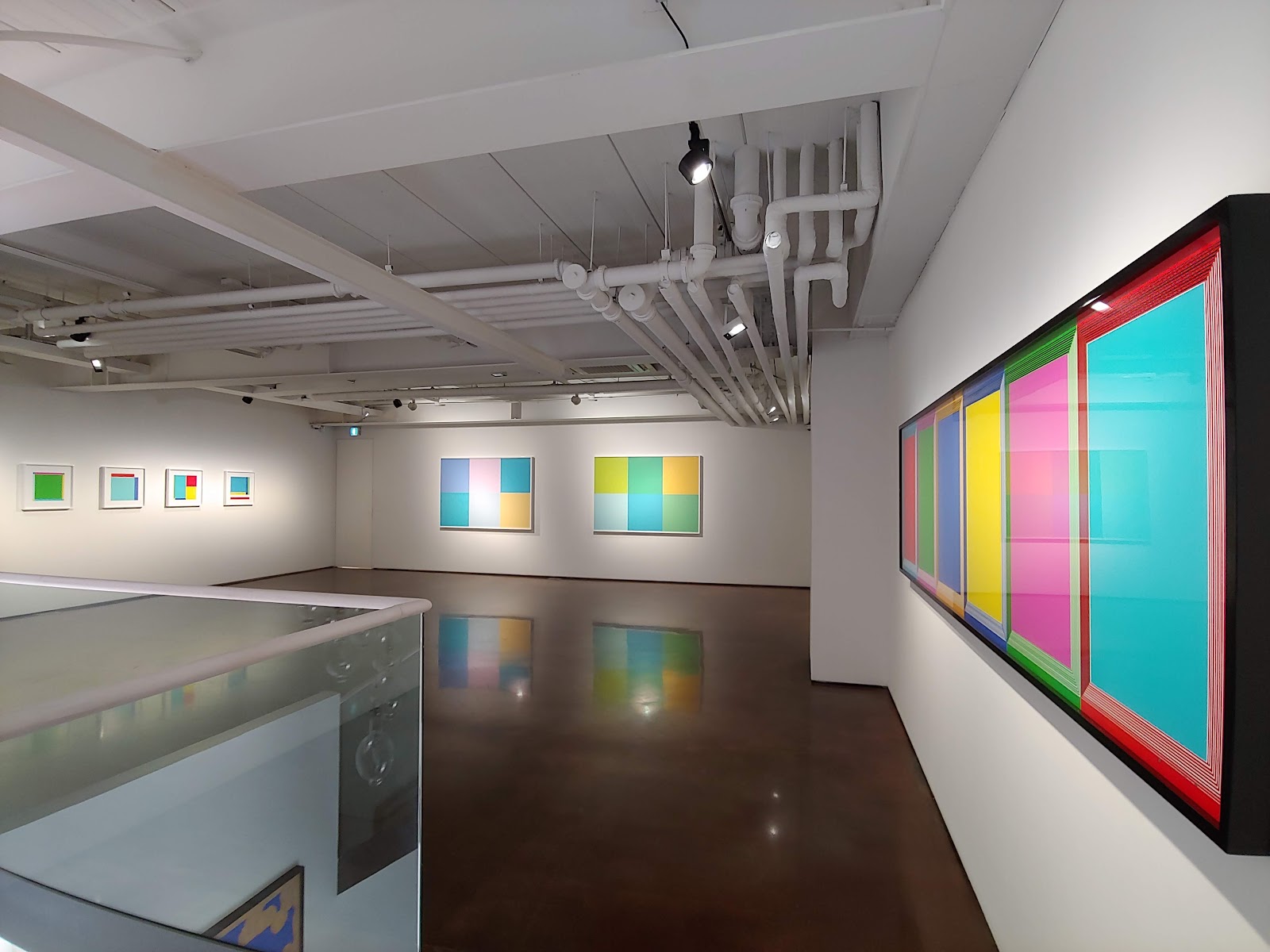
Seoul's gallery district in Cheongdam-dong contains some of the strongest contemporary Korean and international work outside of a major museum context. Arario Gallery is where K-pop's aesthetic ambitions and contemporary art's conceptual frameworks meet most visibly.
The gallery's programming consistently engages with questions of identity, globalization, and visual culture — the same thematic territory that K-pop Demon Hunters navigates. Walking through a well-curated Arario exhibition gives you the same quality of visual thinking that distinguishes the show's direction from standard K-pop production.
- Address: 83 Apgujeong-ro 79-gil, Gangnam-gu, Seoul
- Hours: Tue–Sun 10:00–18:00
- Admission: Varies by exhibition; often free for permanent gallery areas
- Access: Apgujeong Rodeo Station (Line 3), Exit 2
The Design Intelligence: PKM Gallery, Samcheong
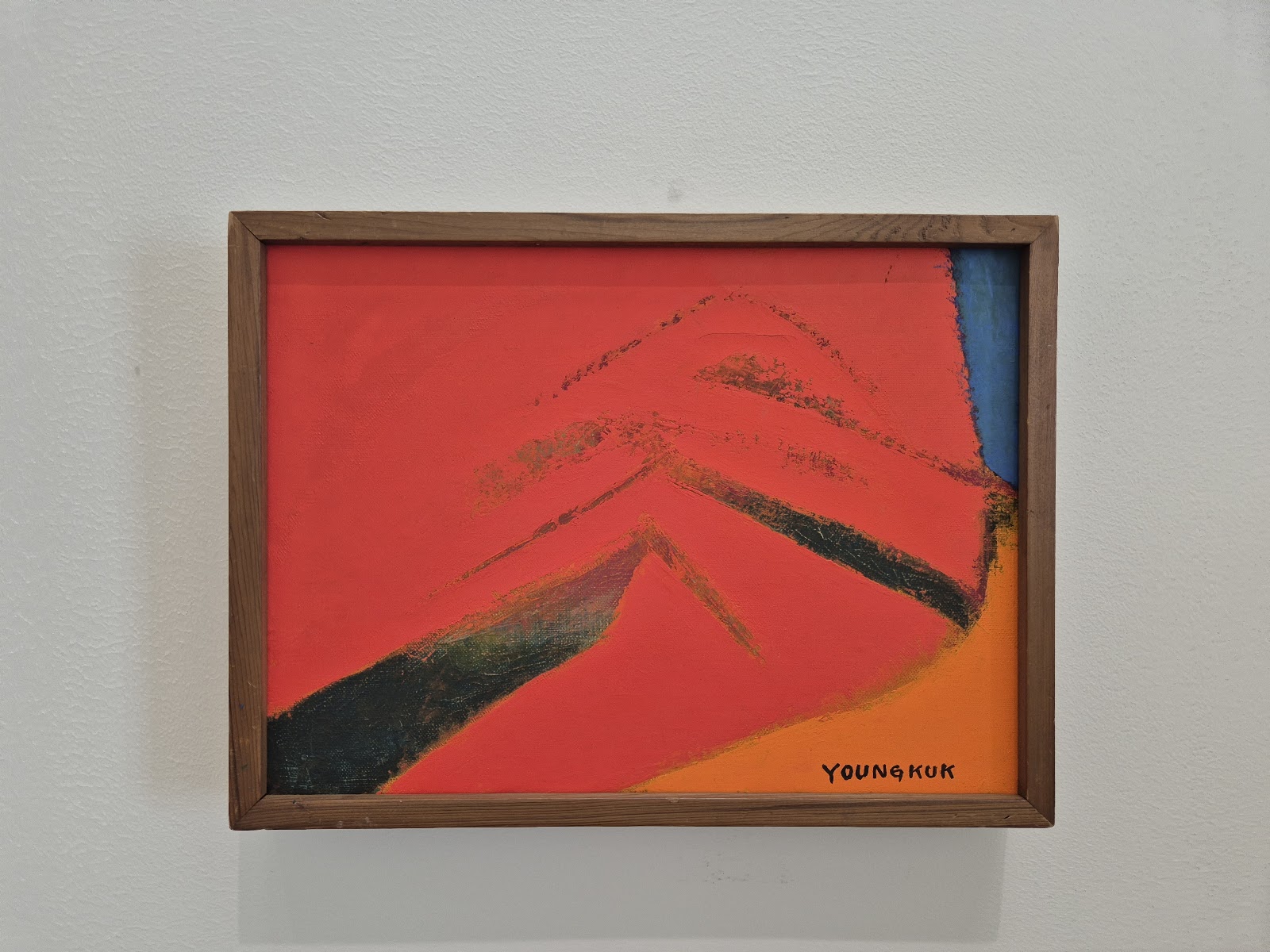
The Samcheong-dong gallery cluster just north of Gyeongbokgung Palace is where Seoul's art world conducts its most serious conversations. PKM Gallery represents a generation of Korean artists who have moved between international markets and Korean cultural contexts — and whose work reflects both.
This is the less visible but more consequential part of Seoul's visual culture. K-pop Demon Hunters' aesthetic complexity — the way it holds Korean cultural specificity alongside international visual references — is rooted in exactly this kind of creative infrastructure. The gallery is worth a visit regardless of who's showing. The architecture is restrained and precise, which makes the work look exactly right.
- Address: 40 Samcheong-ro, Jongno-gu, Seoul
- Hours: Tue–Sat 10:00–18:00
- Admission: Free
- Access: Gyeongbokgung Station (Line 3), Exit 5, 10-minute walk
The Sonic Architecture: Hongdae
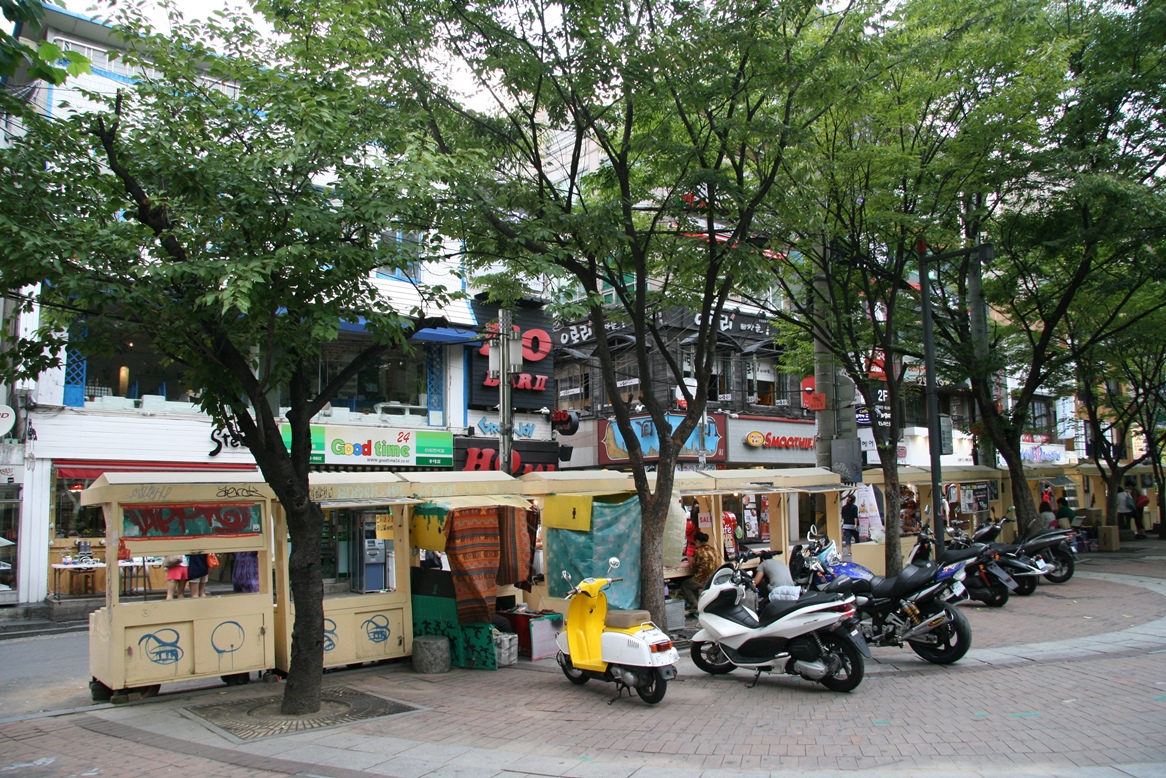
K-pop didn't emerge from a corporate conference room. It came from Hongdae — the neighborhood around Hongik University that incubated indie music, street performance, and the visual culture that K-pop eventually industrialized and globalized.
The outdoor playground stage in Hongdae is where street performers still work. The surrounding streets host the independent music venues, vinyl shops, and graphic design studios that feed into K-pop's visual vocabulary. You can walk through a neighborhood and see where the aesthetic actually comes from, not just where it ends up.
For fans planning around concert logistics: major K-pop entertainment company offices cluster near Hongdae and Yongsan. The neighborhood's density of music infrastructure — rehearsal spaces, small venues, fan cafes near agency buildings — makes it the natural base for any K-pop-focused Seoul visit.
- Access: Hongik University Station (Lines 2, AREX, Gyeongui-Jungang), Exit 9
- Best for: Late afternoon into evening; street performers typically start after 6pm
The Fan Universe: Yongsan Cultural District
The area around Yongsan, spanning toward Hannam-dong and east Itaewon, is where major K-entertainment companies have consolidated. Hybe's building in this zone is a pilgrimage point for global fans. The architectural language here — sleek corporate minimalism, considerable glass, deliberately impressive lobbies — is itself a statement about where K-pop positions itself culturally.
Fan cafes specific to K-pop Demon Hunters and related groups cluster in this district. They're temporary — specific cafes open and close around releases, tours, and anniversaries — so check fan community boards for current locations before visiting.
The Concert Tour venue, when announced, will likely be in one of Seoul's major multi-purpose halls: KSPO Dome in Olympic Park, Jamsil Stadium, or KSPO DOME. All are accessible by metro; KSPO Dome is the most common K-pop concert venue for international touring acts.
- Hybe Access: Itaewon Station (Line 6), Exit 3
- Concert venues: Check official tour announcements for specific venue and transport details
Before You Visit
On timing: DDP at night is a different building from DDP by day. Plan accordingly — the evening light show runs after sunset.
Gallery scheduling: Leeum Museum closes Mondays; most galleries close Monday–Tuesday. Check schedules online, especially for exhibitions that change monthly.
Concert Tour preparation: Tickets for major K-pop concerts in Seoul sell via Melon Ticket, YES24, and Interpark. International ticketing is available through the official tour website. Queuing systems (random draw or early access for fan club members) typically apply — understand the ticketing process before the sale date.
Fan cafes: These are genuinely worth visiting. They're pop-up experiences — typically a cafe that's been temporarily themed for a specific artist, with custom menus and merchandise. The culture is welcoming to international visitors.
Neighborhood base: For Seongsu and Leeum (Hannam) access, staying in Gangnam side simplifies transport. For DDP, Hongdae, and Yongsan, a central Seoul base (Mapo, Yongsan) makes more sense. Most visitors split their time.
Common Questions
Do I need to be a K-pop Demon Hunters fan to enjoy these spaces?
No. The spaces on this list have architectural and cultural merit completely independent of the show. Leeum Museum and DDP are worth a full day each regardless of any K-pop context.
Where can I watch K-pop Demon Hunters in Seoul?
Netflix is available throughout South Korea with the Korean library included. For the Oscar-winning episodes, the quality on a good monitor is worth the wait — small phone screens don't do the animation justice.
Are the Hybe building and entertainment company offices accessible to visitors?
The Hybe lobby area is accessible for brief visits. Fan cafes within walking distance of major agency buildings are the more practical visitor experience — they're designed for fan engagement in a way that corporate lobbies aren't.
What's the best order to visit these spaces?
Leeum + Yeonmujang Seongsu works as a half-day (Hannam to Seongsu by taxi, around ₩12,000). DDP + Hongdae is another half-day (Dongdaemun area to Hongdae by metro). Samcheong galleries pair naturally with Gyeongbokgung Palace in the morning.
When does the concert tour start?
Check the official K-pop Demon Hunters and Netflix social channels for tour date announcements. Seoul dates typically sell within hours — enable notifications before the sale opens.
@minjicurates — follow for design-forward Seoul curation