Seoul's Botanical Design Spaces: 6 Cafes & Gardens Where Plants Define the Architecture
Seoul's cafe culture has done something interesting with spring. The seasonal instinct — put flowers in a vase, drape wisteria on a trellis — has evolved into a more considered spatial argument. A growing number of spaces now treat vegetation as structure. Plants don't decorate these rooms. They make the rooms possible.
This is a curation of six Seoul spaces where that logic holds. The selection ranges from a 50-hectare glass greenhouse of architectural ambition to a mountain-view cafe where floor-to-ceiling glass makes Bukhansan the interior. The through-line: in each space, the botanical element isn't an accessory. It's load-bearing.
@minjicurates
The Greenhouse as Architecture
At its most resolved, biophilic design stops being a style choice and becomes a building type. These two spaces make that argument.
1. Seoul Botanic Park — The Definitive Statement
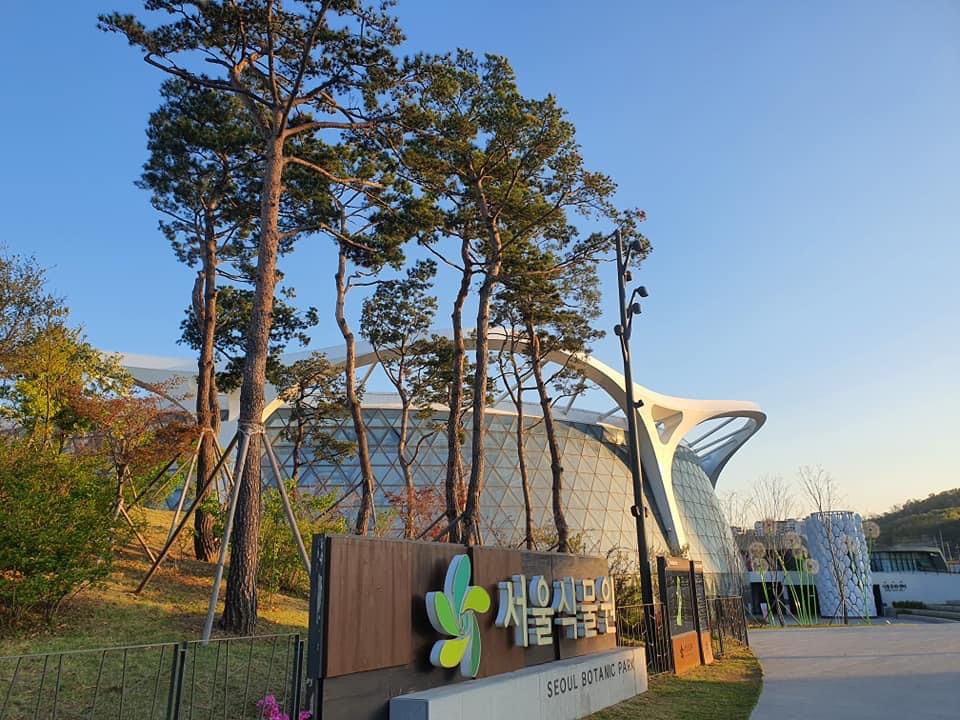
The Magok district isn't obvious Seoul — it sits in the far western reaches of the city, past where most tourists think to go. That distance is worth it. Seoul Botanic Park's main greenhouse is one of the most spatially ambitious structures the city has produced in the past decade.
At 2,370 square meters, the glass dome houses plant collections from 12 cities around the world. Mediterranean specimens share ground-level space with tropical canopy that reaches toward the curved glass ceiling. You enter expecting a garden. What you get is a climate-controlled interior ecology — the greenhouse not as a display case but as a habitat, complete with its own light, humidity, and atmospheric logic.
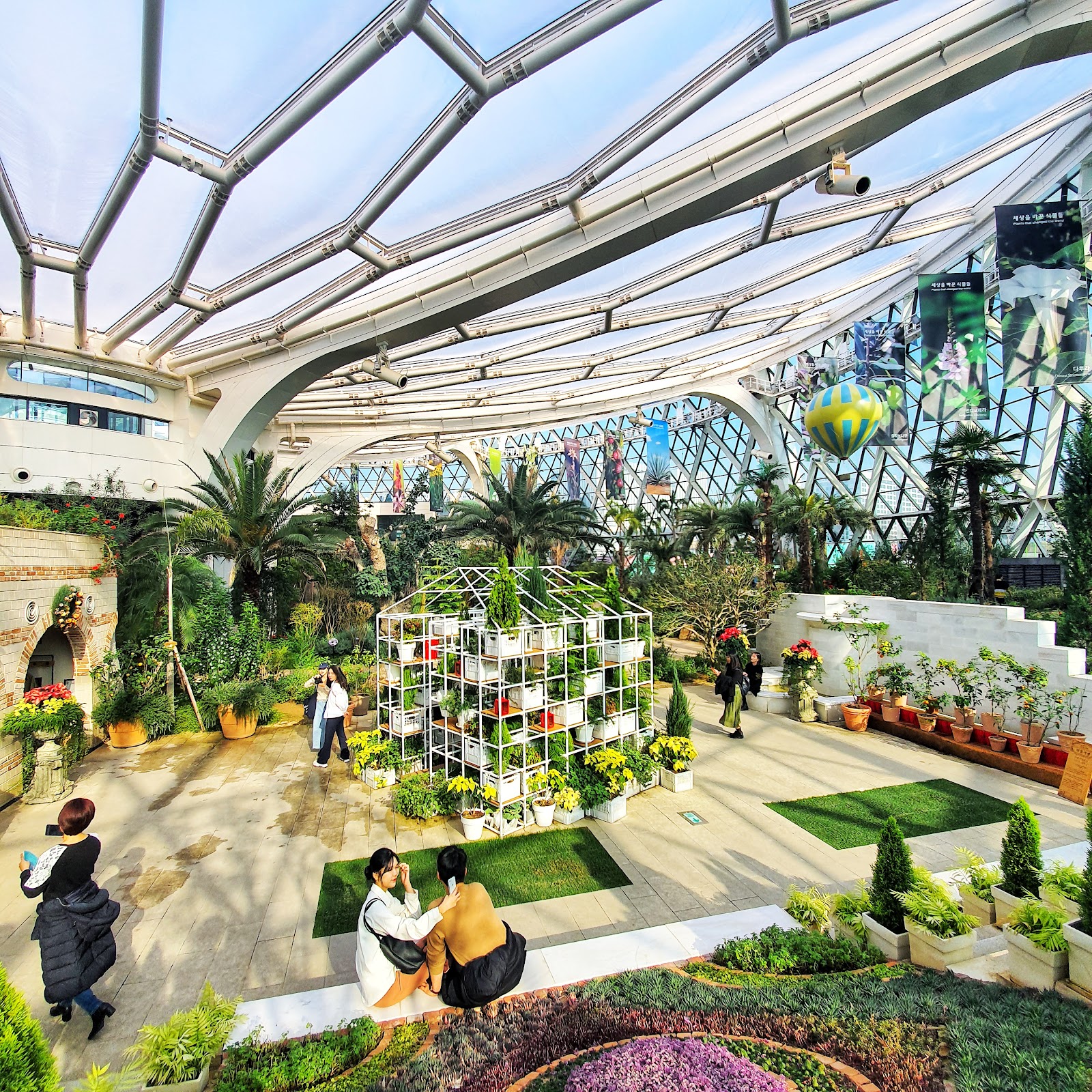
Spring timing matters here. From late March through May, the park's Open Forest zone transitions from bare earth to a riot of forsythia, tulips, and cherry trees. The transition between the managed indoor ecology and the wilder seasonal outdoor space becomes a study in how designers negotiate the controlled versus the seasonal.
The adjacent Magok Naaru Hangang Park offers a natural exit route — a 30-minute walk through water features and restored wetlands to the Han River.
- Location: 161 Magokdong-ro, Gangseo-gu, Seoul (Magok Naru Station, Line 9, Exit 3)
- Hours: 09:30–18:00 (Mar–Oct), 09:30–17:00 (Nov–Feb), closed Mondays
- Admission: Adults ₩5,000, Youth ₩3,000, Children ₩2,000; Open Forest free
2. Cafe Sanare — The Intimate Glass Frame
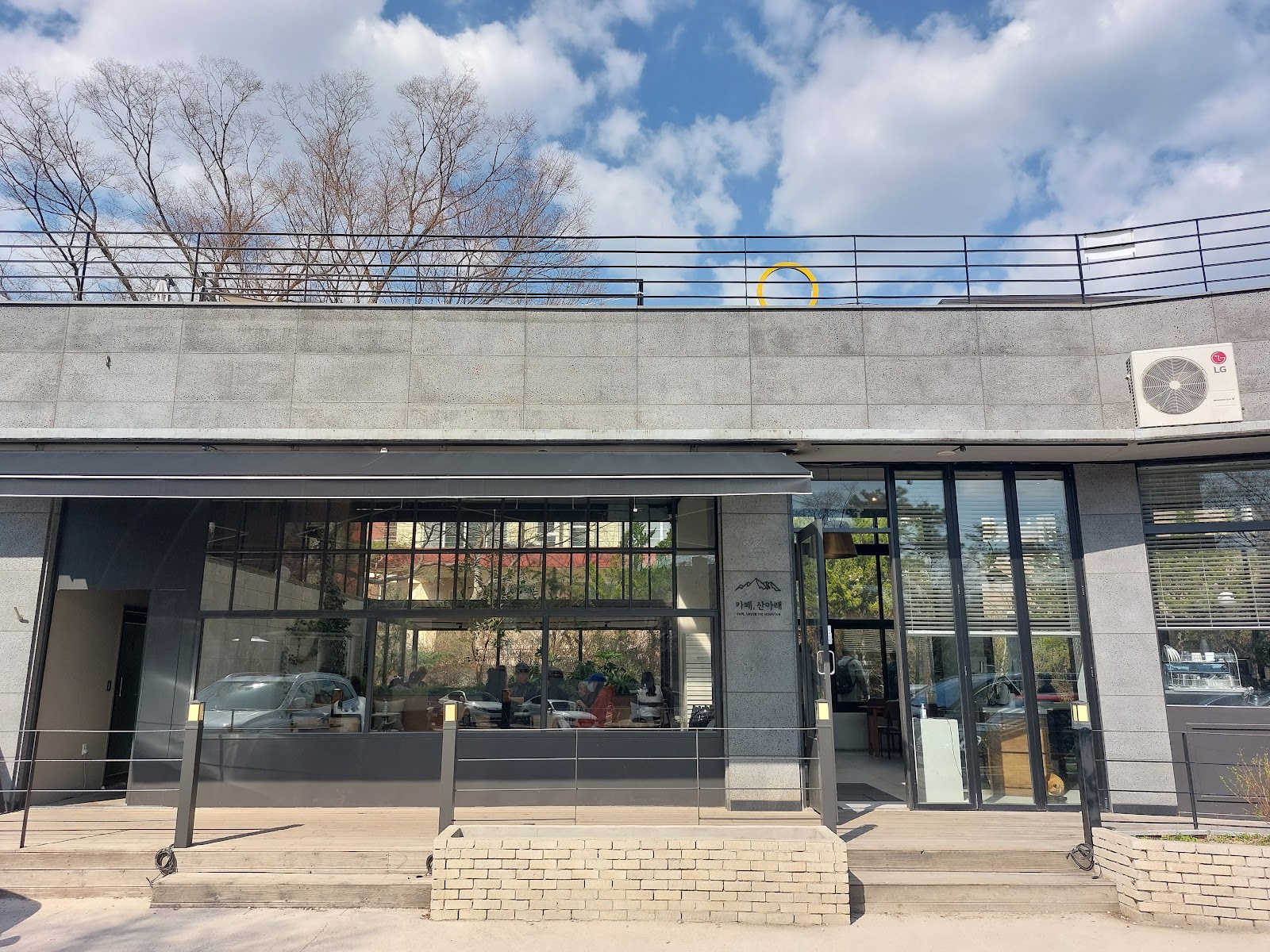
Where the Botanic Park builds its own world inside glass, Cafe Sanare does the opposite. Its glass walls don't contain nature — they make Bukhansan Mountain visible from every seat.
The name translates loosely as "under the mountain," which is accurate both literally and spatially. The cafe sits at the Ui Valley approach to Bukhansan National Park, and the glass greenhouse-style structure reads as a transparent threshold between city and mountain. You're inside, but the forest is everywhere the glass allows.
The design decision that makes this work is restraint. The interior furnishings are kept deliberately neutral — light wood, clean lines, nothing competing with the view outside. This is a cafe designed to disappear. What remains is the glass, the mountain, and the distance between them.
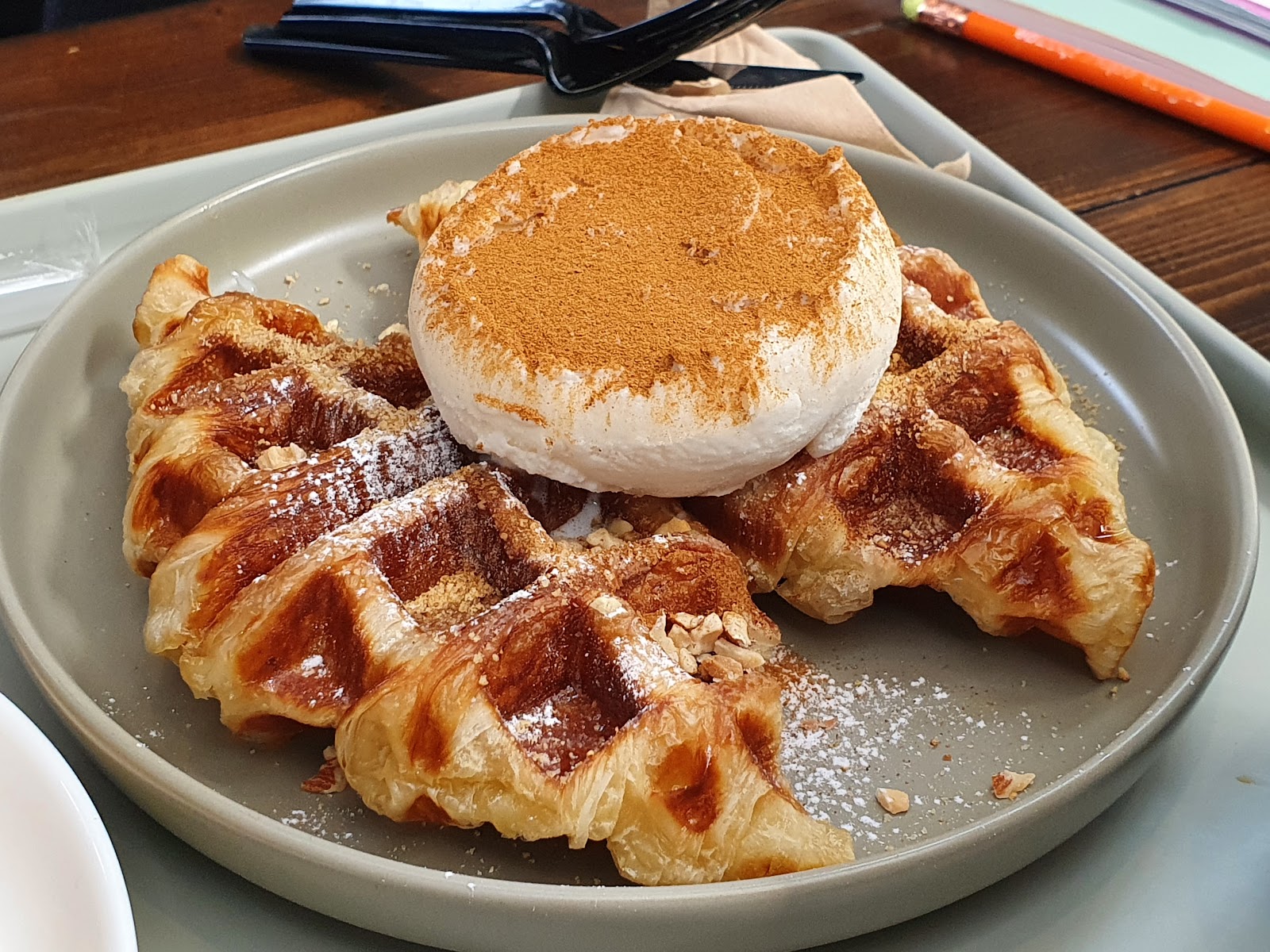
Their croffles (croissant-waffle hybrids) have achieved something of a cult following among the local hiking community. Weekends draw a mixed crowd: serious trekkers who've just descended Bukhansan's trails and design-conscious visitors who came specifically for the glass room.
- Location: 56 Samyang-ro 181-gil, Gangbuk-gu, Seoul (4-minute walk from Bukhansan Ui Station Exit 1)
- Hours: Weekdays 11:00–20:00, Weekends 11:00–22:00
- Price range: ₩₩
The Courtyard as Garden Host
Traditional Korean architecture understood gardens differently than Western conventions. The courtyard — madang — was never ornamental. It was spatial infrastructure. These spaces work with that logic.
3. Dotori Garden — The Hanok Courtyard as Cafe
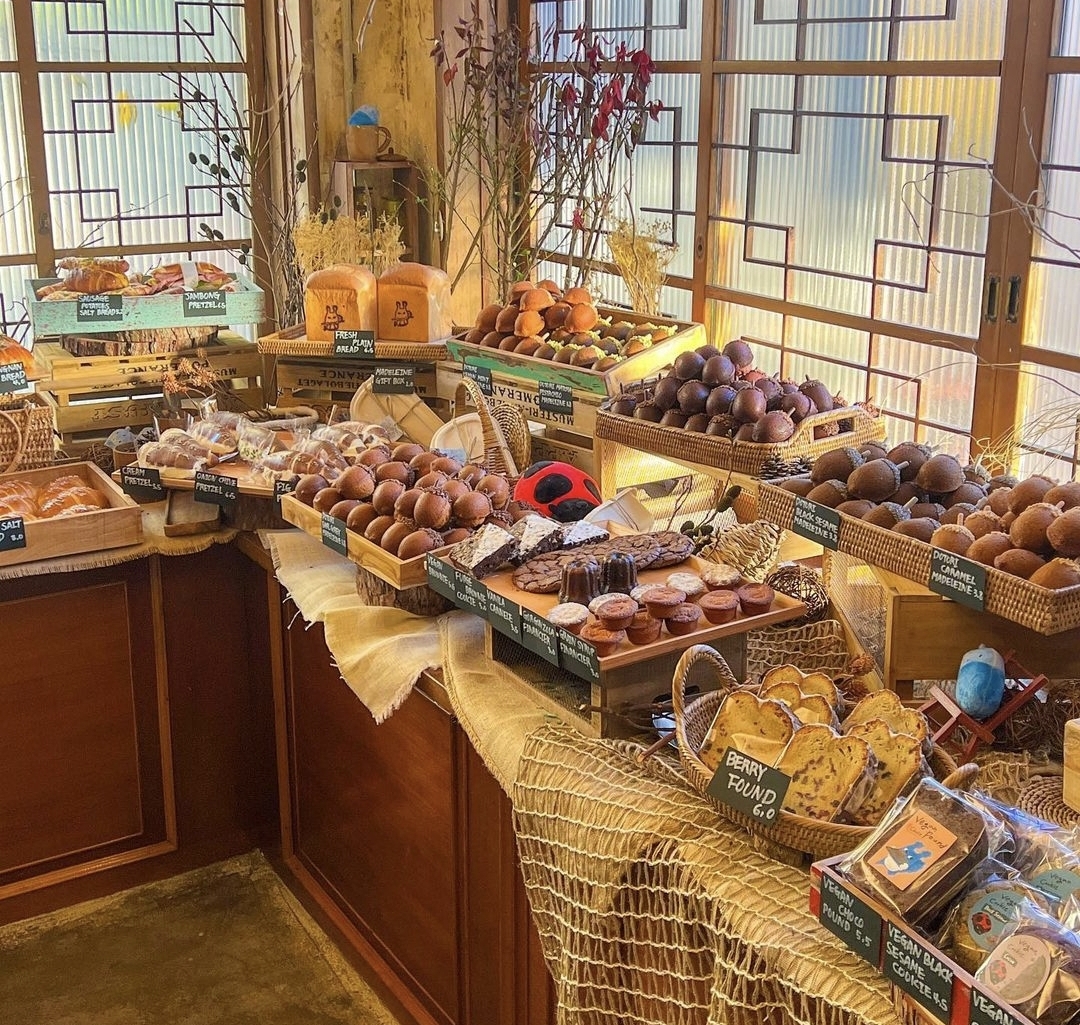
Most hanok cafes in Bukchon and Anguk operate on a conversion logic: remove some interior walls, add an espresso machine, keep the tiled roof visible. Dotori Garden takes a different position. The garden — a real one, with actual planting — remains the spatial center.
The building sits 200 meters from Anguk Station, close enough to draw neighborhood foot traffic but oriented inward toward the courtyard rather than outward toward the street. This is the primary spatial gesture: a building that declines to face the city in favor of facing its own green space.
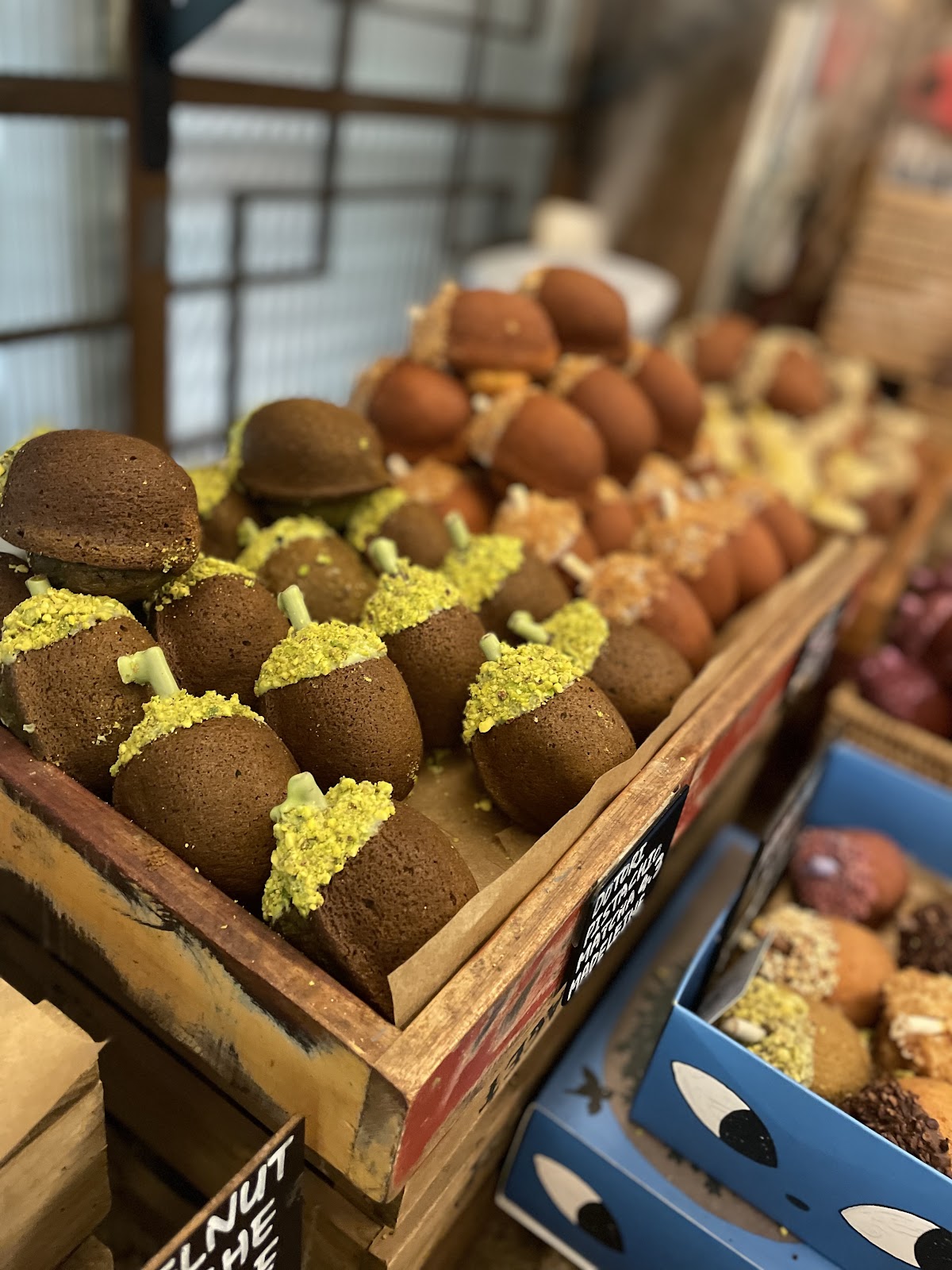
Inside, the split-level arrangement between ground and second floor preserves sightlines to the garden from multiple angles. The bakery elements — Greek yogurt, brunch items, a selection of freshly baked breads — are good enough to anchor the visit on their own terms. But the garden is why people come back.
Spring is the peak season here. The courtyard planting responds to the turning of the season in ways that imported materials can't. What's visible through the windows in March will look different by May.
- Location: 19-8 Gyedong-gil, Jongno-gu, Seoul (200m from Anguk Station Exit 3)
- Hours: Daily 08:00 (bakery items from 09:00); no reservations, first come, first served
- Price range: ₩₩
The Plant Philosophy Made Spatial
The most interesting contemporary approach to biophilic design in Seoul isn't the greenhouse or the courtyard — it's the menu. Two spaces have made plant-forward identity so central to their operation that it inevitably shapes the space.
4. Plant Cafe Itaewon — Where the Menu Dictates the Interior
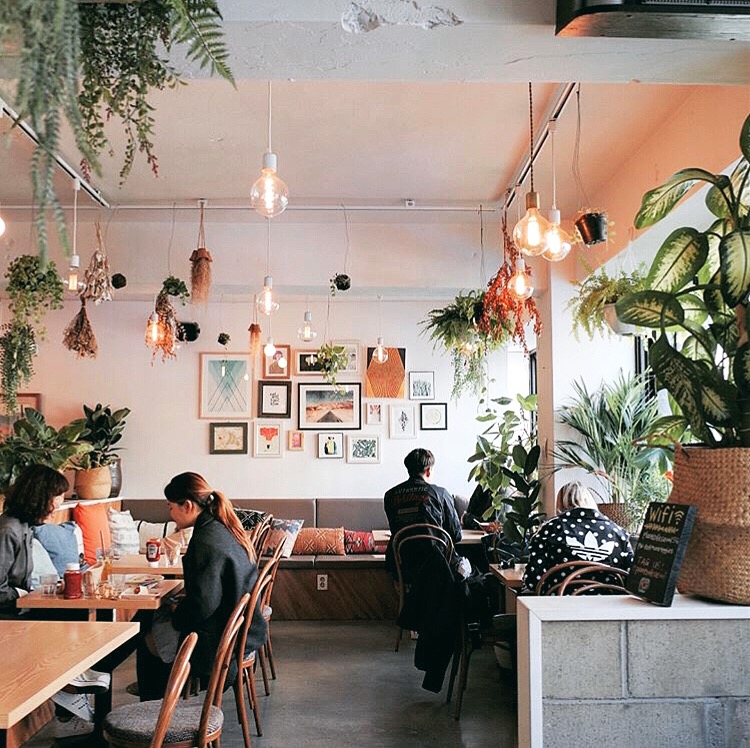
Seoul's original plant-forward cafe, Plant opened in Itaewon before Yeonnam-dong's transformation into a design destination. The kitchen's 100% vegan commitment — no exceptions, across a menu that moves through Indian, Mediterranean, Middle Eastern, and Thai registers — produces a spatial consistency that most cafes achieve only through interior design budget.
When the food philosophy is this specific, it influences everything: who works there, who eats there, how they sit, what they talk about. Plant Itaewon has a particular gravity, a neighborhood institution quality, that distinguishes it from spaces that attempt botanical aesthetics as a design style.
The comparison to the Yeonnam-dong location is instructive. Same menu philosophy, different spatial translation. Itaewon's version carries an edge — the neighborhood's cosmopolitan history inflects even spaces committed to gentle living.
- Location: Itaewon-dong, Yongsan-gu, Seoul
- Hours: Check current hours; closed Mondays
- Price range: ₩₩
5. Plant Cafe Yeonnam — The Second Act
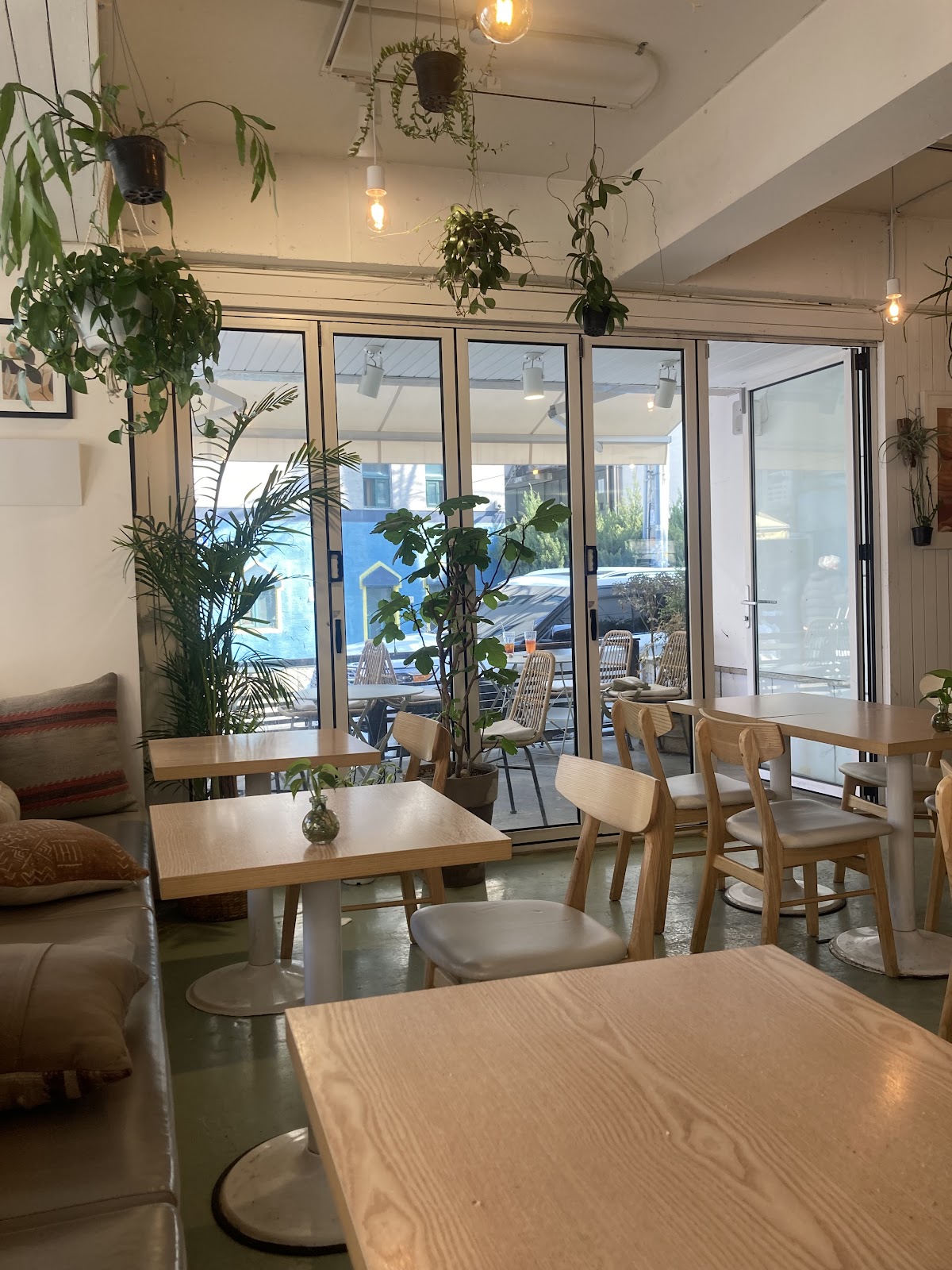
The Yeonnam-dong location is where Plant's spatial identity became fully legible. The neighborhood — a grid of low buildings, independent shops, and residents who take eating seriously — allowed the cafe a kind of expansion not possible in Itaewon's more charged atmosphere.
What's architecturally interesting about Plant Yeonnam is how a food philosophy becomes a design language without a design budget. The vegetation throughout the interior isn't styled — it's accumulated. This gives the space an organic quality that distinguishes it from cafes that merely use plants as props.
For visitors, the menu is the primary argument. Bowls and plates that draw on multiple world cuisines, all plant-based, all genuinely good. But the spatial experience — sitting among growing things, in a room that smells faintly of soil — is its own kind of Seoul original.
- Location: 87 World Cup buk-ro 4-gil, Mapo-gu, Seoul (Yeonnam-dong)
- Hours: Tuesday–Sunday 10:00–22:00
- Price range: ₩₩
The Riverine Frame
6. Urban Plant — The Bridge as Botanical Threshold
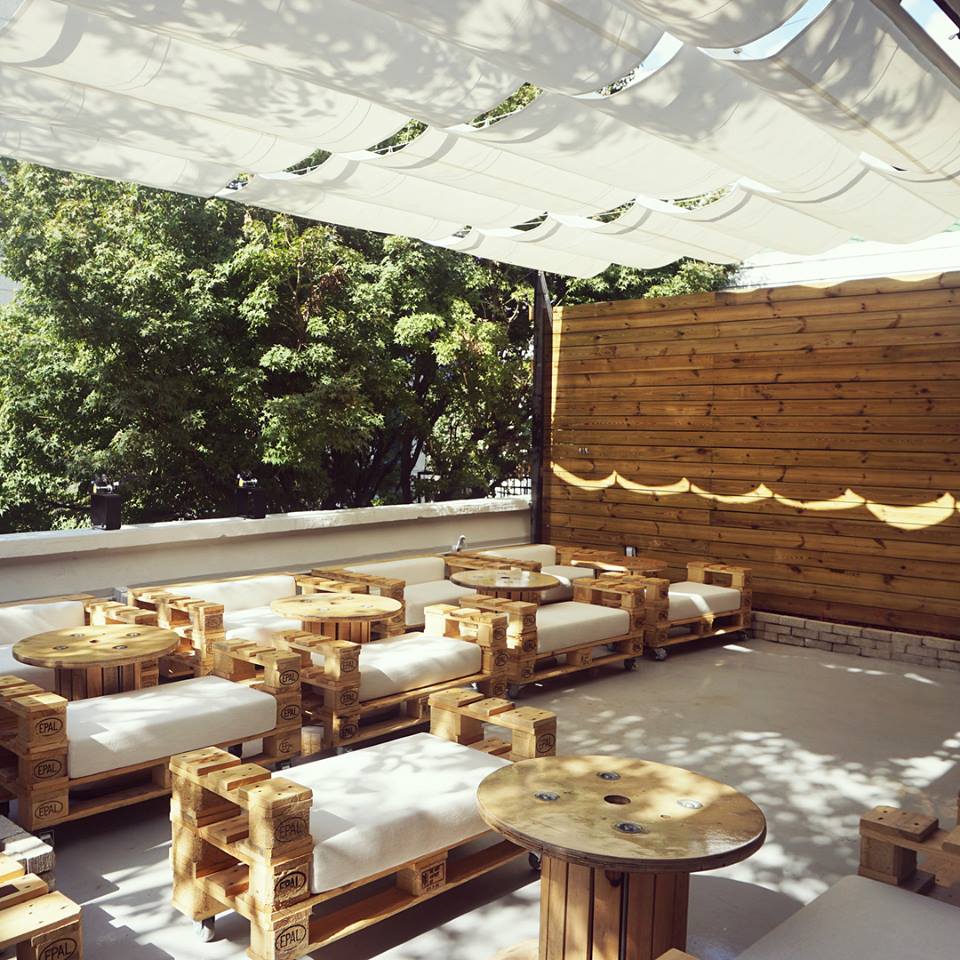
The newest entry in this selection, Urban Plant opened in late 2024 at a location that poses a formal design question: what happens when you name an industrial structure after a plant?
The cafe sits directly on a bridge structure above the Han River near Yongsan. The design vocabulary is unambiguously industrial — steel, concrete, visual openness. But the "plant" in the name gestures toward something the river does for free: it places the visitor in relationship with a living, moving system.
The Han River isn't vegetation. But it performs a similar spatial function — it makes the city legible as something other than built material. Urban Plant's contribution is to create a threshold from which this relationship is visible. That's a biophilic argument, even without a single flower.
This is the most polarizing choice in this selection. Some will find the botanical claim thin. Others will recognize that the most interesting design conversations in Seoul right now happen precisely at these edges — where urban infrastructure and natural systems are asked to mean something together.
- Location: Near Hangang Bridge, Yongsan-gu, Seoul (opened October 2024)
- Hours: Check current hours
- Price range: ₩₩
Before You Visit
Season: March–May is optimal for all outdoor elements. The Botanic Park's seasonal transitions peak in April. Dotori Garden's courtyard planting is at its best from late March through May.
Logistics: These spaces are spread across Seoul — plan each as a destination rather than a single day itinerary. Cafe Sanare pairs naturally with a Bukhansan hike; the Botanic Park pairs with Magok Naru waterfront; Dotori Garden and Plant Itaewon can anchor an afternoon in their respective neighborhoods.
Photography: Morning light works best for glass structures (Botanic Park, Cafe Sanare). Midday is flattering for courtyard spaces (Dotori Garden). Urban Plant is best at dusk when the bridge structure catches the last light.
Reservations: Most of these spaces don't require reservations; the exception is Eatanic Garden if you want the full Josun Palace experience. For Cafe Sanare and Dotori Garden on weekends, arrive at opening or expect waits.
Common Questions
Which of these spaces is most photogenic? Seoul Botanic Park for scale and drama; Cafe Sanare for the mountain-glass composition; Dotori Garden for warm, intimate images that photograph well in soft light.
Are these cafes accessible to non-Korean speakers? Plant Cafe Itaewon and Yeonnam have menu items and staff comfortable with English. Cafe Sanare is more local in character — images on the menu make ordering straightforward. The Botanic Park has multilingual signage throughout.
Is Seoul Botanic Park worth the journey to Magok? Yes, if you're interested in botanical design as a serious design typology. The greenhouse structure alone justifies the trip. Combine with Magok Naru Hangang Park for a half-day.
When does the Botanic Park get crowded? Cherry blossom season (early to mid-April) brings peak crowds to the outdoor zones. The indoor greenhouse remains less crowded and is excellent even on busy days. Weekday mornings are most tranquil.
Are these spaces family-friendly? Seoul Botanic Park and Dotori Garden are family-friendly (Dotori has a kids zone). Cafe Sanare does not allow children. Plant Cafes welcome families.