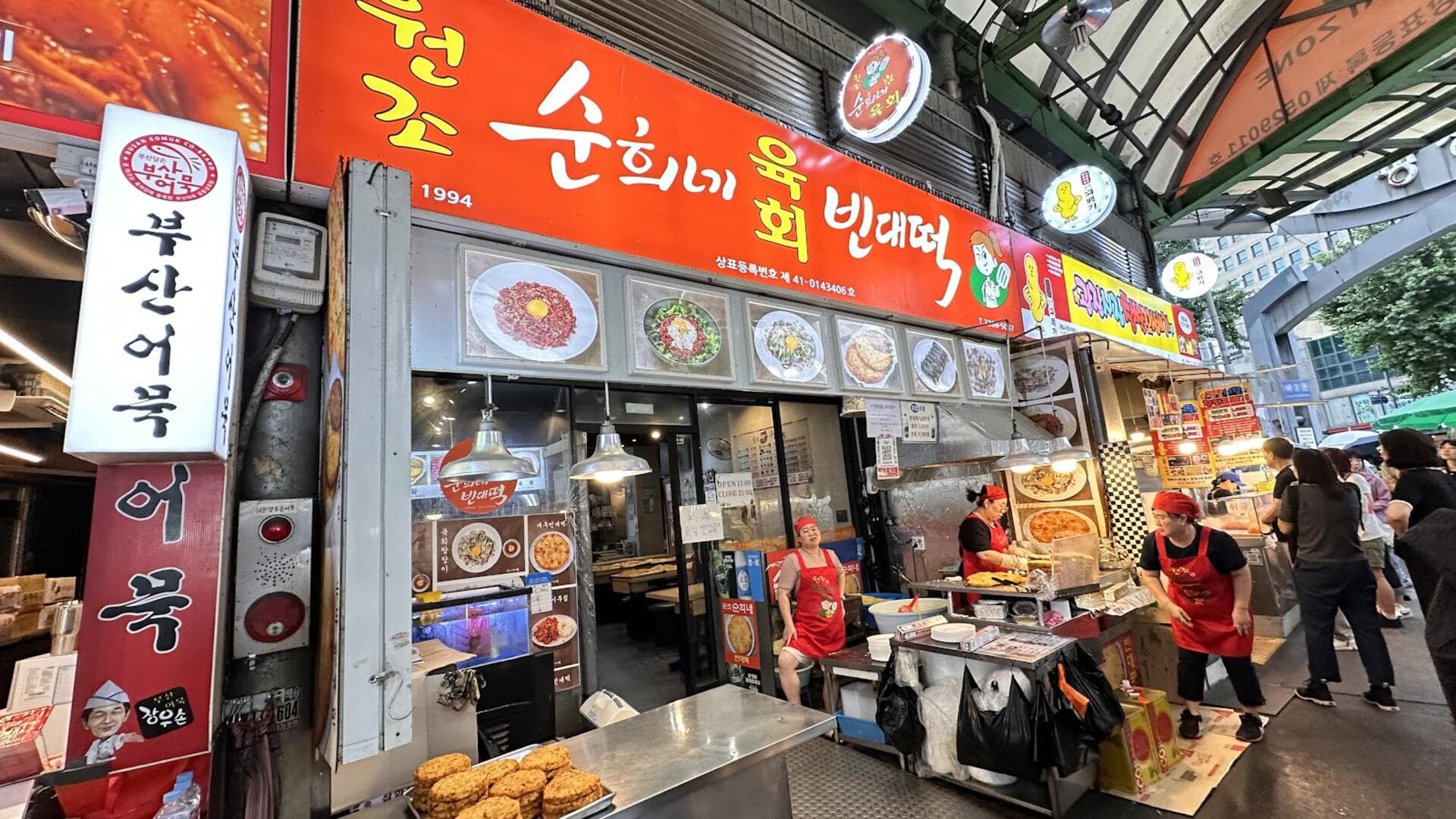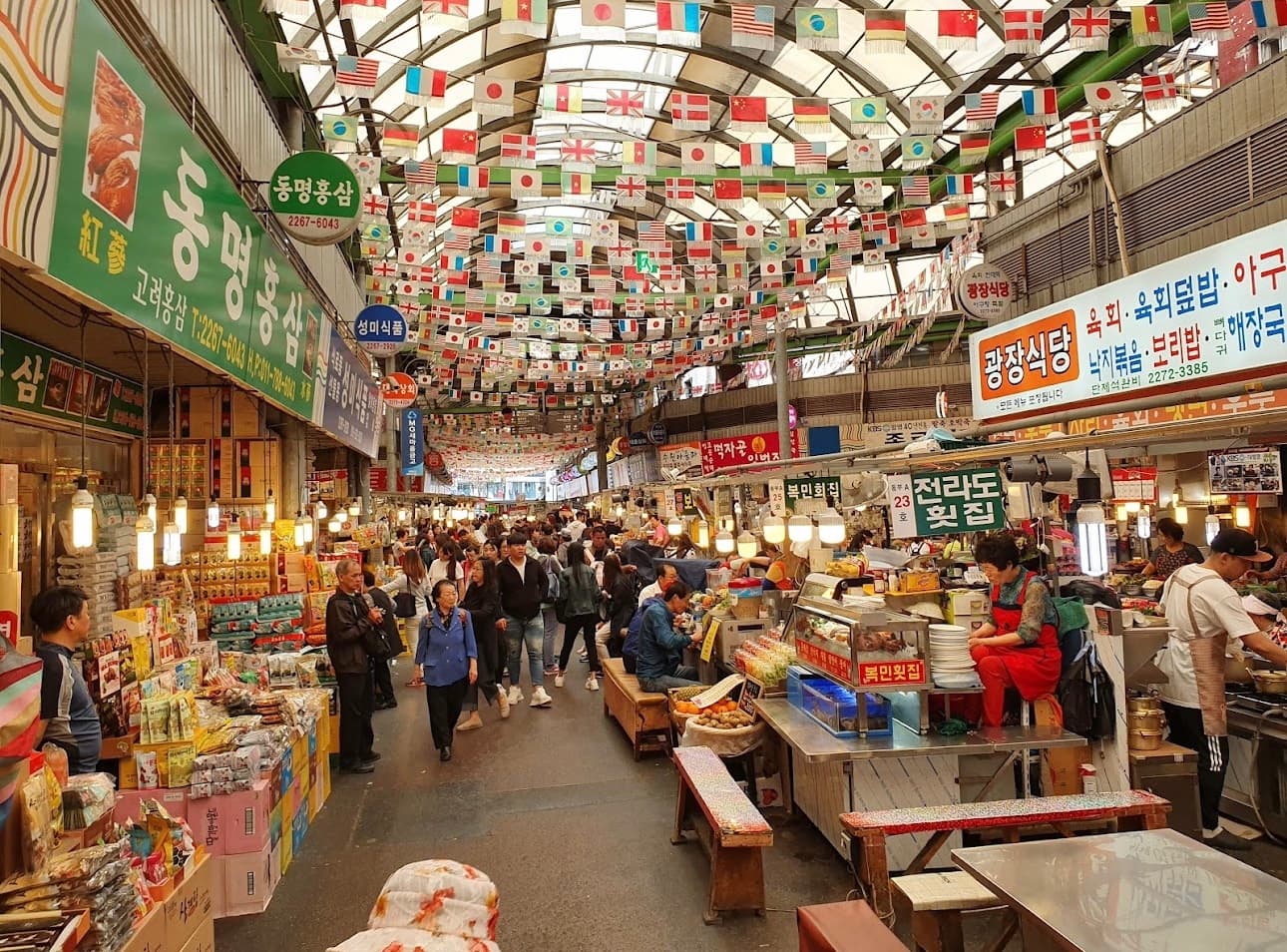

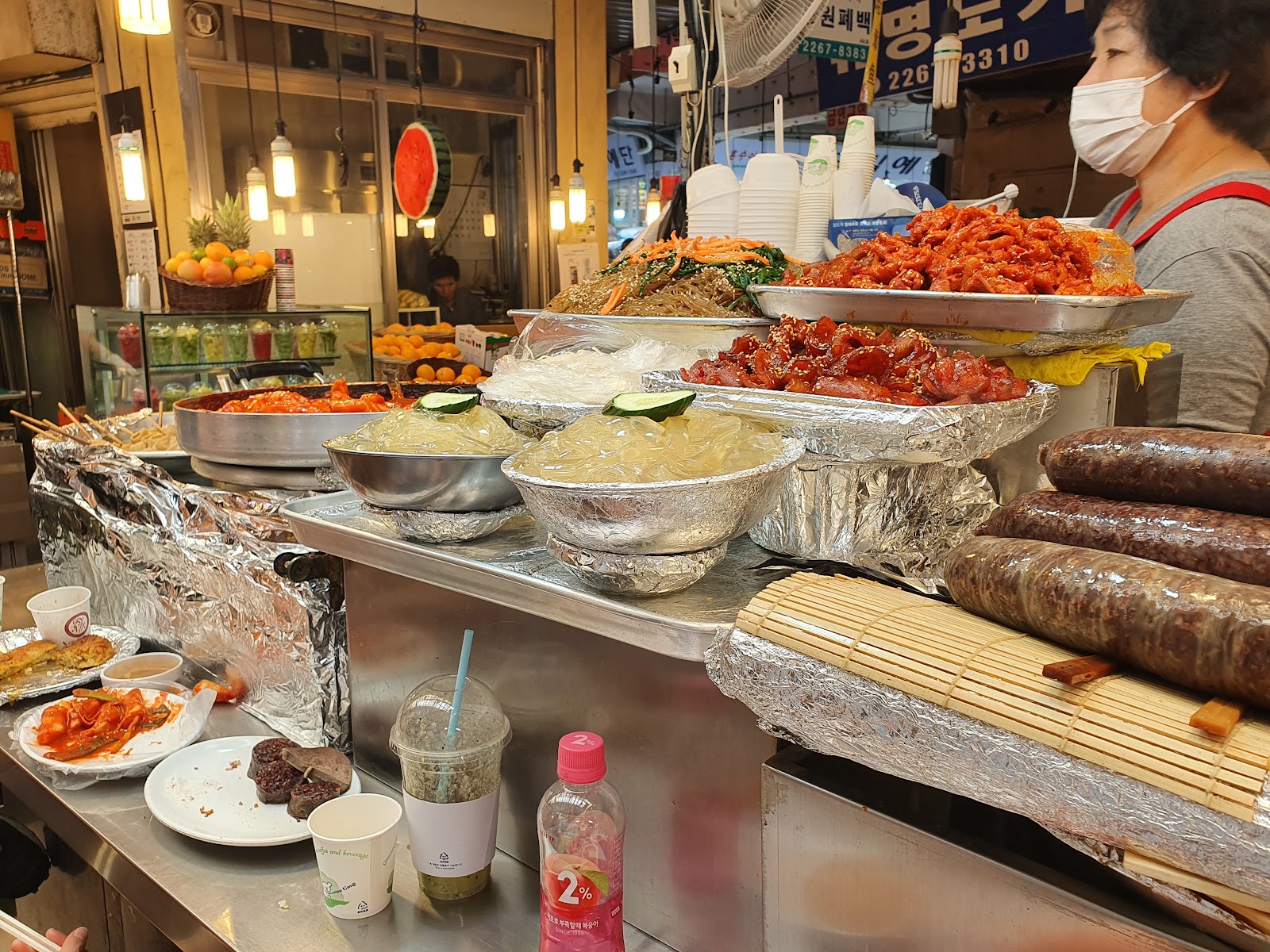
The grandmother behind the counter didn't ask what I wanted. She just watched me staring at the small, tightly wrapped rolls stacked in neat rows, smiled, and slid a plastic tray across the counter with six of them. "Try first," she said. I dipped one in the mustard soy sauce, bit through the sesame-slicked seaweed, and felt the rice and filling compress into a dense little burst of flavor.
I ate all six in under two minutes. Then I ordered another roll.
That was Gwangjang Market's mayak gimbap — and it converted me. Since then I've eaten gimbap in basement chain restaurants at 3am, in school lunch boxes borrowed from Korean friends, at han river picnics with the cherry blossoms coming down. Gimbap is everywhere in Seoul, and once you understand its different forms, you'll want it everywhere too.
What Makes Korean Gimbap Different
People often compare gimbap to sushi. The comparison is surface-level. Yes, both involve rice wrapped in seaweed. But gimbap (김밥) has its own logic entirely.
Korean gimbap rice is seasoned with sesame oil, not vinegar. It's warm, slightly sticky, with a toasted sesame fragrance that makes each bite deeply satisfying. The fillings are cooked or pickled — danmuji (yellow pickled radish) for sweetness and crunch, spinach blanched with sesame, carrot, egg omelet, and usually a protein like beef, tuna, or crab stick. Everything layered in a specific order, then rolled tight in a sheet of laver (dried seaweed), then sliced into perfect coins.
Unlike sushi, gimbap travels beautifully. It doesn't fall apart. It doesn't need refrigeration for hours. That's why Korean parents pack it for school lunches, hikers bring it to mountain trails, and lovers carry it to han river picnics. It's food engineered for movement.
The name itself reflects this: 김 (gim) means dried seaweed, 밥 (bap) means rice. Rice in seaweed. Simple, honest food.
Mayak Gimbap: The Roll That Became an Obsession
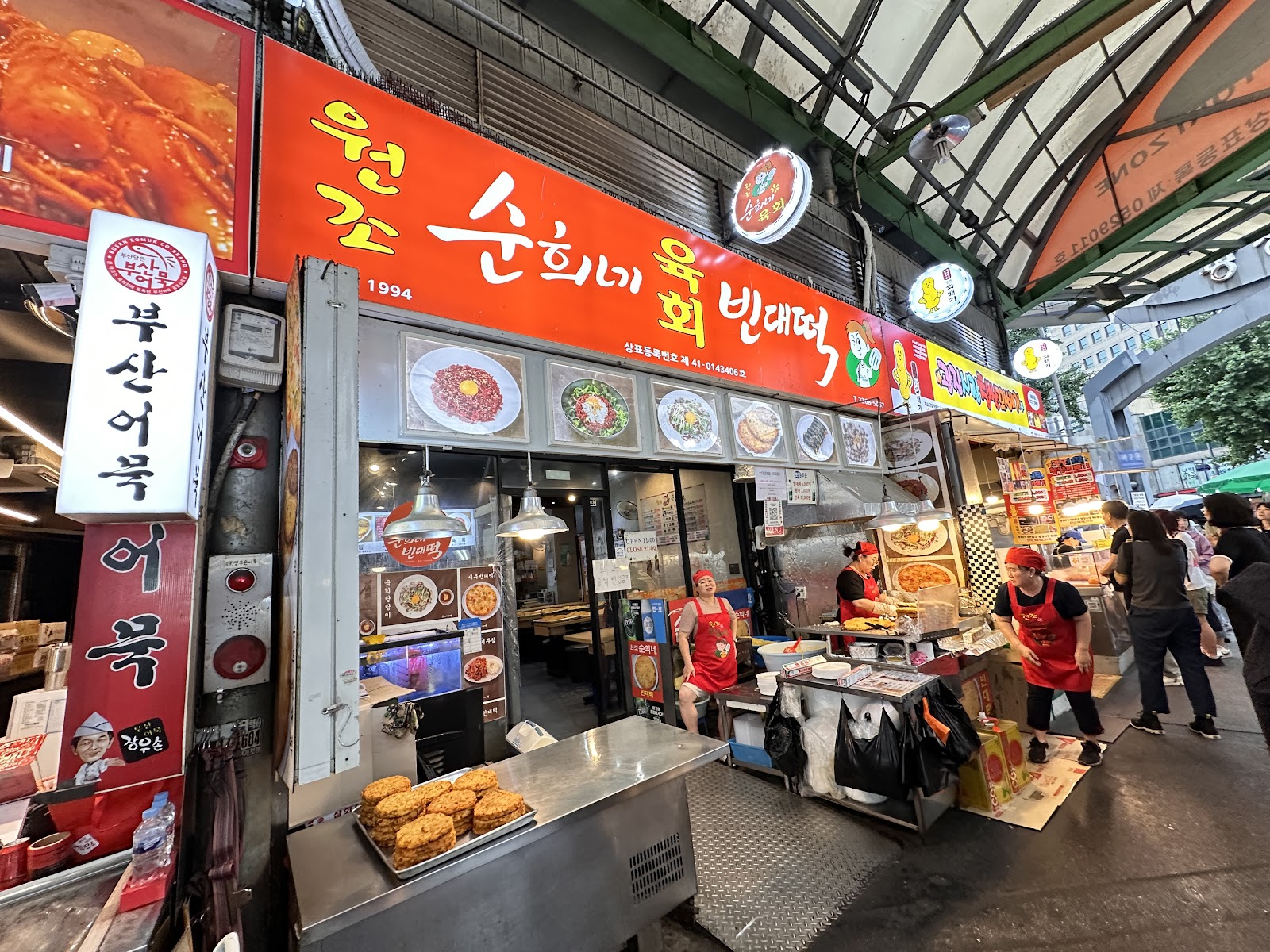
The most famous gimbap in Seoul isn't in a fancy restaurant. It's at Gwangjang Market — and it's called mayak gimbap (마약 김밥). Mayak means "drugs" or "narcotics" in Korean. The name is the warning.
These aren't regular-sized rolls. Mayak gimbap is thumbnail-sized — each piece barely two centimeters across, about a third the diameter of standard gimbap. They're impossibly cute and completely addictive.
Inside: sesame rice, a sliver of danmuji, and almost nothing else. That's it. The minimalism is the point. Without a heavy filling, you taste the rice, the sesame oil, the gentle salt — and then the sauce. The mustard-soy dipping sauce that comes alongside is what completes them. Slightly spicy, tangy, sweet. You can't eat just one.
Where to go: Head to Gwangjang Market, enter through the main Cheonggyecheon-ro entrance, and walk to the fabric market food alley upstairs. Look for any stall with small rolls piled high. The most famous grandmother vendors have been making these since before smartphones existed.
What to order: One roll (한 줄, han-jul) contains about 10 pieces and costs ₩3,000–4,000. Order two. You'll eat the first one before you're back to your seat.
Tip: Go on weekdays before noon. Weekend crowds mean 20-minute waits and impatient queue management by elderly vendors.
김밥천국: The 24-Hour Gimbap Universe
Before Seoul's artisan food scene emerged, there was 김밥천국 — Gimbap Cheonguk, which literally means "Gimbap Heaven." These yellow-signed chain restaurants occupy almost every neighborhood in Seoul. They're open 24 hours. They serve gimbap and about forty other dishes. And they are genuinely excellent.
International visitors sometimes dismiss chain restaurants as lesser options. That's a mistake here. 김밥천국 uses fresh ingredients, rolls to order, and serves gimbap warm — a crucial detail. Cold gimbap exists; warm gimbap from a place that's been doing this for decades is a different food.
Classic Gimbap (클래식 김밥): The standard. Beef, egg, spinach, danmuji, carrot, fishcake, cucumber. ₩3,000–3,500.
Tuna Gimbap (참치 김밥): Canned tuna mixed with mayo, the crowd favorite for good reason. ₩3,500–4,000.
Cheese Gimbap (치즈 김밥): Melted or room-temperature cheese slices tucked in with the other fillings. A modern addition that works surprisingly well. ₩3,500–4,000.
Kimchi Gimbap (김치 김밥): Fermented kimchi as the main filling. Strong, spicy, deeply Korean. ₩3,000.
How to order: Walk in, grab a laminated menu or point to the gimbap section (김밥 류), and say the name of what you want. Most staff understand basic pointing. You can also say "gimbap hana" (one gimbap roll) and they'll suggest.
Best locations: Myeongdong has several branches near the main shopping street. Hongdae has multiple locations along the alleys behind the main drag. The ones near university campuses (Sinchon, Anam) are especially reliable.

Specialty Gimbap: Seoul's Roll Renaissance
Over the last five years, Seoul has developed a serious specialty gimbap scene. These aren't chain restaurants — they're dedicated shops where gimbap is the entire focus, and where ingredients, technique, and presentation are treated with the same care as any other serious food.
What sets them apart:
- Premium proteins: wagyu beef strips, grilled eel, marinated mushrooms for vegetarian
- House-made sauces and seasoning
- Artisan laver (seaweed) from Jeonnam or Wando
- Visible rolling technique — often done behind a glass counter
What to look for: Specialty gimbap shops tend to cluster in Seongsu-dong, Yeonnam-dong, and Mangwon-dong. Look for signage that prominently features the word 김밥 and lists premium ingredients.
Price range: ₩5,000–9,000 per roll, but these rolls are often double the size of standard gimbap.
My favorite experience: A shop in Mangwon-dong serves roasted kimchi and gruyère gimbap — the fermented sourness of the kimchi playing off the nuttiness of the cheese. It shouldn't work. It absolutely works.
Spring Gimbap: The Perfect Picnic Roll
If you're visiting Seoul in March or April during cherry blossom season, gimbap is your single best picnic food option. It's why Koreans have been bringing it to spring outings for generations.
The combination is unbeatable: a plastic container of gimbap rolls, a bottle of sikhye (sweet rice drink) or makgeolli (rice wine), and a blanket on the grass of Seoul Forest, Ttukseom Han River Park, or Yeouido Hangang Park. The rolls travel without getting soggy. They're finger food. They clean up easily. And they taste exactly right eaten outdoors under flowering branches.
Spring-specific gimbap to try:
- Spring vegetable gimbap (봄나물 김밥): Seasonal spring greens like dolnamul, minari (water parsley), and doraji (bellflower root) mixed in. Only available February through April. Look for it at traditional markets.
- Picnic gimbap sets: Convenience stores near han river parks (Ttukseom and Yeouido especially) sell pre-made 6-piece packs for ₩3,000. Grab two packs and a drink for under ₩10,000.
Where to Find the Best Gimbap by Neighborhood
Gwangjang Market (Jongno-gu) The undisputed home of mayak gimbap. Subway Line 1 or 2 to Euljiro 4-ga, 5-minute walk. Open 9am–8pm most days (closed Sundays for some vendors).
Myeongdong (Jung-gu) Multiple 김밥천국 branches plus street vendors near the shopping alleys. Best for quick, reliable gimbap between shopping. Open until midnight or later.
Mangwon Market area (Mapo-gu) Mangwon Market and the surrounding streets have a cluster of specialty gimbap shops alongside the traditional vendors. Saturday and Sunday mornings are best. Subway Line 6 to Mangwon Station.
Seongsu-dong (Seongdong-gu) Artisan gimbap shops have colonized this area. Expect creative fillings, premium ingredients, and slightly longer waits. Subway Line 2 to Seongsu Station.
Hongdae (Mapo-gu) The 24-hour 김밥천국 branches here are legitimately some of the best in Seoul — heavily used, constantly rolling fresh product. Perfect for late-night gimbap after the clubs close.
Namdaemun Market (Jung-gu) Seoul's largest and oldest market has gimbap vendors operating from 5am. If you want to eat gimbap at sunrise alongside market workers, this is your place. Subway Line 4 to Hoehyeon Station.
What to Order and How Much to Spend
| Type | Price | Best at |
|---|---|---|
| Mayak gimbap (마약 김밥) | ₩3,000–4,000/roll | Gwangjang Market |
| Classic gimbap (클래식 김밥) | ₩3,000–3,500 | 김밥천국 chains |
| Tuna gimbap (참치 김밥) | ₩3,500–4,000 | 김밥천국 chains |
| Cheese gimbap (치즈 김밥) | ₩3,500–4,000 | 김밥천국 chains |
| Kimchi gimbap (김치 김밥) | ₩3,000–3,500 | 김밥천국 chains |
| Spring namul gimbap (봄나물 김밥) | ₩4,000–5,000 | Traditional markets, spring only |
| Artisan specialty gimbap | ₩5,000–9,000 | Seongsu, Mangwon, Yeonnam |
| Convenience store gimbap | ₩1,500–2,500 | CU, GS25 nationwide |
Budget tip: A full meal of two rolls of classic gimbap at 김밥천국 costs under ₩7,000. Add a bowl of radish kimchi (무김치) on the side — it's usually free — and you have a complete, satisfying lunch.
Vegetarian note: Ask for 야채 김밥 (yachae gimbap — vegetable gimbap). Most places make it. Contains spinach, carrot, danmuji, cucumber, egg. If you're vegan, ask to remove the egg (계란 빼주세요).
What Gimbap Taught Me About Korean Food
Here's what I've noticed after years of eating gimbap across Seoul: the best version of any Korean food is usually the version that's been made the same way for decades by someone who never thought to change it.
The grandmothers at Gwangjang Market who make mayak gimbap aren't chasing trends. They're not on Instagram. They make the same rolls every day, with the same sesame rice and the same mustard sauce, because that's what the rolls require. That consistency is the whole point.
Gimbap at its best is a lesson in restraint — in doing one simple thing so well, for so long, that it becomes impossible to improve.
Go to Gwangjang Market. Order two rolls of mayak gimbap. Dip each piece slowly. Try not to eat them in one go.
You probably won't succeed.
Frequently Asked Questions
Is gimbap the same as sushi? No. The main differences: gimbap rice is seasoned with sesame oil (not vinegar), the fillings are cooked or pickled (not raw fish), and gimbap is designed to be eaten at room temperature and to travel well. The technique of rolling in seaweed is similar, but the flavor profile, cultural context, and eating experience are entirely distinct.
Where is the best gimbap in Seoul? For the most famous experience: Gwangjang Market for mayak gimbap. For everyday excellence: any 김밥천국 branch near you. For premium artisan gimbap: specialty shops in Seongsu-dong or Mangwon-dong.
How much does gimbap cost in Seoul? Basic gimbap at a 김밥천국 chain costs ₩3,000–4,000 per roll (about $2–3 USD). Specialty artisan gimbap runs ₩5,000–9,000. Convenience store gimbap starts at ₩1,500. Gwangjang Market mayak gimbap is ₩3,000–4,000 per roll.
Can I eat gimbap if I'm vegetarian? Yes. Ask for 야채 김밥 (yachae gimbap). It contains spinach, carrot, danmuji (pickled radish), cucumber, and egg. If you're vegan, request no egg (계란 빼주세요). Spring namul gimbap with seasonal greens is also typically vegetarian.
When is the best time to eat at Gwangjang Market? Weekday mornings between 9am and noon. Avoid Saturday and Sunday afternoons when tourist crowds peak. The grandmothers sell out of the best product early, and weekday visits mean you'll share elbow space with regular locals instead of tour groups.
What's spring namul gimbap? A seasonal variation available February through April that replaces the standard fillings with fresh spring greens — dolnamul, minari (water parsley), doraji (bellflower root). It has a lighter, more herbaceous flavor than standard gimbap. Only available at traditional markets and specialist shops during the spring season.