Seoul's Lotus Lantern Festival 2026: Experiencing a UNESCO Cultural Tradition
In 1975, a small gathering of Buddhist practitioners marched from Jogyesa Temple through central Seoul carrying handmade lotus lanterns. The event was modest — perhaps a few hundred people — and had none of the organizational scale it would later develop. What it preserved was something much older: a practice of lighting lanterns on the eighth day of the fourth lunar month that Korean Buddhists had maintained, through dynasty collapses and colonial suppression, for over a thousand years.
Today, the Yeondeunghoe (연등회) — the Lotus Lantern Festival — draws tens of thousands of participants through the streets of Jongno. In 2020, UNESCO recognized it as an Intangible Cultural Heritage of Humanity. The designation acknowledged what practitioners already understood: this is not a performance staged for tourism. It is a living tradition, passed down through practice rather than text, in which the act of making a lantern and carrying it through the city is itself the cultural transmission.
Experiencing the Yeondeunghoe as an international visitor requires some preparation. This guide covers what the festival is, how to participate meaningfully, and what to expect in 2026.
The History That Shapes Everything
The practice of lighting lanterns on Buddha's Birthday (부처님오신날) reached the Korean peninsula sometime in the Three Kingdoms period, between the 4th and 7th centuries CE, arriving alongside Buddhism from China. The name "Yeondeunghoe" — literally "Lotus Lantern Gathering" — appears in historical records from the Goryeo Dynasty (918–1392), when it functioned as an official state ceremony. Kings participated. The royal court lit lanterns. Streets throughout the capital were illuminated for three days.
The Joseon Dynasty (1392–1897) significantly curtailed Buddhist practice in favor of neo-Confucian orthodoxy. Temples were pushed to mountain locations far from urban centers. State sponsorship of Buddhist ceremonies ended. The Yeondeunghoe did not disappear — it continued in modified forms, maintained by ordinary practitioners and monks — but it lost its public civic character.
Japanese colonial administration (1910–1945) introduced further complications. Buddhism was reorganized under Japanese institutional structures, creating fractures in Korean Buddhist identity that took decades to repair. The Yeondeunghoe survived this period in diminished form, practiced within temple walls rather than through public streets.
The modern Yeondeunghoe began reassembling in the 1970s and grew through the 1980s as Korean civil society expanded. The Korea Buddhist Jogye Order became the primary organizing body. Lantern-making workshops, cultural exhibitions, and the grand parade gradually developed into the multi-day event that exists today.
UNESCO's 2020 designation was significant not merely as validation but because of what it specifically cited: the communal transmission of lantern-making techniques, the participatory nature of the event (this is not a festival you watch; it is one you join), and the role of the tradition in demonstrating what UNESCO calls "peaceful coexistence through cultural diversity." The designation places the Yeondeunghoe alongside practices such as the Argentine tango, Mediterranean diet traditions, and Japanese Noh theatre — cultural forms that carry meaning through repeated enactment rather than recorded text.
What the Festival Actually Is
The Yeondeunghoe extends across roughly two weeks, centered on Buddha's Birthday (음력 4월 8일 — the eighth day of the fourth lunar month). The solar calendar date changes each year. In 2026, Buddha's Birthday falls in May; confirm the exact date through the official Yeondeunghoe website (yeondeunghoe.or.kr) or the Korea Cultural Heritage Foundation, as official dates are announced in early spring.
The festival structure in recent years:
Week 1 — Pre-Festival Activities:
- Lotus Lantern Exhibition at Jogyesa Temple and surrounding Jongno lanes: handmade lanterns from regional temples and cultural groups displayed publicly
- Lantern-making workshops open to the public (advance registration strongly recommended)
- Cultural stage performances at Jogyesa Temple
- Cheonggyecheon Stream lantern installations begin
Grand Parade Day (the Saturday before Buddha's Birthday):
The parade is the festival's public heart. It runs from Heunginjimun Gate (Dongdaemun) west along Jongno Street to Jogyesa Temple — approximately 3.5 kilometers. Participants carry lanterns they have made or purchased; floats representing each Buddhist organization move through the street; traditional music and dance groups perform in procession.
Viewing the parade requires arriving 1–2 hours before the start time, which is typically early evening. The pavements along Jongno fill quickly. The most photogenic viewing positions are at the parade's approach to Gwanghwamun — where the procession passes with Seoul's illuminated office buildings as backdrop — and near Jogyesa, where the crowd peaks as the lanterns arrive at their destination.
Eoullim Madang — Cultural Celebration:
After the parade concludes at Jogyesa, an open-air cultural celebration continues into the night: traditional music, communal dancing, lantern lighting in the temple compound. Participation is free and open.
Buddha's Birthday:
The day itself sees temples throughout Seoul hold ceremonies and communal meals. Jogyesa holds the most accessible programming for international visitors. Some ceremonies are explained in multiple languages, and volunteer guides are often available for foreign visitors on this specific day.
Post-Festival Week:
Cheonggyecheon Stream's lantern installations remain for several days after Buddha's Birthday. Some temples maintain special programming through the following weekend.
Jogyesa Temple: The Festival's Spiritual Center
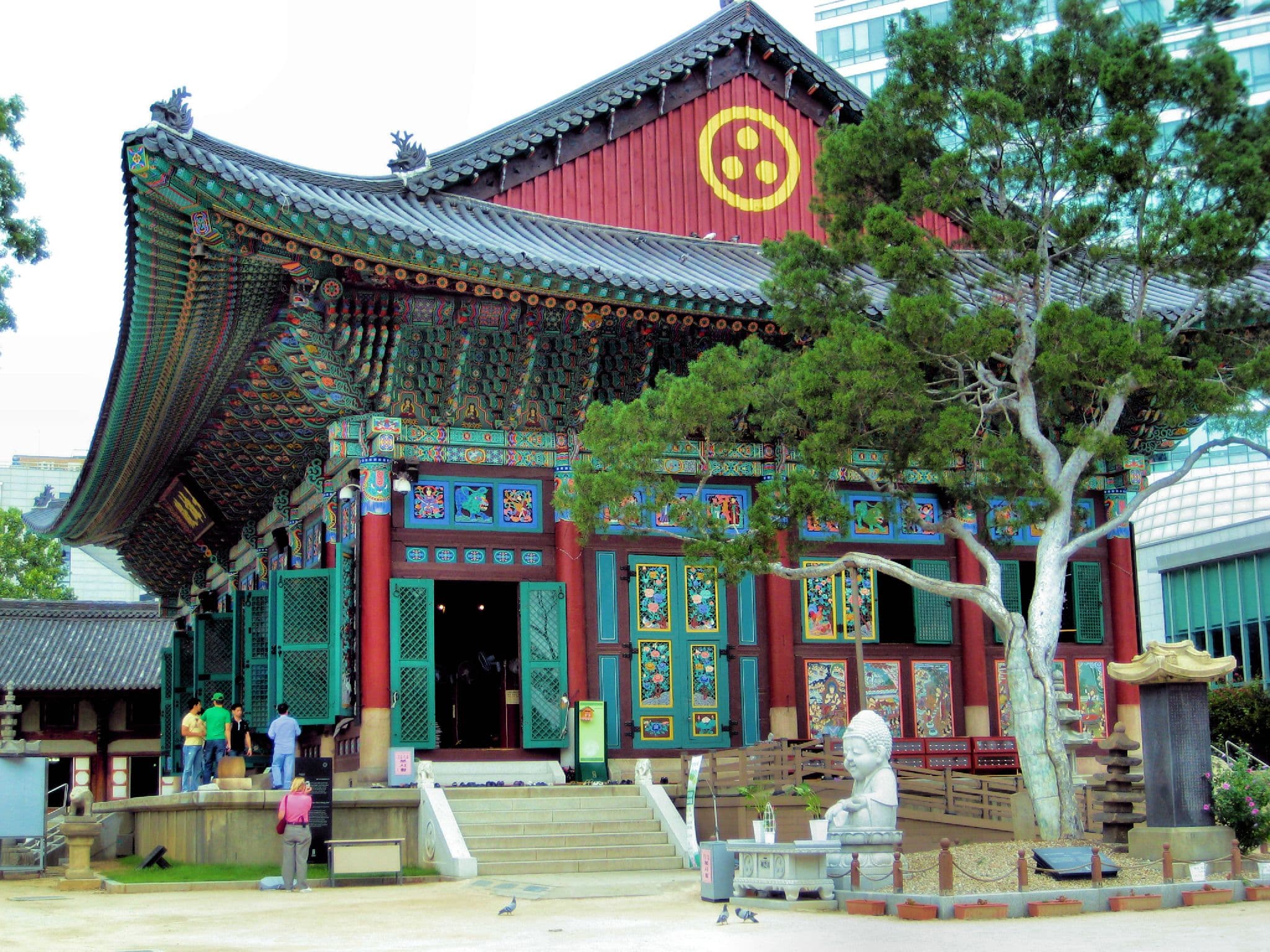
Jogyesa (조계사) is the head temple of the Jogye Order of Korean Buddhism, located in Gyeonji-dong, Jongno — ten minutes' walk from Gyeongbokgung Palace. For most of the year, it operates as an active urban temple amid coffee shops and hanok guesthouses. During the Yeondeunghoe period, its transformation is dramatic.
The approach to Jogyesa through the surrounding lanes changes weeks before Buddha's Birthday. Traditional lanterns — handmade paper lanterns in lotus, fish, and traditional ship forms, not the LED commercial variety — begin appearing along the alleys. By parade week, the entire approach to the temple becomes a lantern corridor leading visitors from the ordinary city into something else entirely.
The compound itself is organized around Daeungjeon (대웅전), the main hall. Thousands of lotus lanterns hang from cables strung across the courtyard. The number increases each year; in recent Yeondeunghoe events, lanterns have covered every overhead surface in the compound. Standing beneath them at dusk, as the lanterns begin to glow against the darkening sky, is one of Seoul's most distinctive experiences — not theatrical in the way that large events often are, but quiet and encompassing.
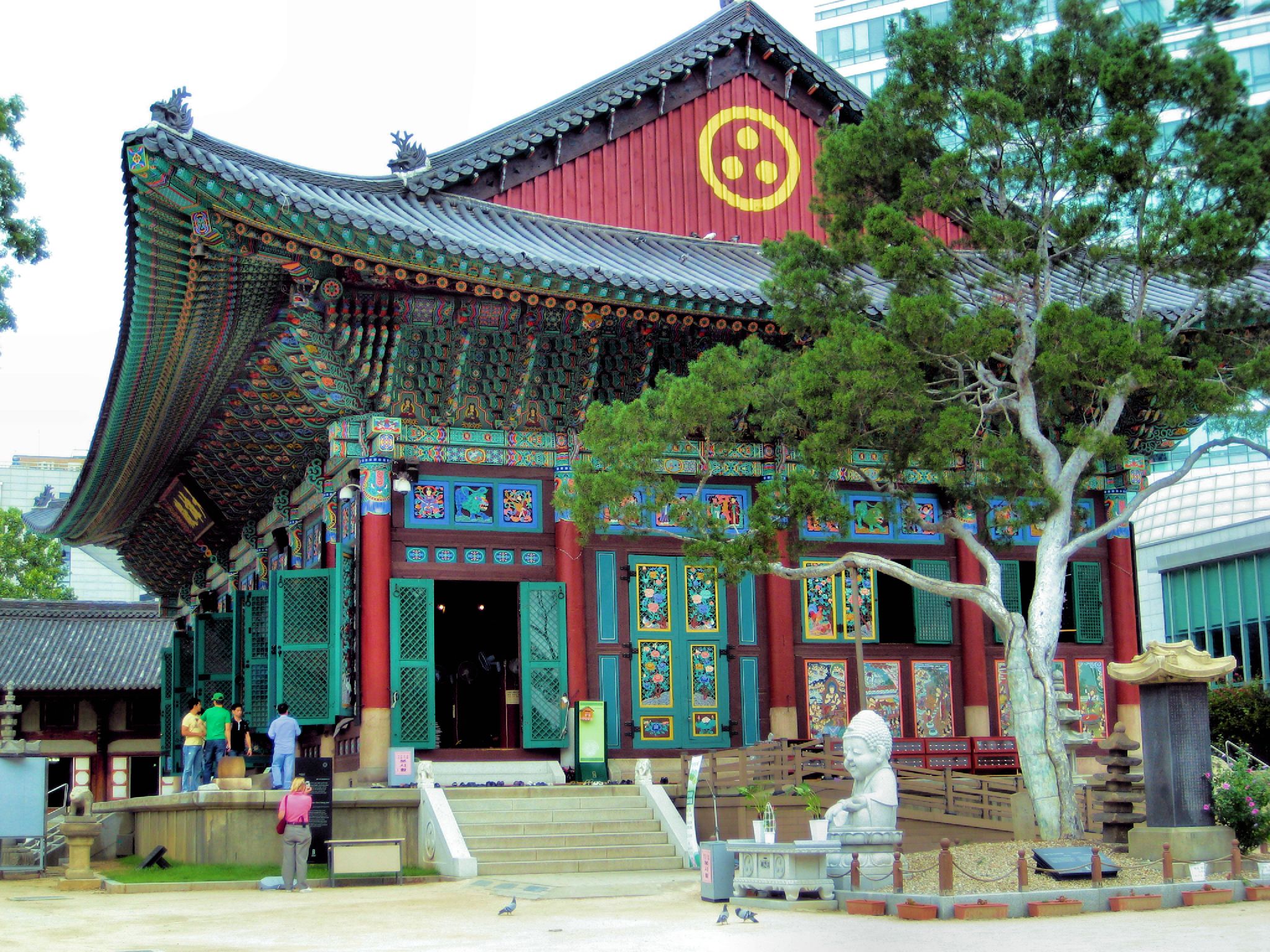
The temple's resident monks hold morning and evening services that visitors may observe from a respectful distance. Daeungjeon contains three principal Buddha images and is an active worship space. Enter — if you enter — having removed your shoes, turned off your camera flash, and prepared to stand or sit quietly while services are in progress. The temple is open daily from 4 AM to 9 PM.
Jogyesa's courtyard reaches capacity during peak evening hours of the festival week. Early morning visits — 5 AM to 8 AM — offer the lantern displays with almost no other visitors, the temple's regular morning rituals continuing in the background.
For a deeper understanding of Jogyesa's history and year-round programming, including temple meditation workshops available to foreign visitors, see our Seoul Buddhist Temples Guide.
Making a Lantern: The Act at the Festival's Core
UNESCO's citation of the Yeondeunghoe specifically names lantern-making as the central practice through which the tradition is transmitted from generation to generation. This framing is accurate: the lantern is not incidental to the festival — it is the festival. Carrying a lantern you have made transforms the experience from spectatorship into participation.
Lantern-making workshops operate for several weeks before Buddha's Birthday. The Korea Buddhist Jogye Order offers workshops at multiple locations; Jogyesa Temple is the most accessible for foreign visitors. Materials cost approximately ₩5,000–₩15,000 depending on the lantern type, and workshops typically run 1–2 hours.
The traditional lotus lantern (연꽃 등) is made from mulberry paper (한지, hanji) stretched over a wire frame. The process involves cutting paper petals, applying them in layers, and painting or leaving them in natural white. Participants learn why the lotus specifically is used: it grows from muddy water to produce a pure flower — a central metaphor in Buddhist teaching representing the possibility of clarity and awakening within ordinary, difficult life.
Workshops accommodate complete beginners. English-speaking volunteer guides are available, particularly on designated international visitor days. Check the official Yeondeunghoe website (yeondeunghoe.or.kr) well in advance for workshop schedules and registration — popular sessions fill weeks before the festival.
Carrying your lantern in the parade: Participants who make lanterns at workshops receive guidance on when and where to join the parade formation. If you are not making your own lantern, basic lanterns are available for purchase from vendors along Jongno on parade day. These work equally well for carrying — what matters is the act of being in the procession.
Cheonggyecheon Stream: Water and Light
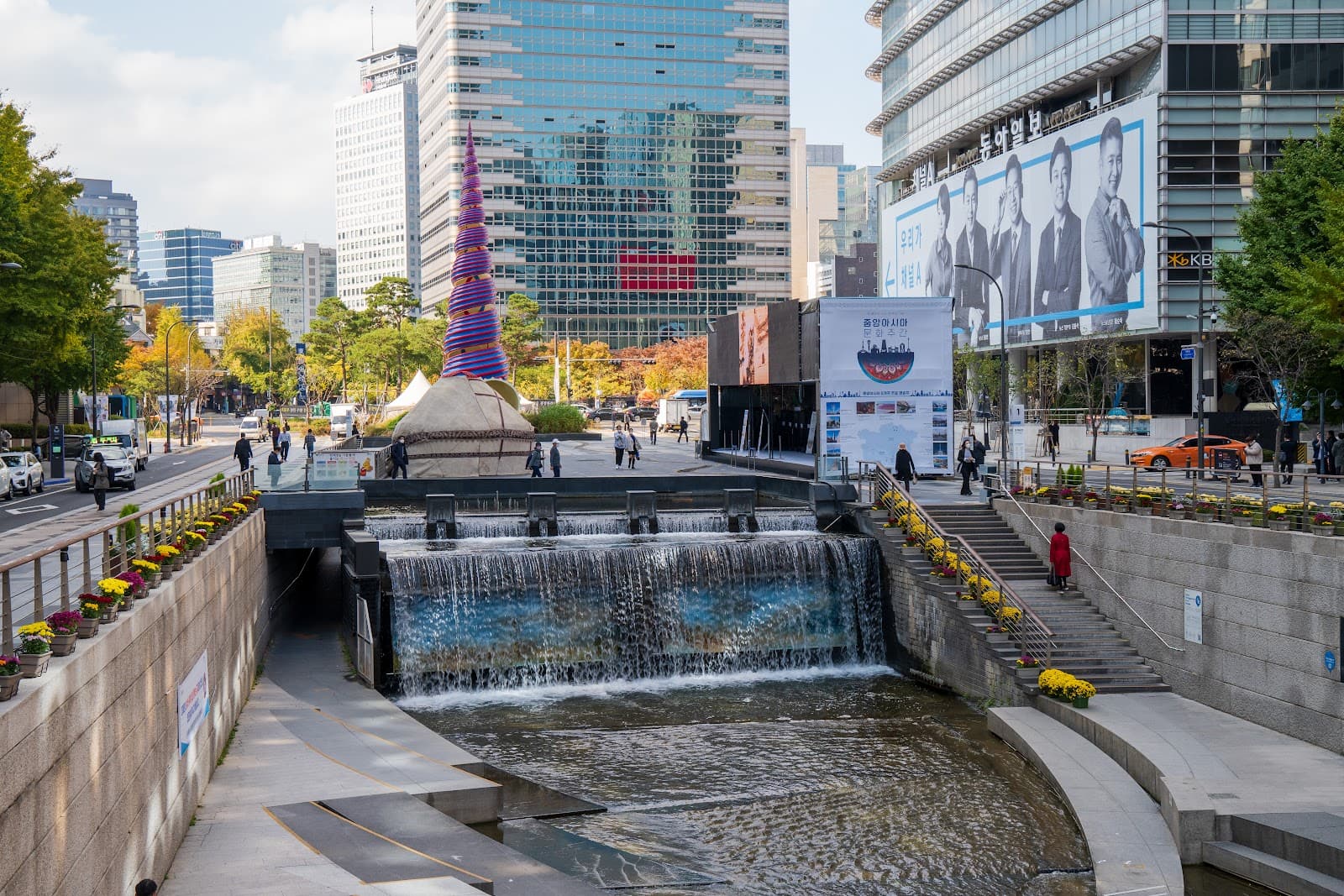
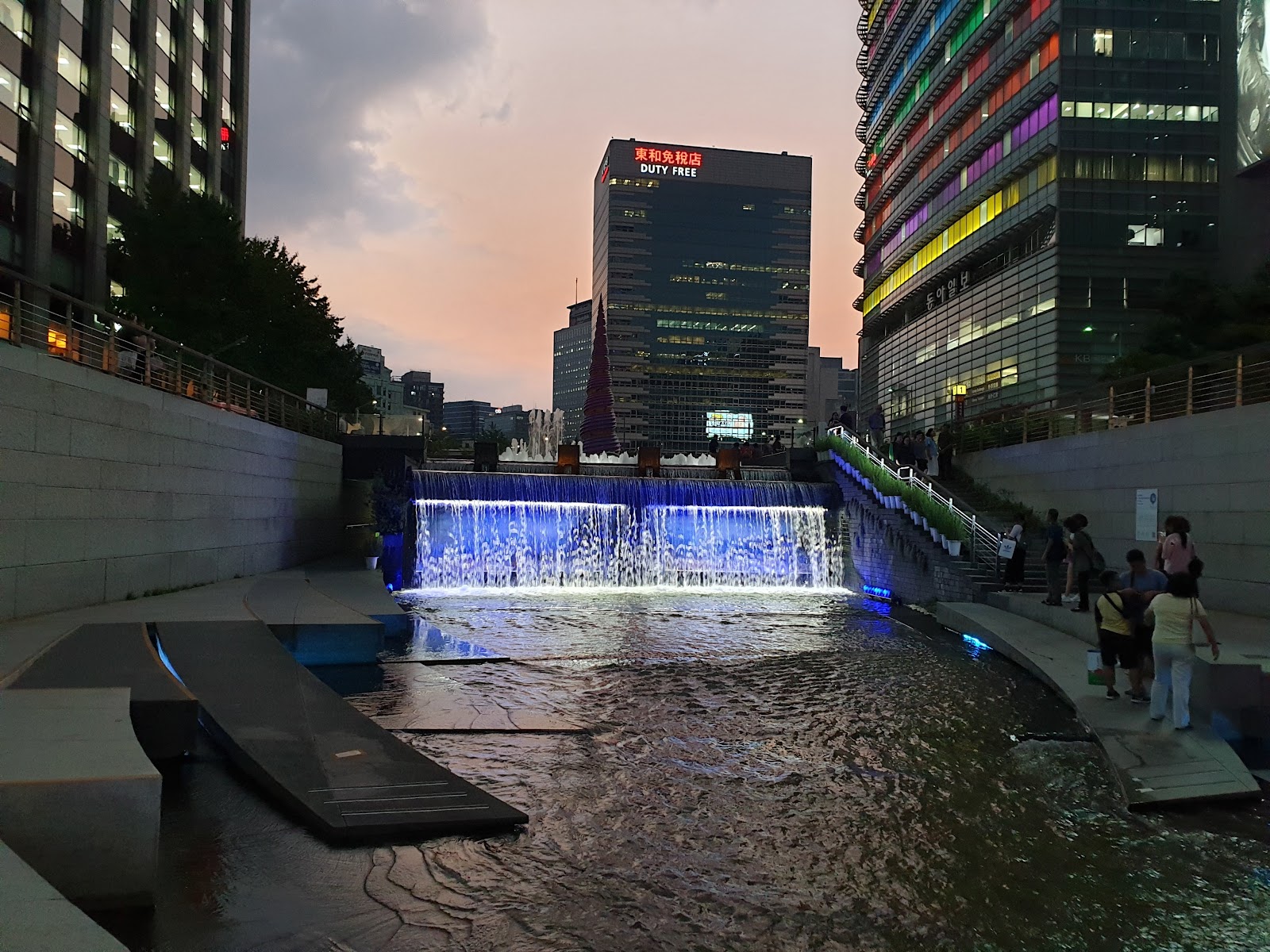
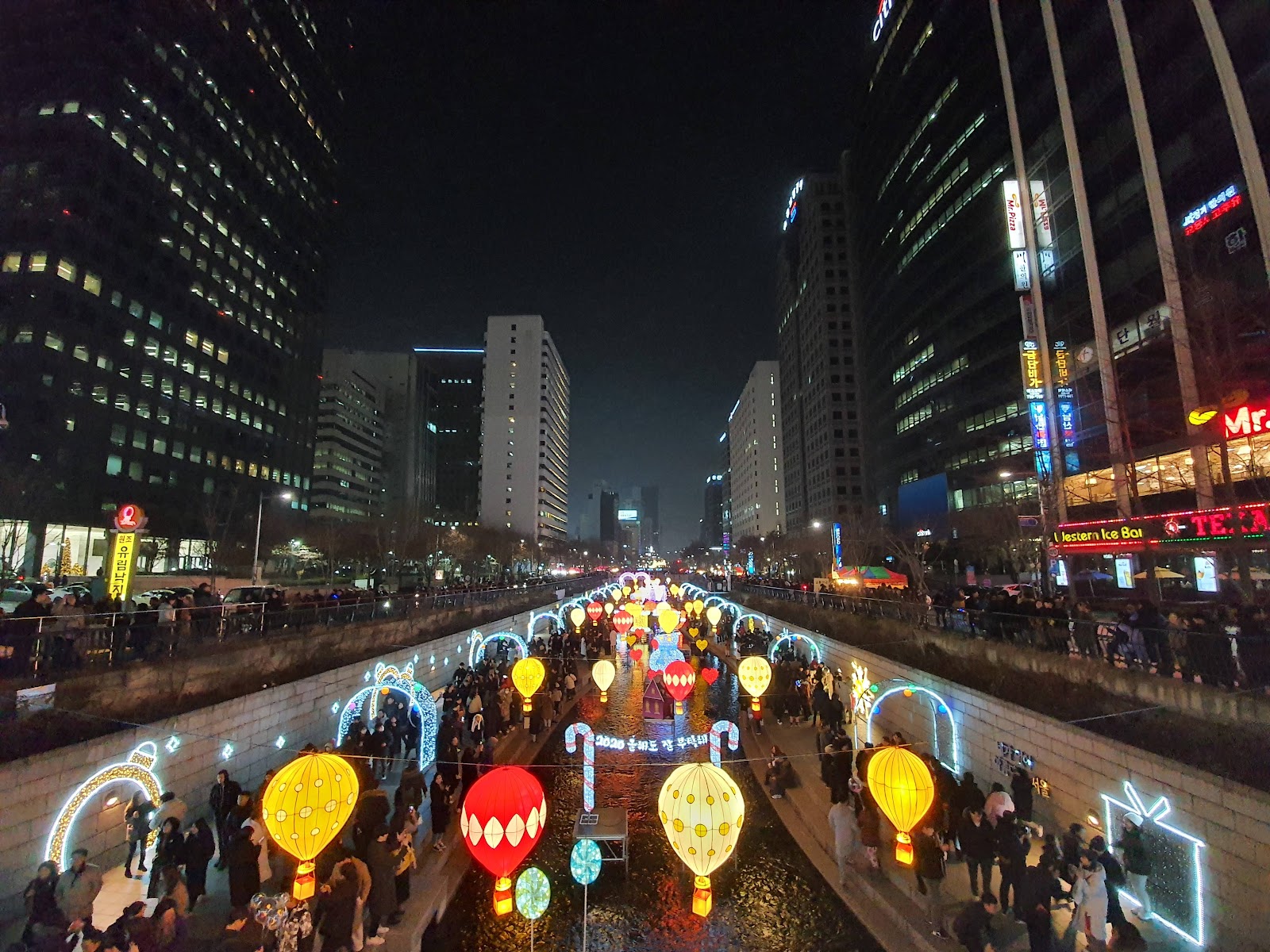
Cheonggyecheon (청계천) — the stream that runs through central Seoul from near Gwanghwamun east toward Dongdaemun — was restored from a covered canal and reopened in 2005. During the Yeondeunghoe period, lotus lanterns are placed along sections of the stream, floating or suspended above the water, creating reflections that draw photographers from the early evening hours.
The best window for Cheonggyecheon's lantern installations is after sunset and before midnight. Crowds are substantial but flow more freely than on Jongno during the parade itself. The stream promenade is accessible by descending to water level at the staircases spaced regularly along the course; the most lantern-dense sections in recent years have been between Cheonggye Plaza and the Gwanggyo bridge area.
Practical note: the stream promenade at water level becomes crowded during festival evenings and does not accommodate strollers easily. The street-level view from the pedestrian bridges provides less intimate but less obstructed sightlines and remains manageable even on busy nights.
What to Wear and Bring
The Yeondeunghoe takes place in May. Seoul weather in May averages 17–22°C (63–72°F) during the day, dropping to 10–14°C at night. For parade day and evening events, layers are appropriate — comfortable for walking, warm enough for standing still after sunset.
The parade route is entirely flat and paved. The full route from Heunginjimun to Jogyesa is 3.5 kilometers; comfortable walking shoes are sufficient.
If you intend to carry a lantern in the parade, lanterns are lit with small LED lights or traditional candles. Candle-lit lanterns require careful handling in wind — bring a small lighter if participating with a traditional candle lantern, and cup the flame when wind picks up.
Photography: the parade is an active public event, not a museum exhibit. Photography is practiced extensively by participants and spectators alike, and welcomed. At Jogyesa Temple and during religious ceremonies, however, observe whether photography is appropriate — services are not performances, and the presence of a camera pointed at worshippers during active prayer is a form of intrusion. When in doubt, lower the camera.
Getting There
For the Grand Parade:
The parade moves west from Heunginjimun (Dongdaemun) to Jogyesa (Jongno/Anguk). Position yourself anywhere along Jongno:
- Heunginjimun (start): Line 1/2/4/5 Dongdaemun Station or Line 2/5 Dongdaemun History & Culture Park Station, 5-minute walk
- Gwanghwamun midpoint: Line 5 Gwanghwamun Station Exit 2, or Line 1 Jonggak Station
- Jogyesa (finish): Line 3 Anguk Station Exit 6, 8-minute walk; or Line 1 Jonggak Station Exit 3, 10-minute walk
Subway timing: Jongno Line 1 and Line 3 stations become extremely crowded during and immediately after the parade. Arrive early; plan to depart either before the parade ends near Jogyesa or wait 1–2 hours for the post-parade crowds at stations to thin.
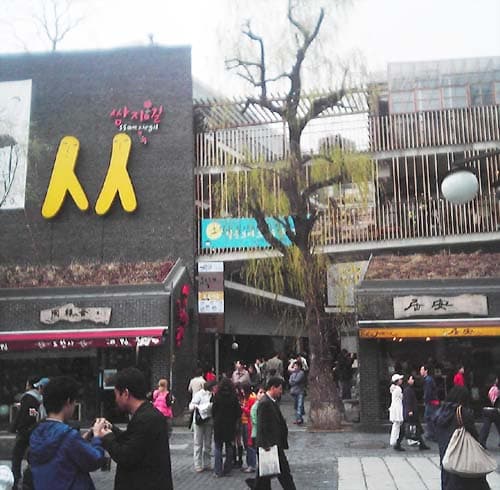
Walking routes between festival points: Jogyesa Temple to Insadong is 10 minutes on foot; Jogyesa to Gyeongbokgung is 15 minutes. These three points form a natural half-day itinerary through the Jongno cultural district. For the full context of the Insadong area and its deep connection to Korean cultural heritage, see our Insadong Heritage Guide.
The Meaning in Participation
There is a distinction between experiencing the Yeondeunghoe as a spectator and participating in it. Standing on the pavement to watch the parade is genuinely moving — the sight of tens of thousands of lanterns moving through the night streets of Seoul is unlike anything else the city offers at any other time of year. But the festival was designed for participants, not audiences.
The monks, volunteers, and lay Buddhist practitioners who organize the Yeondeunghoe consistently describe the act of making and carrying a lantern as an expression of intention — a wish for one's family, for those who are suffering, for the world. This is not a performance of tradition for tourist consumption. It is a tradition that has opened itself to broader participation, having recognized that cultural transmission requires more than preservation — it requires engagement.
If you can attend a lantern-making workshop before the parade and carry your lantern on parade day, you will have a fundamentally different experience than watching from the curb. The people walking beside you will have made their lanterns for reasons you may never know. That unknown reason is part of what the ceremony holds.
Frequently Asked Questions
Is the Lotus Lantern Festival free to attend?
The Grand Parade and most outdoor events are free to attend and participate in. Lantern-making workshops charge a small materials fee (₩5,000–₩15,000). Entry to Jogyesa Temple is always free. Some special programs may have separate admission fees.
When exactly does the festival take place in 2026?
Buddha's Birthday falls on the 8th day of the 4th lunar month, and the solar calendar date changes each year. In 2026, the date falls in May. Confirm the exact date at the official Yeondeunghoe website (yeondeunghoe.or.kr) or the Korea Cultural Heritage Foundation. The Grand Parade traditionally takes place the Saturday before Buddha's Birthday.
Can non-Buddhists participate?
Yes. The Yeondeunghoe has been explicitly open to international visitors and non-Buddhists for many years, and the organizers actively welcome participation regardless of religious background. The UNESCO designation specifically cites the festival's value as a demonstration of peaceful coexistence — participation is the point.
How crowded does it get?
The parade route along Jongno is very crowded during the parade. Jogyesa's courtyard reaches capacity during peak evening hours of the festival week. The Cheonggyecheon lantern installations are more navigable. Early morning visits to Jogyesa — before 8 AM — are the least crowded way to experience the lantern installations.
What is the cultural significance of the lotus lantern specifically?
The lotus grows from muddy, murky water and produces a pure flower — a central metaphor in Buddhist philosophy representing the possibility of enlightenment within ordinary, difficult circumstances. The lantern represents the light of wisdom. Making a lotus lantern from mulberry paper is understood as both a craft practice and a meditative act in which the hands are occupied and the mind is oriented toward what one intends the lantern to carry.
What is the difference between this festival and the Seoul Lantern Festival held at Cheonggyecheon in autumn?
They are distinct events. The Seoul Lantern Festival (서울빛초롱축제) is a separate autumn event at Cheonggyecheon, organized by the Seoul Metropolitan Government, featuring large decorative lantern installations. The Yeondeunghoe is a Buddhist cultural tradition of a thousand years, organized by the Jogye Order, centered on Buddha's Birthday in spring. The two events use the same stream as a backdrop in different seasons but have entirely different origins and characters.