
The first time naengmyeon appeared in front of me, I didn't know what I was looking at. A ceramic bowl filled with translucent broth. A tangle of grayish noodles submerged in it. A few thin slices of cold beef, half a boiled egg, some julienned radish. It looked plain. Spare. Almost austere.
I took a sip of the broth. Cold, clean, with a depth I couldn't immediately name. Then a mouthful of noodles — chewy but delicate, with a faint buckwheat earthiness. By the time I finished the bowl, I understood why Koreans have been eating this for centuries.
Naengmyeon (냉면) means "cold noodles." It's one of Korea's oldest and most fiercely debated foods. Which restaurant makes the best broth? How thick should the noodles be? Is the soup clear enough? Seoul food lovers treat naengmyeon with the kind of seriousness that wine critics reserve for Burgundy.
Two Completely Different Dishes Under One Name
Before anything else, you need to understand the split.
Pyongyang naengmyeon (평양냉면) comes from the North Korean capital. The noodles are made from buckwheat — grey, slightly brittle, and prone to snapping. The broth is made from beef bones and dongchimi (water kimchi), served ice-cold. The taste is subtle. Restrained. Many first-time visitors call it bland. I'd call it precise.
Hamhung naengmyeon (함흥냉면) is the opposite experience. The noodles are made from sweet potato or potato starch, which makes them extremely chewy and elastic — you can feel the resistance when you bite down. They're usually served as bibim naengmyeon (비빔냉면, mixed with a spicy sauce) or in a tangy, fiery broth. Bold flavors, aggressive texture.
Both are called naengmyeon. They share almost nothing in common.
If it's your first time, start with Pyongyang style. It'll challenge you to pay attention.
Woo Lae Oak — Seoul's Most Iconic Naengmyeon
우래옥 (Woo Lae Oak) has been serving Pyongyang naengmyeon since 1946. That's not a marketing claim — you can feel the history in how the place runs. The servers work with practiced efficiency. Regular customers eat in near-silence, focused on their bowls.
The broth is legendary. Made from beef bones and dongchimi fermented over months, it's a light amber color when it arrives — cold enough that a few wisps of steam collect above the surface where your warm breath hits the cool air. The flavor is deeply savory but clean. There's no heaviness.
The buckwheat noodles snap cleanly between your teeth. Order the pyeonyuk (편육, sliced boiled beef) on the side — it's tender and cold and tastes extraordinary against the broth.
Expect a queue at lunch. Go before 11:30 AM or after 2 PM to avoid the worst of it.
What to order: Mul naengmyeon (water broth version). Add pyeonyuk.
Price: ₩12,000–14,000 per bowl
Hours: 11:30–21:00, closed Sunday
Getting there: Line 2/4/5 Dongdaemun History & Culture Park Station → 7-minute walk
Eulji Myeonok — Euljiro's Neighborhood Classic
Tucked between the old hardware shops and printing suppliers of Euljiro 3-ga, 을지면옥 (Eulji Myeonok) is the kind of place that doesn't need to advertise. The lunch queue outside tells you everything.
The naengmyeon here is slightly different from Woo Lae Oak's — the broth is richer, the noodles a bit thicker. It feels more assertive. Locals from the nearby office buildings pack the narrow tables during the lunch hour; you might share a table with someone who's been coming here for twenty years.
Be aware: they often sell out and close early. Arriving by 12:30 PM is safe. Arriving at 2 PM might mean a closed door.
What to order: Mul naengmyeon. The bibim version is available but the broth is why people come here.
Price: ₩13,000 per bowl
Hours: 11:00–15:00 (closes when sold out)
Getting there: Line 2/3 Euljiro 3-ga Station → 3-minute walk
Gwangjang Market — The Accessible Option
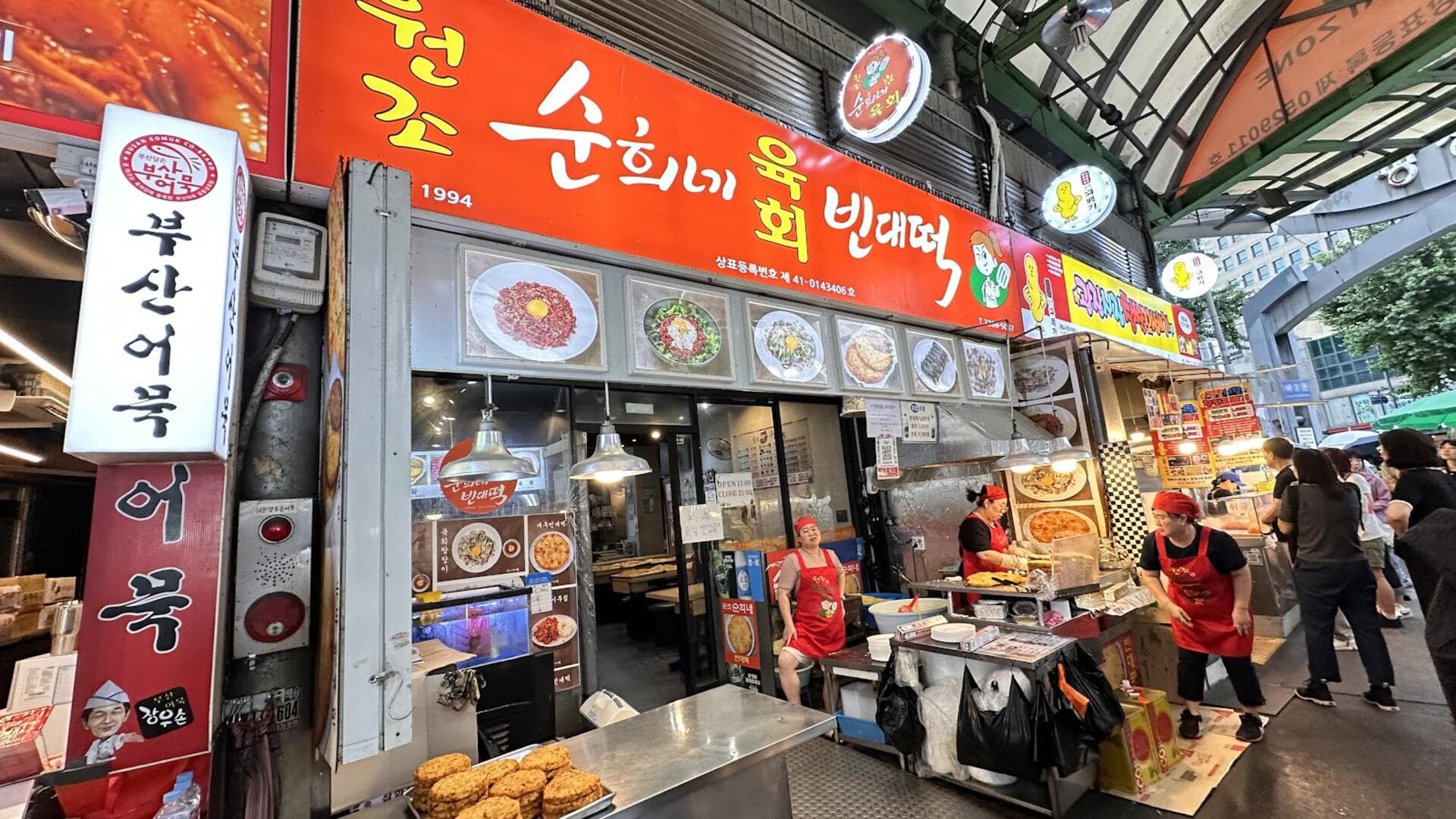
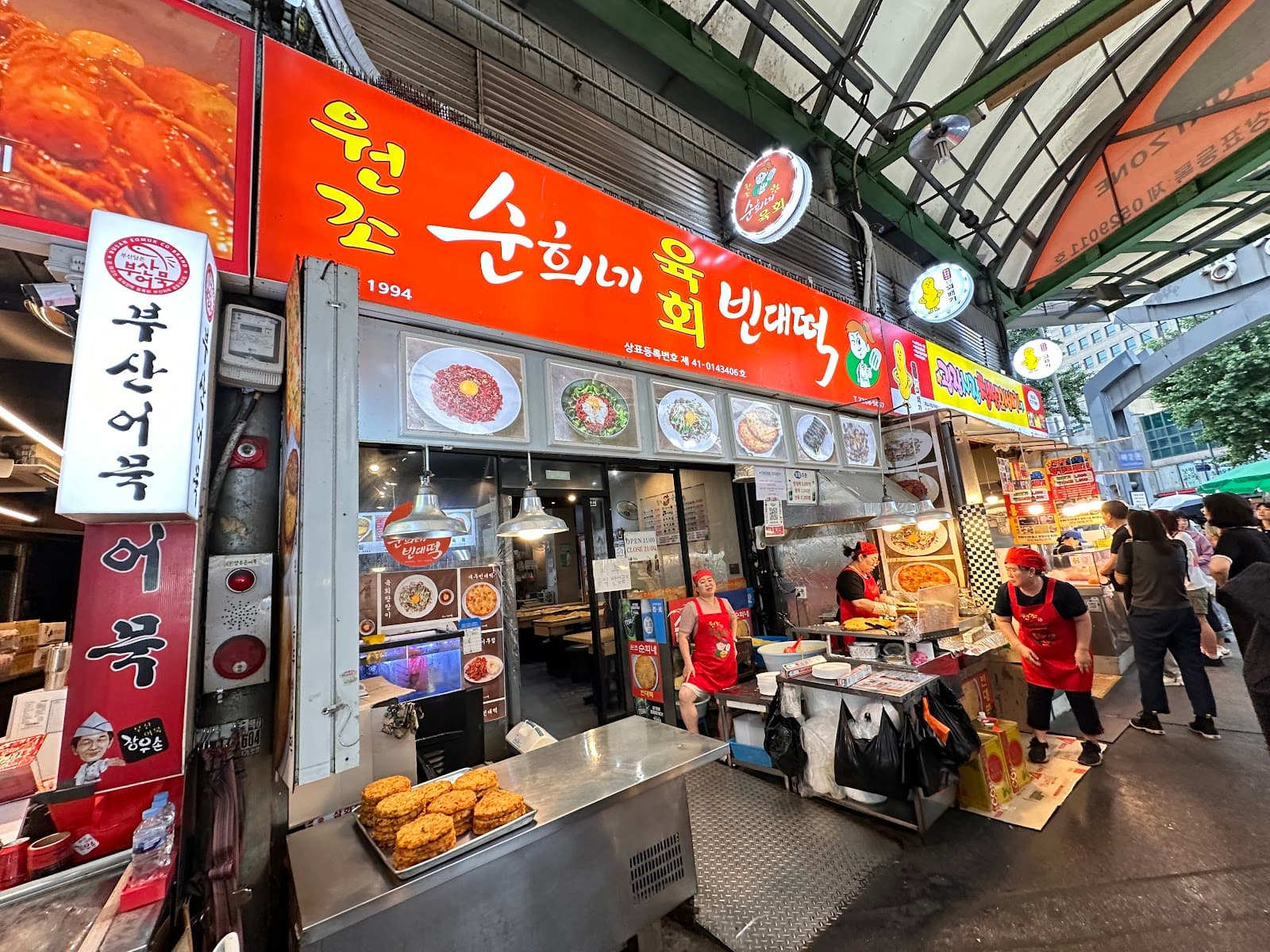
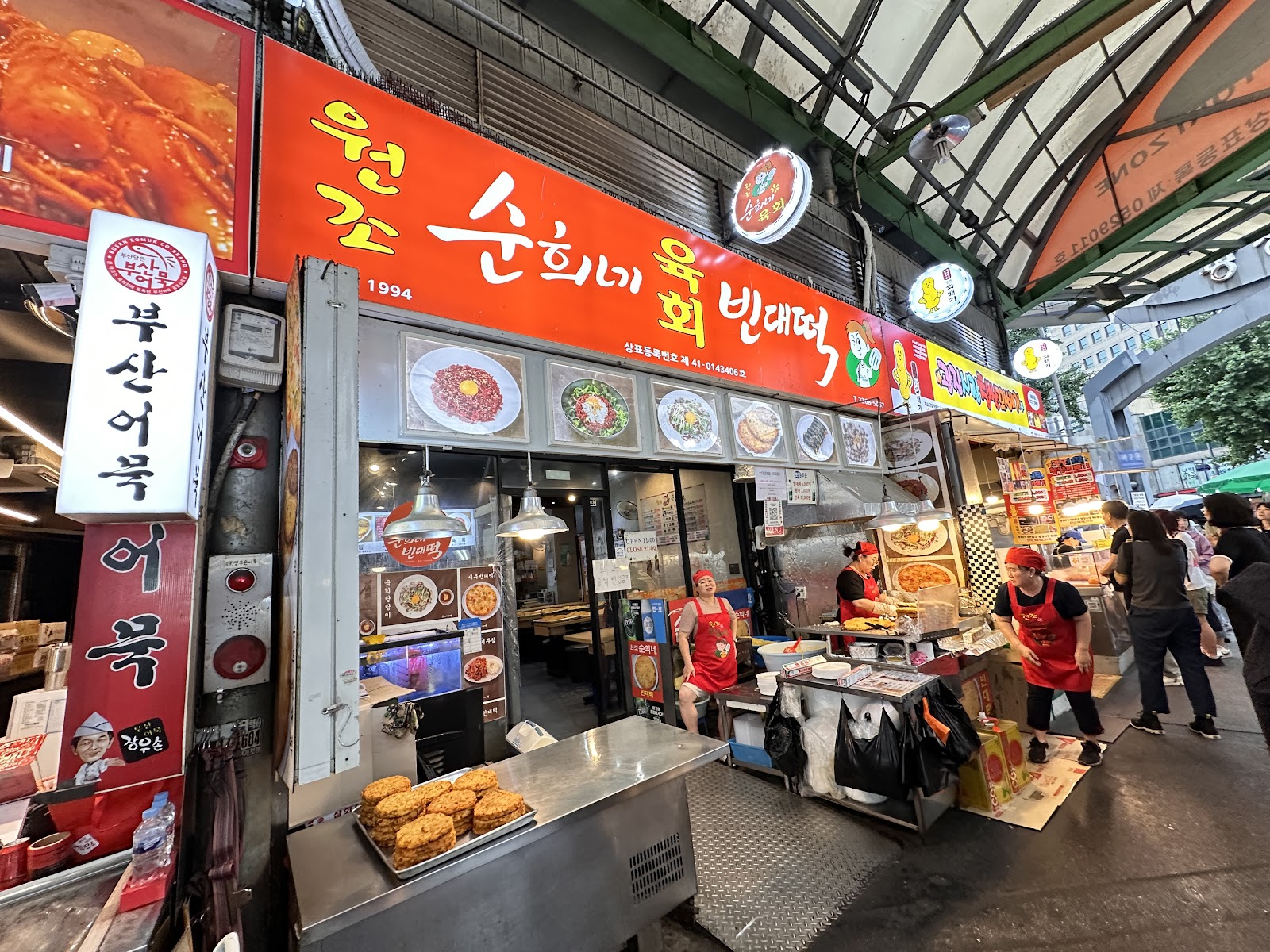
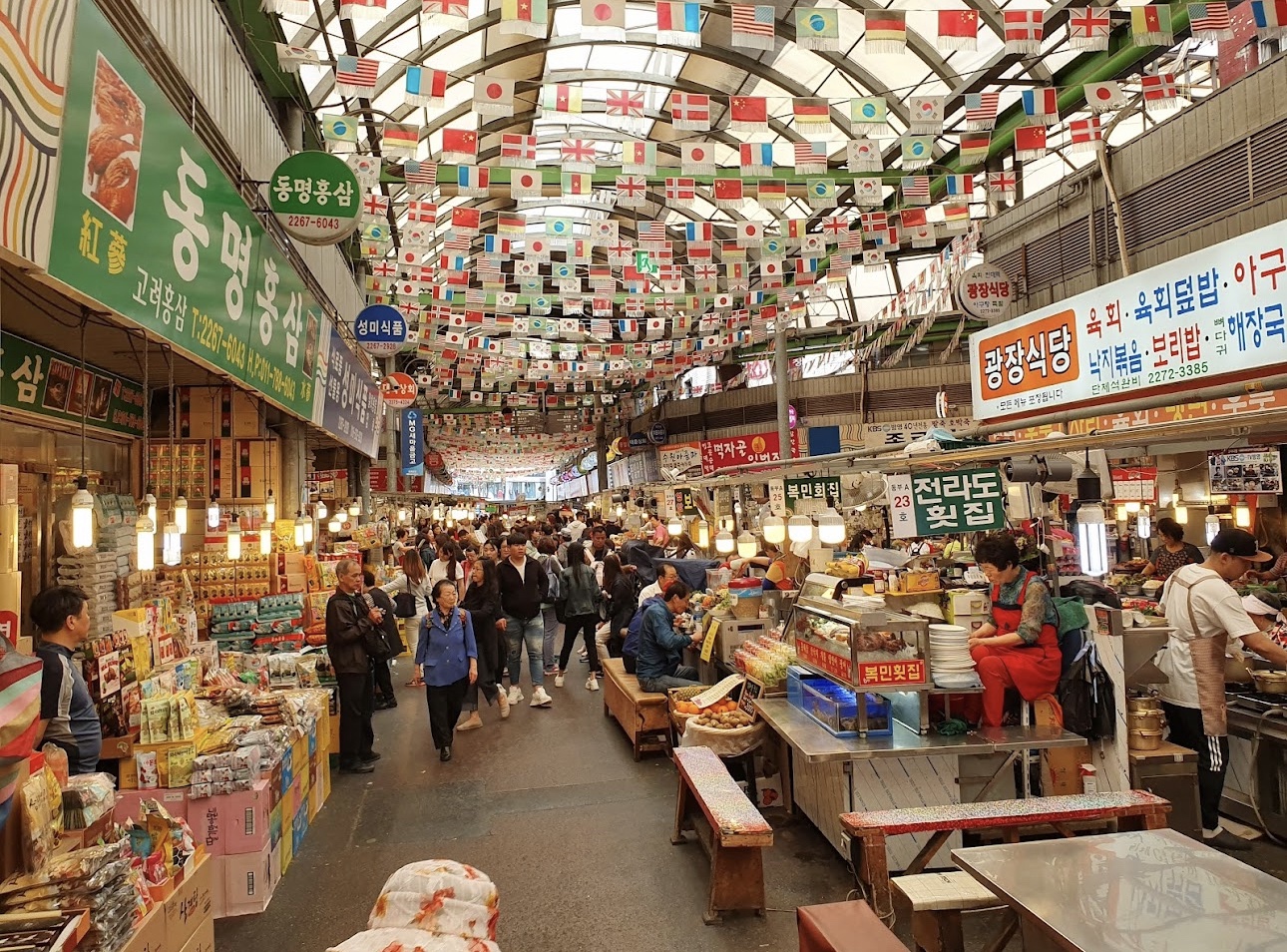
If you're already visiting Gwangjang Market for bindaetteok (mung bean pancakes) or mayak gimbap, you'll find several naengmyeon vendors inside the covered food hall. The quality is good but not on the level of the dedicated restaurants — think of it as a solid introduction rather than a definitive experience.
Price is the appeal here: ₩8,000–10,000 gets you a generous bowl. The atmosphere is chaotic and exhilarating. Office workers, tourists, and market vendors all eat side by side under fluorescent lights. Add a bowl of makgeolli and you've assembled a proper Seoul market lunch.
What to order: Mul naengmyeon. Pair with bindaetteok (₩5,000).
Price: ₩8,000–10,000
Hours: 09:00–21:00
Getting there: Line 1/5 Jongno 5-ga Station, Exit 8 → 5-minute walk
If You Want Hamhung Style
Hamhung naengmyeon is the other Korea — loud where Pyongyang style is quiet, intense where Pyongyang style is restrained. If you've eaten the subtle version and want something with more firepower, Hamhung is waiting.
The classic Hamhung preparation is hoe naengmyeon (회냉면) — topped with raw marinated fish (usually pollack), mixed with a thick, gochujang-based sauce, served with the characteristically elastic noodles. The chewiness is extreme. Don't try to eat the noodles whole — use the scissors that come with the bowl, or ask the staff to cut them for you.
Hamhung naengmyeon restaurants cluster in the Dongdaemun and Sindang-dong areas, where North Korean refugees settled after the Korean War. That history is part of what you're tasting.
When to Eat Naengmyeon
Korea has a complicated relationship with when you're "supposed" to eat cold noodles. Spring and summer are the traditional seasons — as the weather warms through April and May, Seoul office workers start their naengmyeon pilgrimages to their preferred spots. The dish makes perfect sense in heat.
But there's also a contrarian Korean tradition of eating naengmyeon specifically in winter — precisely because eating something ice-cold when you're already cold feels absurdly satisfying. You'll see both sides of this argument among Koreans, sometimes at the same table.
Mid-March is the sweet spot. The air is getting warmer, cherry blossom season is approaching, and the cold clarity of a good Pyongyang naengmyeon broth feels exactly right.
How to Eat Naengmyeon
A few things worth knowing before you order.
Vinegar and mustard: They'll be on the table. Don't add them immediately — taste the broth first. Halfway through the bowl, a splash of vinegar brightens everything. The mustard (gaejangguk-garu) is hot and pungent; add just a small amount until you know how much you like it.
Scissors: The long noodles get cut with scissors — the staff at most places will offer, or there'll be scissors on the table. Don't fight the noodle length. Cut them.
Leftovers: If you can't finish, you can ask for more broth to be added (at some restaurants). The flavor dilutes but you get more of that beautiful cold soup.
Ordering: Say "냉면 주세요 (naengmyeon juseyo)" — one naengmyeon, please. For the broth version specifically: "물냉면 주세요 (mul naengmyeon juseyo)." For the spicy mixed version: "비빔냉면 주세요 (bibim naengmyeon juseyo)."
Quick Reference
| Restaurant | Style | Price | Subway | Notes |
|---|---|---|---|---|
| Woo Lae Oak | Pyongyang | ₩12,000–14,000 | Dongdaemun History Park | Since 1946, iconic |
| Eulji Myeonok | Pyongyang | ₩13,000 | Euljiro 3-ga | Sells out early |
| Gwangjang Market | Pyongyang-style | ₩8,000–10,000 | Jongno 5-ga | Market atmosphere |
Frequently Asked Questions
Is naengmyeon spicy? Mul naengmyeon (broth version) is not spicy at all — it's clean and subtle. Bibim naengmyeon (mixed version) is moderately spicy. If you're heat-sensitive, stick with mul naengmyeon.
Is there an English menu? Woo Lae Oak usually has an English menu or photo menu. Eulji Myeonok is Korean-only — just say "냉면 하나" (naengmyeon hana, one naengmyeon) and point. Staff at most spots are accustomed to tourists.
Can I ask for scissors? Yes — "가위 주세요 (gawi juseyo)" means "scissors, please." Most places will cut the noodles for you automatically, but if they don't, just ask.
Is naengmyeon gluten-free? Pyongyang naengmyeon uses buckwheat noodles, which typically contain some wheat as a binding agent — not gluten-free. Hamhung naengmyeon noodles are starch-based and may be gluten-free, but cross-contamination is common in Korean kitchen environments.
What's the best time of year to eat naengmyeon? Spring and summer (April–August) are traditional. But honestly? Any time you're craving something cold and deeply satisfying.
Naengmyeon takes time to understand. The first bowl might puzzle you. The second starts to make sense. By the third, you'll find yourself thinking about it.
That clean, cold broth. The way the buckwheat noodles hold just enough bite. The restrained elegance of the whole thing — no sauce, no heat, just precision.
Sit with it. Seoul has a way of rewarding patience.