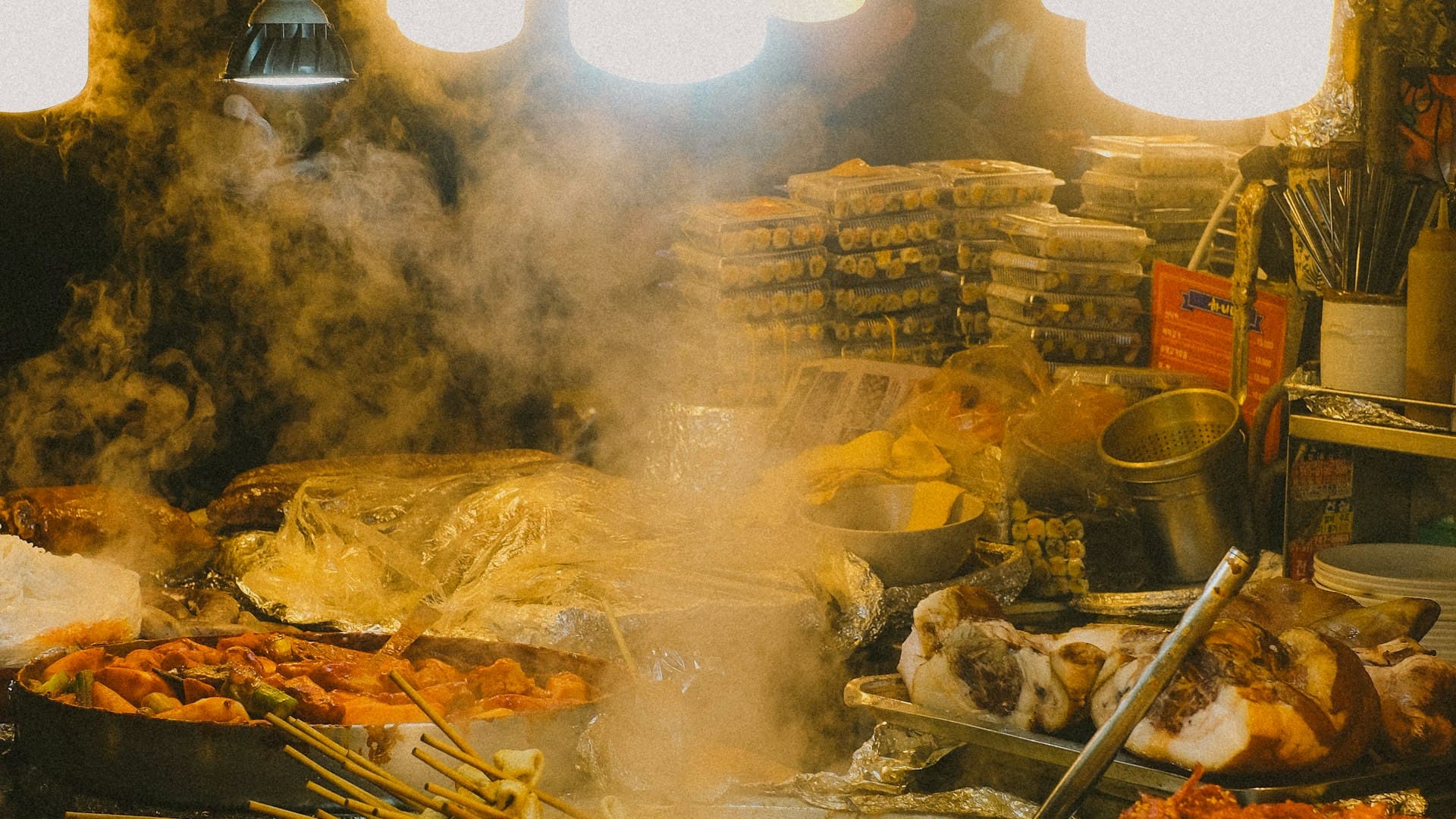
The smell hit me before I even turned the corner. A fermented-sweet sharpness of gochujang, the deep savory bubble of fish cake broth — and then I saw it. A massive iron pan boiling over a gas flame, packed with thick rice cakes, noodles, vegetables, and everything in between. The halmeoni (grandmother) behind it stirred once, slowly, like she had all the time in the world.
That was my first meal in Sindang-dong Tteokbokki Town. I've been back probably 40 times since.
Seoul's Most Iconic Street Food
Tteokbokki (떡볶이) is Korea's answer to street food perfection. Thick, cylindrical rice cakes called garaetteok cooked in a sweet-spicy gochujang (fermented red chili paste) sauce, loaded with fish cakes, boiled eggs, and fried items. The sauce is what makes it — that complex fermented-sweet heat is completely addictive.
Koreans eat it everywhere: school cafeteria windows, market stalls, late-night pojangmacha tent bars. But to understand why this dish has defined Seoul's food culture for 70 years, you need to start in Sindang-dong.
The Original: Sindang-dong Tteokbokki Town
Seoul's Sindang-dong Tteokbokki Town (신당동 떡볶이 타운) is where it all began.
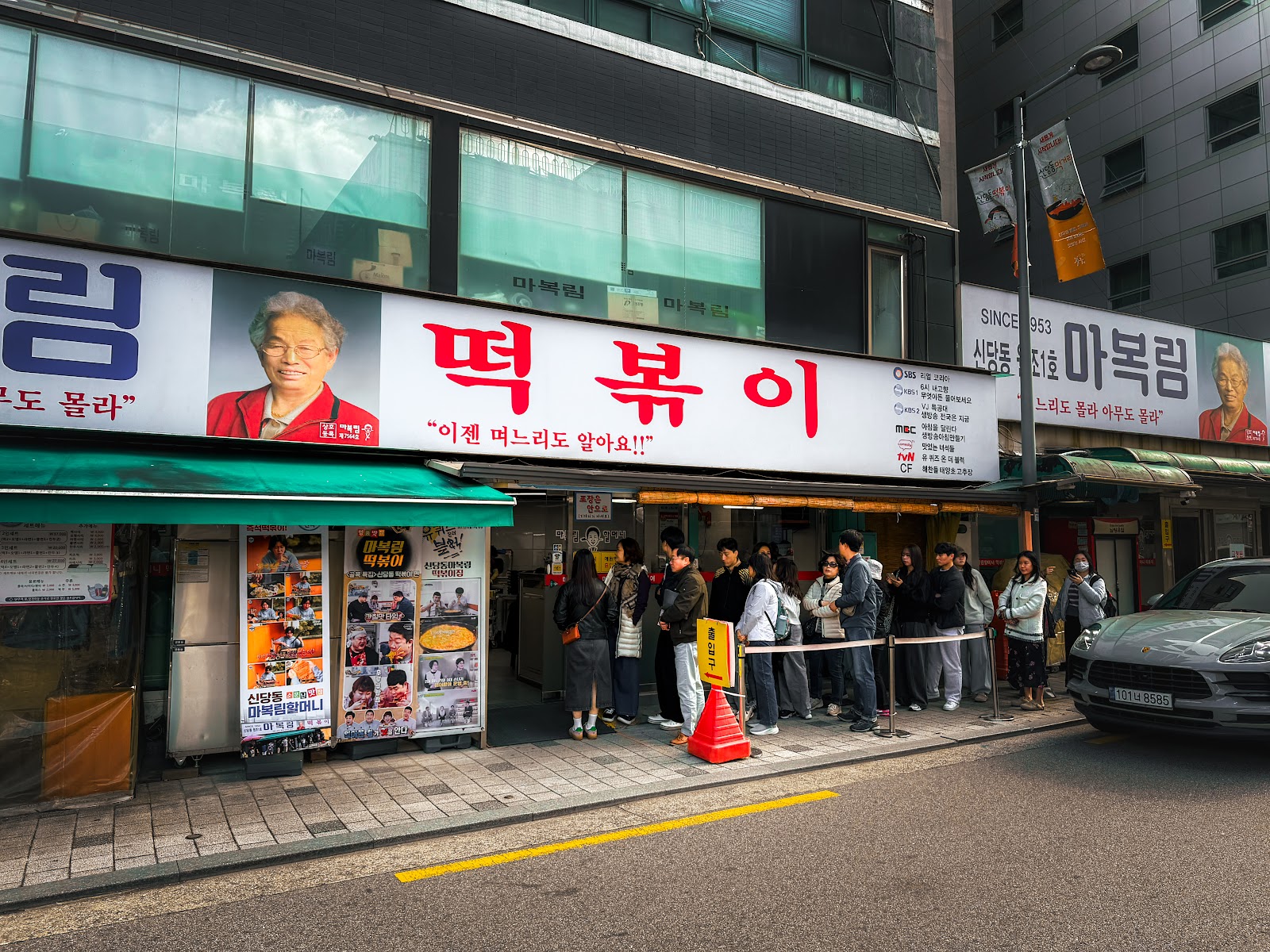
In 1953, a woman named Ma Bok-rim created the first gungmul tteokbokki here — a broth-based communal hotpot cooked right at the table. Before her, tteokbokki was just stir-fried. She added broth, loaded in ingredients, and let it all simmer together tableside. The concept spread through the whole neighborhood.
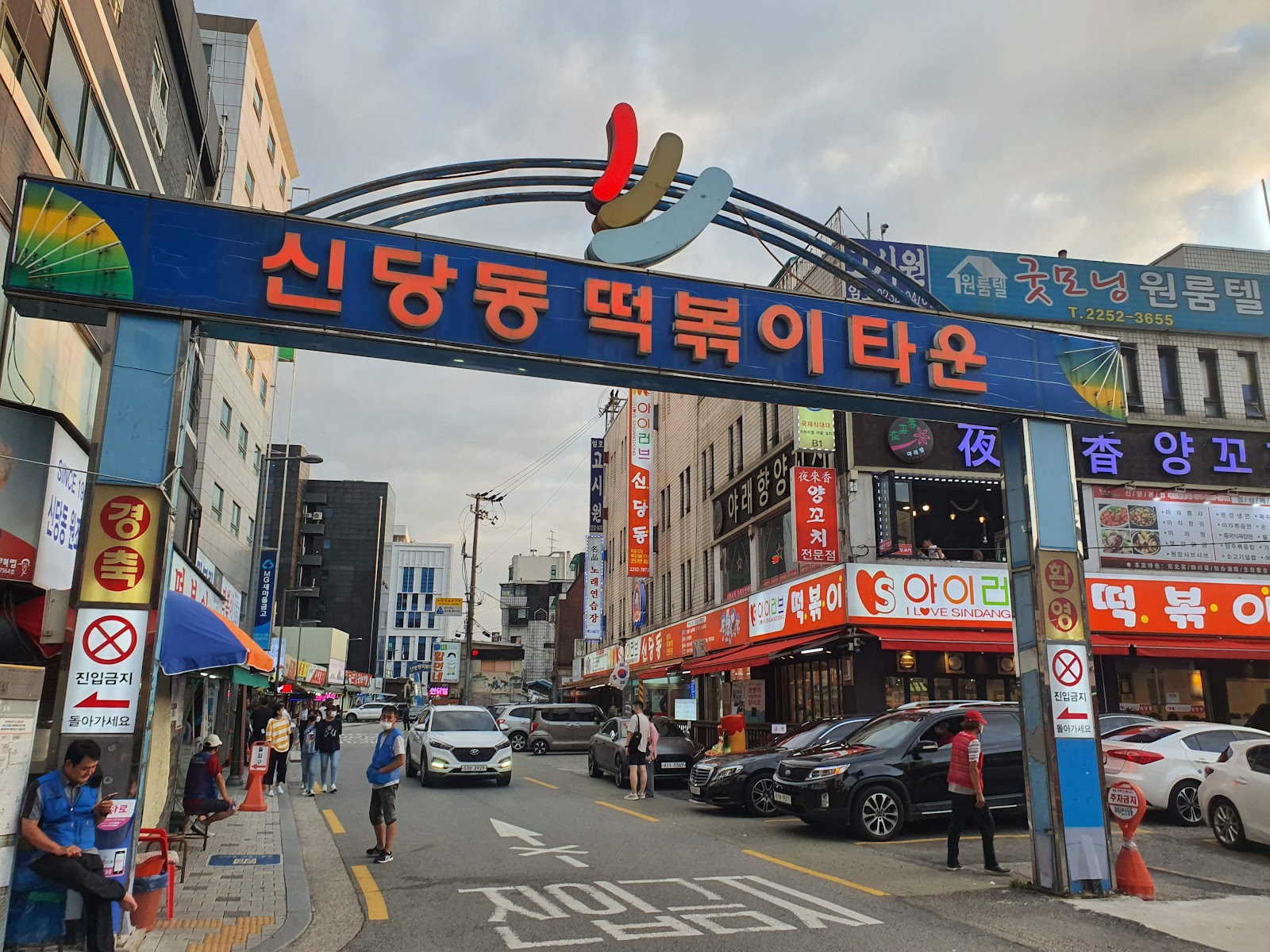
You'll know you've arrived when you see the massive blue arch reading "신당동 떡볶이 타운" in red letters. About 30 restaurants line the alley, most with the founding grandmother's face on their signage.
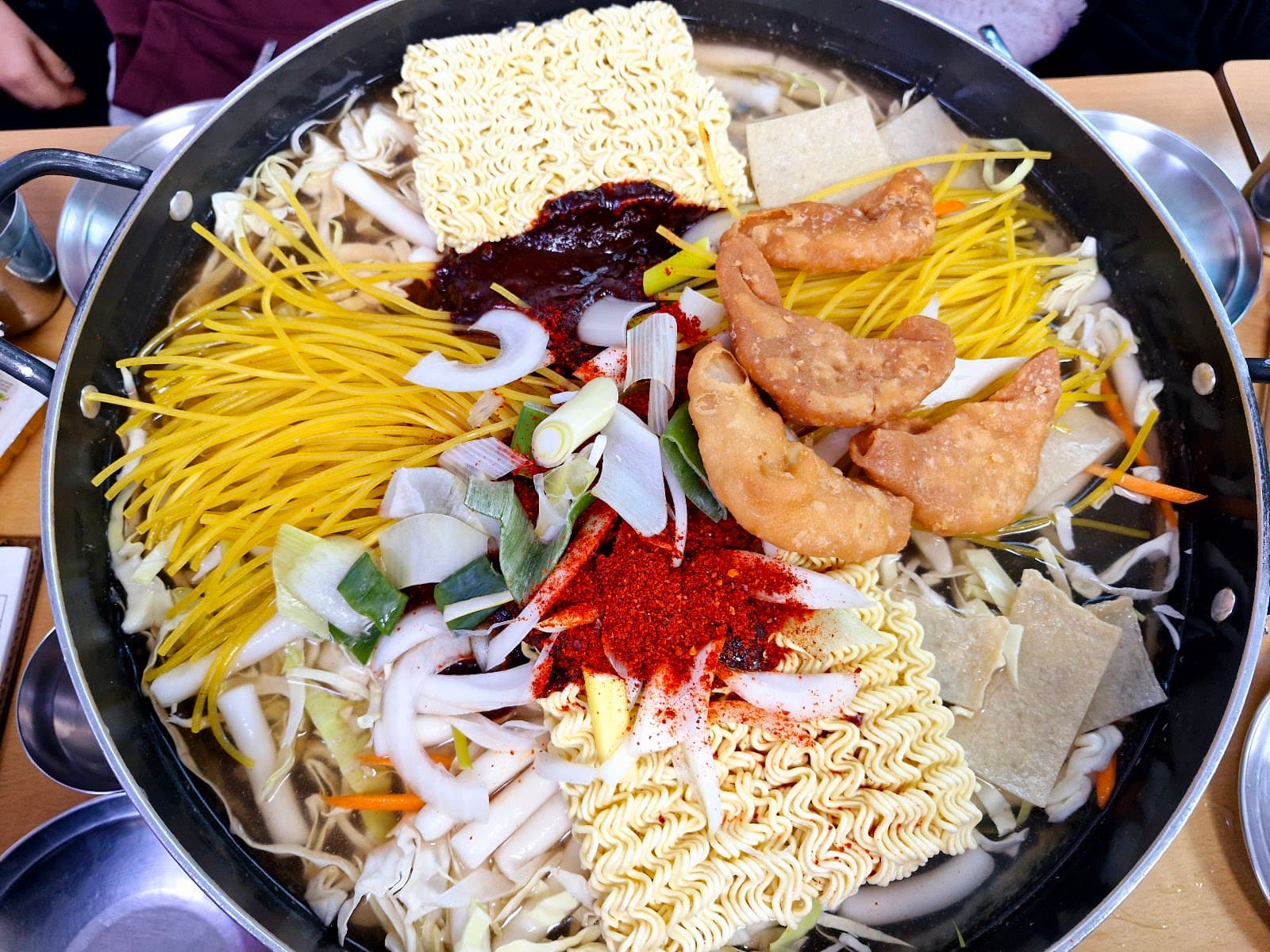
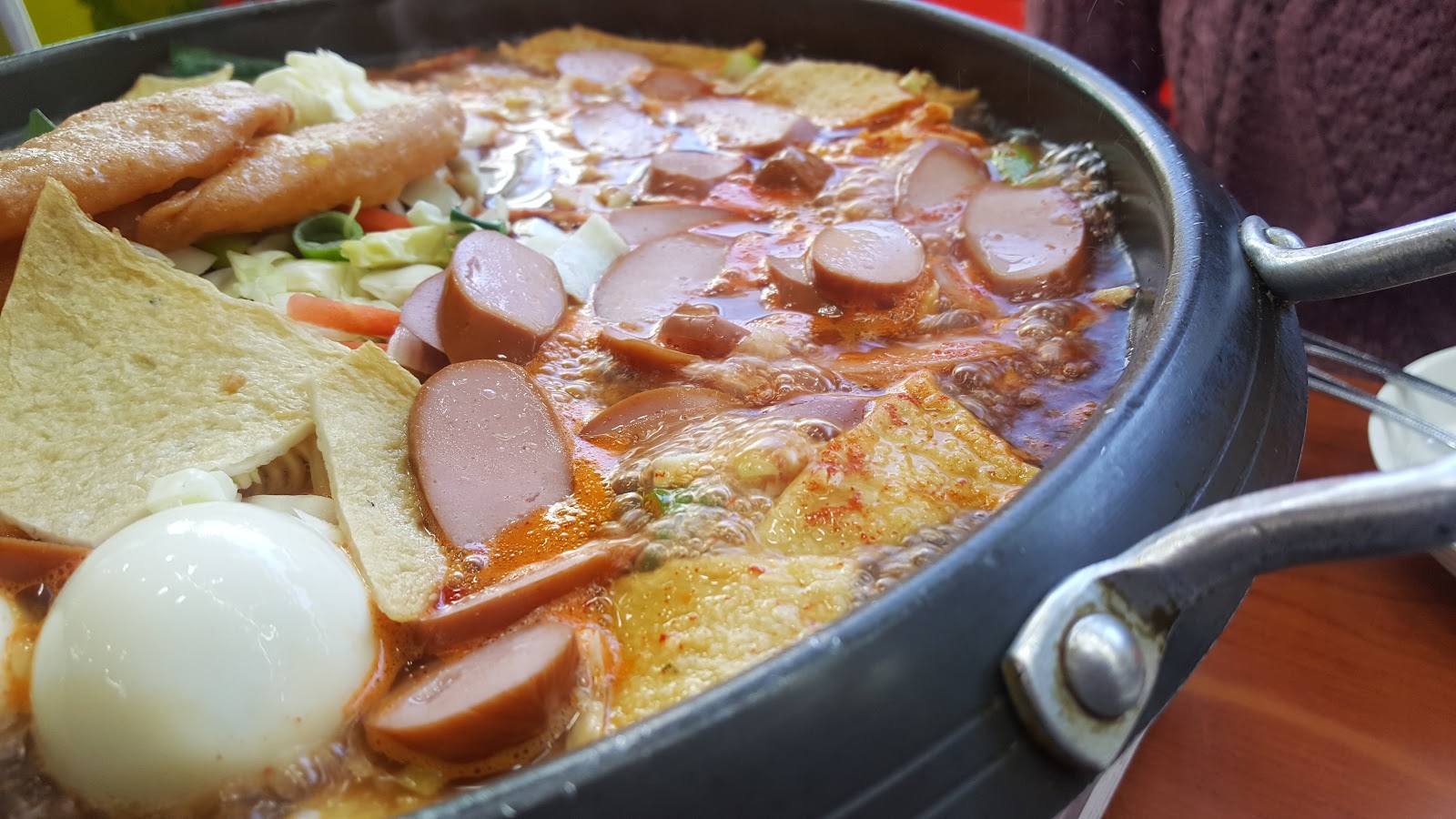
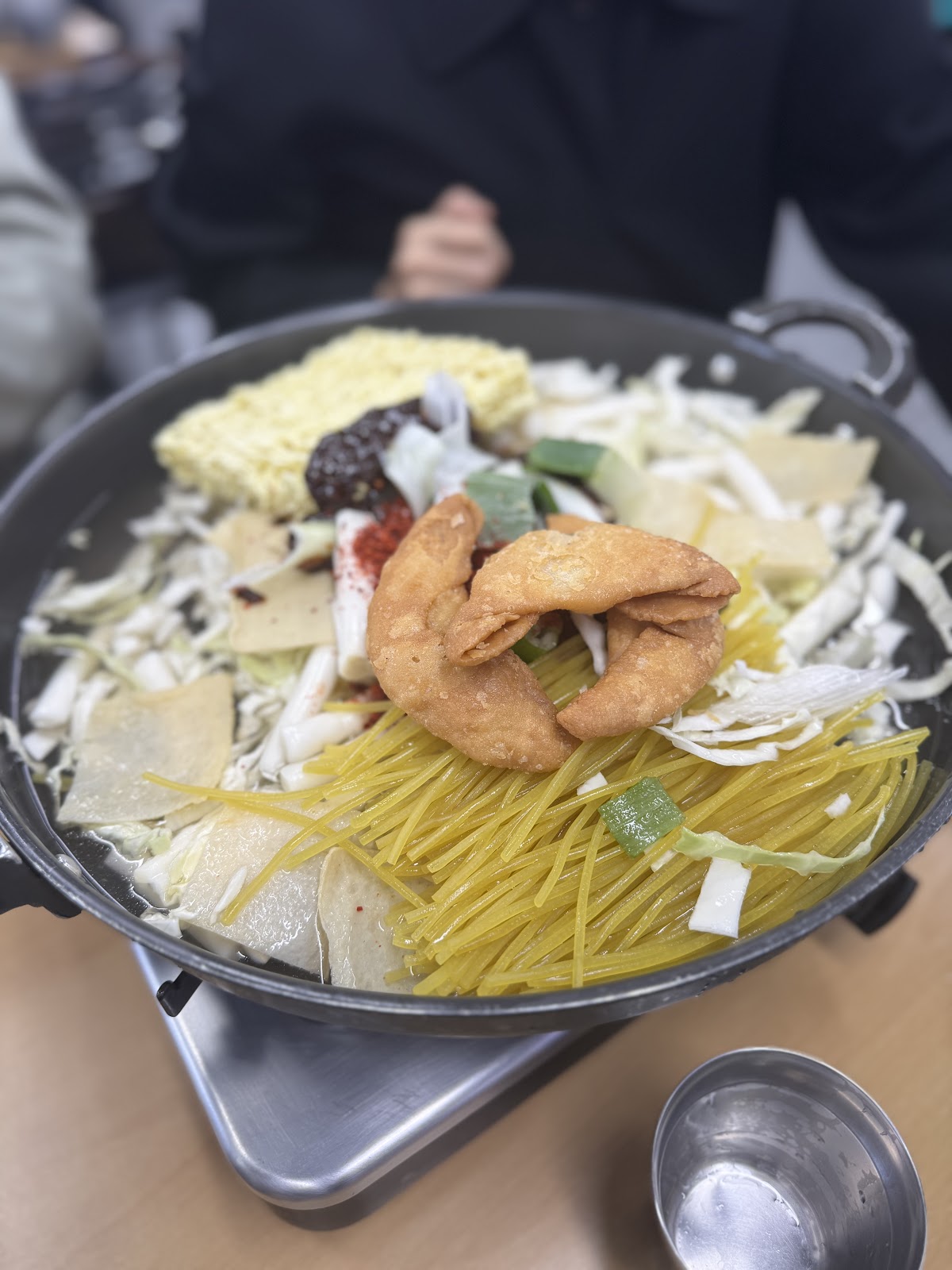
How the hotpot works: A large iron pan arrives stacked with raw ingredients — rice cakes, ramyeon noodles, glass noodles, vegetables, fish cakes, fried items, and a thick portion of gochujang paste. The gas burner ignites. You stir slowly. Over 15-20 minutes, everything melds into something that tastes nothing like the sum of its parts.
When the hotpot runs low, ask for bokkeumbap — they cook rice in the remaining sauce on the same pan, making crispy fried rice from everything left over. Don't skip this.
What to order:
- Base hotpot: ₩14,000-16,000 per person (2-person minimum at most places)
- Add dumplings: +₩3,000 (they absorb the sauce and get incredible)
- Extra ramyeon noodles: +₩2,000
- Soft-boiled egg: +₩1,000
I always get the dumplings. They soak up the sauce and develop this soft, spongy texture that's almost better than the rice cakes.
Top restaurants in Sindang-dong:
- 마마복림 (Mamaboklim): The original, since 1953. Lines by noon on weekends. Sauce is slightly sweeter than others.
- 아마복림 (Amaboklim): Right next door, run by the founding grandmother's daughter. Similar recipe, usually a shorter wait.
Getting there: Sindang Station (Line 2 or 5), Exit 6. 2-minute walk.
Hours: 11am-10pm daily. Some close on Mondays — check before you go.
Beyond Sindang-dong: Best Spots Across Seoul
The hotpot style is unique to Sindang-dong. Everywhere else, tteokbokki comes as a plate of sauce-coated rice cakes or a shared wok portion.
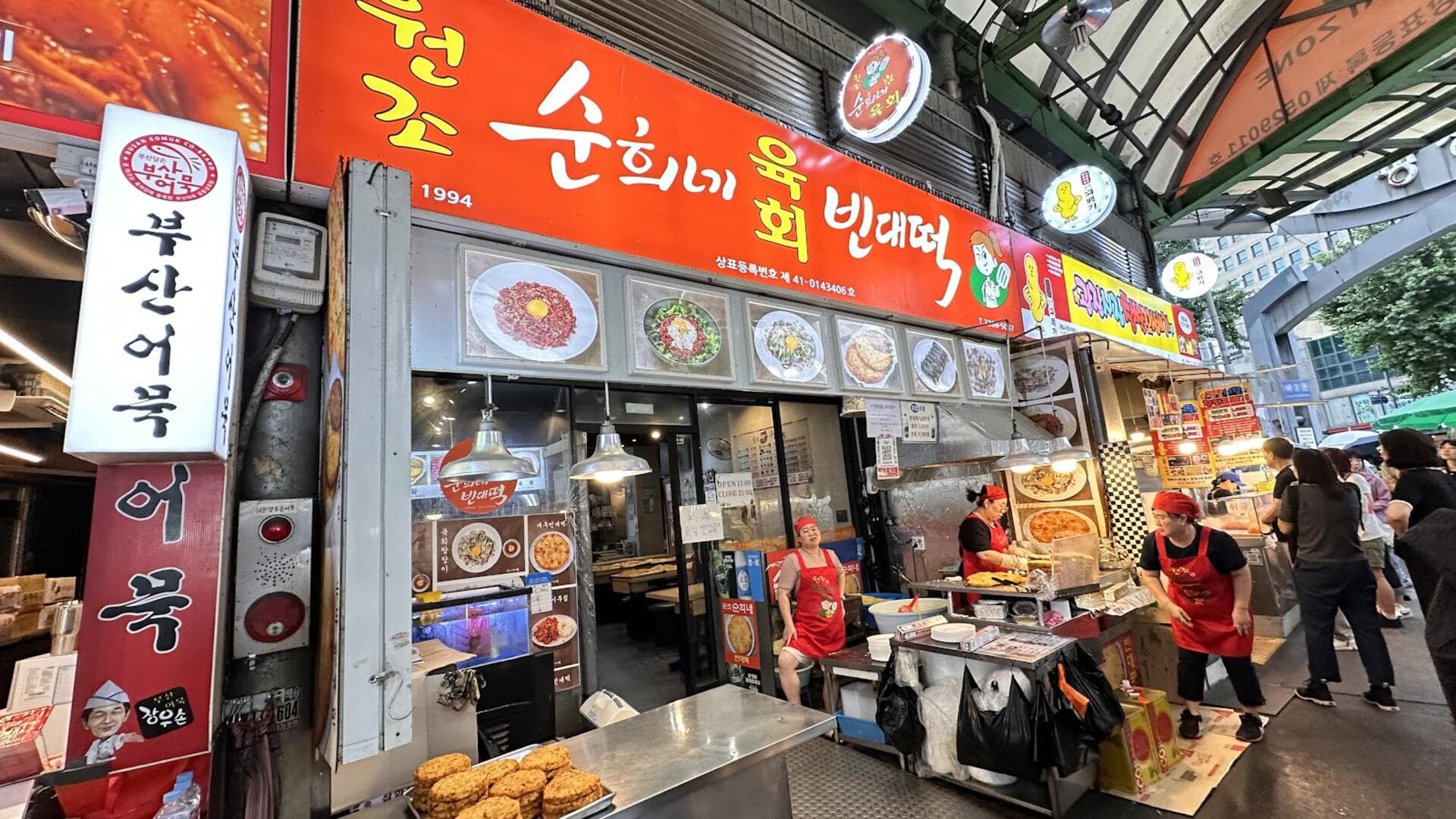
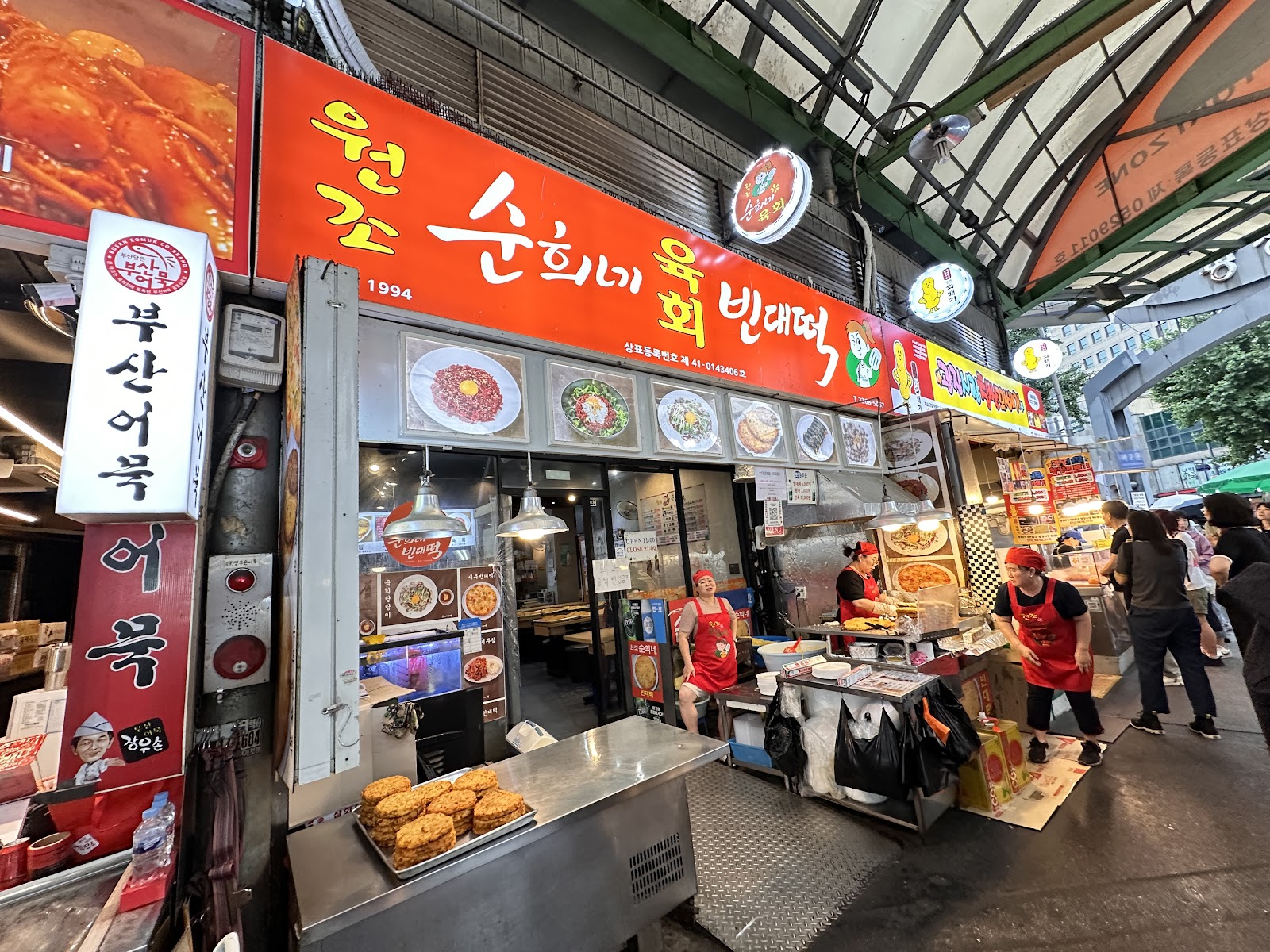
Gwangjang Market (Line 1, Jongno 5-ga): Grandmother-style tteokbokki from massive woks. Thick sauce, intense heat. ₩4,000 a plate. Eat it standing — that's the correct way.
Mangwon Market (Mangwon Station): A local neighborhood market with a tteokbokki vendor that hasn't moved in decades. Half the price of tourist areas, double the authenticity.
Street stalls near Hongdae: Open until 2-3am, catering to university crowds. Cheese tteokbokki and rose tteokbokki (cream sauce) variations are big here.
Types of Tteokbokki Worth Knowing
Once you start paying attention, you'll notice the sauce varies a lot:
- Original gochujang: Classic. Spicy-sweet. The real thing.
- Rose tteokbokki (로제): Cream sauce + gochujang. Less spicy, rich and smooth. Good for those who can't handle heat.
- Cheese tteokbokki (치즈): Molten cheese poured over. Popular with younger crowds.
- Gungjung tteokbokki (궁중): No gochujang, soy-based sauce. The royal palace version — savory, brown, zero spice.
Honest take: the original is still the best. But if spice is genuinely a concern, rose tteokbokki is legitimately good.
Practical Notes
Spice warning: Standard tteokbokki hits around 6-7/10 for international visitors. If you're sensitive, say "덜 맵게 해주세요" (deol maepge haejuseyo — less spicy, please). Most places will adjust.
Sharing culture: Sindang-dong hotpot is communal — one pan per table, minimum 2 portions.
Payment: Most Sindang-dong restaurants take cards. Street vendors prefer cash.
Best time to visit: Weekday lunch for shorter waits. Weekend evenings for the full atmosphere — families, couples, students, all eating together.
What to drink: Cold sikhye (sweet rice drink, 식혜) is the classic pairing — it cuts the heat perfectly. Makgeolli (rice wine) works beautifully in the evenings.
FAQ
Can I go alone? Solo visitors can eat a plate of tteokbokki at any market stall without issue. Sindang-dong hotpot has a 2-person minimum at most places, so bring a friend.
Is it vegetarian? Standard tteokbokki broth uses anchovy or fish stock. At some places, you can ask "야채 육수로 해주세요" for vegetable broth. Rose tteokbokki sometimes offers a vegetarian version. Gungjung style (soy-based) tends to have fewer animal products in the sauce.
How spicy is it? Street stall and Sindang-dong versions average 6-7/10 for international visitors. Rose and cheese varieties are significantly milder — around 2-3/10.
Should I visit Sindang-dong or just eat at a market stall? If you eat tteokbokki only once in Seoul, go to Sindang-dong. The hotpot experience — communal cooking, the halmeoni watching over you, the finishing bokkeumbap — is unlike anything you'll get from a street stall. It's theatrical. It's delicious. It's the original.
That said, a ₩4,000 plate at Gwangjang Market, eaten standing up in a crowded food alley, has its own kind of magic. Do both if you can.