
Sindang-dong: Where Seventy Years of Tteokbokki Meets Seoul's Next Chapter
I went to Sindang-dong the first time because I was hungry. A colleague told me about Mabokrim — the grandmother who invented Seoul's instant tteokbokki back in 1953, the kind you stir-cook yourself at a small gas burner while waiting for it to turn fiery red. "It's not much to look at," he said. "Old alley, plastic stools, fluorescent lights. But it's real."
That was enough. I took Line 2 to Sindang Station.
The tteokbokki was everything he said. But what kept me in the neighborhood — what made me come back three more times — wasn't the food. It was what I found wandering two blocks north of the alley. A building with a vintage car parked out front. Antique cabinets visible through the window. And around the corner, a place where you retrieve your coffee from a mailbox using a key.
Sindang-dong is changing. That's the thing about this city: you never quite know a neighborhood until it's already become something else.
Seventy Years of Spice
To understand Sindang-dong, you have to start in 1953.
Korea had just emerged from three years of war. The city was rebuilding from rubble. On a small street in Jung-gu called Dasan-ro, a woman named Ma Bok-rim opened a small restaurant. She had been selling tteokbokki — the red-sauced rice cake dish — from a street cart, but this version was different. Customers cooked it themselves at the table, over a small gas burner, adjusting the spice and adding their own combinations of fish cake, ramen noodles, and vegetables.
She called it jeukseok tteokbokki (즉석 떡볶이): instant tteokbokki. It cost almost nothing. It was filling. And the act of cooking it was part of the social experience.
Within a decade, the street around her restaurant had filled with imitators. By the 1970s, Sindang-dong Tteokbokki Town was a Seoul institution. Generations of Korean teenagers came here on dates. University students celebrated exam results over a shared pot. Office workers ended Friday evenings here.
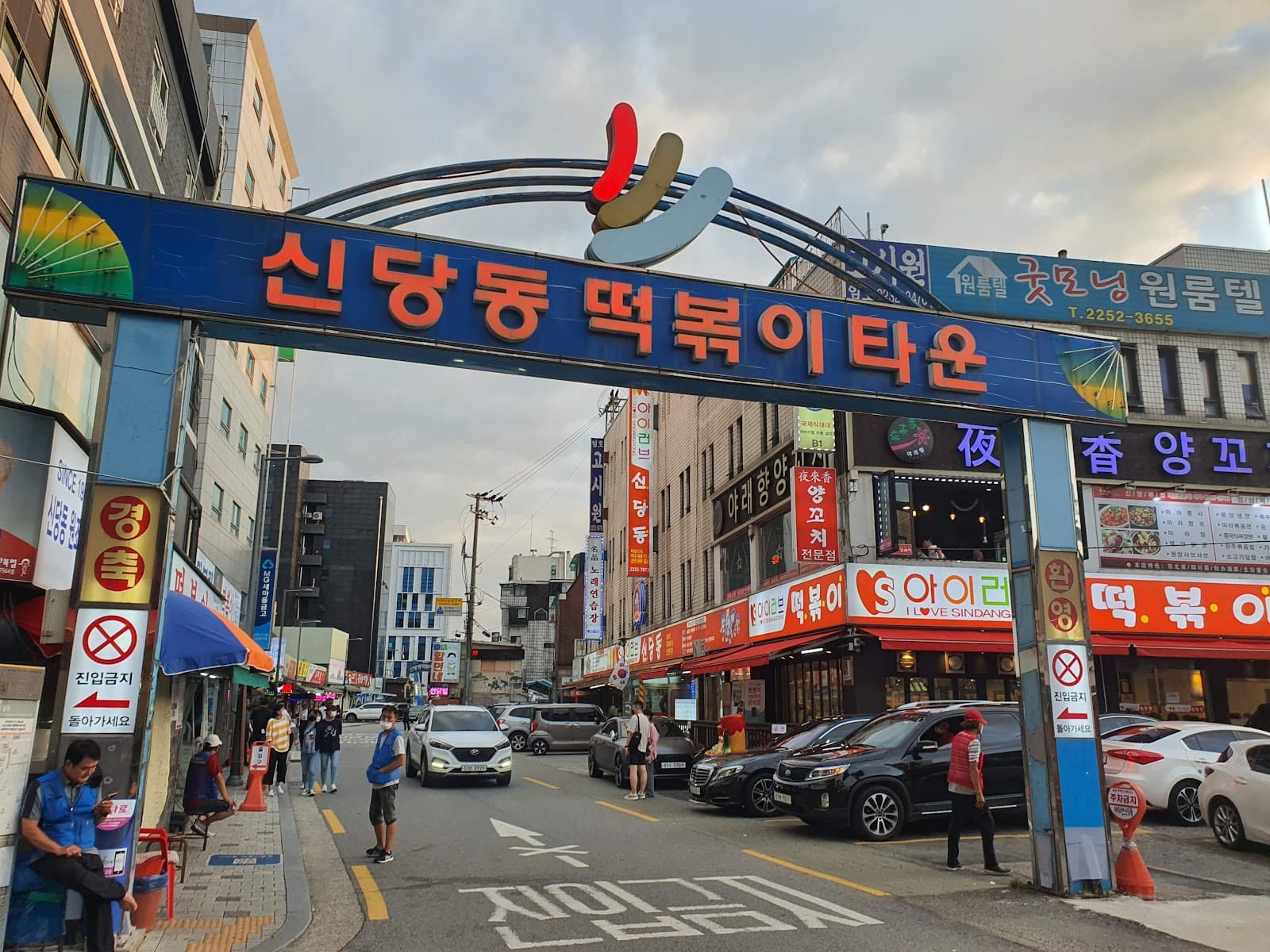
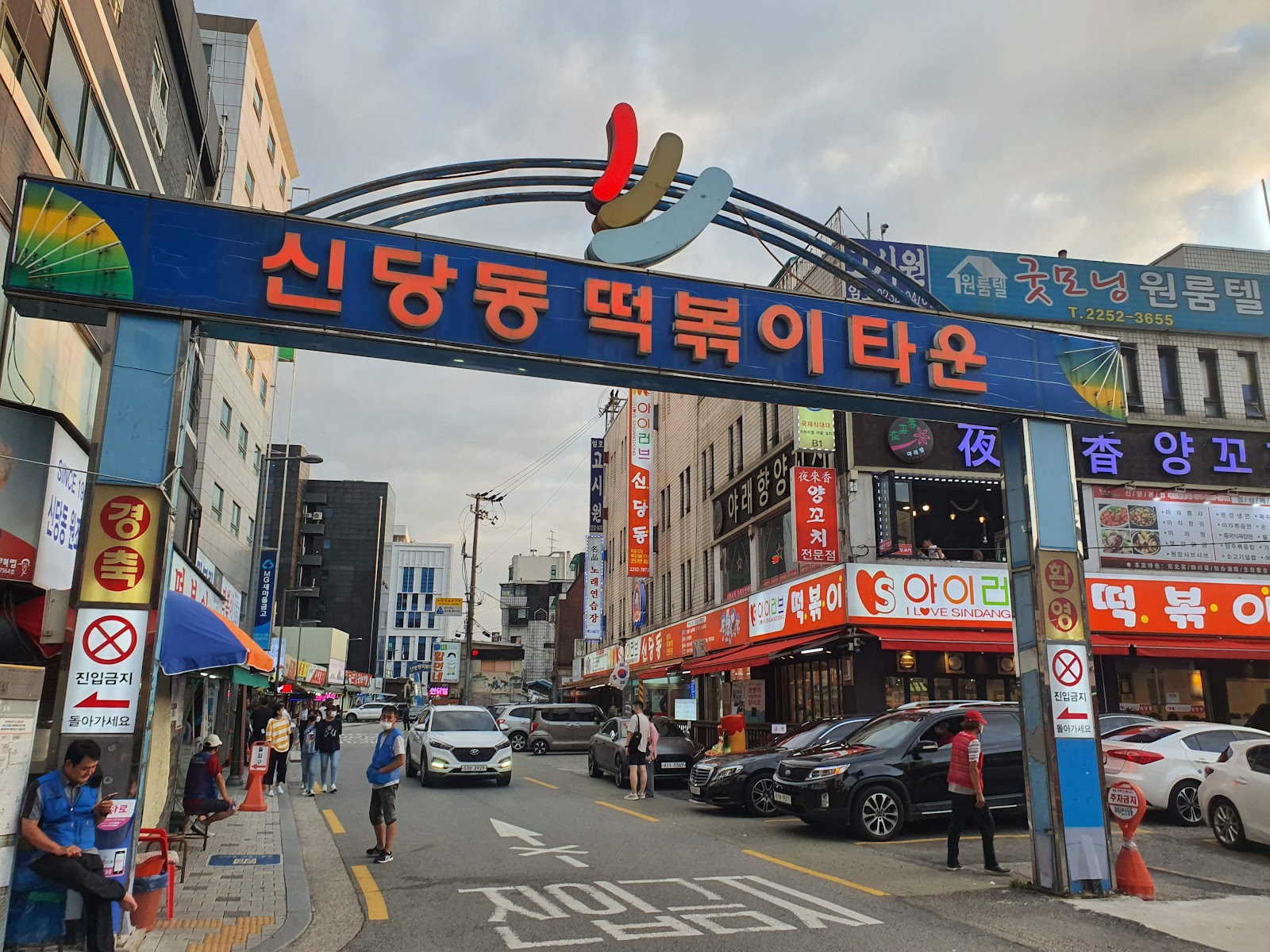
Today Sindang-dong Tteokbokki Town stretches across two alleyways: Dasan-ro 29-gil and Dasan-ro 35-gil. More than fifteen restaurants line the streets, many of them family-run operations passing recipes across three generations. The original Mabokrim is still there — look for the queue and the grandmother's photograph on the sign.
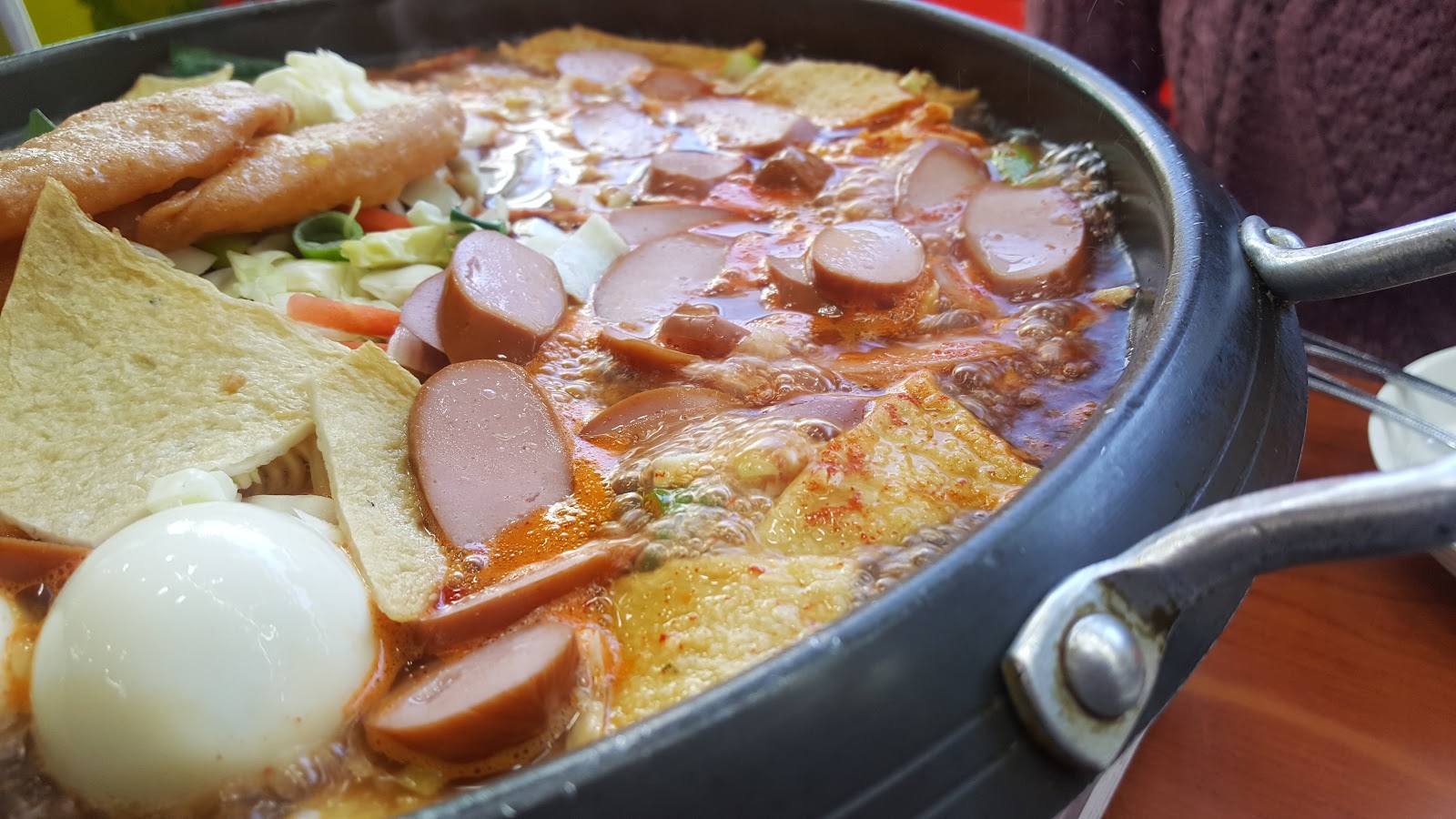
The format hasn't changed much. You sit at a small table. A gas burner sits in the middle. A server brings rice cakes in spicy sauce, fish cakes, and various add-ins. You cook it yourself, stirring occasionally, watching the sauce deepen and reduce. The spice level at Sindang-dong runs hotter than anywhere else in the city.
Walking the Alley
The tteokbokki town is best visited between 1 pm and 6 pm on weekdays. Weekends get crowded enough that you'll wait for a table. Most places open at 11 am and close around 9 pm.
Exit Sindang Station at Exit 7 or 8 and walk straight — you'll hit the alley within three minutes. At the entrance, you'll see the older restaurants first: handwritten menus, walls yellowed by decades of steam, serving staff who look like they've been there since the 1980s. They probably have.
This isn't a tourist-facing food area. English menus are rare. The easiest approach is to sit down and tell the server how many people you have, or simply point at what the table next to you is eating. Standard combos run ₩8,000-15,000 per person — genuinely affordable by Seoul standards. Add ramen noodles or dumplings to the base set if you want more.
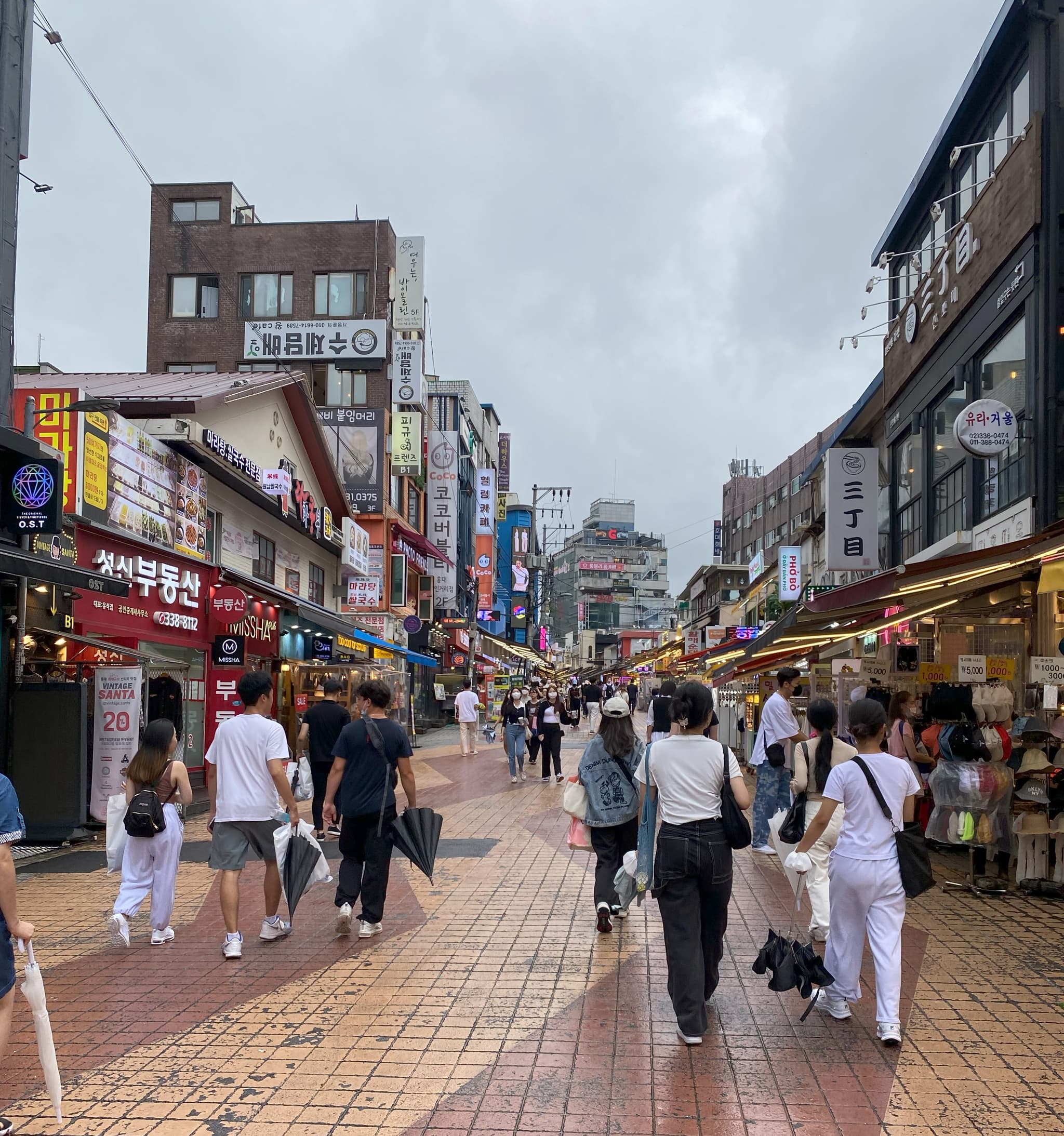
While you eat, look around at the other diners. You'll see Korean families, elderly couples, groups of students. No tour groups. No foreign-language signage. This is a neighborhood eating spot, and that ordinariness is exactly the point.
A Different Kind of Delivery
Two blocks north of the tteokbokki alley, near Sindang Station Exit 1, there's a building where the entrance is lined with brass mailboxes. Each one has a slot and a small key lock. You walk in, order your coffee at the counter, and receive a key. Your drink is placed inside the mailbox that key opens.
That's Mailroom Sindang, one of the more memorable cafe concepts I've encountered in Seoul's explosion of themed spaces. The place appeared on a Korean reality TV show a few years back, which brought a wave of visitors — then things settled into a steady rhythm. Now it runs with a loyal crowd of locals who seem to enjoy the ritual even when they already know how it works.
The cafe has three floors and a rooftop terrace. Ground floor: brass fixtures, small shelves, and the signature mailbox wall. Higher floors: exposed brick, industrial lighting, the kind of seating that invites you to stay. The rooftop has a view of the neighborhood rooftops — not spectacular, but quiet in a way that's rare in inner Seoul.
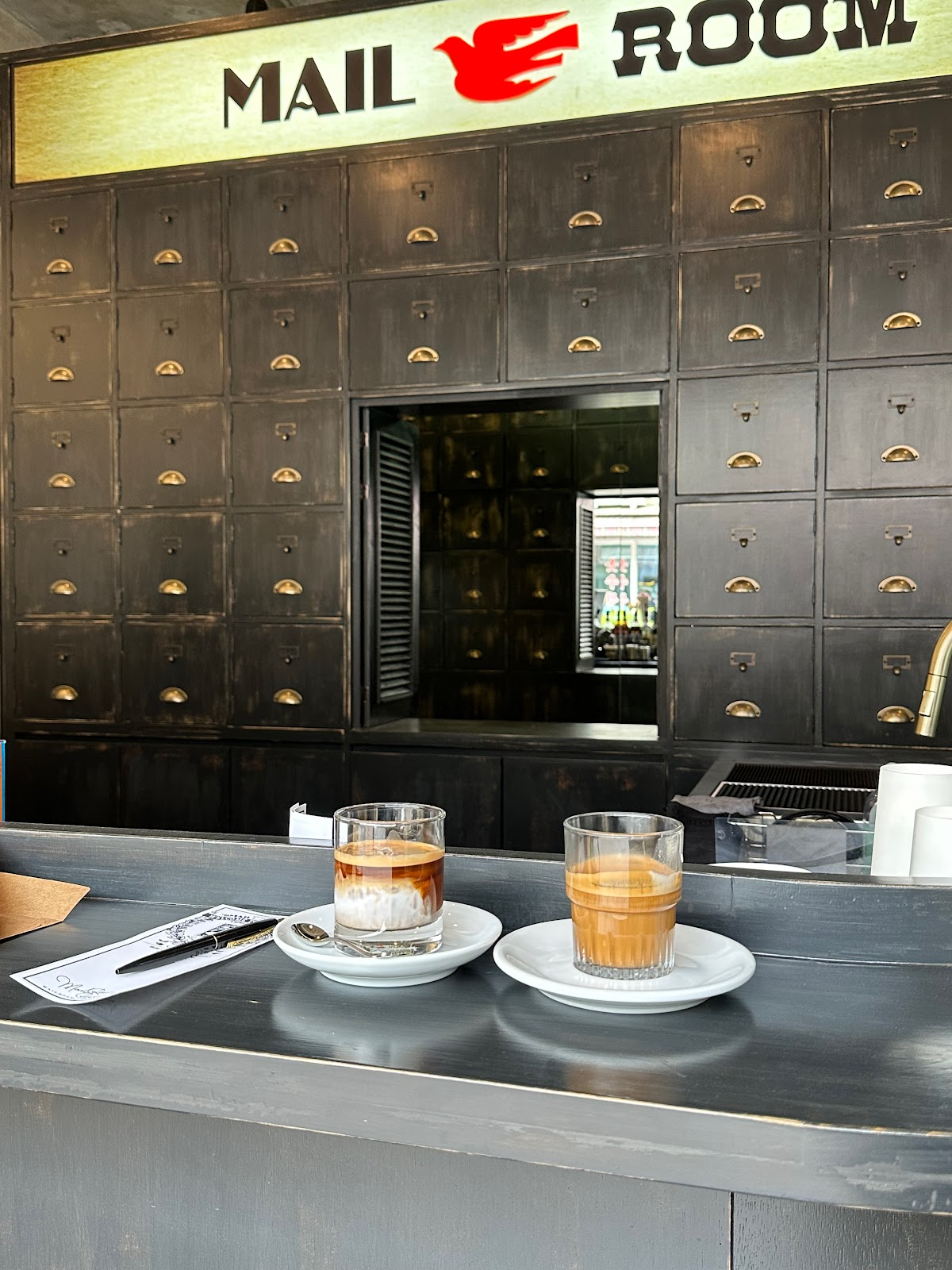
Coffee runs about ₩5,000-6,000 for an americano. Weekday afternoons you can usually get a table without waiting. Open Monday-Friday from noon, Saturday-Sunday from 11 am. Last orders at 11 pm.
The Old Furniture and the 9-Grain Latte
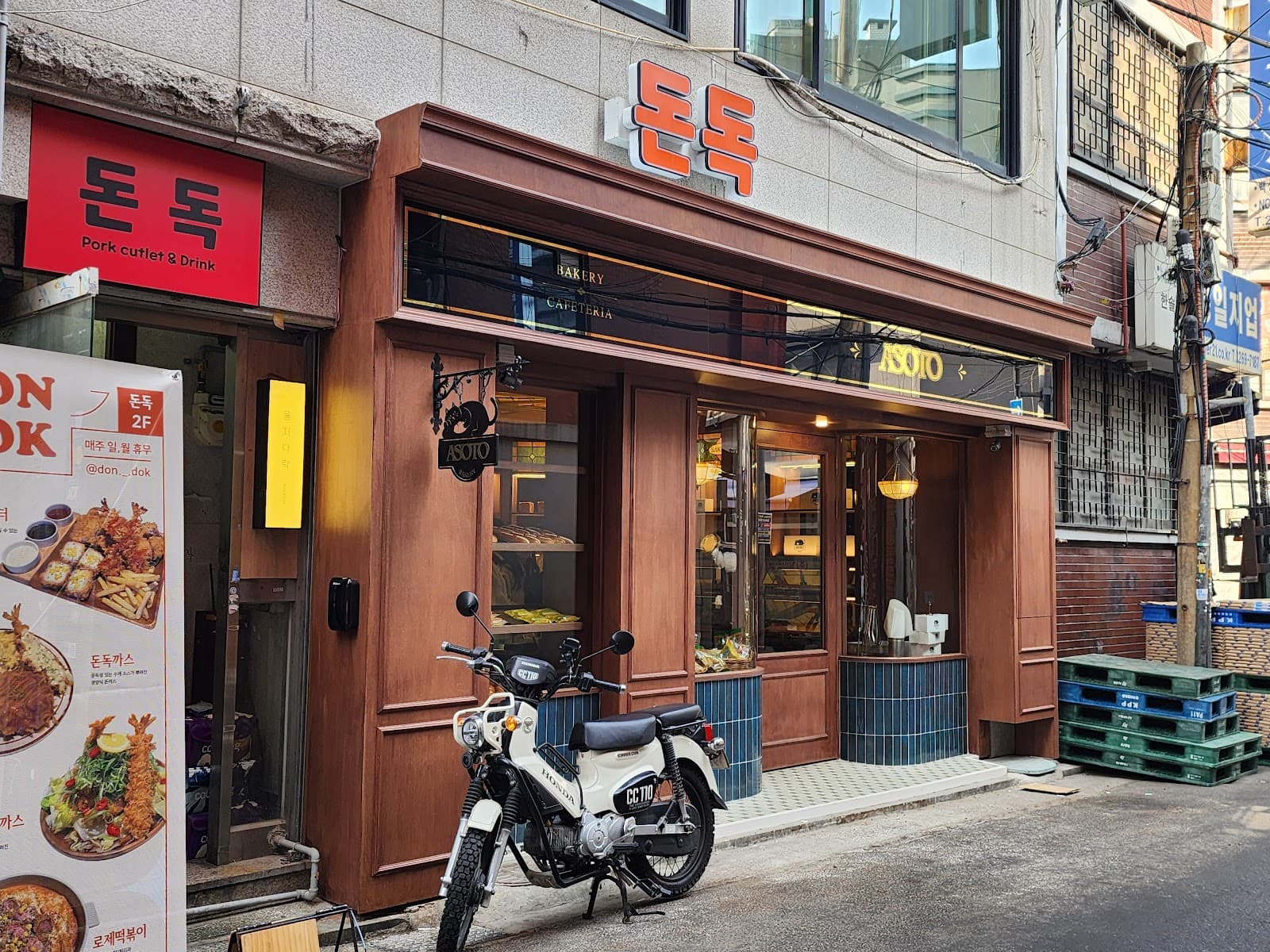
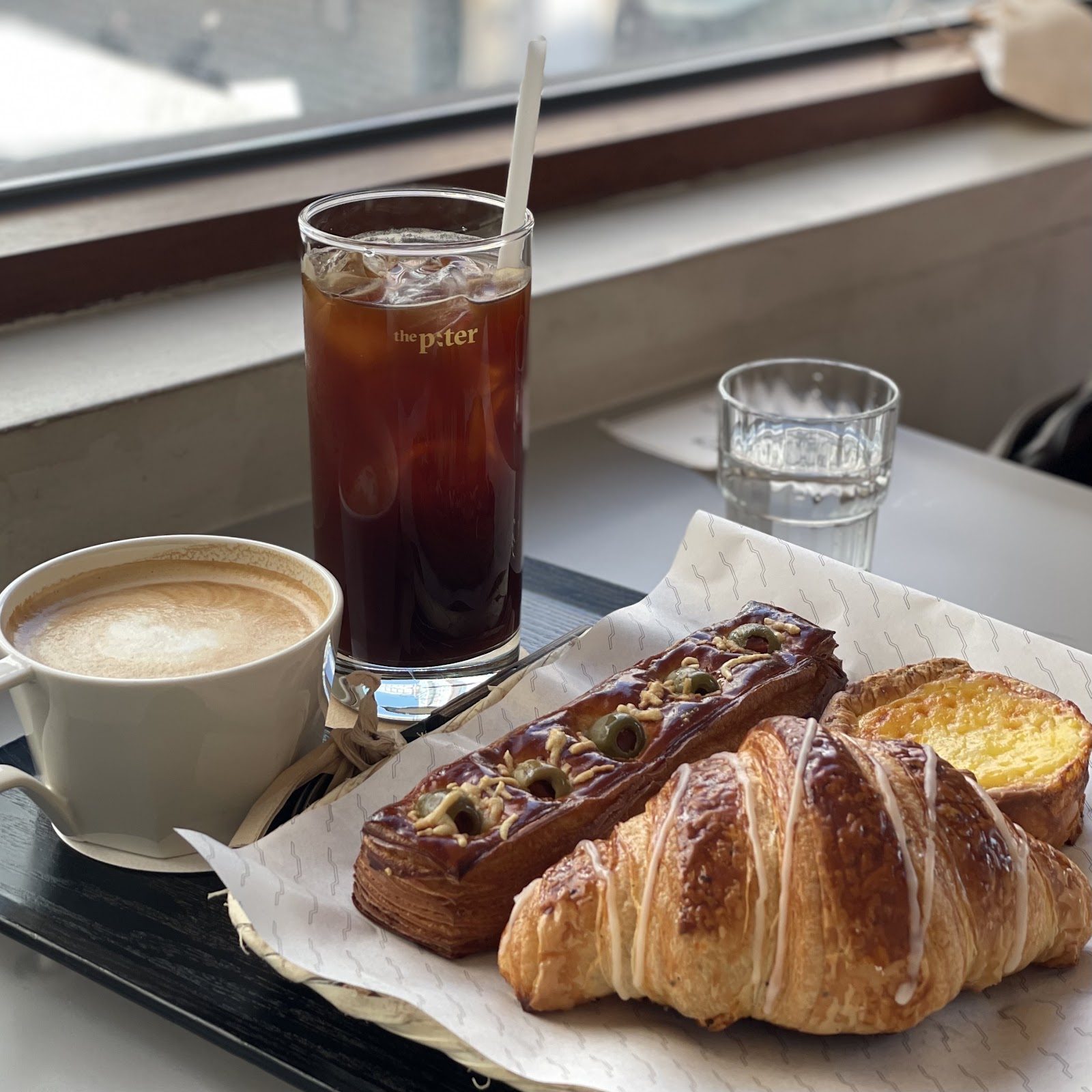
A 2-3 minute walk from Exit 12, The Pter Coffee announces itself with a vintage car parked out front and what looks, through the window, like an antique dealer's showroom: mother-of-pearl inlaid cabinets, old lacquerware, an antique record player.
Inside it's three floors of this assembled aesthetic — Joseon-era decorative arts mixed with modern cafe design. The owner spent years collecting these pieces. The result isn't a museum trying to pass as a cafe. It's more like the apartment of someone who collects too many beautiful things and decided to share them.
The signature drink is a 9-gok-latte: a grain-based blend with a subtle sweetness, served alongside specialty coffee. It sounds like it shouldn't work. It does.
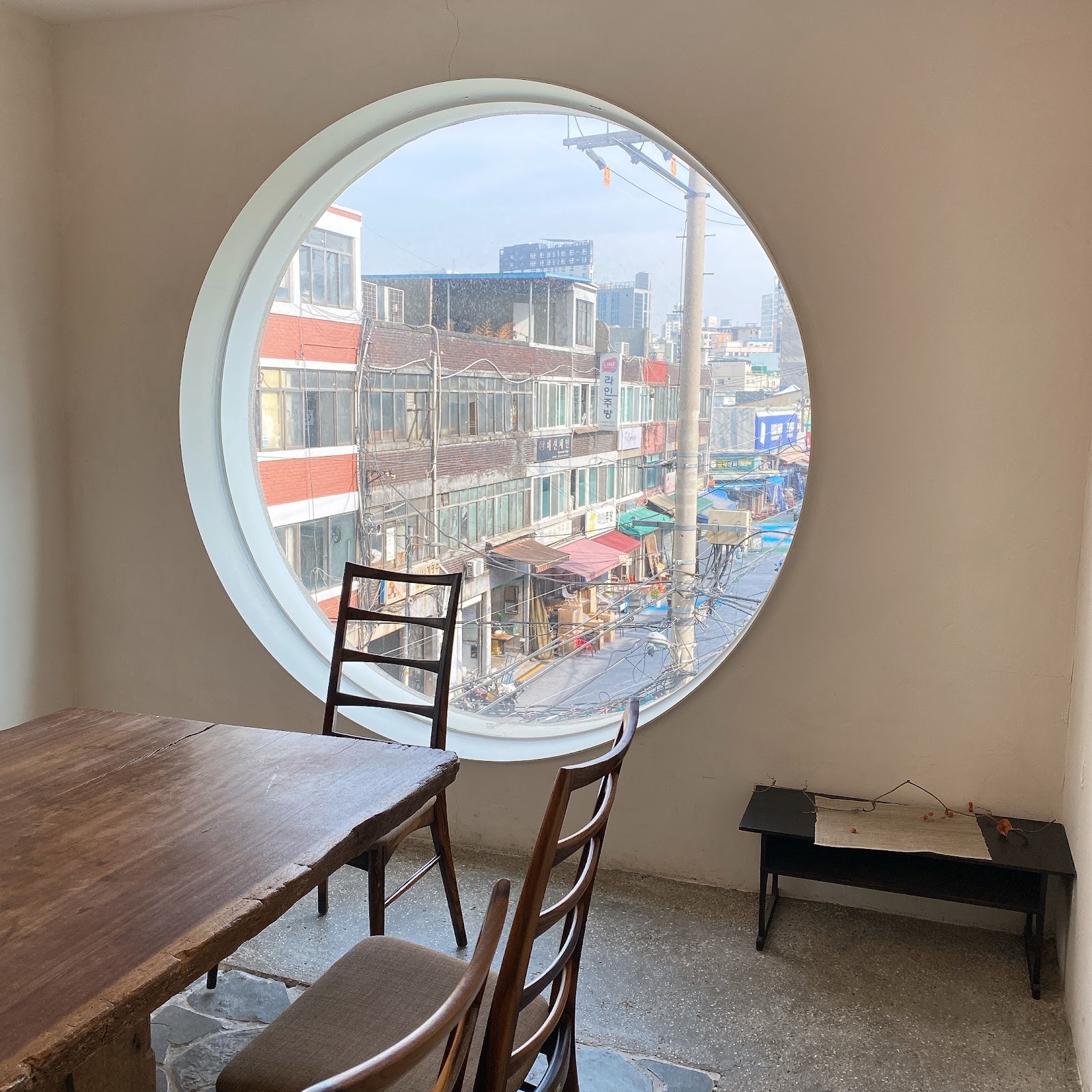
The third floor is the quietest spot — good for reading or working. The rooftop is worth climbing up to in the late afternoon, when the light catches the Sindang-dong rooftops. Closed Tuesdays.
What's Actually Happening Here
Sindang-dong isn't Seongsu-dong or Euljiro. It doesn't have a narrative the way those neighborhoods do — no "old factories becoming galleries" story, no branded identity. The transformation here is quieter. Newer cafes opened without trying to replace what was already there. They serve a different crowd at different hours.
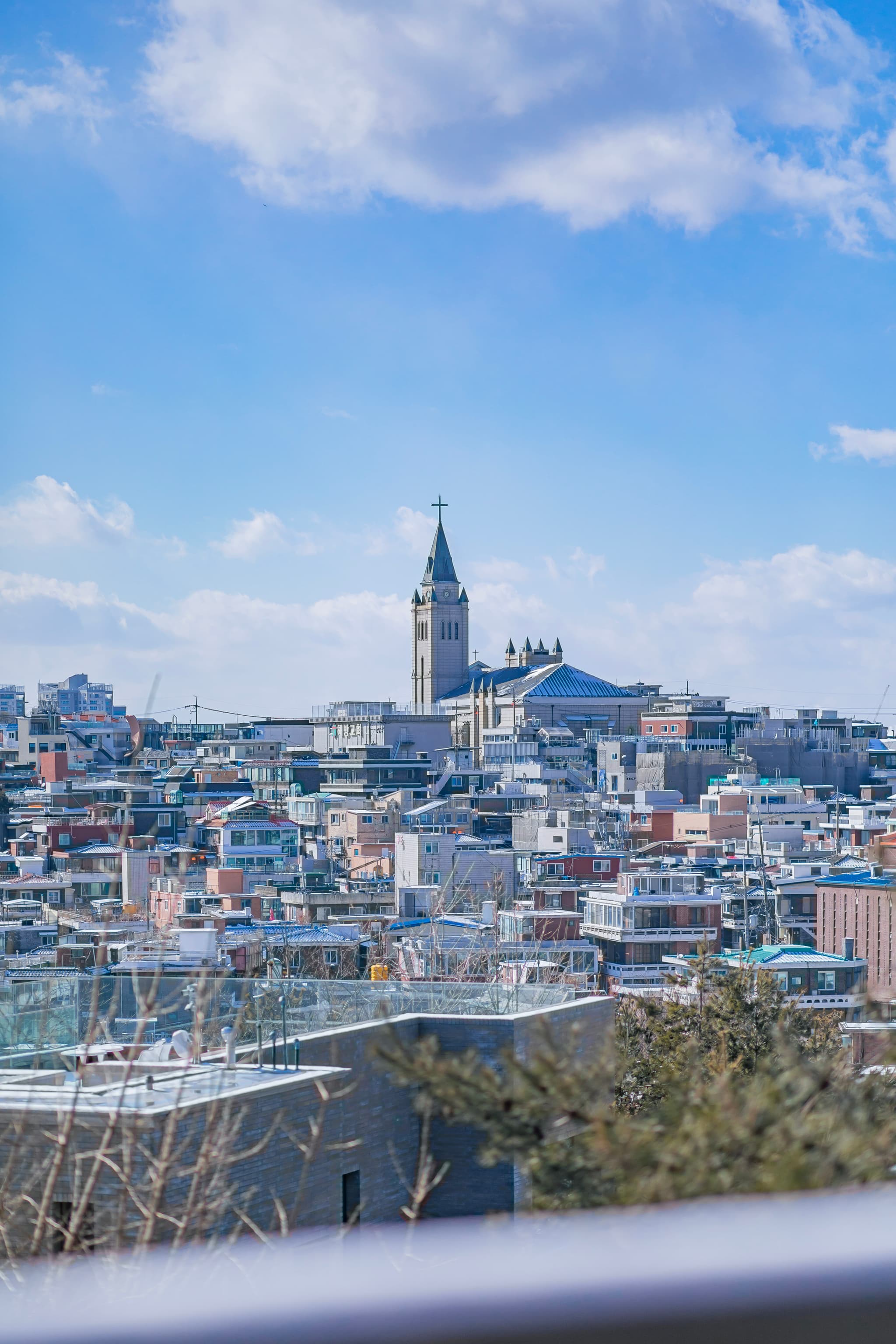
Walk around Sindang-dong beyond the alley and you'll feel what I mean. Quiet residential streets. Small grocery shops. Laundry hanging between buildings. The neighborhood hasn't been smoothed over yet.
It will be, eventually. That's what happens in Seoul. But Sindang-dong in 2026 is still in that particular moment — after discovery, before transformation — when a place is most itself.
That's when I most want to be somewhere. Before the signs change.
Planning Your Visit
Getting there: Sindang Station, Lines 2 and 6. Exit 7 or 8 for the tteokbokki alley. Exit 1 for Mailroom Sindang. Exit 12 for The Pter Coffee.
Best timing: Weekday afternoon into early evening. Arrive at the tteokbokki alley around 2-3 pm (after the lunch rush), eat slowly, then walk north for coffee. Allow 3-4 hours for a relaxed visit.
Budget: ₩8,000-15,000 per person for tteokbokki. ₩5,000-7,000 for specialty coffee. A full afternoon for under ₩25,000.
Nearby: Sindang-dong is 10-15 minutes on foot from Euljiro, and about 20 minutes from Dongdaemun (DDP). It combines naturally with a visit to Euljiro — both neighborhoods have strong industrial histories and are going through quiet change.
What Visitors Ask
Is Sindang-dong worth visiting for a full day? It's more of a half-day or afternoon destination than a full-day neighborhood. Three to four hours gives you time for tteokbokki, coffee exploration, and wandering. Pair it with Euljiro or Dongdaemun for a full day in central Seoul.
How spicy is Sindang-dong tteokbokki? Very. It's the original recipe, and most restaurants here run hotter than any other tteokbokki spot in Seoul. If you're sensitive to heat, tell your server you'd like it milder — "순하게 해주세요" (sunhage haejuseyo). Most places can adjust, though the base is genuinely hot.
Are there English menus? Rarely. Pointing works fine. You can also show the server how many people you have on your fingers. The basic tteokbokki set is the same everywhere — the differences are in what you add to the pot.
Can I visit on a weekend? Yes, but the tteokbokki alley gets crowded after 5 pm. The cafes are manageable on weekends. Come in the early afternoon and you'll avoid the worst of it.
Is this neighborhood safe for solo travelers? Completely. Sindang-dong is an ordinary residential and commercial neighborhood. It's well-lit, busy during eating hours, and the kind of place where you'll feel like a curious visitor rather than a tourist attraction yourself.