The copper coins feel heavier than I expected.
Standing at the exchange window inside Tongin Market, I'm holding a small wooden tray and a handful of old-style brass yeopjeon coins. It's 11am on a Tuesday. Around me, office workers and tourists are already loading their trays — braised lotus root, spicy tteokbokki rice cakes, mini kimbap rolls.
This is the yeopjeon dosirak. And it might be my favorite lunch ritual in all of Seoul.
What Is the Yeopjeon Dosirak?
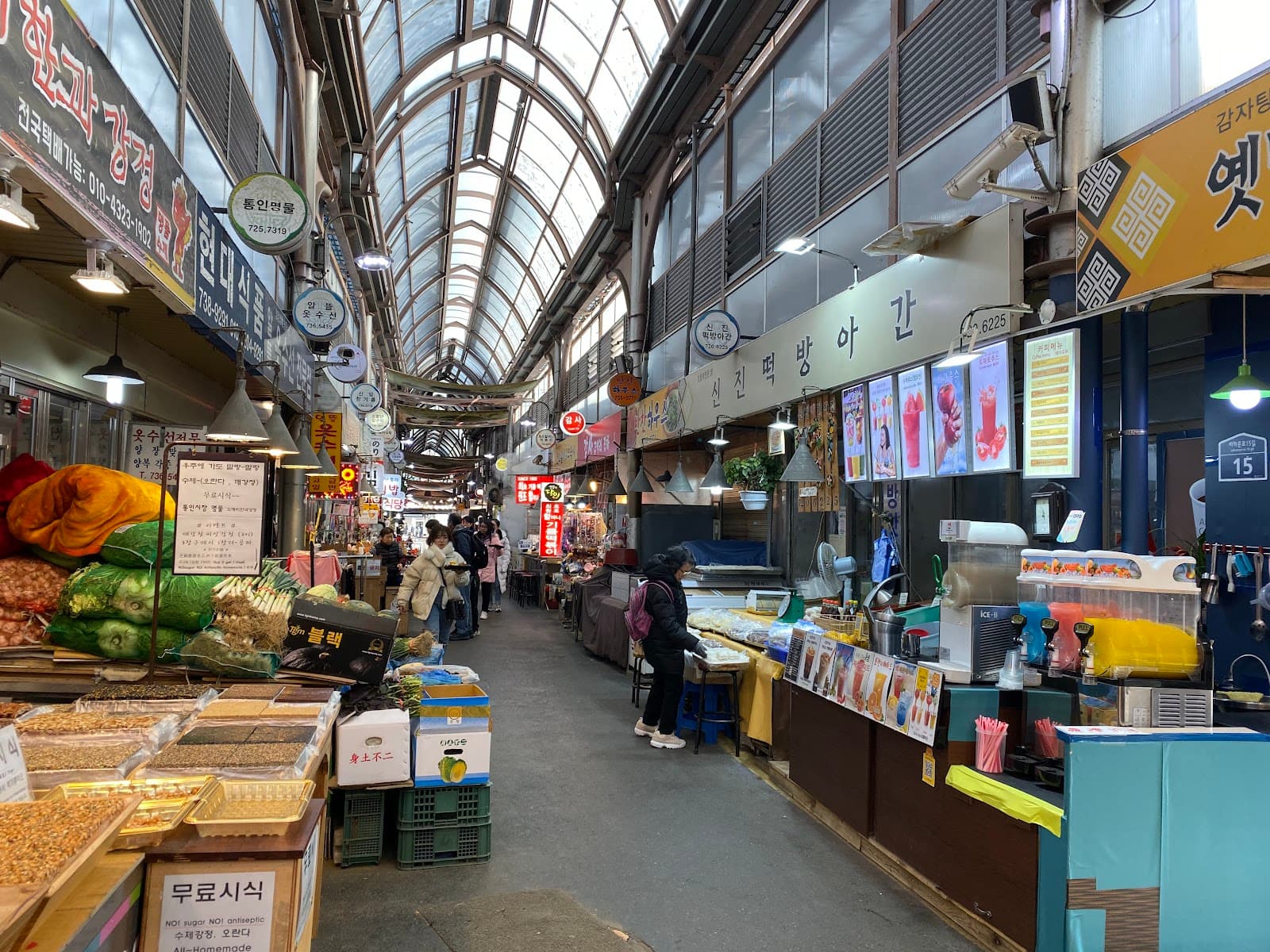
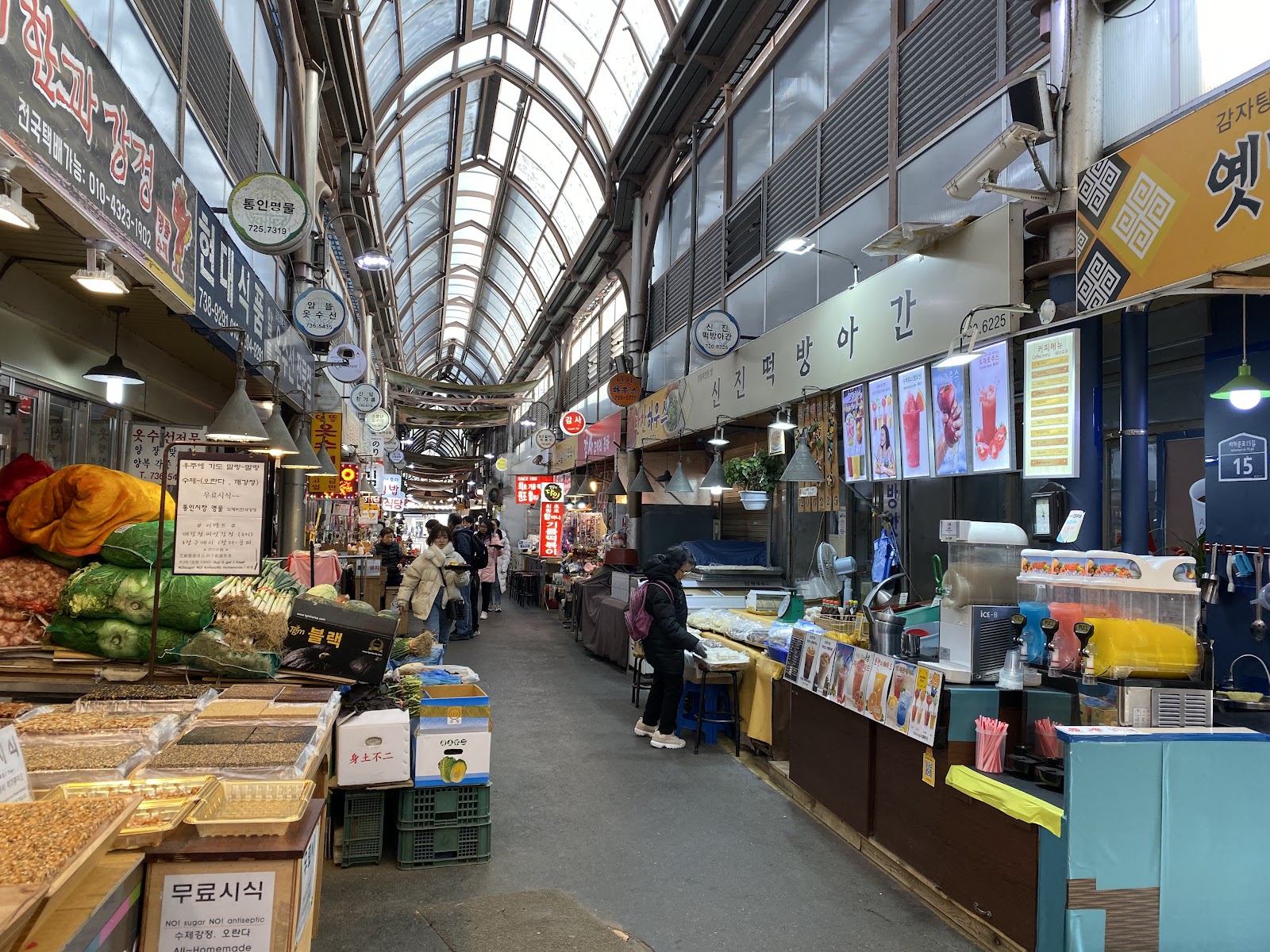
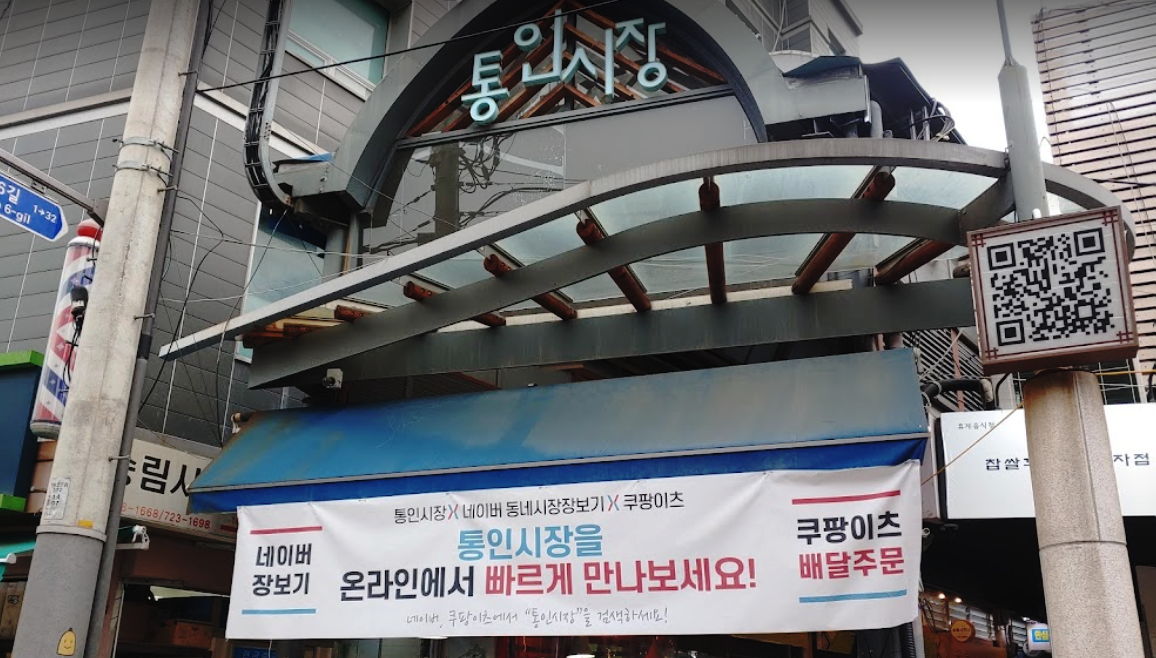
Tongin Market opened in 1941 in Seochon, the low-key neighborhood pressed against the western wall of Gyeongbokgung Palace. For most of its life, it was a regular local market — produce, dried goods, banchan, the usual.
In 2012, the market introduced something special: the yeopjeon dosirak (엽전 도시락) system. The concept is beautifully simple. You exchange Korean won for old-style brass coins (yeopjeon), then wander through the market using those coins to buy small portions from each food vendor. Load up your tray, take it to the communal dining room, and eat.
Soup is included for free. Rice comes with the set.
Think of it as Seoul's original build-your-own lunch — except the currency dates back to the Joseon Dynasty.
How It Works: Step-by-Step
Step 1: Exchange your money
Find the yeopjeon exchange office (엽전 판매소) near the main entrance. One set costs ₩5,000 and gives you around 10–12 coins. The exchange rate is slightly favorable — your coins buy more than face value.
Step 2: Pick up your tray
With your coins, you'll receive a wooden tray and a small dosirak lunch box. Rice is already included inside.
Step 3: Walk the market
Look for stalls with the "엽전 사용 가능" (copper coins accepted) sign. Each side dish costs 1–3 coins. Wander slowly — the best stalls aren't always at the front.
Step 4: Head to the communal dining room
When your tray feels satisfyingly heavy, make your way to the communal dining room. Collect your soup, find a seat, and eat.
What to Fill Your Tray With
Tteokbokki — Non-negotiable. The stall grandmothers make their gochujang sauce from scratch, and it shows. The rice cakes are thick, the fishcakes are fresh, and the sauce has actual depth.
Japchae — Glass noodles with sesame oil and vegetables. Even when it cools down, it's delicious.
Seasonal namul — Spring greens in March and April, braised lotus root in winter. The banchan here changes with what's fresh at the wholesale market that morning.
Mini kimbap — Smaller than the standard rolls, packed tightly with pickled radish, carrot, and spinach. Easy to eat standing up.
A word on strategy: the tray is smaller than you think, and rice takes up real estate. Start with 3–4 items, head to the dining room, then go back for seconds if you're still hungry.
Hyoja Bakery: The Market's Best-Kept Secret
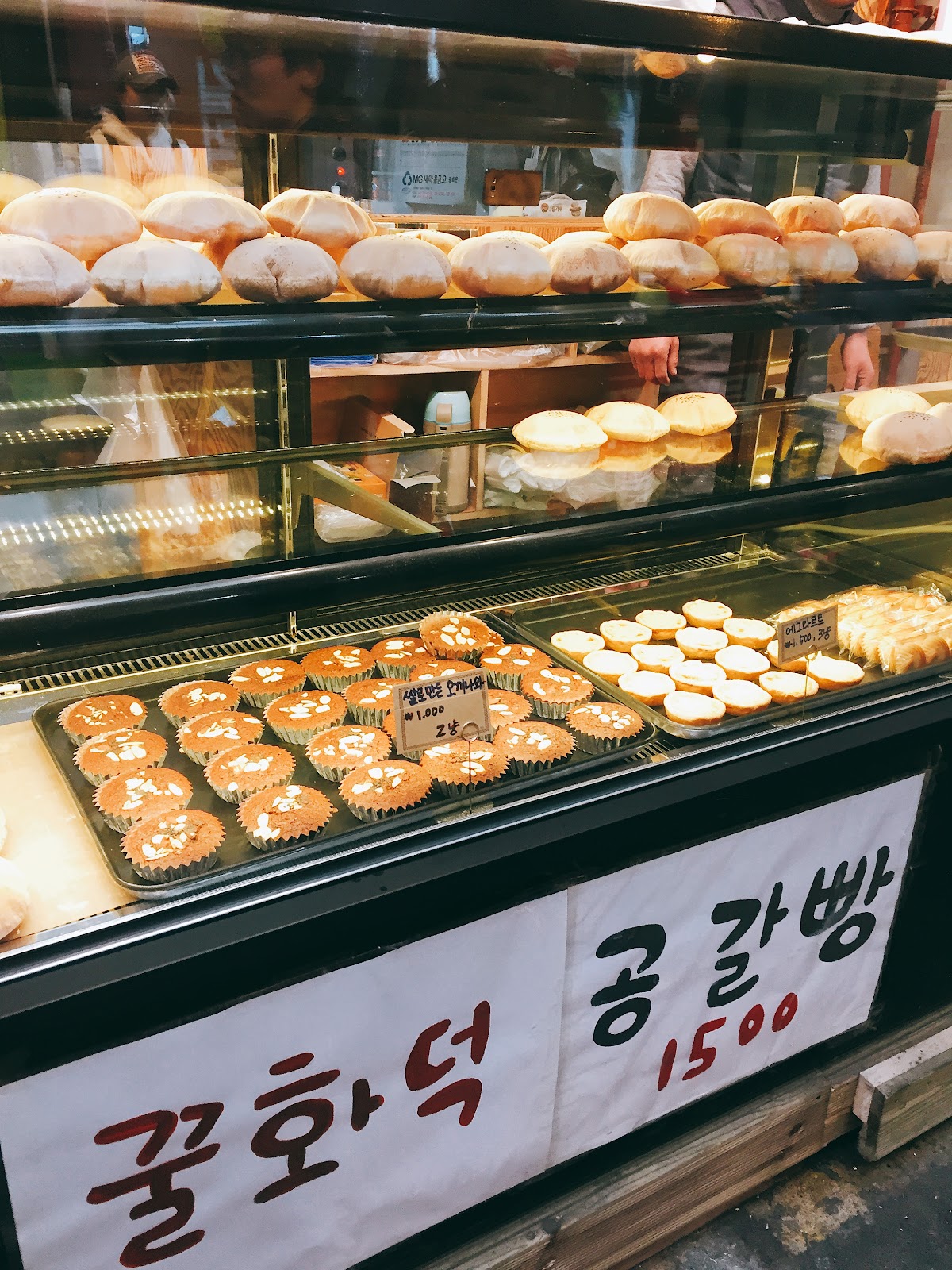
Here's the thing nobody tells you about Tongin Market: there's a bakery inside that gives some of Seochon's trendy cafes serious competition.
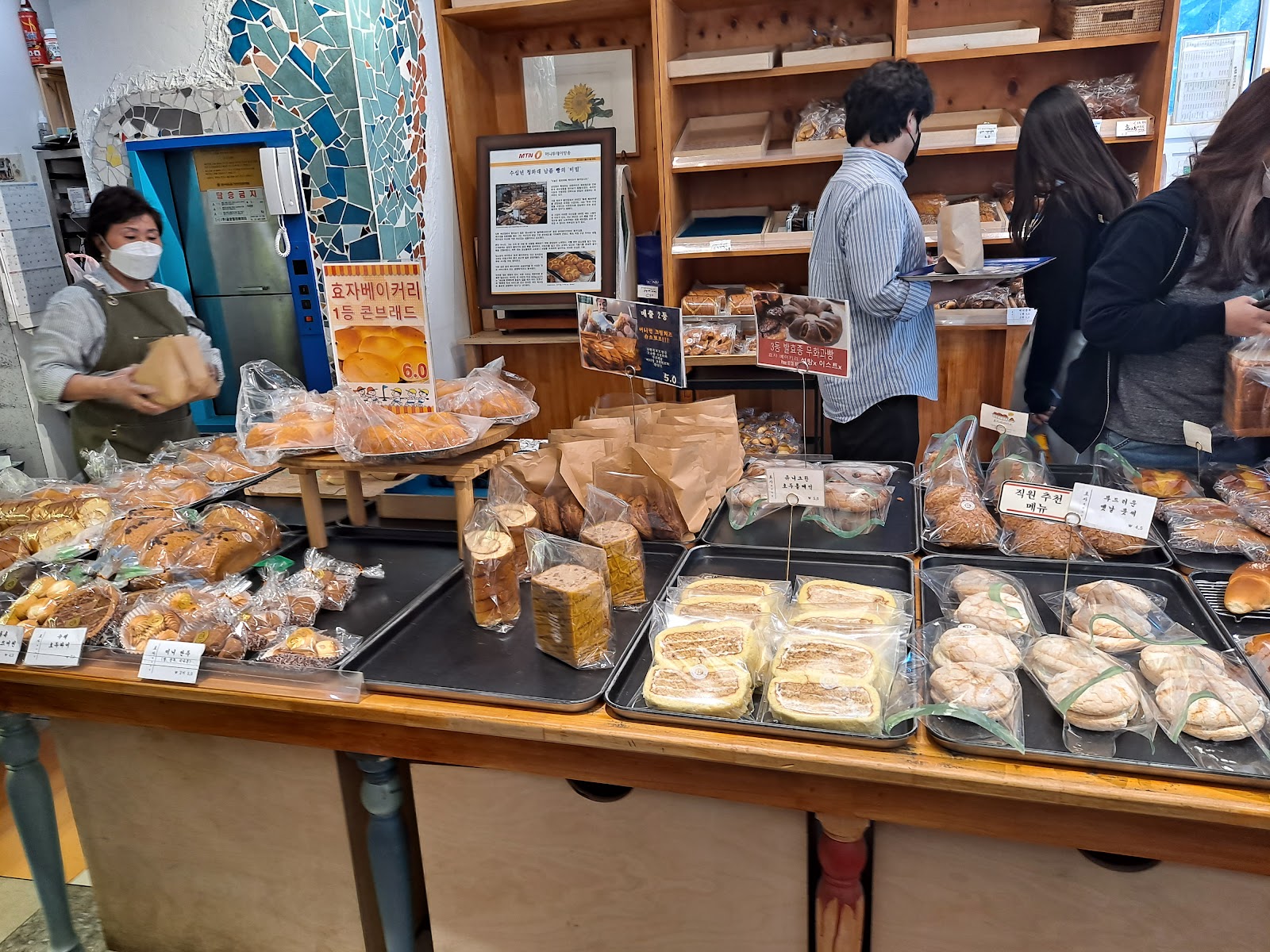
효자베이커리 (Hyoja Bakery) has been here since the 1970s. It's famous for corn bread, walnut loaves, and a cheddar-stuffed focaccia that sells out before noon on most days.
The baker posts the day's baking schedule on a small chalkboard outside. When the oven timer goes off, shoppers stop mid-stride to watch the bread come out.
Go on weekends? Arrive before 10:30am. I'm not joking.
Beyond the Dosirak
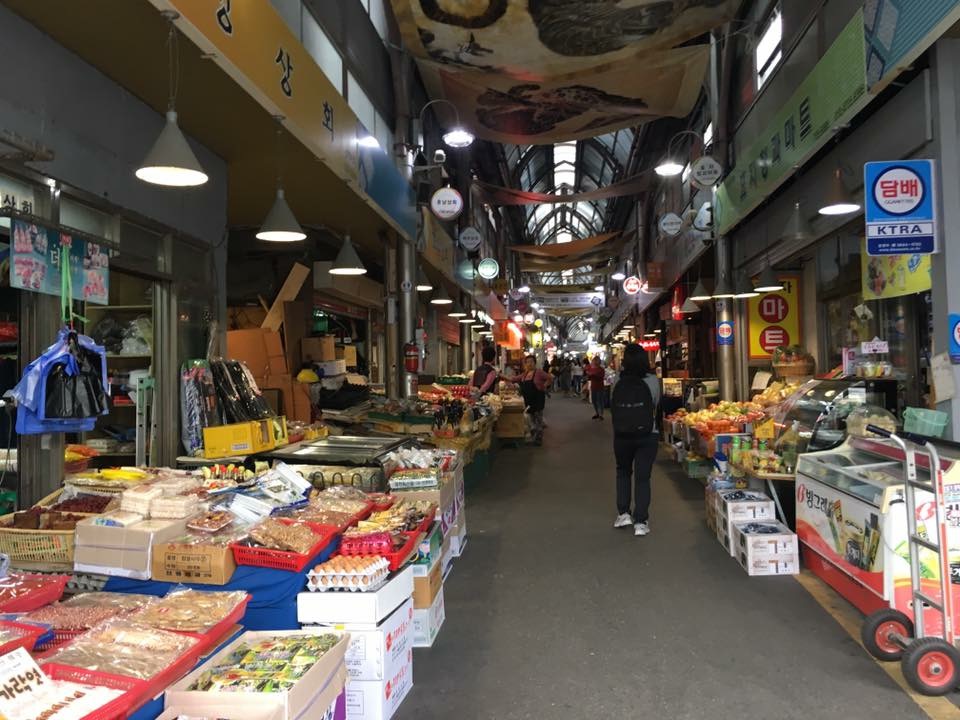
The yeopjeon system is the star attraction, but the rest of the market is worth exploring too.
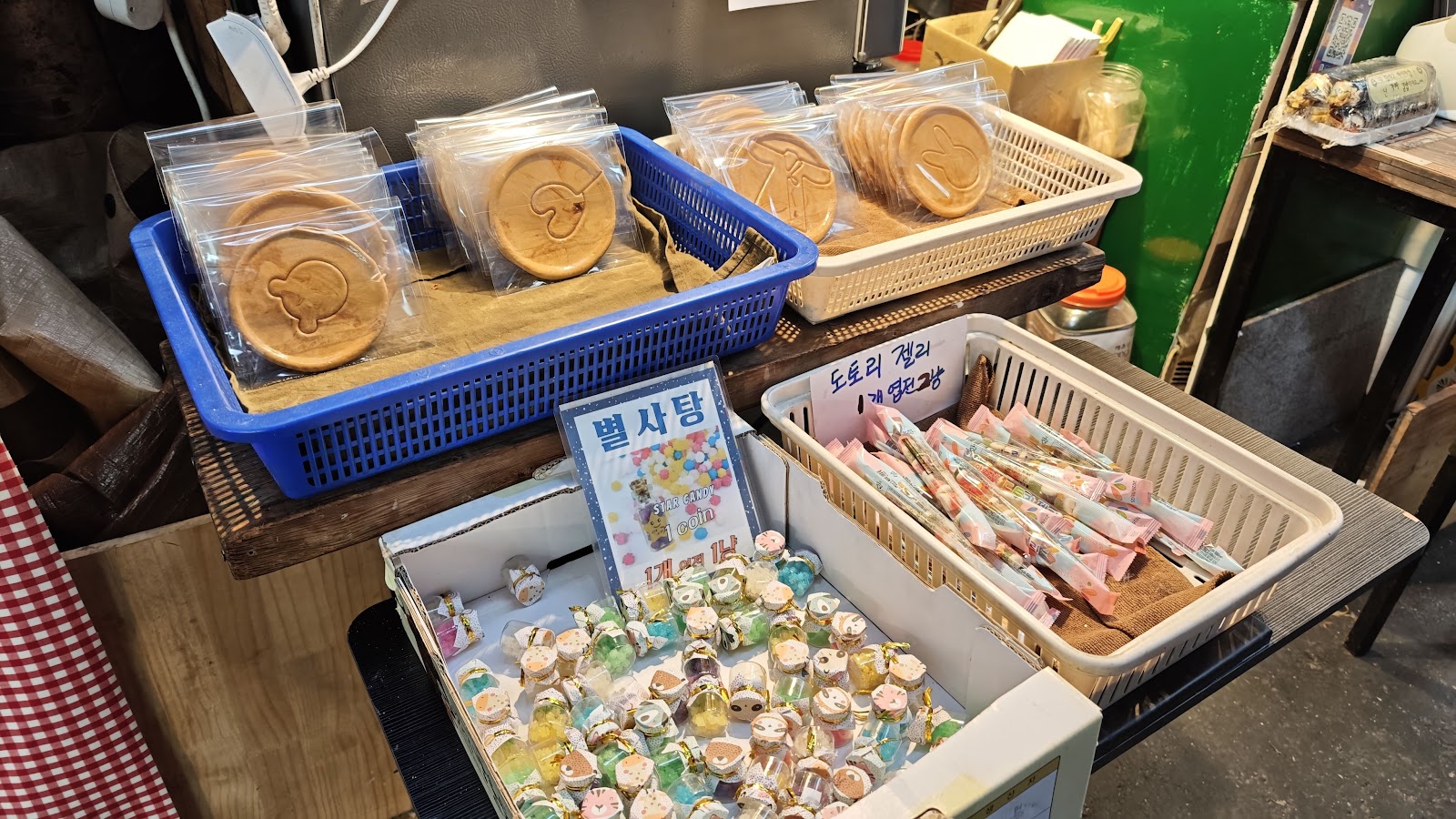
Walk past the banchan stalls and you'll find old-school candy vendors selling star-shaped hard candies (별사탕) and acorn jelly (도토리 묵). Near the back are fresh tofu stalls and fruit juice stands.
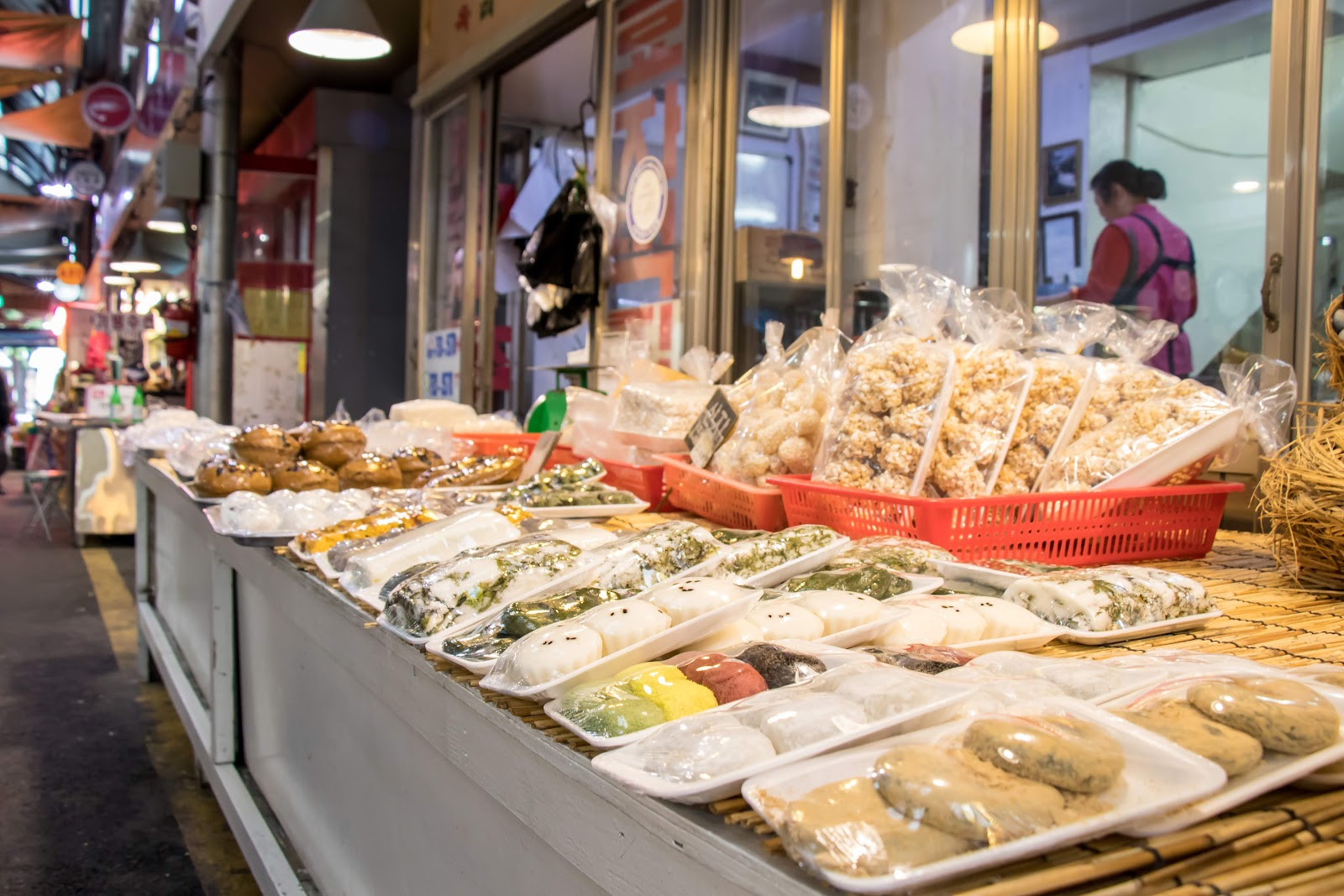
The tteok stall is worth stopping at even if you're not hungry. Red bean, green mugwort, yellow pumpkin — the color gradient stretched across the display case is genuinely beautiful.
Practical Information
Hours: 9am–7pm, closed Sundays
Yeopjeon dosirak service: 10:30am–2:30pm (closes early when ingredients run out)
Cost: ₩5,000 per coin set (side dishes cost 1–3 coins each). Budget ₩8,000–12,000 for a full lunch.
Best time to visit: Weekday mornings, 10am–noon — freshest food, fewer people
Address: 18 Jahamun-ro 15-gil, Jongno-gu, Seoul
Getting There
By subway: Gyeongbokgung Station (Line 3), Exit 2 → 15-minute walk through Seochon. The walk itself is lovely — hanok alleys, indie bookshops, and old teahouses line the path.
By bus: Routes 1020, 7022, or 7025 → Changuimun stop
After the market: Seochon is one of Seoul's best neighborhoods for wandering after lunch. The streets between Tongin Market and the palace wall are filled with century-old teahouses and hanok-turned-galleries.
FAQ
Do I have to use the coin system?
No — you can buy food directly from vendors the regular way. But the yeopjeon dosirak is the main reason to visit. It's genuinely fun, not just a tourist gimmick.
Is the coin exchange available every day?
The exchange runs Tuesday through Sunday, 10:30am–2:30pm. It closes when food runs out, so arrive early on weekends.
What about vegetarians?
Most banchan are vegetable-based — namul greens, tteok, kimchi (though some kimchi contains anchovy). The soup may use anchovy stock. If you're strict, ask at the exchange window first.
Is there English signage?
The exchange office has basic English explanations. Most vendors communicate just fine through pointing. Knowing numbers in Korean helps: "hana" (one), "dul" (two).
How long does it take?
The coin-buying and browsing part takes 20–30 minutes. Add another 20–30 for sitting and eating. Budget an hour total, plus extra time if you plan to walk Seochon afterward.
A lunch built from coins, assembled from a dozen different hands, eaten at a communal table in a covered market that's been here since before your parents were born.
That's Tongin Market. Come hungry, leave with a story.